Bedstemor's 85 års fødselsdag
( 13 - 20 Nov 2004 ) |
Oversættelse Freddy Pallesen
© 2004 |
|
Det gamle Ægyptens historier og legender
har længe markeret sig gennem film som "Kleopatra",
"Mumien" og begejstret os kvinder med Omar Sharifs optræden
i "Lawrence of Arabia" og "Doctor Zhivago og senere i
tegnefilm som "The Prince of Egypt". Der er en vis mystik
omkring mellemøsten skildret for os i en meget ung alder, når
vi hørte godnathistorier som "Ali Baba og de 40 røvere"
eller "Sinbad Søfareren" - de fleste af os har en drøm
om at se pyramiderne.
Jeg var meget heldig at få muligheden
for 20 år siden sammen med mine forældre at komme til Ægypten,
men som 10 årig er der ikke så meget et barn kan huske.
Men dette år samles Familien Pallesen igen engang for "Matriarkens"
85 års fødselsdag. Det er tradition for familien at samles
og rejse til et eksotisk land - tidligere har det været Tunesien,
Marokko, Tyrkiet og Gambia - og nu for Bedstemors ønske om at
se Ægyptens pyramider, som hendes mand så for 50 år
siden.
Bedstemors tre børn, seks børnebørn
(Nikolai kunne ikke komme med), fire oldebørn og respektive ægtefæller,
alle tog sammen til det magiske Ægypten. Det er efterår
med varme dage og kølige nætter - en kontrast til den kommende
vinter i Danmark.
|
Lørdag 13. November 2004
Afrejse til Ægypten
Vores familie måtte af sted kl. 3.30
for at nå flyet kl. 6.55; 4½ time senere ankom vi til Cairo
lufthavn. Jeg har en svag hukommelse om en meget varm lufthavn med komplet
kaos, med mennesker, der skubber for at få deres kufferter igennem,
råbende gennem en masse larm. Nu fandt vi en næsten ren
og ikke tætpakket lufthavn.Vi mødte AP-Travels repræsentant,
som tog os til Hotel Pyramissa, hvor vi tilsyneladende blev glemt i
Pianobaren, til en af os fik den lyse ide, at bede om vores værelsesnøgler.
Vores familie deltes om en toværelses
suite med et stort fællesrum. Vores første eftermiddag
blev brugt til en spadseretur rundt i kvarteret for evt. at finde et
sted for familien at spise. Vores hotel lå på den anden
side af floden i forhold til centrum, så der var ikke meget at
se på sammen med, at mange butikker var lukket p.g.a. Ramadanen,
den Islamiske fasteperiode fra daggry til solnedgang. Søndag
var sidste dag i Ramadanen, så mange var i gang med at forberede
den sidste faste.
Sluttelig spiste familien til aften i hotellets
"Orientel" restaurant i Ægyptisk stil. Vi regnede med
at få ordentlig Ægyptisk mad, men blev skuffede over at
få lunkent mad. Risen var meget tør, lammekødet
var meget småt og maden var en blandet fornøjelse. Til
vores overraskelse, efter vores kommentarer, fik vi serveret ekstra
tallerkner med lokal Ægyptisk frugt så som friske dadler
og duava. Til vores morskab smagte alle Ægyptiske vine ens, uanset
mærke. Der var masser af Ægyptisk øl og selvfølgelig
levede danskerne op til deres drikkeevner og Bedstemor gav maden til
alle.
|
Søndag 14. november 2004
Første nat sov vi ikke så
godt - at sove i en fremmed seng kombineret med koranbøn fra
en nærliggende moske gav os ikke ligefrem en fredfyldt søvn.
Imidlertid var vi alle tidlig oppe for at mødes i Bedstemors
værelse for at overraske hende med danske fødselsdagssange
til flimmer med danske flag og små gaver. Denne familie overrasker
fødselaren og alle synger unisont denne meget søde fødselsdagssang.
Citadellet Muhammad Ali Moskeen
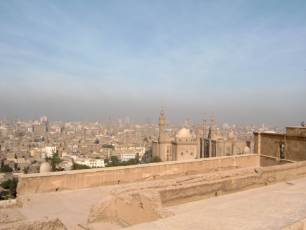 Vores
første besøg gjaldt Citadellet. Det er byens fort og husede
engang den kongelige familie og skønt det meste af komplekset
er åben for besøgende, besidder militæret stadig
en del, som er lukket område. Det tager en halv dag at komme gennem
hele Citadellet, hvilket vi ikke havde mulighed for. I stedet tilbragte
vi vores tid i Muhammed Ali moskeen. Vores
første besøg gjaldt Citadellet. Det er byens fort og husede
engang den kongelige familie og skønt det meste af komplekset
er åben for besøgende, besidder militæret stadig
en del, som er lukket område. Det tager en halv dag at komme gennem
hele Citadellet, hvilket vi ikke havde mulighed for. I stedet tilbragte
vi vores tid i Muhammed Ali moskeen.
<== Der er en fantastisk panorama over
byen fra den Vestlige terrasse - fantastisk at Cairo ikke et bygget
af ens mudderfarvede stenbygninger. Det mest bemærkelsesværdige
ved Cairo er imidlertid mangelen på farver og farverne stemmer
overens med ørkenens farver.
 Vores
guide Adam/Mohammed gav os en ringe indsigt i funktionen eller historien
af Citadellet, og i stedet pladserede gruppen i hjørnet i hjørnet
af Muhammed Ali moskeen som en gruppe skolebørn, og gav en lektion
om Islamisk lov og sædvane. Vores
guide Adam/Mohammed gav os en ringe indsigt i funktionen eller historien
af Citadellet, og i stedet pladserede gruppen i hjørnet i hjørnet
af Muhammed Ali moskeen som en gruppe skolebørn, og gav en lektion
om Islamisk lov og sædvane.
Da René vovede sig til at spørge
om mere om Citadellet, blev han skældt ud for at afbryde og fik
besked på at lytte. Vi fik aldrig muligheden for at finde 7-tallet
Napoleons tropper hade malet over port for at undgå de uvante
arabiske navne, eller det halvrunde tårn, da vores guide simpelthen
ikke vidste, hvor de var.

I den tid havde jeg muligheden for at spadsere
lidt for mig selv og gå i moskeens skønne alabaster arkader.
Den himmelhvælvede centrale bederum var et glimmer af hundrede
af lys, der hang i koncentriske cirkler. På loftet var der arabiske
inskriptioner i guld. Kvinder skulle være anstændig klædt
og kunne ikke bære ærmeløse trøjer eller korte
shorts eller skørter. I et hjørne af rummet lå sarkofaget
med Muhhamed Ali - grundlægger af moskeen og Albanisk handelsmand,
grundlægger af dynastiet, som herskede til revolutionen i 1952.
Cairo Ægyptisk Museet
Jeg
huske turen rundt i dette museum, hvor jeg kiggede ind i smudsige glas
montre og stirrede på de rynkede ansigter af nogle engang kendte
faroer som Ramses II og undrede mig over, om disse gamle Ægyptere
var giganter i deres store kister.
20
år senere var det næsten umuligt at skubbe sig gennem mængderne
af turister - kun nyttigt fordi deres guider gav flere informationer
end vores. Med kun to timer var det umulig at se hele museet og slet
ikke de kongelige mumier.
Museet
fejrede sit hundred år med en speciel udstilling omkring TutAnkhAmun
- det mest berømte fund. Med rejseguiden i hånden "aaaede"
og "åååede" vi over guldskattene fundet
i hans grav - en guldtrone med den berømte scene med TutAnkhAmons
dronning, der tilbeder ham, kister af ibenholt og elfenben, jagtskjolde
beklædt med gepardskin, buer og pile, alabaster krukker med kong
Tuts mummificerede organer, guld sarkofager - da Howard Carter havde
fundet sådanne skatte for en lille kendt drenge-konge, forestil
jer, hvad Ramses II´s grav har indeholdt. Kong Tuts inderste kiste
af rent guld og og den berømte maske af guld, som alle gerne
vil se, er trykt i mange Ægyptiske billedmaterialer.
Museet
er blevet en ny pengemaskine for Ægypterne med yderligere en entre
for at se de kongelige mumier. Vi måtte være tilfreds med
at se dyremumierne - katte, hunde, fugle, geder, Nile Perch (ja, også
fisk!) og mest fantastisk var en 7 meter krokodillemumie.
Udstillingerne
var på øverste etage opsat efter emne og på underste
etage i kronologisk orden uret rundt fra det Gamle Kongerige, til det
midterste og sluttende med de Nye og Sidste Kongedømmer. Der
var værelser fyldt med kæmpe sarkofager (kister), som hver
ville veje en tons, et værelse fyldt med miniaturer, der viste
daglig liv i Ægypten, et værelse fuld af falmede gamle papyrusskrifter
og værelser fulde af brokker og stykker fra ruiner, statuer, palads
gulve - et sted, man kan tilbringe dage med en ordentlig rejse guide.
|
Khan Al-Khalili
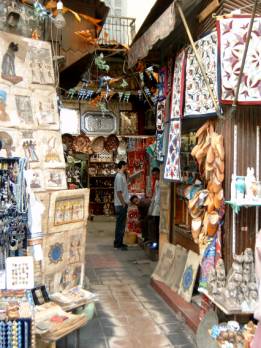 Efter
et stop på en Ægyptisk parfumefabrik og en frokostpause,
kom vi til Khan Al-Khalili, det ældste basar i Ægypten,
som går tilbage til 1300-tallet. Gamle tiders købere besøgte
Khanen for at kigge på varerne bragt dertil af handelskaravanerne.
Vi finder ikke længere slaver, silke, juveler eller diamanter,
men træ guitarer, skønne klude tæpper, klæder,
t-shirts, papyrustryk, vandpiber, bunker af tøj, aromaen af krydderier
breder sig og boder med stakke af rødt, guld og blå pulver
og sække med frø og bønner. Kobbersmede udhamrer
fade, terriner, kaffekander og enorme halvmåneformede toppe til
minareter. Det er et ritual i basarer at tinge om priserne, lokale såvel
som gæster - almindeligvis til en tiendedel af den budte pris
- har du betalt en tredjedel, har du betalt for meget. Vi havde kun
en time til vores rådighed, men mange af boderne var lukkede for
siesta og for ramadanen. Ulla og jeg pegede på nogle sække
af mangefarvede krydderier. Han ville have 50£ (50 kr.), men efter
jeg sagde "da ketir awi" (det koster for meget) og gik, fulgte
sælgeren efter os en kilometer mens han reducerede prisen fra
40£ til 30£, 25£, 20£, og efter vi i spøg
råbte 10£, tilbød han 15£, 10£ og endelig
5£ før han opgav os. Efter megen tingen lykkedes det os
få to udsmykkede parfumeglas flasker for 20£ (20 kr.). Efter
et stop på en Ægyptisk parfumefabrik og en frokostpause,
kom vi til Khan Al-Khalili, det ældste basar i Ægypten,
som går tilbage til 1300-tallet. Gamle tiders købere besøgte
Khanen for at kigge på varerne bragt dertil af handelskaravanerne.
Vi finder ikke længere slaver, silke, juveler eller diamanter,
men træ guitarer, skønne klude tæpper, klæder,
t-shirts, papyrustryk, vandpiber, bunker af tøj, aromaen af krydderier
breder sig og boder med stakke af rødt, guld og blå pulver
og sække med frø og bønner. Kobbersmede udhamrer
fade, terriner, kaffekander og enorme halvmåneformede toppe til
minareter. Det er et ritual i basarer at tinge om priserne, lokale såvel
som gæster - almindeligvis til en tiendedel af den budte pris
- har du betalt en tredjedel, har du betalt for meget. Vi havde kun
en time til vores rådighed, men mange af boderne var lukkede for
siesta og for ramadanen. Ulla og jeg pegede på nogle sække
af mangefarvede krydderier. Han ville have 50£ (50 kr.), men efter
jeg sagde "da ketir awi" (det koster for meget) og gik, fulgte
sælgeren efter os en kilometer mens han reducerede prisen fra
40£ til 30£, 25£, 20£, og efter vi i spøg
råbte 10£, tilbød han 15£, 10£ og endelig
5£ før han opgav os. Efter megen tingen lykkedes det os
få to udsmykkede parfumeglas flasker for 20£ (20 kr.).
|
Bedstemor's fødselsdagfest
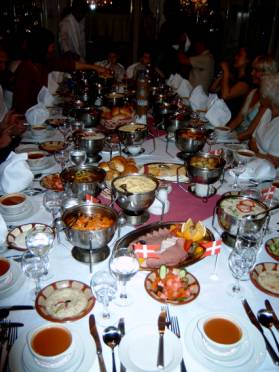 Irene
og Ole havde sørget for et privat værelse til Bedstemors
fødselsdagsfest. Et enkelt langt bord i et værelse i Ægyptisk
stil. Sølv fade i to rækker midt på bordet med ild
under holdt maden varm. Irene
og Ole havde sørget for et privat værelse til Bedstemors
fødselsdagsfest. Et enkelt langt bord i et værelse i Ægyptisk
stil. Sølv fade i to rækker midt på bordet med ild
under holdt maden varm.
Vi fik kommen-panneret stegt fisk, kyllinge
filleter på Ægyptisk stil, kanel-krydret ravioli, ris, kartoffelmos
og steg i pebbersauce, "sang" og brød med Ægyptisk
vin og øl til Bedstemor.
Mens børnene legede i et hjørne,
var der meget snak bordet rundt, og aftenen sluttede med chokolade og
frugt kage pyntet med "Happy Pirthday" (det er ikke en fejl)
og vi morede os over os over overfloden af Ægyptiske kager - bagværk,
semulje tærte, rosenvands krydrede tærter og tærter,
der smagte af flydende honning… Ulla ville gerne have resten af
desserten med sig (undtagen den rosenvands krydrede - det var morsomt
at se hendes udtryk - rosenvand dufter næsten som parfume). Tjenerne
var hele tiden meget opmærksomme, passerede hver andet minut for
at opvarte os.
Det bedste var, at Bedstemor blev som to
årig, da hun skulle puste lysene på kagerne ud. Som danskerne
ville sige, "det var meget hyggeligt!"
|
Mandag 15. november 2004 (start 7:30)
Fra de grå bygninger og gader I Cairo
kørte vi 24 km mod sydøst til Saqqara, skiftende fra ensartet
brun til frodige grøne marker med grøntsager og hundrede
af dadelpalmer. Det var som en oase, hvor et fint slør gav en
uvirkelig følelse af de frodige områder i det gamle Ægypten.
Kvinder i hellange sorte "abeeyas" fordelt i markerne, den
gamle mand, der vandrede omkring - en stor kontrast til mylderet i Cairos
centrum.
Saqqara's Trin Pyramide
Grundlagt som et nekropolis (begravelses
by) for det gamle Kongedømme og et af de rigeste arkæologiske
områder i Ægypten.
Trin pyramiden er mindre end halv så
høj, som den største pyramide ved Giza, men dette monument
var en forløber for de glatte pyramider. Tidligere var gravene
bygget af soltørrede muddersten, rektangulære byggesten,
der dækkede gravstedet. Men arkitekten Imhotep havde  den
lyse ide at bygge med sten og bygge den trinagtige struktur fen gange
ovenpå hinanden, og skabte den første pyramide. den
lyse ide at bygge med sten og bygge den trinagtige struktur fen gange
ovenpå hinanden, og skabte den første pyramide.
Vi kom ind gennem den store sydlige gård
- på størelse med en fodboldbane - gennem en koridor af
40 søjler inspireret af bundter af bundne rør. Mens Adam
holdt endnu en af sine taler, blev jeg antastet af en klæde og
turbanklædt Ægypter, som førte mig op til toppen,
hvor jeg fik et godt skud af de fantastiske søjlers top, før
jeg blev skældt ud af Adam og tigget for "baksheesh".
Jeg var taknemmelig for at blive reddet fra Ægypteren, som ikke
ville lade mig gå uden baksheesh, af et par Italienere. Da jeg
kom ud fra koridoren blev jeg imidlertid blændet af det hvide
sand og den enorme pyramide alene omgivet af sten fra andre ruiner og
en meget mindre trekantet høj af sten i baggrunden. Selv om morgenen
var køkig, så varmede solen os, mens vi vandrede nord omkring
pyramiden.
|
Memphis
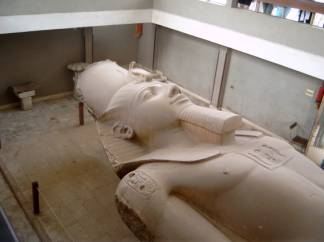 Engang
hovedstaden i det gamle Ægypten, uudgravet på grund af landsbyen,
bygget over den gamle by, og det hævede grundvandsspejl på
grund at Asuan-dæmningen. Der er en lille park med nogle få
fund, brokker og stykker, men den mest spændende ting at se er
en kolos af Ramses II, der ligger på ryggen og mangler den nederste
del af benene. Kolossen ville have været 5 etager høj,
hvis den havde været hel. Midt i parken ligger den største
alabaststatue, der er fundet - en sphinx på 80 tons - tænk
hvilke skatte, der kunne have været fundet, hvis Memphis kunne
udgraves, især da denne gamle by lå på halvvejen mellem
Øvre og Nedre Ægypten. Engang
hovedstaden i det gamle Ægypten, uudgravet på grund af landsbyen,
bygget over den gamle by, og det hævede grundvandsspejl på
grund at Asuan-dæmningen. Der er en lille park med nogle få
fund, brokker og stykker, men den mest spændende ting at se er
en kolos af Ramses II, der ligger på ryggen og mangler den nederste
del af benene. Kolossen ville have været 5 etager høj,
hvis den havde været hel. Midt i parken ligger den største
alabaststatue, der er fundet - en sphinx på 80 tons - tænk
hvilke skatte, der kunne have været fundet, hvis Memphis kunne
udgraves, især da denne gamle by lå på halvvejen mellem
Øvre og Nedre Ægypten.
Vores sidste stop før frokost var
ved en papyrus butik - endnu et sted med kommission til Adam. Bedstemor
købte en papyrus med det Ægyptiske alfabet i heroglypher.
Nogle af papyrusbillederne kostede 3500£ (3500 kr). Til frokost
fik vi et udmærket Ægyptisk måltid ude midt i ingenting.
Vi fik glimrende mezza (ægyptiske tapas) af baba ghanoush (ristet
aubergine dip), tzatziki (agurke dip), hummus (kikærte dip), fuul
(bønner) serveret med friskbagte pitabrød, varme vinblade
ruller, lamme kofta og ny grillet kylling med timian. Det var et måltid
for konger og det bedste Ægyptiske måltid, vi fik på
hele turen.
|
Pyramider af Giza
 Fra
luften ligger ørkenen og pyramiderne lige op til byen, 16 km
fra Cairo. Fra
luften ligger ørkenen og pyramiderne lige op til byen, 16 km
fra Cairo.
Jeg husker svagt at blive puklet op ad
en overraskende varm skakt, oplyst af en enkelt lyspære, og komme
ind i et meget køligt, mørk rum, hvor der stod en enkel
stensarkofag; rummet var tomt, men med tilfældige firkantede huller
i væggen til mad til livet hinsides.
Jeg var inde i Dronningerummet i den største
pyramide og nu 20 år senere kan kun de første 300 gæster
daglig komme ind i disse pyramider - for en anseelig entre. |
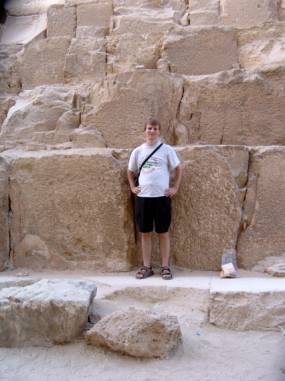
Den største af de tre, Kheops pyramide, er 146 meter høj,
920 meter i omkreds og består af 2,3 millioner stenblokke! Hver
blok var mindst en meter høj, så man kan forestille sig
hvor massive disse pyramider var.
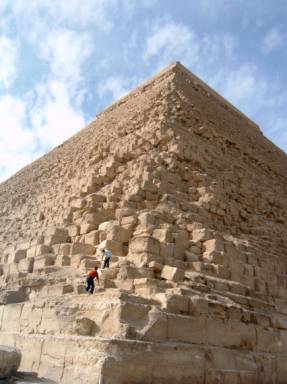
Den næststørste Khefrens (Kheops søn) pyramide har
stadig noget af de glatte skinnende kalkstens dækning, som engang
dækkede alle pyramiderne.==>
Den massive solbåd, som engang bragte
faraos krop fra Memphis til Giza og de tre mindre Dronninge pyramider
står ved foden af den massive Kheops pyramide. Vi havde ikke mulighed
for at komme ind i gravkammeret denne gang, men jeg føler mig
privilegeret over at jeg var derinde, og stadig har nogle minder fra
begivenheden.
|
Sphinxen
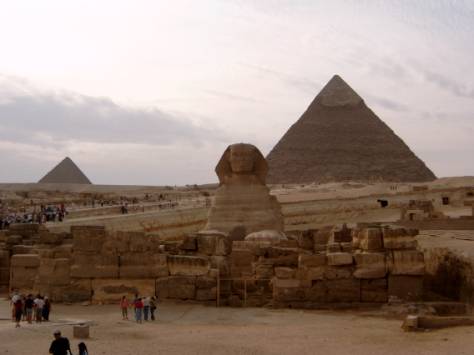 Pyramiderne
rejser sig i baggrunden, mens den sider stille på det varme sand
under den bagende sol i 4000 år. Napoleons tropper brugte den
som målskive, så næsen og faraos skæg er for
længst faldet af og findes i British museum. Grækerne kaldte
den "Sphinx", som var basseret på en mærkelig
skikkelse med hovedet af et menneske og kroppen af en løve, som
ville stoppe enhver rejsende langs vejen med en gåde - hvis gåden
ikke blev gættet, blev man måltid for Sphinxen. Trængslen
af skarerne omringede Sphinxen og vi kunne kun bevæge os i gåsegang.
Gennem tiden ser det ud til, at turisterne må se Sphinxen på
længere og længere afstand. For 50 år siden kunne
Bedstefar røre ved Sphinxen og også klatre op på
toppen af pyramiden; for 20 år siden var Sphinxen hegnet inde
med et lille trådhegn, men jeg kunne stå tæt ved den;
nu ligger den i et stort hul, hvor besøgende kun kan se den tæt
på gennem zoomen på deres kameraer. 4 tusind år senere
bjergtager den stadig os alle. Pyramiderne
rejser sig i baggrunden, mens den sider stille på det varme sand
under den bagende sol i 4000 år. Napoleons tropper brugte den
som målskive, så næsen og faraos skæg er for
længst faldet af og findes i British museum. Grækerne kaldte
den "Sphinx", som var basseret på en mærkelig
skikkelse med hovedet af et menneske og kroppen af en løve, som
ville stoppe enhver rejsende langs vejen med en gåde - hvis gåden
ikke blev gættet, blev man måltid for Sphinxen. Trængslen
af skarerne omringede Sphinxen og vi kunne kun bevæge os i gåsegang.
Gennem tiden ser det ud til, at turisterne må se Sphinxen på
længere og længere afstand. For 50 år siden kunne
Bedstefar røre ved Sphinxen og også klatre op på
toppen af pyramiden; for 20 år siden var Sphinxen hegnet inde
med et lille trådhegn, men jeg kunne stå tæt ved den;
nu ligger den i et stort hul, hvor besøgende kun kan se den tæt
på gennem zoomen på deres kameraer. 4 tusind år senere
bjergtager den stadig os alle.
|
Tirsdag 16. november 2004 (start 2:30)
Ja, du læste rigtig - vi ventede
alle I receptionen kl. 2.30. I aftes diskede Bedstemors børnebørn
op med Spansk-Ægyptisk-Italiensk middag til hele familien. Dette
fulgtes op af en 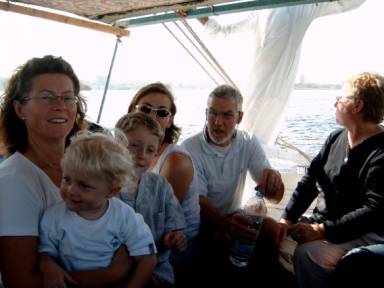 larm
fra tamboriner, obo og trommer, der spillede til forlovelsesfest for
et Ægyptisk par I receptionen. larm
fra tamboriner, obo og trommer, der spillede til forlovelsesfest for
et Ægyptisk par I receptionen.
Denne morgen fløj vi til Asuan for
at gå ombord til et Nilkryds på 4 dage op til Luxor. Da
vi ankom, tog vi på en "felucca" (nilbåd) tur
på Nilen med en fantastisk panorama til "Tomb of Nobles"
(de overordnedes grave). Da vi kom tilbage fik vi vores værelser
på en fire etages krydstogt skib, der havde motionsrum, svømmebassin
og soldæk øverst oppe. Selv fra vores værelser i
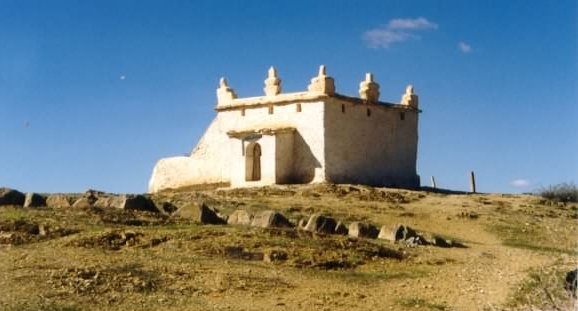
bunden, havde vi en fantastisk udsigt til de små moskelignende
bygninger på toppen af de store sandbjerge med små huler.
Om aftenen havde vi mulighed for at besøge
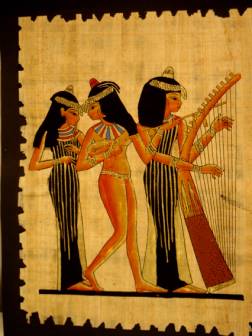
byens lille souq (locale bazaar), hvor de solgte t-shirts, papyrusbilleder,
dynger af safran og tørret vellugtende lotusblomster, brun, rød,
gul og indigo bjerge af duftende krydderier - alt noget som nogle af
os tingede om - det dyreste køb var 25£ for papyrus billede
og billigst 15£ for en broderet t-shirt med hieroglyffer. Sidst
brugte vi 5£ til en hestevogn tilbage til skibet. |
|
Onsdag 17. november 2004 (start 7:30)
Det ser ud til, at nogle I familien har
pådraget sig en maveonde. Vi andre undgik uvasket frugt, frisk
salat, rå grøntsager og drinks med vand fra vandhane. Dette
forhindrede os imidlertid ikke i at tage på sightseing.
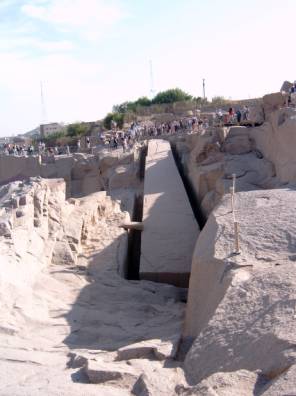
Den ufærdige Obelisk
Hvis denne obelisk var blevet færdig,
ville det have været den højeste og tungeste nogensinde
fremstillet på 142 meter. Den ligger i et granitstenbrud, færdighugget
på tre sider, men opgivet da en revne viste sig i stenen. Det
er næsten umulig at forestille sig, hvordan de gamle ægyptere
kunne flytte selv en enkelt sten fra dette stenbrud, da dette sted er
ganske mange mile fra alle monumenterne, som er færdigfremstillet.
Uheldigt for Ægypten er de fleste obelisker blevet spredt til
andre lande - til Italien, England, Frankrig og selv Argentina - af
fremmede arkæologer gennem de sidste århundreder. Mange
af os havde ikke tid til at se hele obelisken før Adam ringede
med sin klokke, som han medbragte (for at genere os, tror jeg). |
|
Den Høje Dæmning
 I
århundreder har Nilen styret Ægypternes liv - hvad enten
der var oversvømmelse eller for lidt vand, var det skæbnesvangert
for folket, hvis liv afhang af denne store vandkilde. Da Asuandæmningen
blev bygget mistede nogle af landsbyerne i det sydlige deres vandforsyninger. I
århundreder har Nilen styret Ægypternes liv - hvad enten
der var oversvømmelse eller for lidt vand, var det skæbnesvangert
for folket, hvis liv afhang af denne store vandkilde. Da Asuandæmningen
blev bygget mistede nogle af landsbyerne i det sydlige deres vandforsyninger.
For 30 år siden blev den nye Høje
Dæmning bygget, hvilket resulterede i den menneskeskabte Nasser
sø mod syd. ==>
Det betød, at mange mennesker måtte
flyttes, da landsbyerne og bopladserne blev oversvømmet, ligesom
også nogle af de gamle Ægyptiske monumenter som Philae templet. |
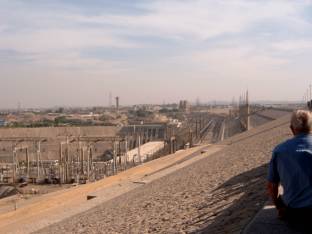 På
sit højeste er den Høje Dæmning 111 m, 3,8 km lang
og 980 m bred ved foden. På
sit højeste er den Høje Dæmning 111 m, 3,8 km lang
og 980 m bred ved foden.
Der er blevet brugt tre gange så
mange sten, som der var i Kheops pyramiden til bygningen af dæmningen.
Da dæmningen er militært område,
må man ikke bruge videokamera - hvis der blev rettet et angreb
på dæmningen kunne meget af Ægypten blive oversvømmet,
hvilket ville være en katastrofe for landet.
Efter kun 10 minutter "ringede"
Adam os tilbage til bussen igen.
|
Philae templet
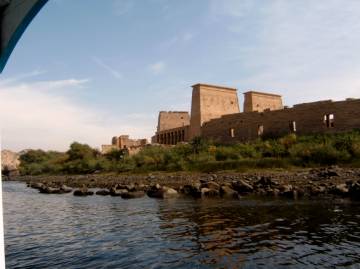 Efter
den første Asuan dæmning blev bygget, var Philae templet
oversvømmet 6 måneder om året, og turisterne måtte
se templet gennem Philae søens mudrede vand. Da den Høje
Dæmning blev bygget, truede det med at oversvømme templet
for evigt. Templet blev da flyttet sten for sten til en ø med
et lignende landskab. Philae er speciel i, at den kun kan nås
med båd og at solnedgangen giver et spektakulært bagtæppe.
Templet, som er bygget til Isis (gudinden for kvinder, sexualitet og
renhed), var en af de sidste hedenske udsteder og på grund af
Isis popularitet, blev det også brugt af de tidlige Kristne. Templets
vægge og mange af søjlerne var fra top til fod fyldt med
hieroglyffer og billeder af Isis - mange af billedernes ansigter var
ødelagt af de tidlige Kristne, som anså de gamle Ægyptiske
guder for hedenske. Jeg havde en fantastisk eftermiddag med at vandre
ind og ud af gennem alle krogene og sprækkerne - besøge
Fødselshuset, Nilometeret, Faraos sengested og meget mere og
til stor morskab for familien, var jeg den sidste til at møde
op. Efter
den første Asuan dæmning blev bygget, var Philae templet
oversvømmet 6 måneder om året, og turisterne måtte
se templet gennem Philae søens mudrede vand. Da den Høje
Dæmning blev bygget, truede det med at oversvømme templet
for evigt. Templet blev da flyttet sten for sten til en ø med
et lignende landskab. Philae er speciel i, at den kun kan nås
med båd og at solnedgangen giver et spektakulært bagtæppe.
Templet, som er bygget til Isis (gudinden for kvinder, sexualitet og
renhed), var en af de sidste hedenske udsteder og på grund af
Isis popularitet, blev det også brugt af de tidlige Kristne. Templets
vægge og mange af søjlerne var fra top til fod fyldt med
hieroglyffer og billeder af Isis - mange af billedernes ansigter var
ødelagt af de tidlige Kristne, som anså de gamle Ægyptiske
guder for hedenske. Jeg havde en fantastisk eftermiddag med at vandre
ind og ud af gennem alle krogene og sprækkerne - besøge
Fødselshuset, Nilometeret, Faraos sengested og meget mere og
til stor morskab for familien, var jeg den sidste til at møde
op.
|
 Kom
Ombo Kom
Ombo
Skibet sejlede fra Asuan kl. 15.45 efter
en eftermiddag tilbragt med solbadning og øldrikning (typisk
dansk med solbadning og øl). Vi sejlede 48 km. nord for Asuan
til Kom Ombo - den gamle by med tilbedelsen af krokodilleguden Sobek.
Den gamle by er for længst forsvunden og krokodillernes eksistens
på de nærliggende sandbanker er blevet jagtet til udryddelse.
I solnedgangen besøgte vi Kom Ombo
templet, opført til både krokodilleguden Sobek og Horus,
den falkehovede himmelgud og Isis søn. Selvom vi ikke havde tiden
til at fordybe os i 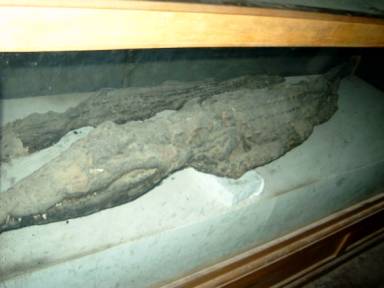 dette
tempen, var det både imponerende og sælsomt med store projektører,
der belyste templet. Der var en brønd med vand og en afsats halvvejs
nede, hvor krokodiller gennem en gang blev lokket ind fra Nilen med
menneskekød, og den største krokodille blev fanget og
mumificeret som et offer til Sobek. Ved kapellet for Hathor (Horus hustru)
var der en Amerikaner, der udbrød "Gud, jeg troede jeg skulle
se krokodillestatuer!" - latter - Kapellet indeholdt to krokodillemumier
fundet i templet. dette
tempen, var det både imponerende og sælsomt med store projektører,
der belyste templet. Der var en brønd med vand og en afsats halvvejs
nede, hvor krokodiller gennem en gang blev lokket ind fra Nilen med
menneskekød, og den største krokodille blev fanget og
mumificeret som et offer til Sobek. Ved kapellet for Hathor (Horus hustru)
var der en Amerikaner, der udbrød "Gud, jeg troede jeg skulle
se krokodillestatuer!" - latter - Kapellet indeholdt to krokodillemumier
fundet i templet.
Vi returnerede til et lille cocktail party
før middagen, givet af skibet for at introducere de ansvarlige
for personalet og for at gøre vores tur behagelig.
|
Tirsdag 18. november 2004 (start 7.00)
Gennem natten sejlede vi fra Kom Ombo til
Edfu, et lille regionalt center for sukkerrørshandlen, besøgte
Horus templet og sejlede videre til broen over Nilen og slusesystemet
ved Esna.
Horus templet
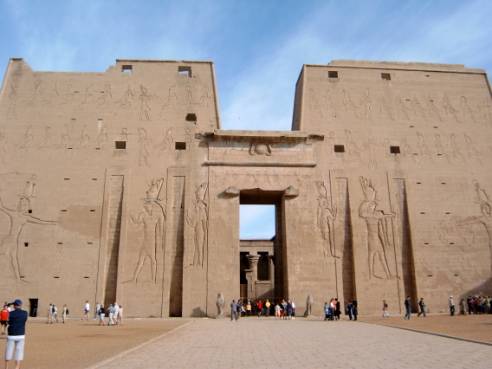 Dette
Perfect Moments Photography | A Rene Pallesen Journal Dette
Perfect Moments Photography | A Rene Pallesen Journal
|