Home

14. November 2004 11:03
by Rene Pallesen
0 Comments

Egypt - Pallesen Family Holiday 2004

14. November 2004 11:03 by Rene Pallesen | 0 Comments

egypt pallesen family holiday 2004
Egypt - Pallesen Family Holiday 2004

~ Travel Journal ~

Read about our journey with links to an amazing photo gallery


~ Photo Gallery ~

What We are All in Egypt for

The Sphinx
~ Half Man Half Lion
~
Saqqara's Step Pyramid
Valley of the Kings
Pyramids of Giza
Kheop's Pyramid
~ the Largest Pyramid ~
Khefren's Pyramid
Aswan Dam
Memphis
~ Capital of Ancient Egypt ~
The Unfinished Obelisk


Temples

Karnak
~ 120-metre Columns ~

Hatshepsut in a Cliff
Horus
~ Greek "Egyptian" Temple ~
Philae - the Island Temple
Kom Ombo
Crocodile Mummies
Luxor


The People Way of Life

Streets of Luxor
Khan Al-Khalili
~ an Egyptian Bazaar ~
Horses


The Pallesen Family

Bedstemor's Fest
Egyptian "Italian" Dinner
Coffee-shop

On the Roof-top

In Cairo


The Nile

On the Boat
Felucca on the Nile
Tomb of Nobles


Egyptian Sunset


Things to Buy

Papyrus
Perfumery
Alabaster


Other Places We Saw


The Citadel in Cairo

Lunch on the Nile


Created: 8 Jan 2005Last Updated: 24-Jan-2005

14. November 2004 11:02
by Rene Pallesen
0 Comments

Bedstemor's 85th Birthday ( 13 - 20 Nov 2004 )

14. November 2004 11:02 by Rene Pallesen | 0 Comments

bedstemor s 85th birthday 13 20 nov 2004
Bedstemor's 85th Birthday ( 13 - 20 Nov 2004 )


Ancient Egyptian stories and legends have long made their mark through movies such as "Cleopatra", "The Mummy" and wowed us women with Omar Sharif's performance in "Lawrence of Arabia" and "Doctor Zhivago" and more recently in cartoons such as "The Prince of Egypt". There is a certain mystic about middle east portrayed to us from a very young age when we hear bedtime tales like "Ali Baba the 40 Thieves" or "Sinbad the Sailor" - most of us have a dream of seeing the pyramids.

I was very lucky to have the opportunity 20 years ago to come to Egypt with my parents and at 10 years old, there's only so much a child can remember. But this year, the Pallesen Family once again get together for the Matriach's 85th birthday. It is tradition for the family to come together and travel to an exotic country - in the past Tunisia, Morocco, Gambia and for Grandmother's last wish, to see the pyramids of Egypt, that her husband saw 45 years earlier.

The Matriach's three children, six grandchildren (Nikolai could not make it), four greatgrandchildren and respective spouses all came together for a week in magical Egypt. It is autumn with warm days and cool nights - a contrast to the approaching winter in Denmark.


Saturday 13 November 2004
Departure for Egypt

Our family had to leave Falster at 2:30am to catch a 6:30 flight, 4½hr later we arrived at Cairo Airport. I have dim memories of a very warm airport in complete chaos, with people pushing to get their luggage through, shouting over a mad din. Instead we found a rather clean and uncrowded airport. We were met by the AB Travel Agency representative, taken to a Hotel Pyramisa, left in a closed piano barPallesen familie venter på værelser and promptly forgotten until one of us had the bright idea to ask for our keys.

Our family shared a two-bedroom hotel room with a large living area. Our first afternoon was spent walking around the streets of Cairo trying to find a place for the family to have dinner. Our hotel was located across the river from downtown Cairo, so there was not a lot to see, combined with the fact that many shops were closed during the day over Ramadan, the Islamic period of fasting from dawn to dusk. Sunday heralded the last day of Ramadan, so many were preparing for the final feast.

In the end, the whole family had dinner in the hotel's "Oriental" restaurant of Egyptian style. We figured we would get some decent Egyptian food but were disappointed to find most of our food luke-warm. The rice was very dry, little meat on the lamb and rather bland food. To our surprise, after our comment about this, we were presented with a complimentary platter of fruits native to Egypt such as fresh dates and guava. To our amusement, no matter what kind of Egyptian wine we ordered, they all tasted the same. There was plenty of Egyptian beer and of course the danes lived up to their drinking prowess and Bedstemor ("grandmother") treated us all dinner.


Sunday 14. november 2004

On the first night we didn't sleep very well - sleeping in a different bed combined with quranic prayers coming from a nearby mosque didn't exactly leave us with a peaceful sleep. However we were all up early to get together in Bedstemor's room for a "surprise" get-together - to sing the danish birthday song amongst a flutter of red white flags, and present her with a small gift. This family "surprises" the birthdayee and all sing in unison this rather cute birthday song.

The Citadel Muhammad Ali Mosque

Udsigten fra CitadelletOur first destination was the Citadel. It is the city's fortress that once housed the royal family and although most of the complex is open to visitors, the military still have a foothold and some areas are out of bounds. It takes a half day to explore all areas of the Citadel but we didn't have the opportunity to do so, and instead spent most of our time in the Muhammad Ali Mosque.

<== There is a magnificent view of the city from the Western Terraces - magnificent had most of Cairo not been filled with the same shade of mud-bricked buildings. What was most notable about Cairo was its lack of colour or rather its ability to blend into the desert.

Mohammed Ali MosqueOur guide Adam/Mohammed provided little insight to the function or history of the Citadel, and instead sat the group in one corner of the Muhammad Ali Mosque like a bunch of school children, and gave a lecture on Islamic laws and behaviour.

When René ventured to ask more about the Citadel, he was scolded for interrupting and told to listen. We never got the opportunity to find the number 7 Napoleon's troops had painted above one doorway to avoid using the unfamiliar Arabic names or the twin half-round towers because our guide simply didn't know where they were.

Ind i Mohammed Ali Mosque


During this time, I had the opportunity to wander off and walk the beautiful alabaster-lined arcades of the mosque. the soaring central prayer hall was a glimmer of hundreds of lights hanging in concentric circles. Arabic inscriptions in gold were painted on the ceiling. Women had to be suitably attired and could not wear sleeveless tops or short skirts or shorts. In one corner lay the sarcophagus of Muhammad Ali - the builder of the mosque and an albanian mercenary who was the founder of the dynasty that ruled till the revolution in 1952.

Cairo Egyptian Museum

I have memories of wandering around this museum, peering into smudged glass cases, staring into the shrivelled faces of some once well-known pharaoh like Ramses II and wondering if the ancient Egyptians were giants in their large coffins.
20 years later, it was almost impossible to push through the crowds of tourists - only useful because their guides provided more information than ours. With only two hours, there was no way that we could view the whole museum or see the royal mummies.
The museum was celebrating its centenary and there was a special exhibition dedicated to TutAnkhAmun - the most famous archaeological find. With travel guide in hand, we oohed and ahhed over the gold treasures found in his tomb - a gold throne featuring the famous scene of TutAnkhAmun's queen anointing him, chests made out of ebony ivory, cheetah-skinned hunting shields, bows, arrows, alabaster canopic jars holding King Tut's mummified organs, gold sarcophagus - if Howard Carter had found such treasures for a little known boy-king, imagine what the tomb of a pharaoh like Ramses II would have been like? King Tut's inner coffin of solid gold and the famous mask of gold that everyone wants to see and is portrayed in many egyptian images.
The museum has become another money-making expedition for the Egyptians with an exhorbitant price to view the royal mummies. We had to content ourselves with the animal mummies - cats, dogs, birds, goats, Nile perch (yes, fish as well!) and most amazing was a 7-metre crocodile mummy.
The exhibitions were arranged by themes on the upper floor and chronological on the lower floor, going clockwise from the Old Kingdom, to the Middle and finally to the New and later kingdoms. There were rooms full of giant sarcophagi that would've weighed a tonne each, a room full of miniatures showing the egyptians' daily lives, a room full of ancient papyrus long faded and rooms full of bits and pieces from ruins, statues, palace floors - a place where one needs a days to spend with a decent travel guide.


Khan Al-Khalili

På gaderne af Ægypts største bazar, Khan Al KhaliliAfter a stop at an egyptian perfumery and some lunch, we headed to Khan Al-Khalili - the oldest bazaar in Egypt that has lasted since the 1300s. Ancient buyers visited the khan for goods brought in on merchant caravans. No longer do we find slaves, silk, jewels or diamonds, but wooden guitars, brightly patched pouffe covers, clothes, t-shirts, crappy papyrus paintings, bongs/water pipes, bright bolts of cloth, the aroma of spices is very much present and stalls are heaped with bright red, gold and blue powders and sacks of seeds pods. Coppersmiths hammer out platters, tureens, coffeepots and enormous crescent-shaped tops for minarets. It is a ritual of the bazaar to expect to bargain - locals or foreign visitors - usually a 10th of the offer price - if you have paid a third, you have paid too much. We had only an hour to spare but many of the shops were closed for a siesta after lunch. Ulla I pointed to bags of multicoloured spices. He wanted £50 (AUD$10, 50DK.Kr) and after I said "da ketir awi" (it costs too much) and walked away, the shopkeeper doggedly followed us for a kilometre reducing the price from £40 to £30, £25, £20 and after we shouted £10 in jest, he offered £15, £10 and finally £5 before finally giving up on us. After much haggling, we managed to bargain for two ornate glass perfume bottles for £20 (AUD$2.50; 20DK.Kr)


Bedstemor's Birthday Feast

Bedstemors festIrene Ole had organised a private room for Bedstemor's birthday party. A single long table in a room of egyptian style. Small silver pots lined in two rows in the middle of the table kept the food warm.

We feasted on cumin-flavoured fried fish, chicken fillets egyptian-style, cinammon-flavoured ravioli, rice, mashed potatoes and beef steaks in pepper sauce, sang and toasted with bottles of egyptian wine and beer to Bedstemor.

Whilst the children played in one corner, there was much chatter througout the table and the evening finished off with chocolate and fruit cakes topped with "Happy Pirthday" (note, it's not an error) and we laughed in amusement in a plethora of egyptian sweets - baklawa, semolina tarts, rose-water flavoured tarts, and tarts that tasted like liquid honey... Ulla almost wanted to take the rest of the desserts with her (except for the rose-water flavoured ones - it was funny to watch her expression - rosewater almost smells like cosmetics). The waiters were extremely attentive, coming by every two minutes to serve us.

Best of all, Bedstemor turned 2 years old, as she blew out each candle on the cakes. As the danes would say, "det var meget hyggeligt!" (it was cozy)


Monday 15. november 2004 (7:30am start)

From the brown buildings and streets of Cairo, we travelled 24km southeast of the city to Saqqara, changing from a uniform brown to lush green fields of large cabbages and hundreds of date palms. It was like an oasis, a gentle mist gave a surreal sense of the fertile plains of ancient Egypt. Women in full-length black abeeyas squatted in the fields, the odd man walking around - such a contrast to the intense crowds of central Cairo.

Saqqara's Step Pyramid

Founded as a necropolis (burial city) for the Old Kingdom and is one of the richest archaeological sites in Egypt.

The Step Pyramid is less that ½ the height of the largest pyramids at Giza, but this monument served as a predecessor of the smooth pyramids. Previously tombs were made of mud brick, rectangular slablike structure covering a burial pit. But the architect Imhotep had the bright idea to construct in stone and Zosers trinpyramide i Sakkarabuild the slablike structure 5 times one on top of the other, creating the first pyramid.

We entered through the Great South Court - the size of a soccer field, down a corridor of 40 pillars inspired by bundles of tied reeds. Whilst Adam was making another one of his speeches, I was tempted by a turbaned egyptian in a dress who took me to the top where I managed to get one shot of the magnificent pillars up top, before being scolded by Adam and being asked for baksheesh (tip). I was gratefully rescued by a couple of Italians when the egyptian would not let me go without a baksheesh. However, once I surfaced from the building, I was blinded by white sands and the immense pyramid sitting solitary amongst a few ruined stones, with a much smaller triangular heap of stones in the background. Although the morning had been cool, the sun soon warmed us up as we wandered round to the north.


Memphis

Ramses II ligger på Memphis' lille museetOnce the capital of ancient Egypt, it remains unexcavated due to villages built on top of it and a high water table as a result of the Aswan Dam. There is a small garden with small finds - bits and pieces but the most exciting thing to see is a colossus of Ramses II lying on his back as the lower legs are missing. The colossus would've been 5 stories high had it been standing. Nearby lies the largest alabaster statue ever found - 80 tons of sphinx - imagine what treasures that could've been found if Memphis could've been excavated, especially as this ancient city lay halfway between Upper and Lower Egypt.


Our final stop before lunch was a papyrus museum - another place of commission for Adam. Bedstemor purchased a papyrus of egyptian alphabets. Some of the paintings cost a massive £3,500 (AUD$900, 3,500DK.Kr). For lunch, we had a splendid egyptian meal in the middle of nowhere that served excellent mezza (egyptian tapas) of baba ghanoush (roasted eggplant dip), tzatziki (cucumber dip), hummus (chickpea dip), fuul (beans) served with freshly made pita bread, warm vine-leaf rolls, lamb kofta and freshly roasted chicken in thyme. It was feast fit for a king and the most egyptian meal we had on the whole trip.


De store fantastiske pyramider i Giza. Her ses vi den største pyramid - Cheops/Khufus pyramidPyramids of Giza

From air the desert pyramids were right on the edge of the city, 16km from Cairo.

I remember vaguely, as a child, hunched over, walking up a surprisingly warm shaft lit by a single light bulbs and emerging into a very chilly dark room that held a single stone sarcophagus, the room empty except for occasional square holes in the wall where food was left for the afterlife.

I had entered the Queen's chamber in the largest pyramid and 20 years later, only the first 300 can enter these pyramids - for an exhorbitant fee.


René står næste pyramiden
The largest of the three, Cheops' pyramid was the largest, standing at 146metres at one point, took 920 metres to walk around it and contained 2.3 million blocks! Each block was at least one metre high, so you can imagine how massive these pyramids were.


Den anden største pyramid - Chephrens pyramid


The 2nd largest, Khefren's (Cheop's son) pyramid still had some of the smooth shiny limestone casing that once used to cover all these pyramids.==>

The massive solar boat that once carried the pharaoh's body from Memphis to Giza and the three smaller Queens' pyramids stood at one corner of the massive Cheop pyramid. We didn't have the opportunity this time to enter the tombs, but I feel priveleged that I did and that I still have some memories of the event.


The Sphinx

SfinxenThe pyramids loomed in the background as it sat silently on the hot sand under the glaring sunlight for 4,000 years. Napoleon's troops once used it for target practice, so its nose and pharaohs beard and long fallen off and lies in a British museum. The Greeks called it "the Sphinx" as it was based on a mystical creature with the head of a man and body of a lion, which would stop any traveller along the way with a riddle - if the riddle wasn't answered, it became the sphinx's dinner. Throngs of crowds surrounded the sphinx and we could only enter in single file. Over time, it seemed that tourists could view it from further and further away. 45 years ago, Bedstefar's (grandfather) could touch the Sphinx and even climb to the top of the pyramid; 20 years ago, it was simply surrounded by a small wire fence but I could stand close up to it; now it lay in a very large pit where visitors could only view it up close if they zoomed in on their cameras. 4 millenia later, it still manages to awe all of us.


Tuesday 16. november 2004 (2:30am start)

Yes, you did read that right - we were all waiting in the lobby at 2:30AM. Last night, Bedstemor's grandchildren treated the family to a Spanish-Egyptian Italian dinner, which was followed by a Familien i en cacophany of tambourines, oboes and drums played for an Egyptian engagement couple in the lobby.

This morning we were flying to Aswan, to board a 3-day cruise up the Nile, sailing up to Luxor. When we arrived, we were taken for a short felucca ride along the Nile with a fantastic view of the Tomb of Nobles. When we returned we were given our rooms onboard a four-storey Perfect Moments Photography | A Rene Pallesen Journal

Home

7. January 2018 21:01
by Rene Pallesen
0 Comments

Tribes - Laos

7. January 2018 21:01 by Rene Pallesen | 0 Comments

The tribes of Laos still exist although it is no longer as noticeable. They no longer wear their tra
The tribes of Laos still exist although it is no longer as noticeable.

They no longer wear their traditional costumes but it is possible to glimpse the occasional traditional head wear or dress in one of the shops.


It is especially sad to see the Hmong tribal wear gone as worn below by Mavis and Kim. The Hmong traditionally lived in the mountains. The government has forced them down into the lowlands where they can be controlled and 'integrated' into the the rest of Laos.


6. January 2018 20:01
by Rene Pallesen
0 Comments

Vang Vieng Countryside - Laos

6. January 2018 20:01 by Rene Pallesen | 0 Comments

On the first day in Vang Vieng we hired a local guide to take us through the country side and some o
On the first day in Vang Vieng we hired a local guide to take us through the country side and some of the villages around Vang Vieng.


Hiking through the countryside in Laos is partly magical and at the same time an eye opener. It is not until you get into the country side that you get a glimse of the real Laos and its people, the way of living and their beliefs.

Walking into the first village a group of boys came walking towards us. One of the kids was holding his head with blood dripping down his face. The other boys were taking him home to his parents. I couldn't help but notice that there was a green substance smeared across the wound and asked our guide is he knew what it was. He went over to some bushes and plucked a couple of leaves and said that if you crush them then they will help stop the bleeding. This is when you realise that a lot of the plants in the villages serve a purpose as natural herbal medicine or for eating.

The village was a HMong village and at one of the houses we spotted the little girl above standing in a door opening with her grand mother. There are very few of the traditional bamboo shacks still standing and instead being replaced with brick buildings.


A bit further up the road we heard a sound. Someone was hitting a gong and chanting. Thinking it might be a monk we went to investigate. The sound was coming from one of the local houses. At the back of the house the family was in the process of preparing food, but we couldn't see where the sound was coming from. Our guide asked them and was told that they had a newborn (possibly sick) child and that the Shaman was in the house talking to the 'other world to' attract the good spirits and chase the evil spirits away.


As we walked on we could see him through the opening of the door and I snapped the above photo which is one of my favourite photos of the trip.

In the village people go about their normal life such as this woman removing lice from her daughters hair.


As we walked on we had to walk through the local school. It happened to be recess and the kids in the smaller classes were outside playing.


There was a small stand selling them lunches who also sold lollies, so Kim got the idea to spoil the kids with lollies - but also turned out to be a great opportunity for our kids to interact and see what a classroom in Laos looks like.


The area is still very un-developed. Although there seems to be electricity, this is mainly used for lighting. Cooking is still done by collecting wood and done on wood fired stoves and people still wash their clothes in the rivers and streams.


Although there are still a number of water buffaloes these are mainly used for eating along with any other non-human living animal - such as pigs, dogs, birds etc.


It was very healthy for the boys to see where their food 'potentially' comes from and understand that this is part of life.

The area is full of rice paddies, but these are now worked with mechanical tools rather than buffaloes.


The government has built bridges across the large river to allow access to the villages.


But the smaller streams have bamboo bridges - in this case wide enough to drive a motorbike across, others just a single bamboo to allow a person walk across.


At the far village (Lao and not Hmong) there was a limestone cliff with a small cave in it. This was called elephant cave and inside there was a small shrine along with some bizarre images.


The whole area is spectacular - I can only imagine what it would be like during rice planting season - yes it would be muddy but also stunningly beautiful.


During this whole hike we saw no other travelers. Other than at the cave we didn't get a sense that there frequently came any groups through and I think the feedback from all of us was that this was one of the highlights of the trip - no adrenaline required.

5. January 2018 16:01
by Rene Pallesen
0 Comments

Vang Vieng - Laos

5. January 2018 16:01 by Rene Pallesen | 0 Comments

Vang Vieng is an interesting tourism destination in Laos that has undergone several iterations of re
Vang Vieng is an interesting tourism destination in Laos that has undergone several iterations of re-inventing itself.


When I first visited for an overnight stopover it was a sleepy little town with maybe a handful of backpackers going tubing (more on that later).
I also remember the deserted airport runway from the 'secret war' going through the sleepy little village (Lima site 6) and the stunning mountain scenery in the background. Other than that there wasn't much there.


Ten years later my mum and dad visited the place and told me stories how the place had transformed. It had grown and was full of drunk backpackers with loud rave music and parties throughout the night. During the day they were floating down the river in car tubes again with beers and drinks in their hands.


Then again about 5 years ago, Laos appeared in the Australian news media with stories of young backpackers breaking their necks doing somersaults off the tree branches on the river and lagoons and hitting the rocks. Stories of high highly available drugs were also emerged.

The Lao government stepped in and closed the majority of the bars along the river, stopped the parties and the drugs and implemented a number of other safety restrictions.
It worked, the parties stopped and the young party seeking backpackers fled.

A new crowd has now moved in - this is bus loads of adrenaline seeking Koreans. They go there to go kayaking, zip lining, tubing, buggy riding etc. They eat at the Korean restaurants and stay at the same hotels, but otherwise mostly keep to themselves. This also means that some of the same old sleepy feeling has returned to this town. It also meant that is was easy (or just plain luck from our side) to avoid the tourists.

The airstrip is still there, but I recon most visitors would walk across it and not notice and definitely wouldn't know the history behind the secret war in Laos, let alone the American involvement and the little airstrips around the place. It is a fascinating story and has very much shaped Laos into what it is today.


The area is just absolutely stunning with steep limestone cliffs and rice paddies. I could easily have spent more time there taking photos in the surrounding area.


3. January 2018 21:01
by Rene Pallesen
0 Comments

Pha That Luang - Laos

3. January 2018 21:01 by Rene Pallesen | 0 Comments

A must see in Vientiane is Pha That Luang - It is on every bank note in Laos and they are very proud
A must see in Vientiane is Pha That Luang - It is on every bank note in Laos and they are very proud of it.


Unlike Buddha Park it is surprisingly quiet when it comes to tourists. The majority of people visiting seems to be either Laos or Thai people offering a prayer. The correct way here is to get the insense and flowers and then walk clockwise around the Stuba on the inside of the covered corridor (mostly to keep out of the sun I assume).


Although it is not particularly old (The original 1st century structure was mostly destroyed and has undergone a number of more recent restorations), it is stunningly beautiful and impressive in size.


For me to get some of the panorama photos here with the selection of lenses I'd brought along I had to take multiple photos that I then had to stitch together.

Outside there is a temple that is equally interesting, although nothing compared to further north in Luang Prabang.


There are also street vendors selling cage birds that are supposed to bring good luck and prayers to anyone releasing them.


2. January 2018 10:01
by Rene Pallesen
0 Comments

Buddha Park - Laos

2. January 2018 10:01 by Rene Pallesen | 0 Comments

One of the sights we wanted to visit was Buddha Park outside Vientiane (close to the border crossing
One of the sights we wanted to visit was Buddha Park outside Vientiane (close to the border crossing back into Thailand).


Trying to figure out the most comfortable way to get there we settled on taking the local bus. There aren't any taxis as such in Vientiane and we weren't keen taking a tuk-tuk for 30 kilometers. Most of the tuk-tuks are in an extremely poor shape with failing brakes, wobbling wheels and thick smoke coming out of the exhaust pipes.
They are perfectly fine for shorter trips inside the city (such as hotel to bus station), but not recommended for longer trips.

The bus turned out to be easy to find and we were early enough to all get a seat. The bus was later packed with passengers going to Thailand and it would have been tough to stand up for the one hour bus ride.

The bus is also really convenient in that it stops right outside Buddha Park which is the last stop before the bus turns around and heads back to Vientiane.


Buddha Park itself was apparently established by a Monk building the statues for religious purposes as education of his religious beliefs.


It is actually a nice little area and quite interesting with lots of (to us) weird statues showing bizarre things.


The most obvious is the massive 'pumpkin' at the entrance that you can climb. Each level inside the the sculpture itself represents hell, earth and sky.


The entrance is a head with a clock above it - meaning swallowed up by time?


There is also a massive reclining buddha.


And my favourite was the large centre sculpture carrying the body of a woman...no idea what this is supposed to represent.

2. January 2018 09:01
by Rene Pallesen
0 Comments

Vientiane - Laos

2. January 2018 09:01 by Rene Pallesen | 0 Comments

Vientiane is no longer the sleepy capital city it used to be. It is hustling and bustling with peopl
Vientiane is no longer the sleepy capital city it used to be. It is hustling and bustling with people, cars, motorbikes and shops everywhere.


The once neglected colonial buildings have all been renovated and the red dust flying everywhere is long gone as the roads have been paved. In the outskirts of the city high-rise office towers have started shooting up and I think that given another decade this city will look like any other East Asian capital.


The most striking difference was the banks of the Mekong River. Last time I was there it was really just a dirty path and following it north long enough there would be a string of wooden shacks with local restaurants that would serve some beautiful local dishes, fish and other seafood.
The water then would come right up to the bank and the boats could pull up and during the day the local kids would jump from the trees and swim in the river.
The old path has been replaced by a modern walk way (which actually is really nice) and the shacks have been replaced by some bars closer to the centre catering more for a western clientel - still with some nice seafood on the menu. The water of the Mekon has receeded and there is now a massive sand bank moving the river 2-300 meter back from the city.

Although Vientiane doesn't have a massive amount of things to see, it is definitely worth a visit. The Wats are beautiful and the vertical runway (local Arc de Triumpe - called so because they used cement intended for building an airport) is worth the climb to get a view of the city (and the main road which used to be the only paved road). There is certainly plenty to do for a couple of days.


About 100 meters from the Arc down a side street we had what was probably the best noodle soup of the whole trip. It was just a local mum, dad and grandma run place and it met the critia of being busy having locals eating there which means that it is likely that the food is good and relative fresh.


Even with it being in the middle of the city there was no access to gas or running water, so everything was cooked over wood fired stoves with the broth for the soups likely cooking overnight and the rest cooked fresh on the spot.


On the first afternoon we were sitting in a local coffee place and I started speaking to the girl working there. I asked her for local places to eat great authentic Lao food - not touristy. She recommended a place up neat That Dam (the black stuba) called Soukvinam and she showed me some photos. It looked more like a fine dining place, but the food looked delicious so we decided to give it a go.


It was a quiet place with a nice ambience. We were sitting outside in the courtyard which was ideal with the kids. We ordered a lot of food sticking to specialties we had never tried before such as stuffed frogs, fermented fish eggs etc. and it was all really nice.


By Lao standards it probably wasn't cheap, but for the whole group of us the entire meal ended up costing approximately $100 AUD. On that 'note' it is easy to be an instant millionaire as a foreigner in Laos - change $150 Australian dollars you are there.


We also celebrated New Years Even in Vientiane which was fairly low key with a couple of late night drinks.


1. January 2018 21:01
by Rene Pallesen
0 Comments

Returning to Laos

1. January 2018 21:01 by Rene Pallesen | 0 Comments

Returning to Laos
This year our holiday was going to a country in South East Asia called to the Laos with the boys and some close friends. I went there almost 20 years ago. I had just migrated to Australia and was going on my first holiday. Laos which had only just been opened up by the communist regime, was very much undeveloped after two decades of isolation and happened to be one of the first places I visited in Asia and it was a country that I immediately fell in love with.

It wasn’t the things to see and do in the country that I fell in love with - but the people. I loved the smiles, how welcoming everyone was, and I especially loved the joy of the dirty kids playing in the streets. Everyone was living at very simple lifestyle and yet everyone had what they needed and were happy.


Back then I had no firm plans, but made them up as I went along. I traveled light, caught local transport, I met locals and other travelers along the way on a budget of less than $10/day, and still remember the sticky rice sold to passengers when passing through towns.
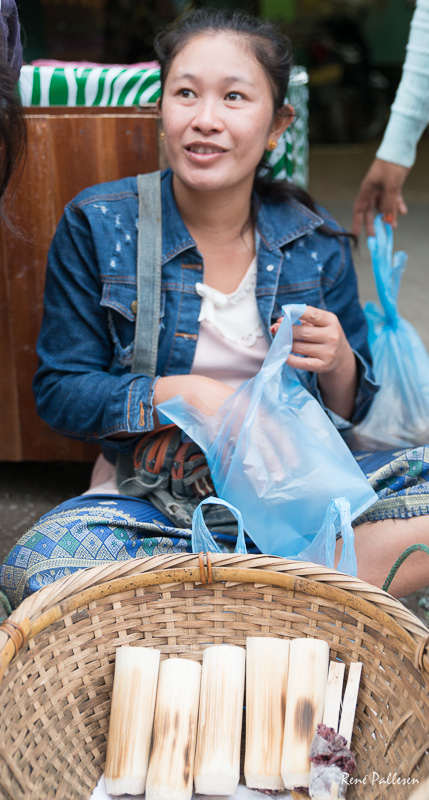
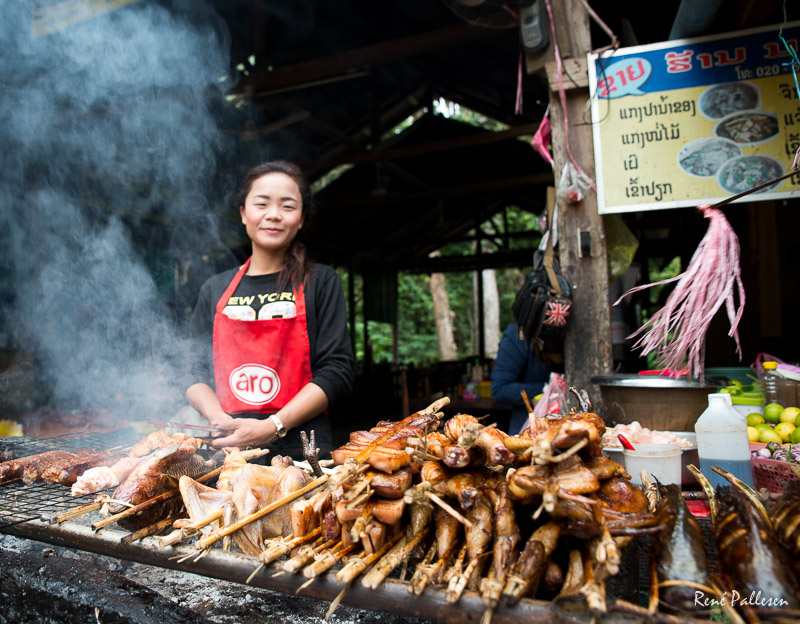


I had some incredible experiences in an amazing country. I managed to have a full busload full of locals break down laughing from me trying to read up sentences from my little pocket Lao phrase book. Through this I was invited to visit families and join their local celebrations through festive events. The only local I met up in Northern Laos who could English was a girl working for an NGO. She invited me to join her visits to remote local villages where we had to cross the rivers on bamboo rafts to get to them and experienced the local dragon boat racing.

Since this distant time I had heard and lots about the country from other travelers including my Mum and Dad who visited the country ten years ago. I heard how the country had changed and how mass tourism had ruined the experience. I had heard about the young backpacker rave parties, the drugs and adrenaline junkies in Vang Vieng. I heard about the modernization, cars and traffic in Vientiane.

Going back with family and friends I was worried that they wouldn’t see the country that I saw so many years ago. There isn’t a lot of historical sites to see in Laos other than in Luang Prabang where there are lots of Temples due to many wars destroying major parts of the country. More worried was I that I would be disappointed by the country and the people I saw back then being no more.
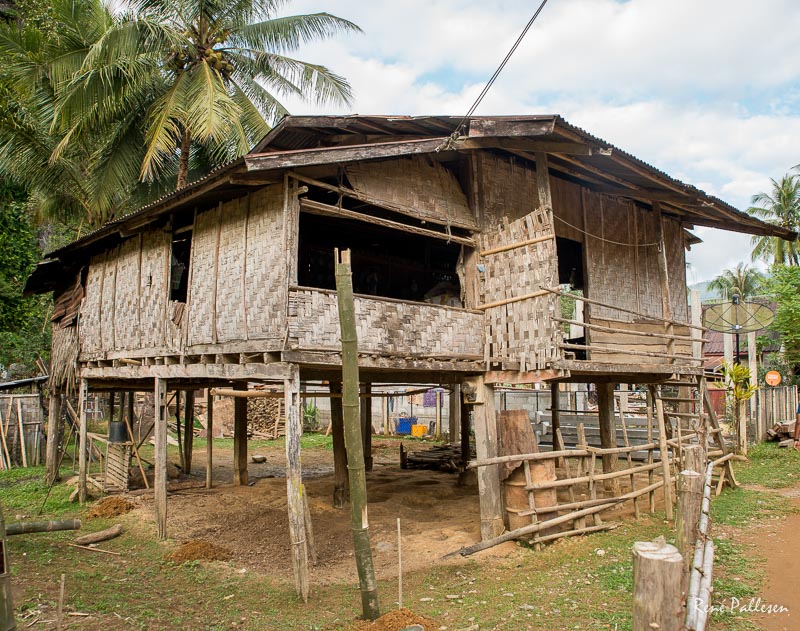


When we got there it turned out that, yes, the country has changed a lot. Lots of roads have been paved, there are lots of cars everywhere, the old colonial buildings have been renovated and all the houses are now built in brick and mortar instead of being wooden bamboo shacks. People are on mobile phones, the kids are watching youtube videos, every hotel has wifi, you can buy everything, and major investments are flowing in from neighboring Thailand, China and Vietnam.

There are a lot more tourists in the country, especially in Vang Vieng and Luang Prabang, but they are a different type of tourists than the ones I was dreading.The backpackers have been replaced with mainly adrenalin loving Korean tourists or wealthier middle-aged Europeans and the era of party fueled backpacker tourism is largely gone.
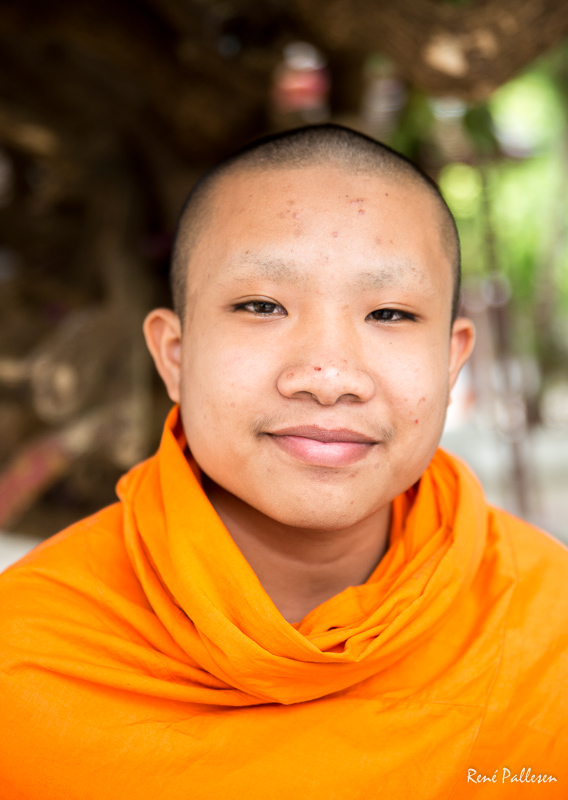


And most importantly getting outside the towns, the Laos I loved back then still very much exists if you go look for it. The modern tourists are surprisingly easy to avoid. They all stay in the same places and visit the same top ten sites or visit the same restaurants that Tripadvisor recommended they go to. They go back home and tell everyone that they have experienced Laos, not knowing that their comfort has eluded them of the real magic of Laos.
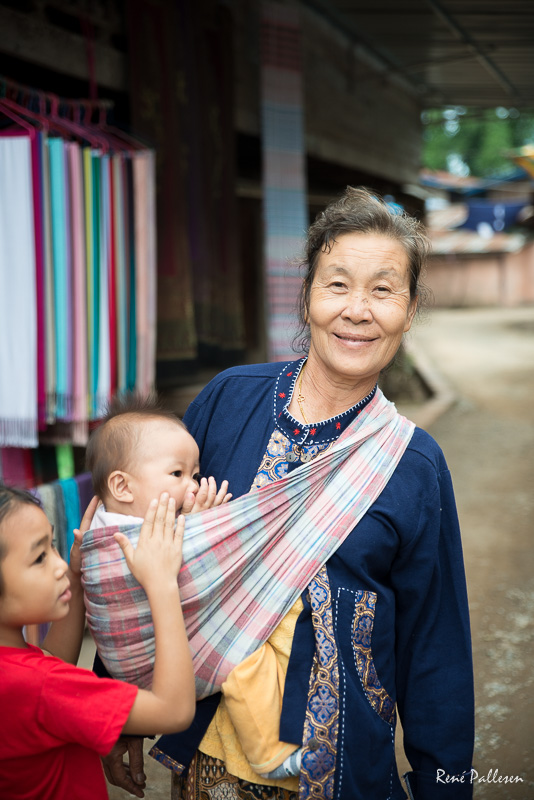


The Lao people everywhere are still very loving, smiling and friendly, there are dirty kids, chickens, cows, dogs and cats roaming the streets everywhere and the remnants of the old tribes that I saw back then still exists through their ancient traditions although the traditional costumes and houses are largely gone now due to government policies.


Had we gone even further afield that we did on this trip, I’m convinced that little has changed in those villages I once visited two decades ago. Prior to going I was scared what I would find there, but now I feel blessed that my family and friends have experienced some of the glimpses of ‘my’ Laos together with me…Laos still has a big place in my heart.


9. October 2017 12:10
by Rene Pallesen
0 Comments

Christmas 2016 - family photos

9. October 2017 12:10 by Rene Pallesen | 0 Comments

Here are some more photos from Christmas 2016


9. October 2017 12:10
by Rene Pallesen
0 Comments

Kims old photos

9. October 2017 12:10 by Rene Pallesen | 0 Comments

Kims dad has some old photos hanging of Kim when she was little.This is Kims mum when she was young.
Kims dad has some old photos hanging of Kim when she was little.


This is Kims mum when she was young.


This is Kims dad when he was young


9. October 2017 12:10
by Rene Pallesen
0 Comments

Malabar headland

9. October 2017 12:10 by Rene Pallesen | 0 Comments

Malabar headland is now open to the public. We have been there a few time now taking the kids walkin

Malabar headland is now open to the public. We have been there a few time now taking the kids walking.

Here are some photos from various walks.