Home

19. March 2004 12:55
by Rene Pallesen
0 Comments

Egypt 2004

19. March 2004 12:55 by Rene Pallesen | 0 Comments

egypt 2004


This year it was my Grandmothers 85th Birthday. As per the tradition the whole family went on a trip overseas, this time to Egypt.

It was my first time to Egypt so it was a different experience. I can recommend that you take a read of the Travel Journal by clicking here!


Click here to see more photos from egypt Click here to see more photos from: Egypt 2004/Slideshow/Travel Journal

19. March 2004 12:48
by Rene Pallesen
0 Comments

Canada 2004

19. March 2004 12:48 by Rene Pallesen | 0 Comments

canada 2004


2004 was the year I started working for Captaris. One of the first things I did was to visit our office in Calgary to learn about our workflow product.

My visit coincided with the Calgary Stampede, so lots of cowboys in town, indians and rodeos. I also too a bus ride up through the Canadian rockies through Banff, Lake Louise and up to the Columbian Ice Fields.

Click here to see more photosClick here to see more photos from: Canada 2004/Slideshow

19. March 2004 12:24
by Rene Pallesen
0 Comments

Anti War Demonstrations 2004

19. March 2004 12:24 by Rene Pallesen | 0 Comments

anti war demonstrations 2004


In 2004 Australia was being drawn into the war in Iraq. A lot of Australians were opposed to the war, but the politicians wouldn't listen.

On a nice sunny day several hundred thousand people gathered around Hyde park in the middle of the city to demonstrate and express their opinions against Australia entering into the war.

I was of the belief that the war was a mistake in the first place and was totally unjustified, so I was decided to join the demonstrations and at the same time see if I could take a few photos.

Click here to see more photosClick here to see more photos from: The 2004 Anti War demonstrations/Slideshow

27. March 2003 10:56
by Rene Pallesen
0 Comments

Mia is born

27. March 2003 10:56 by Rene Pallesen | 0 Comments

mia is born


Andy and Tink had their first baby...a little (and very hairy) girl names Mia.

This was also one of those periods where I was checking out what it would be like to have a beard.

27. March 2003 10:50
by Rene Pallesen
0 Comments

Granddad passes away

27. March 2003 10:50 by Rene Pallesen | 0 Comments

granddad passes away


My grandad passed away in 2003.

He was getting old and was getting tired of living so he decided to end it.

27. March 2003 10:47 Perfect Moments Photography | A Rene Pallesen Journal

Home

28. July 2001 10:48
by Rene Pallesen
0 Comments

Mandalay . . .

28. July 2001 10:48 by Rene Pallesen | 0 Comments

mandalay


Map of Burma


When I initially arrived in Yangon / Rangoon, I wanted to fly up Bhamo - one of the bigger towns north of Burma. I also considered exploring Myitkyinã - a town further north of Bhamo.

My Lonely Planet guide indicated that the only border crossing into China was to the east of Bhamo. My initial plans to Burma also included exploration of western China. However, I was disappointed by the military turning me back, despite the fact that my Lonely Planet guide said I could cross into China at Ruili.

I decided instead to fly to Mandalay, not only because it was cheap to do so, but it saved me a 20-hour bus ride there from Yangon.

City of Mandalay


I heard about a song for sailors.
“To be a real sailor, the sailor would have to have been to Mandalay way upriver”


I quite liked Mandalay.


The photo below, is of Mandalay Hill.
During World War II (20 March 1945), the British and the Japanese fought one another to gain control of the position on this hill.

Important Position in Mandalay Mandalay Hill facing east


The photo to the left is taken from the hill itself facing east - as you can see, it has an aerial view of the whole city, and puts any oncoming enemies at a disadvantage. Control of Mandalay was important during the war, as the soldiers were able to set up artillery and attack anyone approaching the fortress.

This hill was of big strategic importance.

The building you see near the shrine is a monument to the British regiment who managed to take control of this hill from the Japanese.

At the eastern part of the delta, a lot of logging takes place. There was a train line built that used to cart all the trees/wood for export to Thailand.

View of the FortressView of the Fortress


The moat around the fortress is man-made.
Although man-made, comes from the local river.


The original fortress was burnt to the ground.
The whole fortress covered an area of 2.5 x 2.5 km


Fortress at Mandalay

Fortress at Mandalay

Clocktower in Mandalay


The design of Mandalay was quite colonial, and surprisingly, most of the streets were at 90º to one another.


Overall, I found Mandalay the most expensive city to travel to in Burma.

No matter what one does in Mandalay, be it explore Mandalay Hill or the city itself, the locals always had “special” foreigner prices. It really annoyed me.

I tried to use local currency as much as possible. However, FEC (Foreign Exchange Currency) was more valuable and worth more to the locals. FEC is also used in China, and one tries to use local currency as much as possible. Any item you buy has 2 prices - and obviously it is cheaper to use local currency than to use FEC.

I must admit, even Mandalay Hill was not that nice for the price I paid to explore it. It was also expensive just to go into the fortress.

Surprisingly, I could not find maps of the area that was not more that 40 years old.

28. July 2001 10:47
by Rene Pallesen
0 Comments

Burma Religion & Politics . . .

28. July 2001 10:47 by Rene Pallesen | 0 Comments

politics

Politics . . .

Queue for Rations
There is a lot of politics going on in Burma that an outsider should not get involved in - Burma is one of those countries where political opinions are best kept to oneself.

In Burma, use of the Internet and mobile phones is illegal. This is the government's way of controlling the information entering the country. Even access to equipment such as laptops is illegal - the country is so poor that many could not afford such a piece of equipment.

I saw many young women queueing for their rations. They were standing so close together that I thought they were lesbians! *laugh* The girls stand close together so another person cannot jump the queue by pushing in.


Girls Standing Close

Girls Standing Close
Young Girls Working on Roads


The girls here are very young, some have barely reached puberty and are doing some very hard work.


Young Girls Working on Roads


There is a lot of critique by Amnesty International, of Burma's use of young girls to provide maintenance for the roads.

28. July 2001 10:47
by Rene Pallesen
0 Comments

Medicine . . .

28. July 2001 10:47 by Rene Pallesen | 0 Comments

medicine


The Wares of a 'Medicine Man'
Medicine . . .

My girlfriend, Arumi, tells me one sees the wares of a 'Medicine Man' quite often throughout Asia.

Whether they sit by the roadside, or whether they own a shop in a building, one will see very similar items being sold around Asia.

The “pellets” you see here are in fact different types of roots such as ginger or some unknown vegetable, that have been sun or air dried.

The Medicine Man 1The Medicine Man 1The Medicine Man 1

You will see the antlers of various animals such as deer or even rhino. There are also skulls from different animals - some of these animals may be endangered species, but somehow you will see them being sold in these markets.

The Medicine Man 2


These skulls are definitely not being used as “trophies” around the house!

The Burmese, like many Asians, believe in using very 'natural' remedies to cure common ailments.

Tiger Skull


A Medicine Man may not necessarily be a “doctor” according to western standards - that means he may not have a university degree.

However, a Medicine Man, may be what we know as “witch-doctors”. Some of the remedies they know are very natural and useful.

Unfortunately, not all of these remedies work. Around Asia, you will see shops or Medicine Man selling items like tigers' paws and skulls, or ground ivory tusks. Many of these are sold as cures or enhancements for the sex life.

In Burma, there is virtually no wildlife left.


Selling Tobacco


You will even find that even tobacco is sold naturally.

Not in cigarette form, but in leaf form! The laws in Burma are not quite the same as they are here. Marijuana is also sold very freely.


Fruit of the Lotus Plant
Lotus Fruit . . .


Quite often in Asia, you may see lily pads floating on the water. In fairy-tales, you hear about frogs sitting on a lily pad.

You will be amazed to associate that this fruit here, comes from the flowers/plant growing out of the water near the lily pads.

The yellow seeds come from the flower itself. The seeds are used often in many Asian desserts, and said to promote better blood circulation.

While, the root of the lotus plant is also a delicacy. It is white when cooked, and has a crunchy texture, similar to that of the water chestnut. Mainly used in savoury meals, although used as a dessert as well.

Personally, I think it is too much hassle retrieving the fruit! *smile*

Created: 31 Oct 2001

28. July 2001 10:46
by Rene Pallesen
0 Comments

Schwedagon . . .

28. July 2001 10:46 by Rene Pallesen | 0 Comments

schwedagon
Escalator leading up to Schwedagon


Schwedagon was a holy place with extremely large and beautiful temples.

To get to Schwedagon, you had to travel up very long escalators. I took this photo because these escalators were the only escalators I had seen during my whole trip in Burma. As Schwedagon is a very religious place for the locals, I guess to travel up these escalators give the sense of travelling to a higher and holier place.

Temples at Schwedagon Photo 1

The temples at Schwedagon were really impressive.

Temples at Schwedagon Photo 2
Another Temple


I was told that collectively, these temples were built with 39 tonnes of pure gold.

Cleaning Up


At the end of the day, the locals all contributed in cleaning the place. They clean all the tiles and are very organised.

Big StubaBig Stuba at Night

Buddhas at base of Big Stuba


Here is the 'Big Stuba'. All that gold...


Up close, the temples are a glorious sight. Especially at night!

Can you see those lights at the base of the Big Stuba? Each is a 'mini temple', illuminating a Buddha.


Lots of Gold


You can really see the magnificence of these temples!

Praying to BuddhaPraying to BuddhaIntricate Carvings


There are lots of rules or procedures about the way one prays to the Buddhas - very complicated to an outsider!

I saw a couple of the buddhists pour water onto the statue of the Buddha. Depending on the day of the week a buddhist is born, the individual would pour the respective number of bowls for the day of the week. A buddhist believes that by doing this, it would bring them luck.

At Schwedagon, I noticed there were hardly any tourists, mostly locals paying homage.

Can you see how intricate the carvings are in the foreground?

Praying Monk 1Praying Monk 2

Large Bell


The monks rung this bell to announce prayer times.


It brought luck to ring the bell.
For example, if you were born on the 1st day of the week, you rung it once to bring good luck. If you were born on the 6th day of the week, you rung it 6 times etc.


28. July 2001 10:45
by Rene Pallesen
0 Comments

Myanmar ( Burma ) 23 July ~ 5 Aug 2001 . . .

28. July 2001 10:45 by Rene Pallesen | 0 Comments

myanmar burma 23 july 5 aug 2001
Click here for full size Map of Burma


Burma/Myanmar surprised me in many ways. I would have liked to see more of Burma than I did, but due to military restrictions, I only had access to certain parts of Burma and was not able to see any of the indigenous people along the border as I had initially planned.Burma is a very poor country. It was difficult to travel... travelling 100 kilometres could sometimes take up to 6 hours.

One of the most beautiful places in Burma, I thought, was Bagan.

I took many photos in Burma, and tried to order them in the following pages:
  • I spent some days in Yangon, which had a heavy colonial influence.
  • Schwedagon was another place full of temples, a place laden with pure gold.
  • Whilst travelling, I could not help notice how influenced the people were by religion, and Burma's politics is one thing an outsider should not get involved in.
  • I was fascinated by what the Burmese used for medicine. They also had some rather interesting local fruit.
  • Mandalay also had an interesting colonial battle history. Whilst there, I watched the “Mandalay Marionettes”.
  • With the restrictions up north, I did not get to see much. But you would not believe how the Burmese play volleyball!
  • Finally, at Mt Popa, I went there to see a local monastry, and saw a lot of wild monkeys there.


Yangon ( Rangoon ) . . .

One of the main stough South America...the differences between the countries are huge. During the last six weeks I have taken off in aircrafts 20 times:<br><br>Sydney to Los Angeles, Los Angeles to Mexico City, Mexico City to Los Angeles, Los Angeles to Sydney, Sydney to Auckland, Auchland to Santiago, Santiago to Buenos Aires, Buenos Aires to Santiago, Santiago to Lima, Lima to Cusco, Sucre to La Paz, La Paz to Iguazu, Iguazu to Santiago, Santiago to Sao Paulo, Sao Paulo to Rio, Rio to Sau Paulo, Rio to Sao Paulo, Sao Paulo to Santiago, Santiago to Auckland, Auckland to Sydney.<br><br>In other words...I have an enormous carbon footprint this year which cannot be apologised enough for.<br><br>The people in South America were extremely friendly and helpful (Except the girl at the hostel in Potosi). Most people didn't speak anything other than Spanish...but Spanish is almost my second language now (I know at least 70 words)<br><br>Argentina was an interesting place. I loved the culture and the dancing. The food was bland with too much meat and Buenos Aires itself didn't have much else to offer and was a bit run down.<br><br>Chile is amazing. It is really organised in Santiago and you could be in Northern Europe in terms of cleanliness. They have a really effective public transport system which is a magnitude better than sydneys (close to being as good as Tokyo). People are very friendly...but unfortynately this is also the only location in all of south america where they managed to scam Chris and I on the price of a taxi fare as we didn't know the local exchange rate...in the rest of South America they did try, but generally we paid same price as the locals (and a few times less). Again I can understand why my cousin chose to live in Santiago rather than somewhere else...it is by far the safest and most developed city in this part of the world. The food here is amazing, and you can get everything...this is the only place in South america that we saw a Thai restaurant.<br><br><br>Macchu Picchu in Peru is incredible...it is a fantastic ride into the site and the area around Cusco has got a lot of potential. <br><br><br>Bolivia is a country with so much potential and with people with so little ability and knowledge to tap into it. People in the North are fantastic, but the further south you get the less culture. It has been a privilege to go there and I think they will get there one day.<br><br><br>Brasil...Beautiful by day and dangerous by night. It was fantastic to go here and I'd like to one day come back to Brasil to see other parts of the country. The economy has really taken off here...but in the process left a lot of people behind and that can be seen by all the crime and social problems. <br><br><br>I have now set foot in 52 countries on 6 continents. As I have travelled I've noticed that the world is becoming a smaller place where no major differences in culture and language. <br><br><br><img src=

in 10-20 years from now everyone will wear the same clothes, listens to the same music and eat the same food (Pizza). The fun and the purpose of travelling will disappear. I can see from the new generation of travelers that they are more interested in thrill seeking and dead buildings rather than people, cultures and observing and learning from differences. Pity as there is so much to learn and it will build appreciation of how lucky we are to have what we have.

Where to next? I don't know...there is one continent down south that I still haven't been to and former Russian republics have got potential....otherwise closer areas like Tonga, Fiji, Indonesia etc.

22. March 2008 06:08
by Rene Pallesen
0 Comments

Rio De Janeiro - Brasil

22. March 2008 06:08 by Rene Pallesen | 0 Comments

rio de janeiro brasil


We are now in Brasil after an overnight stopover in Santiago (The flights here in South America are fairly irregular so it can be difficult to get connecting flights without having stopovers).

We hadn't booked a place to stay but at the airport the tourist information suggested renting an apartment at Ipanema. When we got there it turned out to be really basic, fairly prices and probably a friend of the guy at the tourist information. Instead we went to Copacabana beach to one of the other options we had which also was very basic and a bit far from the beach...but at least non commiting for more than one night. Later in the evening we walked around and eventually found a hotel close to the beach and cheap. It also had big mirrors on the wall and in the ceiling over the bed...and Kim and I was wondering if it was one of those hotels that could be hired by the hour.
It did however turn out to be really nice apart from one evening when some of the other guests tried to get into our room because they got the number on the door wrong.

The day after we went to Ipanema beach to go for a walk. It is very beautiful in Rio and especially this beach is really cool.

Click here for more photos

After lunch we took the local bus to the Sugarloaf mountain. Traffic is really bad in Rio and Taxis are outrageously expensive and just as slow as the busses so it took us about two hours to get there. It turned out to be perfect. We ended up taking the lift of there just before sunset and had a fantastic view from the top.

Click here for more photos

Click here for more photos

Click here for more photos


Click here for more photos

In the evening we had a fantastic meal called a Ridozio (or something like that). It was a 15 course meal (A lot more than we could eat) and only cost around 10 australian.

Next day we decided to go to see the Jesus statue first thing in the morning. Again we took the local bus there to save some money (Rio is really expensive). We then took the train up to the Statue which has got a fantastic view of Rio and all the beaches.

Click here for more photos Click here to see more photos

Click here for more photos

On this trip with Kim I had planning to ask her if she'd marry me. I had three possibly locations in mind..29th Feb in Santiago, Machu Picchu or at the statue in Rio. Kim was very happy when I popped the question and showed her the ring I'd gotten for her (but more about that later), so we are officially no longer boyfriend and girlfriend.

Click here for more photos

Click here for more photos


In the evening we went to a restaurant called Porcao Rios which had been recommended to be by our partner in Mexico to celebrate and later we had a drink down at the beach.

Click here for more photos

We didn't get back to the hotel until very late and I promised that I would never again walk back to the hotel that late at night. There were people from the slums everywhere and I didn't feel safe walking back...so next time we definitely take a taxi. In the daytime you see quite a few police cars and police officers around...but at night they are very hard to spot. It is almost like the movie 'I am Legend'...you are safe during the day, but as soon as night falls and most people have gone off the streets then the kids from the slums rule the city. It is truly a dangerous place at night...not that we were carrying any valuable on us whatsoever except for whatever cash we needed on the night, but the question is....would these kids believe that that was all we were carrying?
All houses an properties in the more wealthy areas are all surrounded by big fences and cages to keep the kids out...but really...not a very comforting way to live if you cant leave your house.

Another thing I noticed is that there also still is a class difference between the white/light and the black. The blacks have all the lowest paid jobs and the ones requiring manual labour. It is also the black people you see living on the street and going through the garbage every night (and there are a lot of these). So even through slavery was abolished several hundred years ago doesn't mean that everyone is equal.

In the morning I had caught some sort of a stomach bug...probably from the one drink I had at the beach and was feeling really weak so we spend the day doing a bit of shopping locally and then went to Ipanema.

Click here for more photos

Click here to see more photos

In the evening I started to feel really weak and felt like vomiting so dinner consisted of some light vegetables followed by coca cola (The ultimate remedy for any stomach problems).


Last day we slept in (ignored the hotel checkout time) and packed out stuff. I still felt a bit weak but otherwise ok (My bug lasted for two days after which I felt really weak but a dose of Imodium eventually took care of it).

Next back to Santiago overnight and then back to Sydney

Click here to see more photos from Brasil

14. March 2008 10:23
by Rene Pallesen
0 Comments

Sucre - Bolivia

14. March 2008 10:23 by Rene Pallesen | 0 Comments

sucre bolivia


Wow, wow, wow...Sucre is everything that La Paz isn´t...it is fantastic.

Click here to see more photos

We took the bus from Potosi yesterday afternoon and drive through a fantastic landscape of deep canyons and high mountains and through passes of 4800 meters altitude. As soon as we arrived into Sucre we fell in love with it. Right from the start at the bus terminal they had fixed prices on taxis. We drove into town with an old gentleman that had a 1970´s Datsun.
He held the door for us at the hoteland made sure we had accomodation.

Oh..yeah...did I mention accomodation. Kim had booked the Hotel Real Audencia the night before and received confiemation. When we got to the Hotel they didn´t have our booking but fortunately the hotel is empty (I think we are the only ones here). They told us that it was $60 per night...Kim said that the booking we had was $45 and they agreed to this price. It later turned out that she by mistake had booked the Real Audencia in Quito Equador 2000km from here...LOL.
Anyway the hotel is fantastic and Kim loves the luxery...not even Hilton compares and it is 1/20th of the price of a similar hotel.

Click here for more photos

Click here for more photos

We then went to this French restaurant La Taverne...fantastic. I spoiled Kim with a 5 star meal that we would have a hard time finding in sydney...price for the two of us...less than $10.

Sucre is a nice and quiet city...it is beautiful with all the old colonial white washed buildings and it is clean and not polluted. There are far less beggers and street kids and far less social problems. Everything is getting very well maintained and it is a really romantic place to walk around at night through the plazas...with people everywhere at night.

Click here for more photos

We were initially planning to go back to Santiago one day early...but because this is such a nice place we stay here another night and then spend as little time as possible in La Paz. We also treat ourselves to a flight to La Paz which takes 45 minutes rather than a terrible 14 hour bus ride.

Sucre is at 2800 meters altitude but probably 20 degrees warmer than Potosi (4000-4500 meters). It is so nice being able to walk around in a T-Shirt during the day and just a thin Alpaca (I´ve bought two for less than $15 each)jumper during the night.

We went out to the dinosaur park. In some limestone they have found some 5000 tracks from more than 400 different species of dinosaurs. The park has only been open for less than two years and will be a major attraction once they get the place conserved and once the word spreads.

Click here for more photos

We also had lunch at this fantasic Cafe Mirador overlooking the whole city...very nice.

Next day we hired a guide to take us through one of the local Inca trails as well as to a small village called Potola. It was raining so in the beginning it was pretty cold and miserable but eventually it stopped and we had a really nice day on the Inka trail (by the way there are thousands of Inka Trails around the Andes...most of them still in use by the locals as the main mode of transport still is on foot).

Click here for more photos

Potola is a small village west of Sucre. It is supposed to have a lot of local still dressed in their local costumes and lost of local handicraft...but really is has none of that. There was far more dressed in local costumes in Copacabana.

Click here for more photos

As such for Bolivia it has got a huge potential for developing tourism...but the people there don't understand how to do it.

Tomorrow...onto Santiago and then continue to Rio De Janeiro

Click here to see more photos from Bolivia

12. March 2008 11:54
by Rene Pallesen
0 Comments

Potosi, The Mines - Bolivia

12. March 2008 11:54 by Rene Pallesen | 0 Comments

potosi the mines bolivia


Today was a really positive day compared to yesterday after I'd written my last post. We found an excellent restaurant (much better than most restaurants in Sydney) called El Meson...and the food was cheap as. For around USD 13 we got a three course dinner that was absolutely fantastic including drinks. It was so good that we decided to go back there tonight.

This morning we had to move hotel. We did try to extend one night at Hotel Eldorado...but everything in this town is fully booked. Late last night we had managed to put through a couple of bookings at other places, but the only one that came through was a local hostel...so this morning we moved there. It is a nice enough place...but the personnel is totally disinterested in providing a service (and no smiling please)...there is no heat in the room so it could be a cold night...but everything else is ok once you chase them for towels, blankets etc.
The told us that we couldn't have the room until 11.30am...so in the mean time we decided to go to the mint museum.

The Mint museum was really good. They had a lot of interesting items there and they provided an english speaking guide for free to explain how the silver was mined in Potosi, the historical significance as well as went through the whole process of producing silver coins which were produced in the same building (All the original equipment is still there). They also have a fantastic art collection there.
We joined the guided tour a bit late, but the guide was kind enough to repeat the first part of the collection so that we didn't miss out.

The highlight for Kim was when I made her a copper coin using an original minting stamp using a large hammer...she got to keep the coin as a souvernir.

After a lunch at La Plata (With the thickest hit chocolate we've ever seen...the spoon could stand upright) we went down to join a tour of the mines in Potosi. It turned out that Kim and I were the only ones on the tour and the guide spoke perfect English.

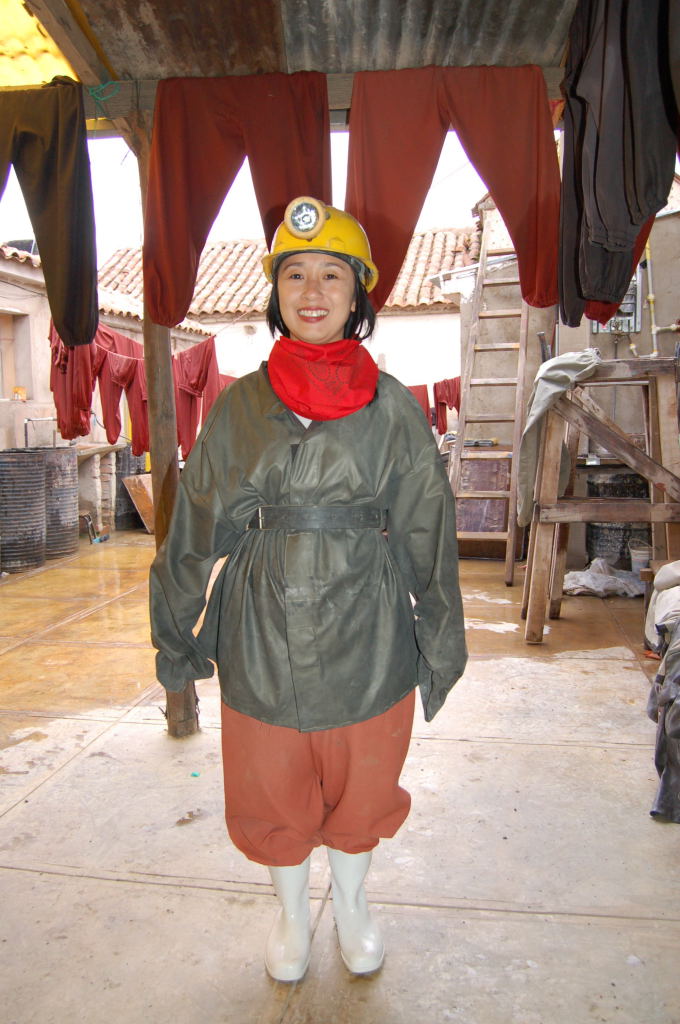
First we were fitted with overalls and helmets and afterwards the tour went to the miners market. I bought a stick of dynamite for around 5 Bolivianos (75 cents) and our guide gave Kim a fright when he threw the stick at her.
Click here for more photos Click here for more photos

Click here for more photos


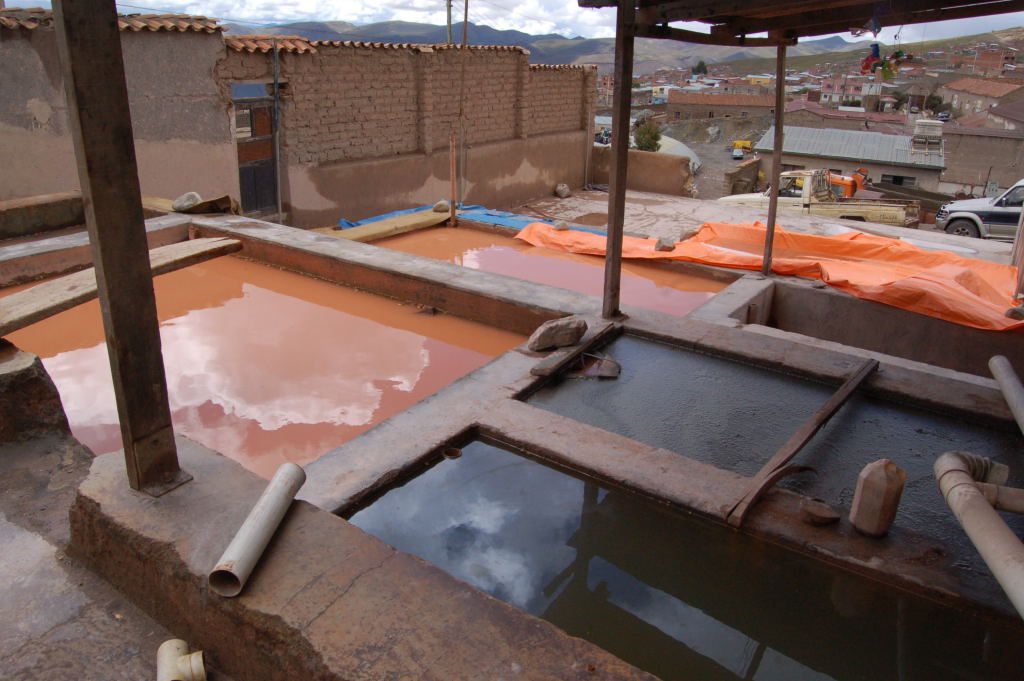
After this we went to the processing plant where they do the first extraction of the metals from the rock. We saw how they crush the rock into a fine powder and then using various chemicals extract the metals from the rock as well as using gravity. All the chemicals and side products are then flushed into the Rio Negra where it then is washed into Paraguay and Argentina. Both BHP and Rio Tinto buy minerals from here processed in this way (It it great to see my shares at work). There are 42 such processing plans here in Potosi...because everything is working as coorporatives there is no investing in processing plants and machinery and the various plants refuse to work together although this would benefit everyone...but more about that later.
Click here for more photos

Afterwards we drove up to the mine itself. We expected to be visiting a part of the mine that was no longer being used but this is not the case...the mine was fully functioning so once in a while we had to run for our lives to a location where the tunnel was wide enough for us to jump to the side when one of the small trains came zooming past.

Click here for more photos

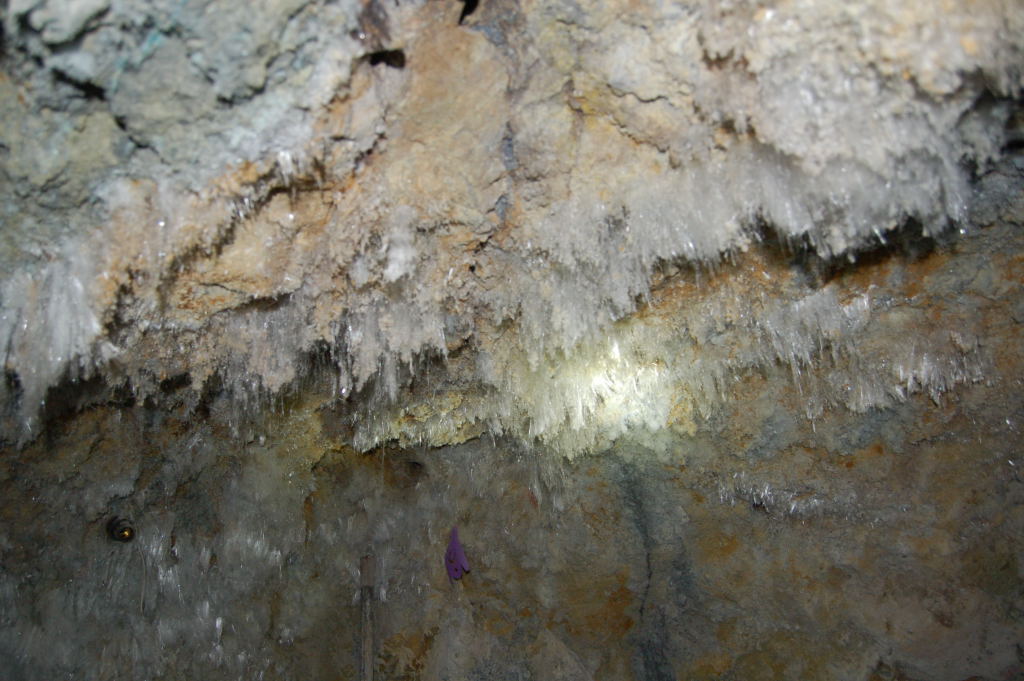
As we went further and further into the tunnels the gasses became thicker and thicker. I have never seen so many visible minerals in one location before...you could actually see the zinc, lead, copper, iron and bronce in the walls all over the place. The yellow sulphur was sitting in 2cm thick layers on the wall (but they don't mine this) and there was Albestos hanging in long threads off the ceiling all over the place and the air was think of asbestos dust.
Click here for more photos Click here for more photos


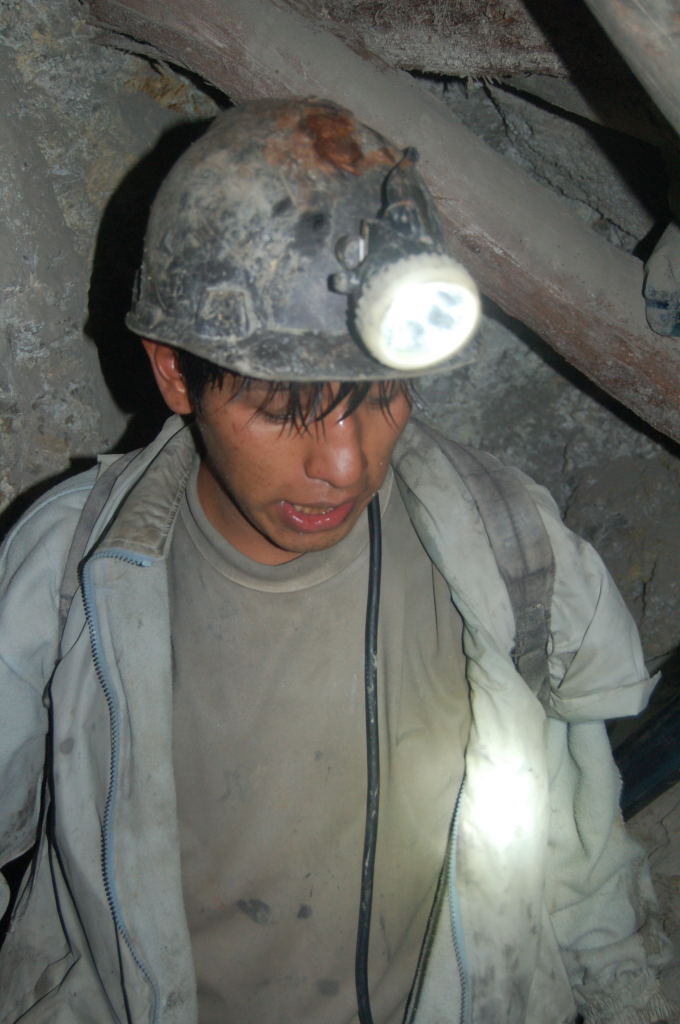
We were covering our mouthes with bandannas but running through the tunnels, the cramped places, the dust and the gasses in the air made it really hard to breathe through the bandanna (Remember that this is all happening at 4500 meters altitude where there is only 25% of the oxygen as at sea level...so there is not much air in the first place!). The miners themselves were chewing coca leaves to tolerate the gasses.
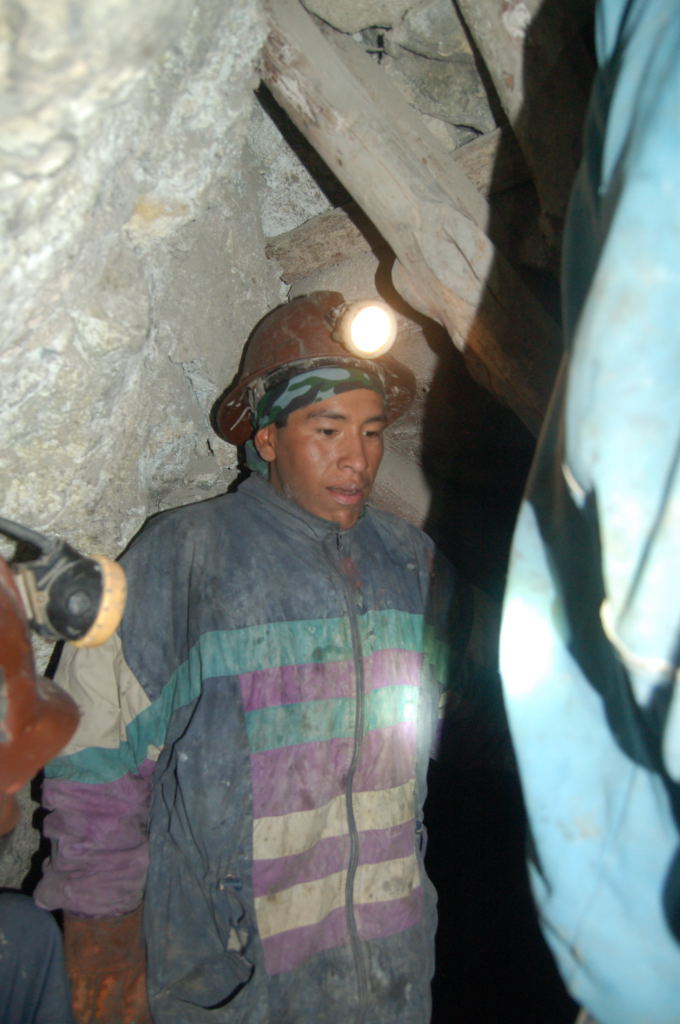
Click here for more photos Click here for more photos


Normally I would be fine, but at one point I thought I'd die and decided to not use the bandanna (I'd rather die young than die instantly)...and at this point we were still only on the first level (3 additional levels and appx 80 meters below us).
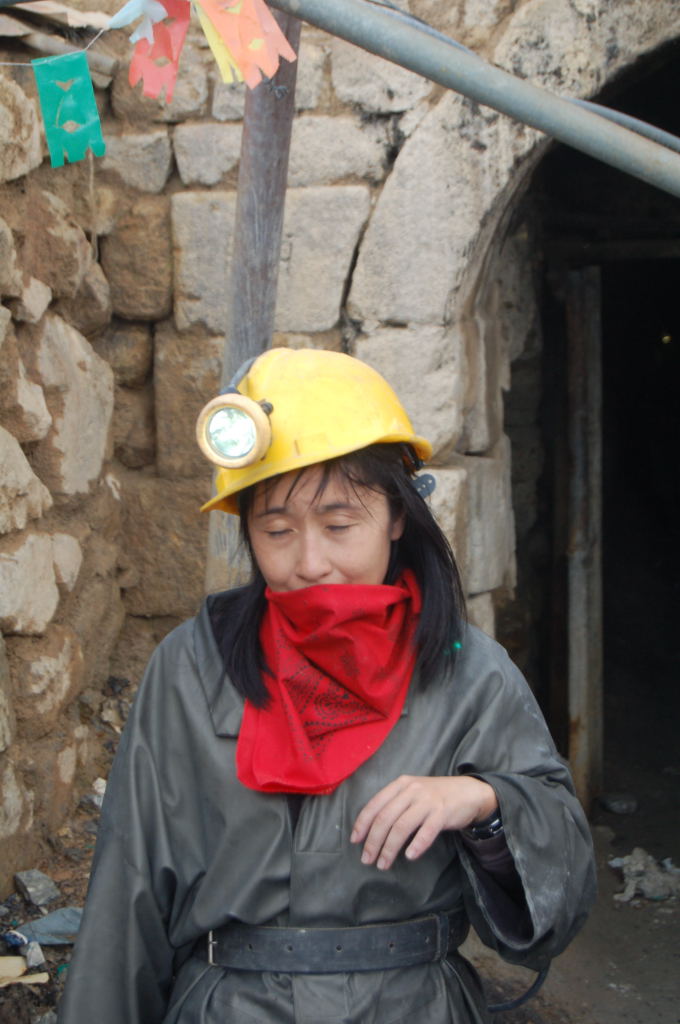
Click here for more photos


We got to a 20 meter almost vertical tunnel and halfway down we took a break where we got the chance to ask a lot of questions about the mine. We also asked if the gasses became worse than here and the reply was yes. We were also told that the tunnels were very similar so Kim and I decided that we'd had enough and would like to breathe clean air...also because the mines are still working and a lot of the supporting structures are from the colonial spanish times 350 years ago the mines are really dangerous places.
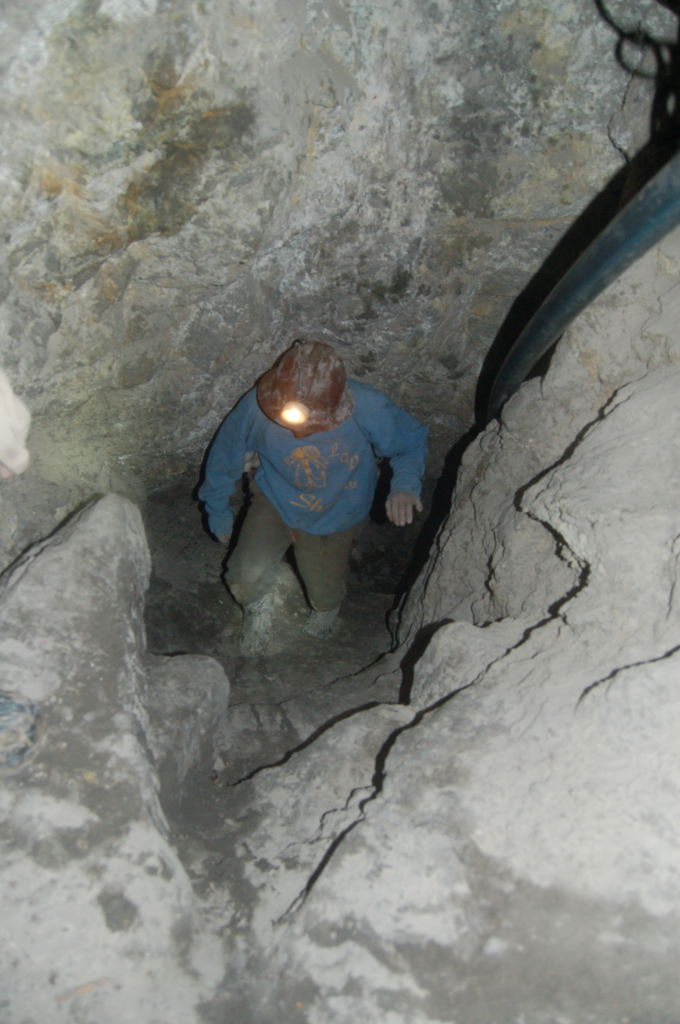
Click here for more photos

On the way out we say how the used an old electric motor to pull up the rocks from 80 meters below to our level and then dump it onto the trains. They actually have a champer above the level and then use a big hole in the floor to fill the trains...unsuspecting I walked across the pile 2 minutes prior to them opening up the while whereafter a 1 meter whole appeared in the floor.
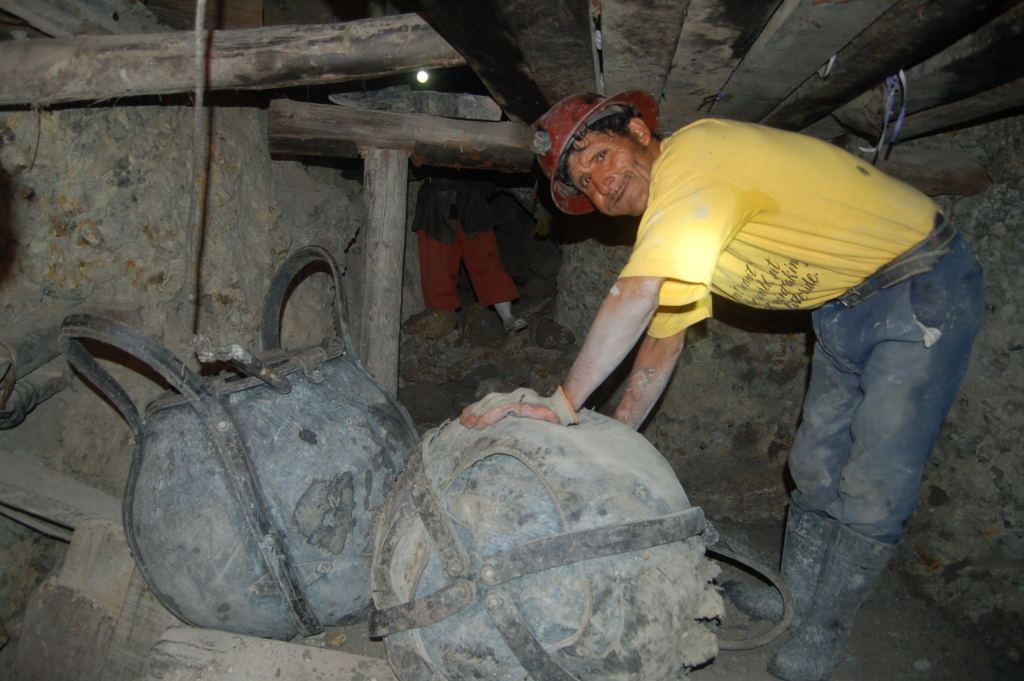
Click here for more photos

The whole mountain has got more than 700 mines most existing several hundred years where more than 400 of them are in use today. There is no backfilling taking place and there are no geologists or engineers working on stabilising the mines so the whole place is like a swiss cheese that can collapse any time.

Each individual mine is working as a small collective of maybe 50 miners. There is no coordination between the different mines and most regard eachother as enemies. Because of this they still use old inefficient and very dangerous mining methods and equipment. If they instead coordinated their efforts they would be able to mine the whole mountain in a very modern way which would benefit the whole town and actually earn the individual miners 50-100 more money than they do today. The same goes for the processing plants as they currently don't extract the minerals efficiently and have too high production costs. They haven't even bothered exploring the area for other mining sites, but instead mine the same mountain they have done for several hundred years.

The average age in the mine is 25 years old. The youngest is 10 years old and the estimated lifespan is about 10 years before dying from lung cancer from inhaling gasses and asbestos. The miners are chewing coca leaves and their eyes are blood red. On the weekend they drink 96% pure alcohol (50 cents a bottle).

Click here for more photos

For both Kim and I it was real eye openers...we now love our 9-5 jobs. I think everyone should at least once in their life try and enter such a mine...but for me...never again.

Was it a positive experience? Yes absolutely...I have always wanted to see these mines with my own eyes how dangerous they are. Are they dangerous...yes undescribable...I cannot describe with words what a horrible feeling it was just being on the first level of these mines. I have been in other mines and enjoyed it immensely...but this was truly scary and awful. It took several hours before I could breathe normally again from inhaling all the dust and sulpher gasses.


One more night in Potosi and then we continue to Sucre. Click here to see more photos from Bolivia