Home

14. November 1999 11:10
by Rene Pallesen
0 Comments

Donkey Day Out . . .

14. November 1999 11:10 by Rene Pallesen | 0 Comments

donkey day out
Grandparents on donkeys


Whilst we were in Morocco, our whole family went riding on donkeys.

That included my grandparents! They needed a bit of support to keep their balance, but otherwise they were doing all right.

You can see my grandmother, my brother Claus and my mother in succession behind by grandfather.

My father on a donkey!


Here is my father! Do you not think that he looks so much like his brother in one of the photos on the 80th birthday page?


Claus on a donkey!


Here is my brother on the donkey. It is quite amazing how much these small animals can carry.


Mum on a donkey!


My mum on her donkey. Not quite as elegant (maybe relaxing a bit would have helped) as the rest of the family, but at least she didn’t fall off!


This is one of the few pictures I have of her where she is not smoking! (oh, and the other one at my grandmother's 80th, of course! It was a very nice picture of her smiling!

Me on my donkey!

Finally, someone got a photo of me on my donkey!

14. November 1999 10:59
by Rene Pallesen
0 Comments

Morocco ( 1999 ) . . .

14. November 1999 10:59 by Rene Pallesen | 0 Comments

morocco 1999


Our main reason for the trip to Morocco, was to come together as a family and attend my grandmother's 80th birthday. We also managed to explore Morocco, and even had a fun day riding donkeys - yes, the whole family - my grandparents, parents and brother!

We met different people and there were some really beautiful women in this country. There were some interesting buildings and we even found some strange goats!

The Women of Morocco . . .


One beautiful girlAnother beautiful girl

Girl being offered


People in the city tend to be more extremist/fundamentalist when it comes to religion, then those who come from the country areas.

One reason could be that the people living in the cities are mainly Arabic, and those living in the countryside are Berbers.

Berber women are less dressed up than in the cities.

Some of them are extremely beautiful.

Also, I noticed that those in the city tend to be more self-conscious of photos being taken than those in the country.People are naturally a bit shy, but by showing friendliness, it a makes it a lot easier to take good photos.

Hmmm... Do you know that I was actually offered to buy this girl on the right for two camels? I do not know why they wanted to get rid of her. Maybe she was making too much trouble in the village?

Anyway…I refused the offer.

Henna hands


The girls decorate themselves with what is called henna. It is a dye that stains there hands for a long time. They paint different patterns onto their hands and it actually looks very pretty. Much nicer than tattoos - which are permanent!


Return to Top


Goats . . .

A goat in a treeA goat in a tree (black & white)More goats in a tree!

We came across a couple of trees full of goats. They were climbing around the tree to reach all the green leaves. Our first though was that someone put them there, but they were too much out of reach for that idea.

14. November 1999 10:34
by Rene Pallesen
0 Comments

My Grandmother's Birthday ( Morrocco 1999 )

14. November 1999 10:34 by Rene Pallesen | 0 Comments

my grandmother s birthday morrocco 1999


Mon Grandmere

My whole family was in Morocco to celebrate my grandmother's 80th birthday.

This is my grandmother. Even as an 80-year-old woman, I find her pretty cool (you should see some of the pictures I’ve got of her with dark Blues Brothers sunglasses).

(No need to say that the flags are Danish.)

It was a family reunion. We do not all live in the same place, but all of us make this journey as it is one of the few times that we all get together. Unfortunately, there were a few of us who could not make it.

It was important for me to be there it was hard to tell whether the whole family will ever come together again as a large group, as my grandparents are no longer living there.


My brother


My brother, Claus!

Another person I find pretty cool is my brother.

He has not been well in the last few years, but I love him anyway
( Definitely can't do without my big brother )
My


Mum's pretty cool too! She will probably hate me for putting this photo on my homepage. But it is a really nice photo of Mum with a big smile.

She hates the idea of me climbing mountains, but at the same time she bought me a climbing helmet as a Christmas present. She thought it will keep me safer when I am so far off the ground.

Thanks Mum for supporting me.

I also find my dad pretty cool. He’s a bit of a nerd just like me which means that we probably understand each other better than anyone else in the family.

My Dad's brother & his wife


This is my dads brother and his wife. The resemblance is unequalled. My dad and his brother looks very much like each other. They have the same bad habits (just like my grandfather) and both their wives are smoking like chimneys.
Me stuffing myself!


Finally, a picture of me...

I do belong to the family even though most of them have probably forgotten about it by now!

I am sitting outside one of the food places on the local market. We each got a serve of excellent calamari, shrimp and fish. I think this was the best meal I had while I was in Morocco.

Most tourists would avoid a place like this just because of the hygiene, but I have never had diarrhoea because I had been eating local food.

Perhaps all this travelling I do has made me immune to germs and bugs! Or maybe I just pick good food!


Do you want to see my family on a Donkey Day out?
Click Here!


Created: Jan 2000 Last Updated: 16 Sept 2001

15. March 1999 11:00
by Rene Pallesen
0 Comments

Laos

15. March 1999 11:00 by Rene Pallesen | 0 Comments

laos 1999


Laos is not a place one can forget.

One day I would like to go back there again in my travels.

It is a beautiful place with friendly people who welcomed me with open hearts.

It is also a place of sorrow because of war and loss.
Yet the people try to go on with their lives despite the war.
They live in hope and their beliefs keep them going.

There are tribes there who seem unaffected by western influence and change and keep to their tradition after all this time.

I met many children there, some happy, some sad.

I also spent time with a special family and also managed to enjoy the local food.



War . . .


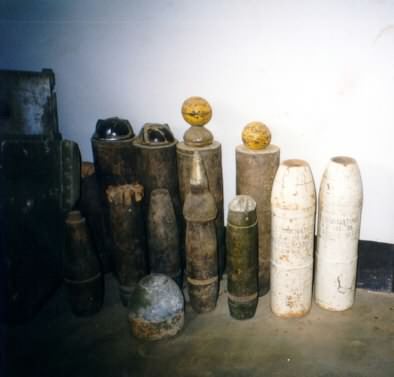
Various types of bombsMore bombs

All the eastern parts of Laos was heavily bombed during the Vietnam War. More bombs were dropped in this area than the number of bombs dropped during the entire Second World War (approximately 10,000 bombs for every citizen of Laos). Laos has the sad reputation of being the most heavily bombed country in the world ...

Ever.

The Ho Chi Min trail went through Laos, and the Americans tried to destroy it with every means. They tried everything from carpet bombing, dropping cases of Budweiser Beer (hoping that the Vietnamese soldiers would get drunk) to dropping washing detergent during the wet season (hoping the trail would get slippery). It is estimated that the Americans only succeeded in stopping 10 percent of the traffic on the trail.


In Vietnam, the Americans were not allowed to bomb within 500 meters from temples and hospitals. Their rules of engagement furthermore said that they were not allowed to return to their home base with a bomb load. The result was that they flew across the border to Laos and dropped all their bombs there. In Laos, there were no rules of engagement. They could bomb whereever they wanted to bomb.
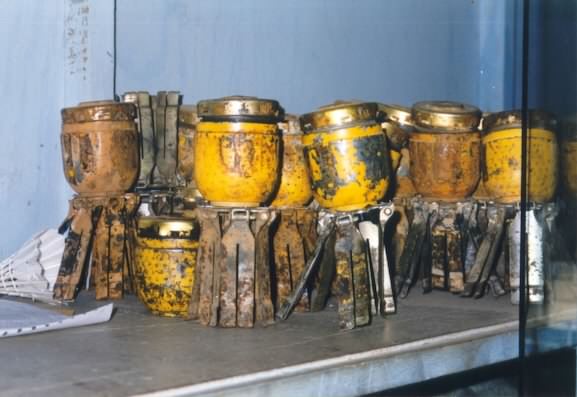
Cluster bombs


This also means that there is quite a large amount of UXO (Unexploded ordnance) in the country. Land mines and unexploded cluster bombs (shown on left) are some of the biggest problems.

In Laos, there are still approximately 4 accidents per day resulting from UXO.

Bombs outside a house


Sad as this may seem, people have been pretty creative about using some of the leftover bombs. In this case they have used a couple of 2000-pound bombs as decoration outside the house.
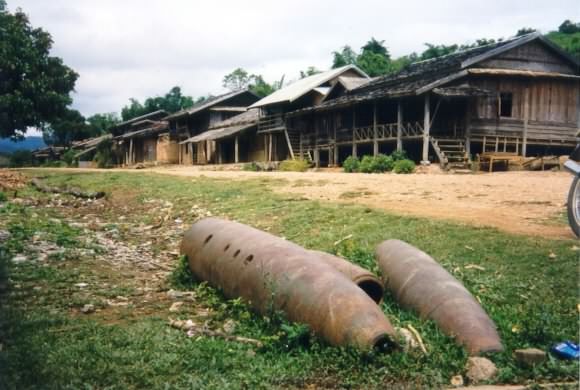
Bombs everywhere


No matter where you go you are reminded of the war.

In all the local villages there are unexploded bombs and shells from the cluster bombs.

Bombs used as scrap metal


A lot of the remains from the war are sold as scrap metal. In this pile there are shells from cluster bombs, wheels from tanks etc. >>>
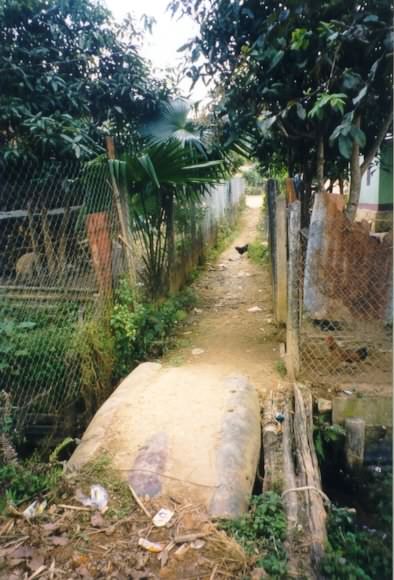

Bridge made from bombs


<<< Shells from the cluster bombs have been used to make this bridge.


Fences made from bombs


Here as fence posts outside a house. >>>
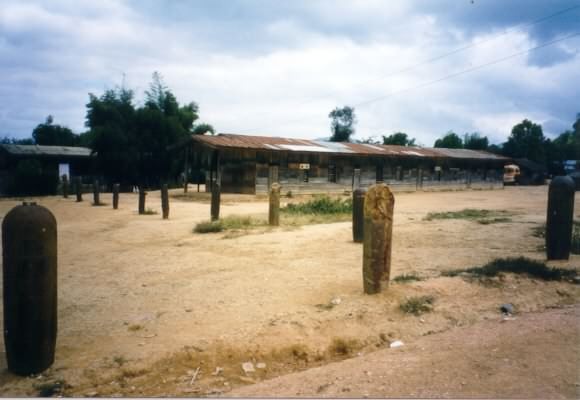
School with bombs


Outside a school, the schoolyard was surrounded by the shells from the American cluster bombs.


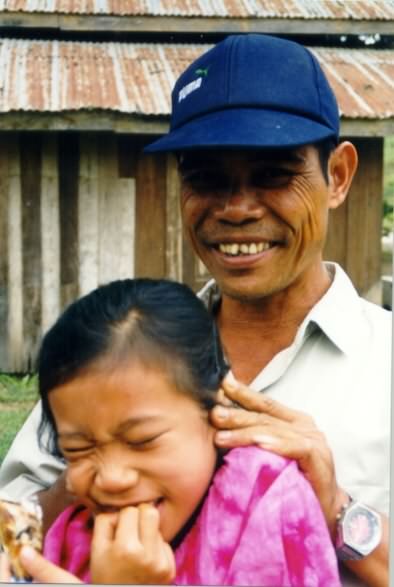
Grandfather  his orphan granddaughterSorrow . . .


This girl's parents were both killed by Hmong guerillas in 1997.

There are still areas where there are lots of problems with guerilla warfare. This is especially the case on Route 7, along the eastern border towards Vietnam and in the western part of Laos west of Vientiane, in the area between the Mekong River and Thailand.

The government is trying to control these problems, but it is difficult with such wast areas of jungle.

Unfortunately such incidents have affected a lot of people. This girl is not the only person in Laos who has lost her family.

Remember that the area has virtually been a permanent warzone since the Vietnam war, until the mid 90’s.

The person behind the girl is her grandfather.
He is now looking after her to make sure that she gets an education

He is after all, her only family left.
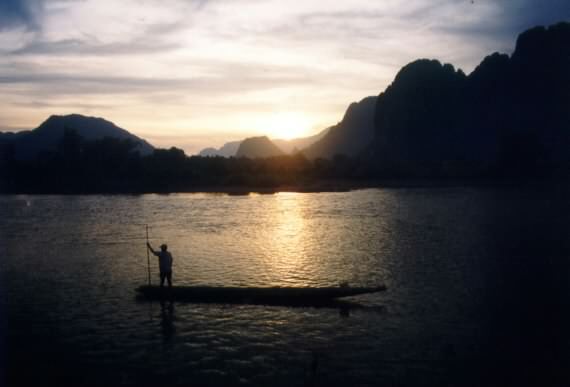


Beautiful SunsetHope . . .


Looking at this beautiful photo, it seems really serene and calm.

You couldn't really tell that things are pretty bad in some parts of the country.

The northern part of Laos is especially poor. The mountainous terrain limits what can be grown. Outdated farming methods using “slash-and-burn” of whole mountainsides are not very appropriate for feeding a growing population. A lot of the western countries are represented in Laos with health care workers. What Laos really needs at the moment is help using more environmentally-friendly farming methods, which at the same time improve the growing of crops. The slash-and-burn method basically means they burn a whole mountainside to grow rice. There is nothing left to hold back the nutrients in the soil, and fertiliser is not added. After a few years there are no more nutrients on this mountainside and they move on to the next mountainside. They need to learn how to grow crops in terraces and add fertiliser from their animals to the soil.
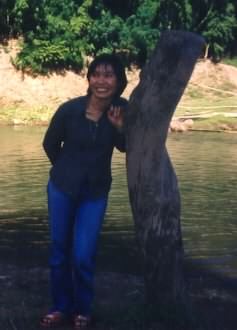

Vinchu - a Red Cross worker

One of the problems with growing rice is that the men are unempleyed most of the year while they are waiting for the rice to grow.

Vinchu is working for the Swiss Red Cross. She intends to buy a piece of land in the 32-kilometre village of Muang Xai, and convert it into a fish farm. This would keep some of the men occupied for most of the year. The profit from the fish farm could be used to take care o Perfect Moments Photography | A Rene Pallesen Journal

Home

10. December 2013 12:11
by Rene Pallesen
0 Comments

Christmas Photos 2013 - Candles

10. December 2013 12:11 by Rene Pallesen | 0 Comments

christmas photos 2013 candles


Christmas is approaching fast. The Christmas tree is up and Kim is busy shopping for presents for the various people.

The other night I managed to slot in 10 minutes for the first set of Christmas photos of Aiden and Lucas.


I was shooting these with a 50mm f1.4 lens to get the nice blurry Christmas tree lights. This also meant that I didn't have much room to play with when it came to focus...almost impossible with two moving kids whily trying to get the right mood with facial expressions, tantrums etc. Aiden couldn't sit still and Lucas refused to wear his hat. What do they say...never photograph wild animals and children!


7. December 2013 07:54
by Rene Pallesen
0 Comments

Christmas Concert 2013

7. December 2013 07:54 by Rene Pallesen | 0 Comments

christmas concert


The other day it was Aiden and Lucas Christmas concert with their daycare centre.

This year they were supposed to dress up in some country's national clothes.

We borrowed some Chinese clothes from KC and they looked very cute in it.


The concert went very well. We were especially impressed how well Aiden was able to follow the instructions and the moves to the various dances.


It was especially funny when they were singing this song with Konitchiwa...Namaste....BULA!!!!


Lucas was also in the first part of the concert sitting down the front with one of the carers.


6. December 2013 07:18
by Rene Pallesen
0 Comments

Big foot playing soccer

6. December 2013 07:18 by Rene Pallesen | 0 Comments

big foot playing soccer


Aiden is still playing soccer once a week. Last week he insisted on wearing my shoes instead of his own.


Maybe he was hinting that his old shoes are getting too small.

6. December 2013 07:16
by Rene Pallesen
0 Comments

Fun on a rainy day

6. December 2013 07:16 by Rene Pallesen | 0 Comments

fun on a rainy day


We have had a lot of rain lately. On one of the days I was showing Aiden and Lucas how to make a pair of funny glasses out of an egg crate and a piece of string.

They got to paint the glasses afterwards.


6. December 2013 07:14
by Rene Pallesen
0 Comments

A helping hand vacuuming

6. December 2013 07:14 by Rene Pallesen | 0 Comments

a helping hand vacuuming


The other day I picked up Aiden and Lucas pretty late from daycare.

They were in the process of cleaning and Aiden was eagerly waiting for them to turn on the vacuum cleaner so he could play with it.

20. November 2013 10:15
by Rene Pallesen
0 Comments

De knoklede - page 007

20. November 2013 10:15 by Rene Pallesen | 0 Comments

de knoklede page 007


I have already gone out too far. I cannot return and jump over the stream because it is growing inside of me and is becoming a roaring river.
What are these strange thoughts I am having?
Were these free farmers in the hills above Varde Aaa more free at year 900 than they were in year 1100?
The only difference was christianity.

Off to the library
The landowner at Noerholm
The Herredfoged.
The Bishop in Ribe
It is all written here

I start thinking about hunting
A good hunter makes sure that they keep a healthy game on the property. He will feed the game during tough winters and make sure that the the overall health is there and have to most productive game survive.
No, it is not right to have these thoughts here in the library when it is the farmers I need to find information on.

Queen Margaret..
Make a claim on Noerholm..
Maybe there is something here..

Wasn't it the landowner of Noerholm that owned Noerholm?
Has he just built up Noerholm and then put his filthy hand on every surrounding piece of land and property?
Which the church was claiming that it should own?
Or was it the Bishop in Ribe?

This was not what I was supposed to find here at the library. It was the farmer - farmers!

Hunting...

What rubbish was that. I must get rid of these thoughts, this has nothing to do with hunting.

20. November 2013 08:59
by Rene Pallesen
0 Comments

De knoklede - page 006

20. November 2013 08:59 by Rene Pallesen | 0 Comments

page 6 de knoklede


It wouldn't have been the lord who was out there beginning to move large boulders.

And not the bishop -

Christianity had just been introduced but building that many churches required a lot of workforce.

My thoughts are diverted.

Has this big change in faith based activity created communities, something in common because surely it was the farmers who built the churches.
This introduction was it something that made the existence easier for the farmers, my old roots.
It must have been, a lot of other things to believe in has been forgotten and the church is now a gathering place.

You should never start researching your ancestry.
You encounter one surprise after another and will never finish. There is always more.
There is changes in ones beliefs for every new discovery.

Of cause it was the farmers who built the churches. Who else would have?
They probably started with the words; "On the day of honour I am with you".

My thoughts are again left astray.

Russia build the aswan dam in Egypt.

Yes, I saw it myself with my own eyes. I drove in my car along the large canals they were digging.

How was it that they explained it to me?
This canal was to be dug 5 metres deep, 100 metres wide and should extend 800km out into the desert.

There were thousands of workers, it all looked like a large ants nests.
Men with baskets full of soil on their heads.

There was not a single Russian in this ants nest.

- Who actually built the Aswan Dam? -


20. November 2013 08:48
by Rene Pallesen
0 Comments

De knoklede - page 005

20. November 2013 08:48 by Rene Pallesen | 0 Comments

page 5


Farmers


My grandads memoirs.

-

My Memoirs.

-

But there has to be something before us.

Our family of farmers from Kongeaaen at Toboel to Lyngbakkerne across Varde Aa - Mejls - Hornelund - Sig.

How did they live in the last 1000 years?

I rush to the library but it feels like hitting a miss in the lottery.

Have my ancestors, the farmers, not accomplished anything that made it worthy for a couple of pages in the danish history?

Yes, they have of cause not walked about killing each other to get hold of their neighbors possessions. Rather the opposite, from the looks of it, it was the farmers that were killed.

And for this the killers deserved a rather prominent mentioning in the history.

Yes, there was built a number of churches in the 1100's, but my relatives, the farmers are not mentioned.

I start to think.

- Who actually built these churches? -.

20. November 2013 03:11
by Rene Pallesen
0 Comments

De Knoklede - page 009

20. November 2013 03:11 by Rene Pallesen | 0 Comments

de knoklede page 009


..as a couple of cows and a bull out on the feeding grounds. Something that can work and reproduce.

There is an old say like this - The devil looks after his own.
Let me immediately point out that the Devil didn't look after the farmers in the area around Varde and it was obvious that it was the met in power that were looked after by the Devil.

Here I would like to jump forward to 1300-1400 in the Danish history (Queen Margaret I). It is like my ancestors roots here start sprouting quickly. It is not quite clear who owns then, the church or the landowner at Noerholm.
Queen Margaret interfere in the argument and this gives the farmers a bit of breathing space.
A few farmers become more established and become independent (owns their land).
How should all these farmers see all the trouble ahead? Yes, even the Danish history has forgotten them.
It is only all the bad evil, power hungry people that are written about.
The more bloodthirsty the more pages they get in the book.

How mush is described about the farmers fight for independence against Kristian the 3rd?

The farmers at Varde invaded the river fortres at Varde and destroyed it but then had to retreat north with Captain Clement pursued by Johan Rantzau the kings right hand.
The farmers were at last defeated at Aalborg so that they would not appear in the history books. Not even crying and mourning by women and children behinds the hills at Varde river.

Honour becomes he who should be honoured.

20. November 2013 02:57
by Rene Pallesen
0 Comments

De knoklede - page 008

20. November 2013 02:57 by Rene Pallesen | 0 Comments

de knoklede page 008


I am stuck.

There is something peculiar about this study.

Why do I still return to - in a time of hunting?

Right! I remember, there is a book by that name.

I tell myself to think about something else - And he thoughts saw wide views.
And the neighbours wife said to her mum - That decease looks just like...

No, this is enough...

Were the farmers the hunted game or not?
Were the king, the lords, the church, the bishop the hunters?

Were the farmers the game and the hunting so good that the hunters couldn't agree on splitting the game?
Was it like that all over Denmark? Of cause it was. the Varde area was no exception.

It is something strange you are getting involved in when you study your ancestors.
The farmers had to live, otherwise there was nothing to hunt, but when the land owner was about to loose his hunting rights then the hunting escalated to the point where the game was about to go extinct.
The hunters would then loose interest and start hunting elsewhere.

Here we can mention the war against Sweden with its following plague as well as Napoleon with his Spanish troops in Denmark.

The farmers always recovered, because they were the lifeline for Denmark.
Children are born and new generations grow up between the marshes and hills without knowing whether they in years to come will be valuable as game and hence again be hunted to extinction.

It is the owners of the hunting grounds, their mentality and actions that is written into the Danish history. They have been lifted onto the podium for their dishonest behaviour.

On the contrary is just mentioned as an afterthought...