27. March 2002 11:14
by Rene Pallesen
0 Comments
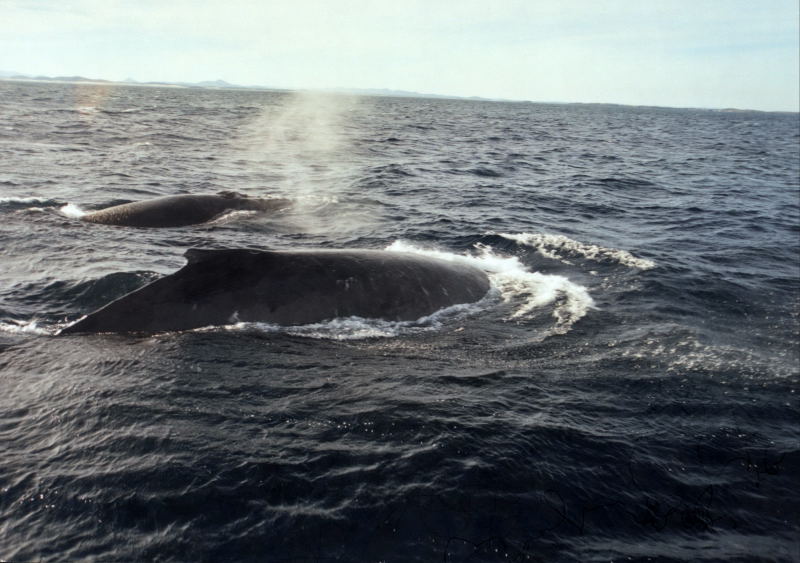
We went with Donna and Sandra up to Port Stephens to go Whale watching.
It was a great day (very cold) and we saw lots of whales.
Click here to see more photos from:
Whale Watching/
Slideshow
27. March 2002 11:03
by Rene Pallesen
0 Comments
4. February 2018 16:03
by Rene Pallesen
0 Comments
3. February 2018 15:03
by Rene Pallesen
0 Comments
2. February 2018 00:02
by Rene Pallesen
0 Comments
1. February 2018 23:02
by Rene Pallesen
0 Comments
Luang Prabang is without a doubt the cultural highlight of Laos. The old part of the city is beautiful and there are good reasons why is has been heritage protected.
I believe it has the most beautiful temples of South East Asia - they are not the largest or even the oldest, but the amount of details that has been put into them is absolutely stunning.
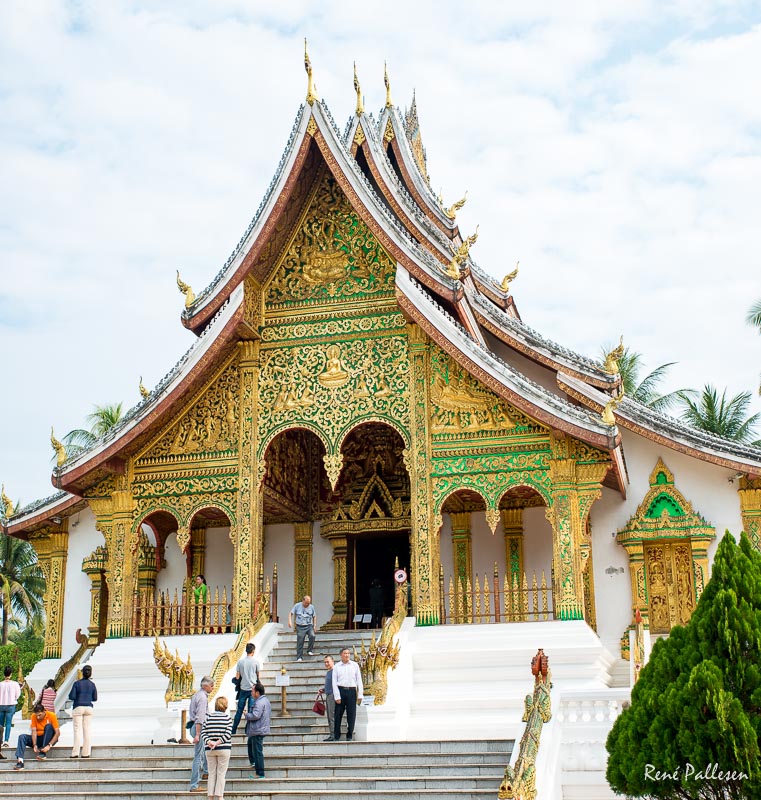
In addition to this there are a lot of other very interesting things to see in and do in the city, which I will cover in later posts.
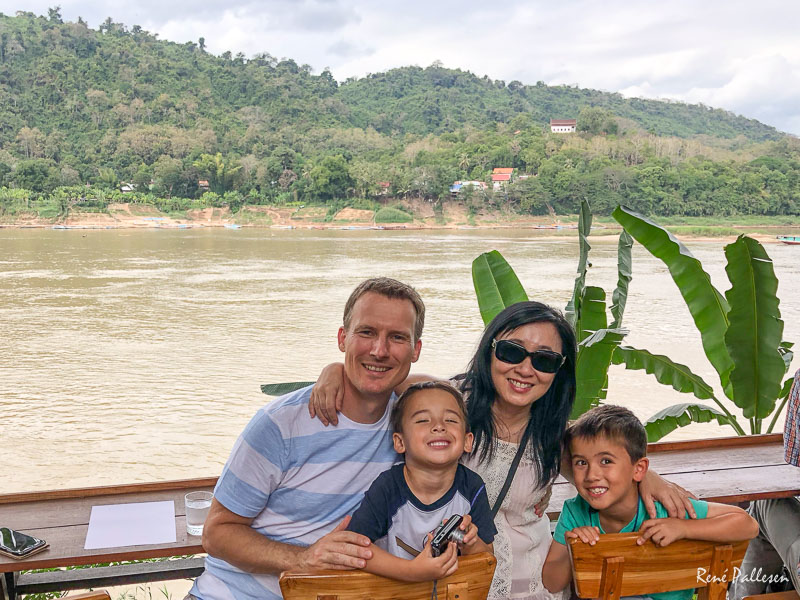
The city itself is situated between two rivers where one of them is the Mekong which is still fairly busy with slow boats and ferries (The chinese are building a large bridge across the river north of the city)
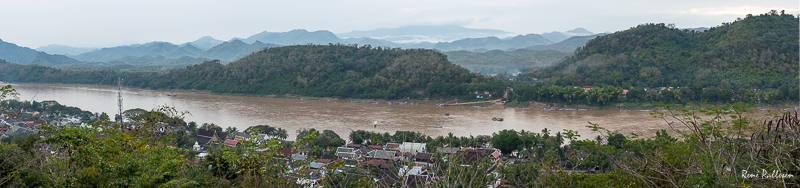
The section between the two rivers form the city itself which consist of four parallel streets each about a kilometer long.
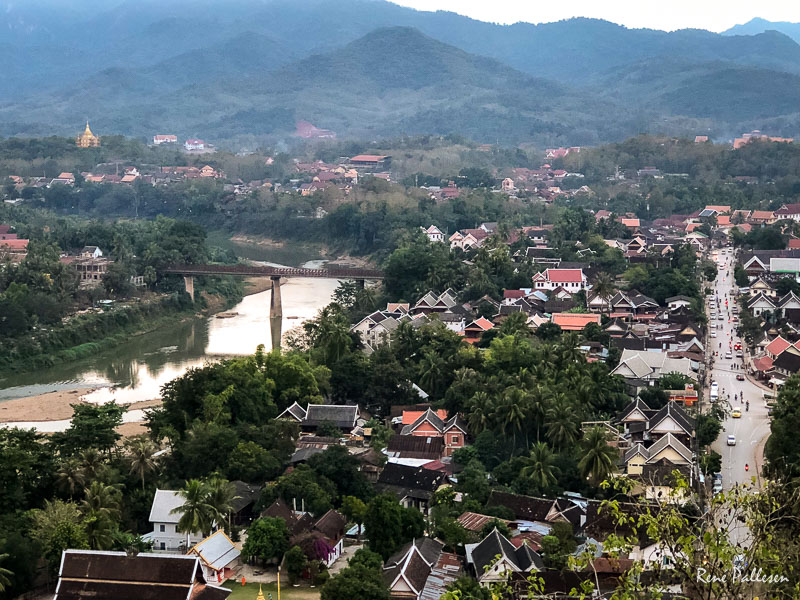
Everything within the city itself can be covered on foot and in the evening the main streets are blocked for card and reserved for pedestrians.
The place is dominated by a big hill with a small temple and stuba on top. It is very popular with tourists to climb the hill around sunset. And there is a great view of the mountains from the top.
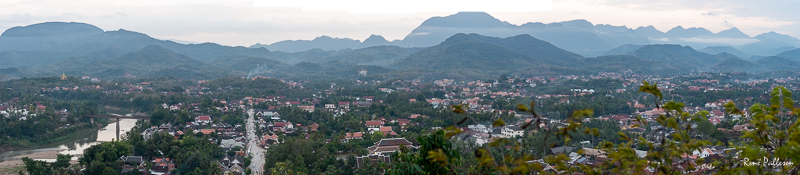
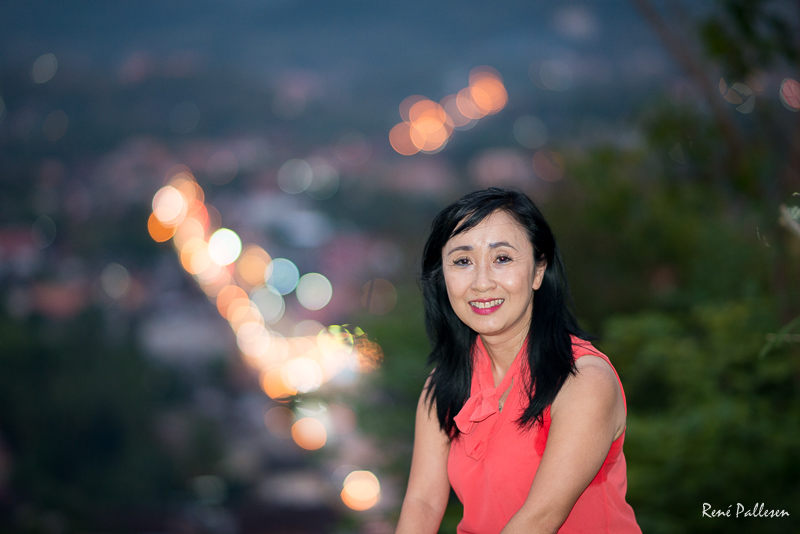
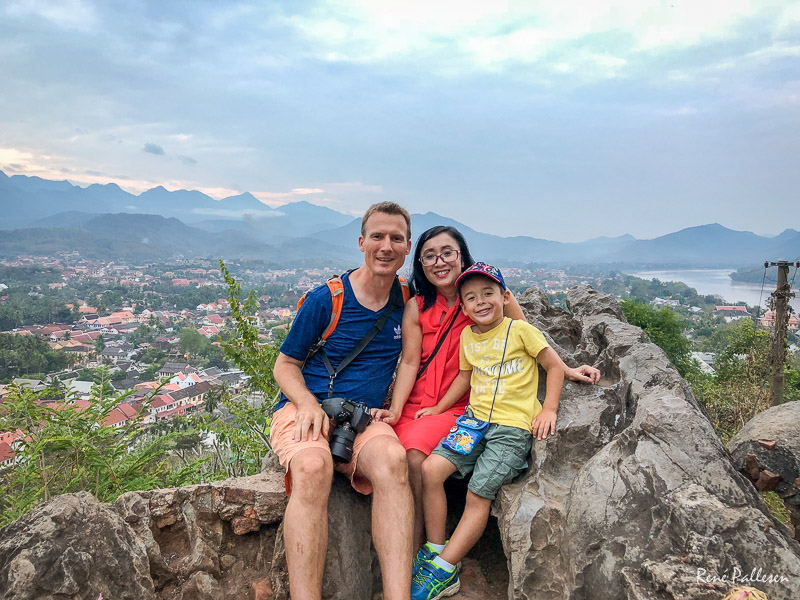
There are some things that have changed in the city since I was there the last time. The most noticeable is the amount of tourists and fine hotels - and here it is really the more wealthy middle aged Europeans you see. The main street of the old city is full of modern western European influenced restaurants, souvenir and antique stores.
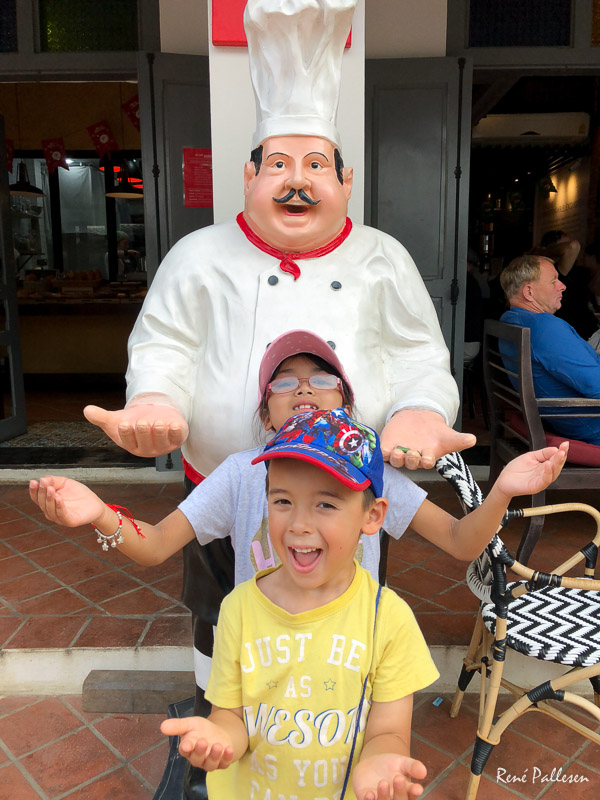
Fortunately you don't have to travel further that to the parallel streets to fine more low key Laos places to eat.
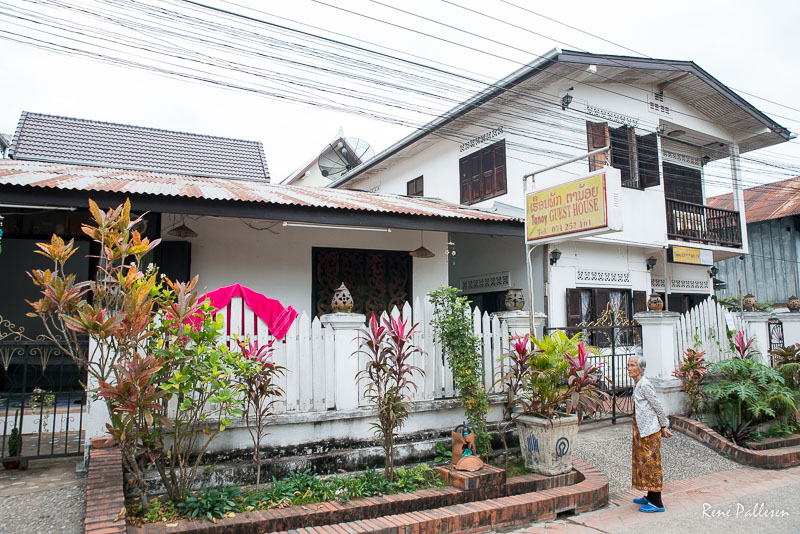
Also, last time I visited, I stayed in a small guest house near the city centre called Tanoy Guest House. When I stayed here I became good friends with the family and the place was named after the oldest daughter who's name was Tanoy.
The place is still there and apart from a larger fence it looks pretty much unchanged.
29. January 2018 21:01
by Rene Pallesen
0 Comments
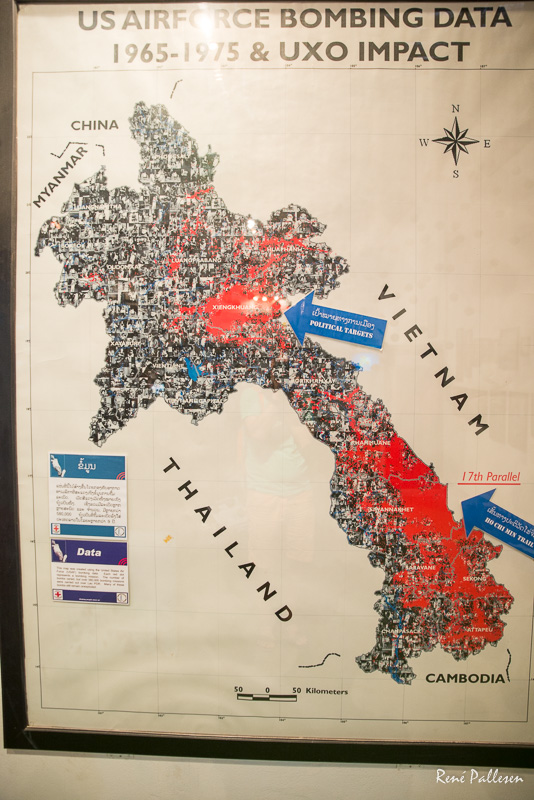
The 'secret' war in the 60's and 70's had a major impact on the country. A massive amount of bombs were dropped by mostly the Americans in mostly the Northern and Eastern part of the country. This was partly an internal civil war but also to stop the North Vietnamese using the country as a supply route.
To get an insight into this was I can highly recommend the books by Christoper Robbins called 'The Ravens' and 'Air America'.
The impact today is that un-exploded ordnance (mines, cluster bombs etc.) is covering large parts of the country and that every year lots of people including children gets injured or killed.
It is also very noticable, especially in the Hmong villages that there is no presence of old men. This is because most of these were killed either during the war where especially they took heavy casualties despite the American support or through 'education' camps after the war.
Last time I went to Laos I went to Plains of Jars which was one of the most heavily bombed areas and the debris was everywhere. We weren't going there on this trip, but to give the family and friends an insight into the history and the dangers to present people we visited the COPE organisation in Vientiane.
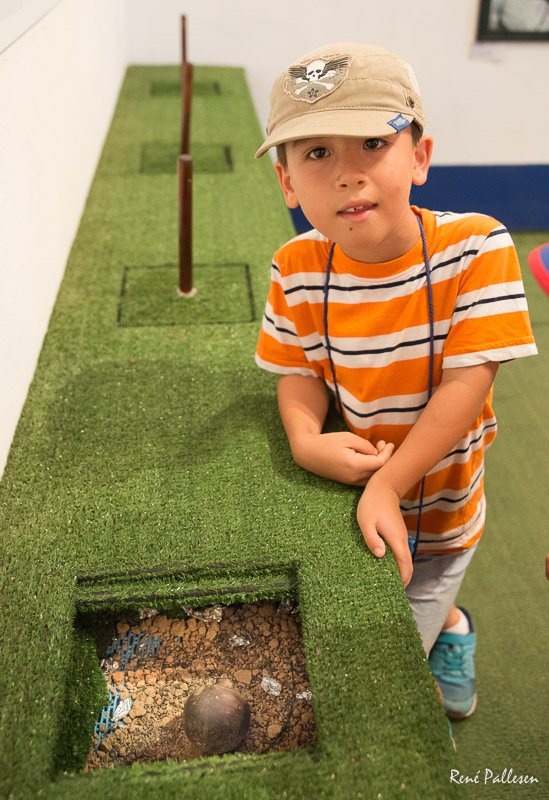
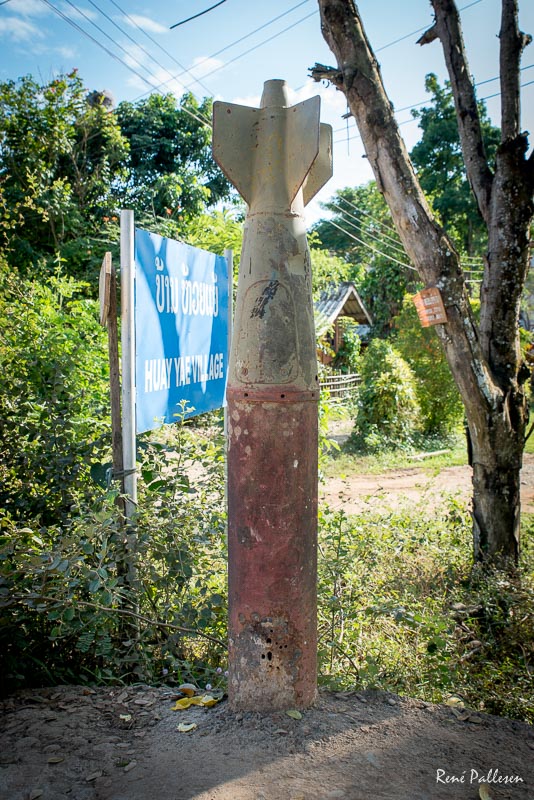
Here is Aiden in front of an unexploded (disarmed) clusterbomb. Looks just like a ball and tempting for kids to play with.
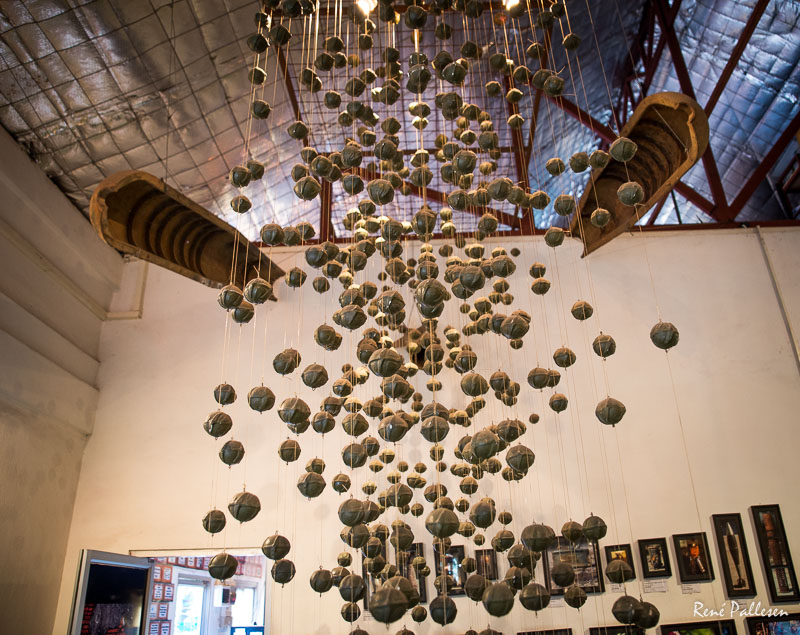
These were dropped from canisters on aircraft with several hundred in each load. It is estimated that 1/3 of these didn't explode on impact.
This map shows the areas most effected.
If you look for the bombs they you see them everywhere - mostly disarmed and used as fence posts.
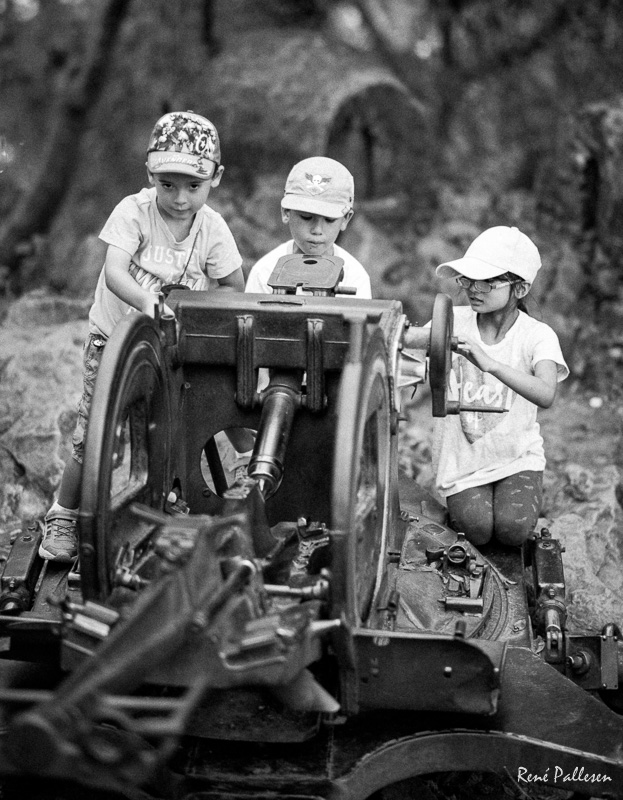
There is also remains of anti aircraft guns such as this one in Luang Prabang. The barrel had been removed but everything else still worked on it and they could turn it by rotating the handles, much to the amusement of the kids. During the war kids only a little older than our kids would have been fighting at the front lines.
18. January 2018 19:01
by Rene Pallesen
0 Comments
Model: Ally J Wilkinson
28. July 2001 10:51
by Rene Pallesen
0 Comments
28. July 2001 10:50
by Rene Pallesen
0 Comments
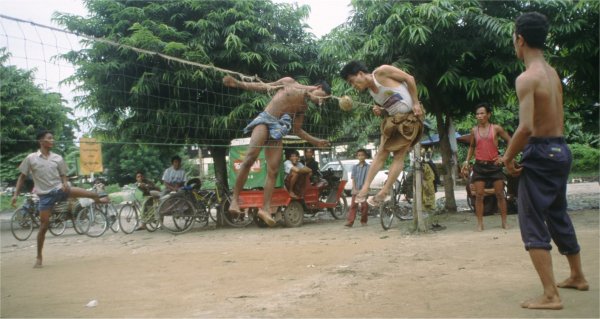
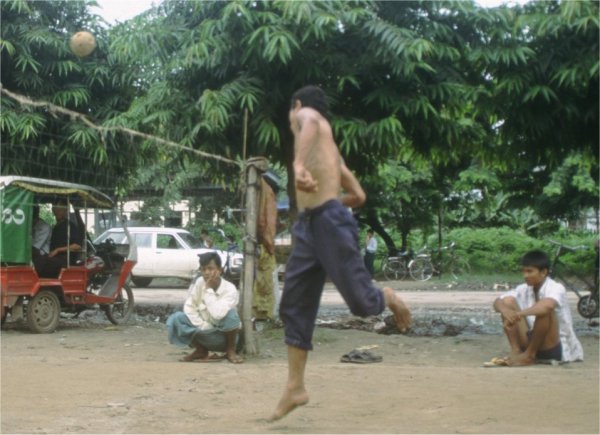
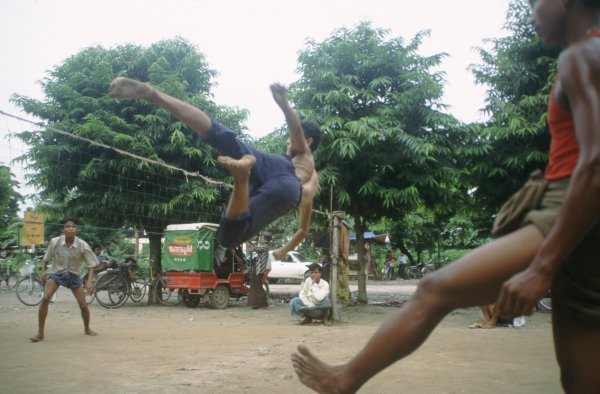
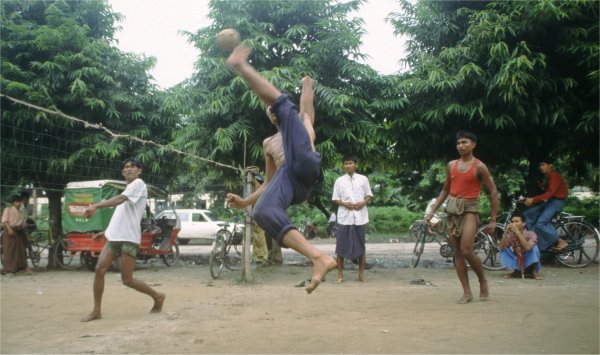
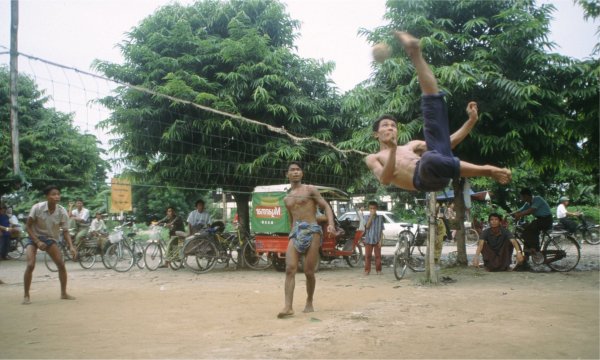
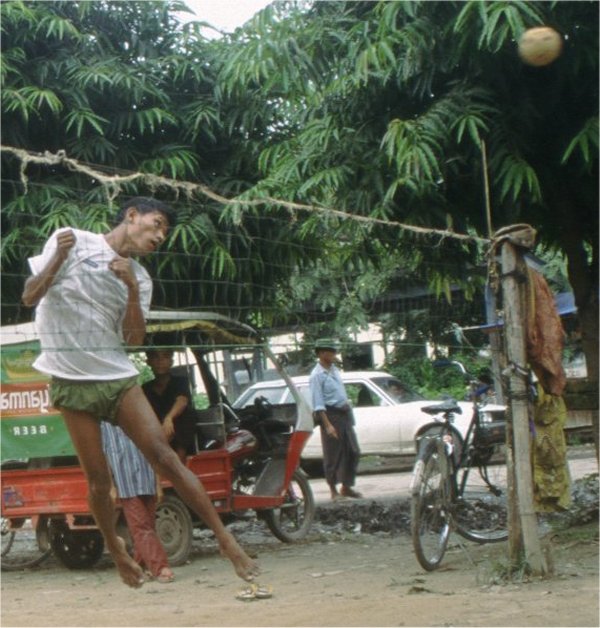
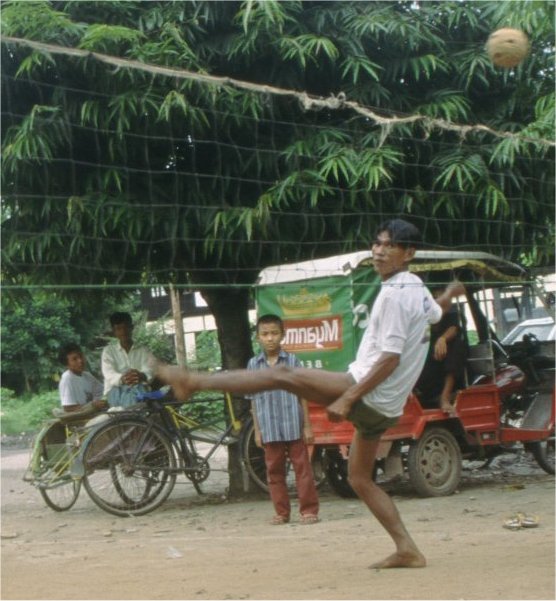
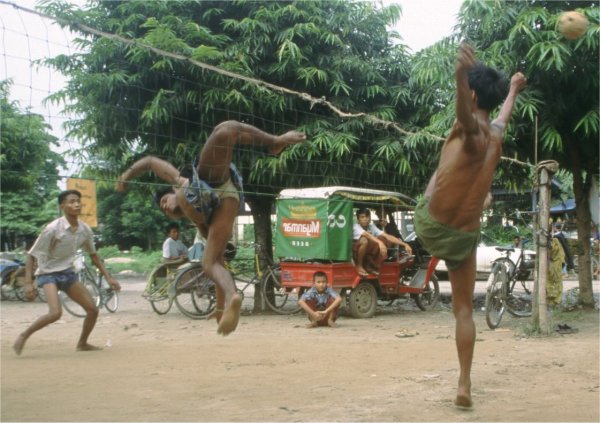
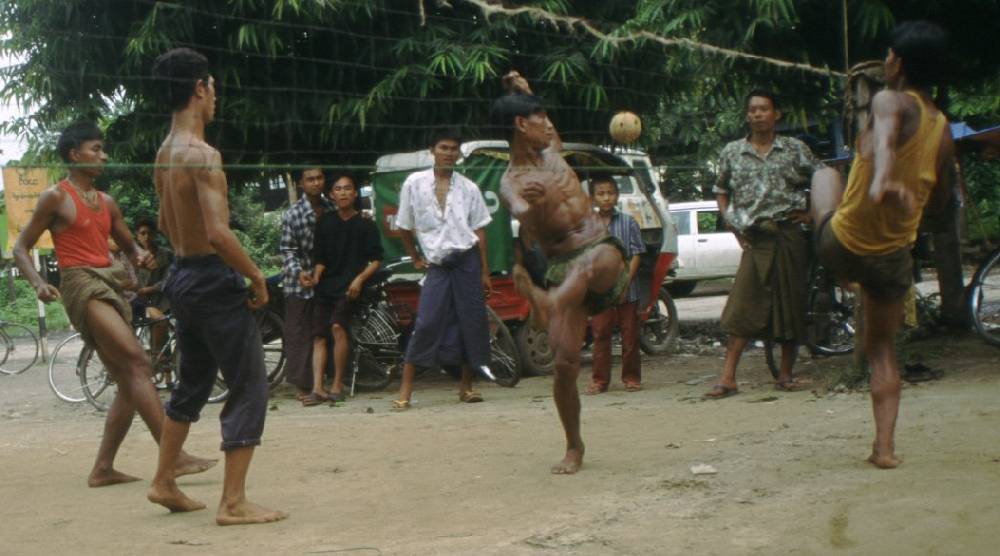
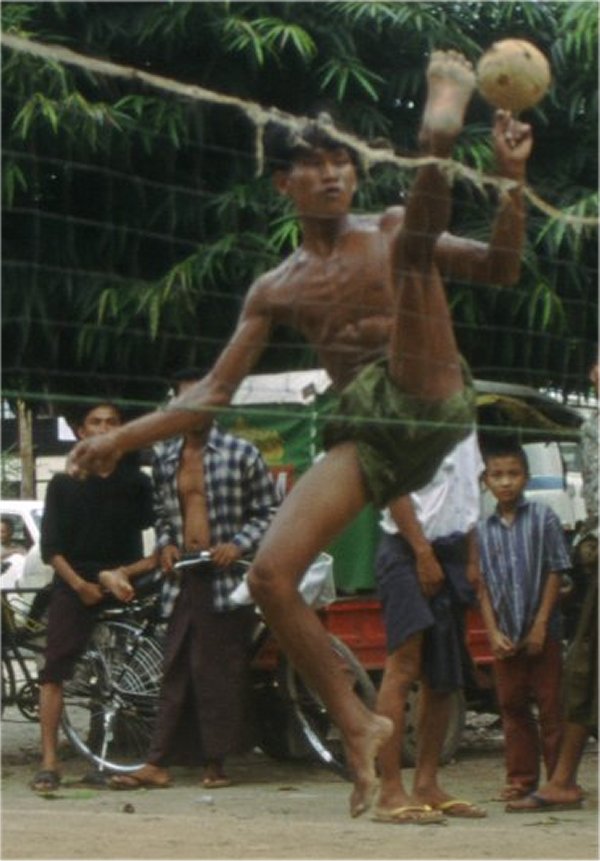 Whilst I was up north, I watched a rather interesting game of volleyball.
I have never seen such dexterity and agility amongst the players!
It was amazing to see how flexible these guys were.
Whilst I was up north, I watched a rather interesting game of volleyball.
I have never seen such dexterity and agility amongst the players!
It was amazing to see how flexible these guys were.

28. July 2001 10:50
by Rene Pallesen
0 Comments
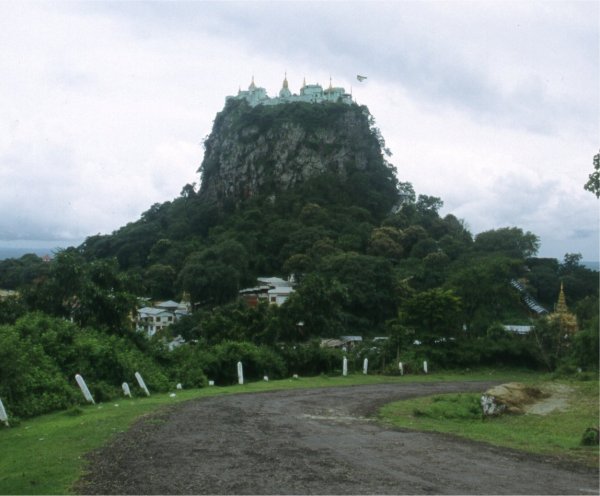
There is a monastry on Mt Popa - a hill located 50km away from Bagan.
When I was there, it was a cloudy day.
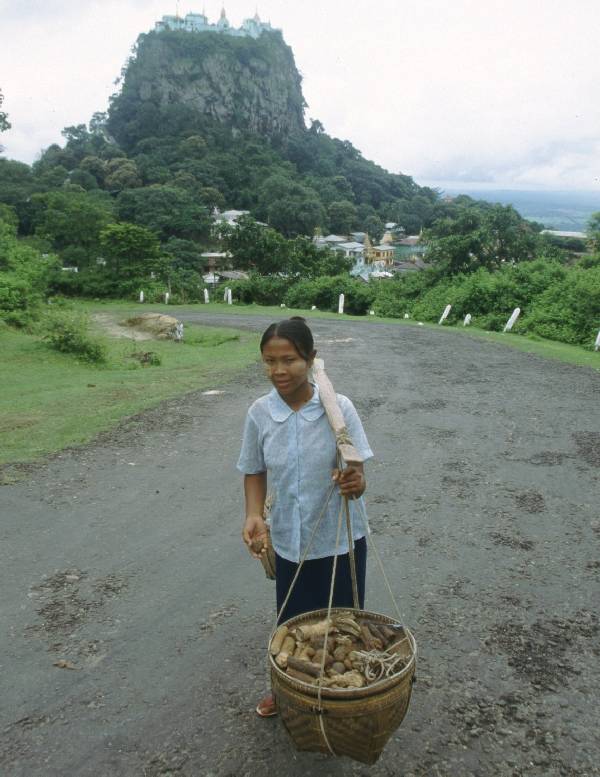
I ran into a woman selling petrified wood - quite silly really, considering the place was covered with it.
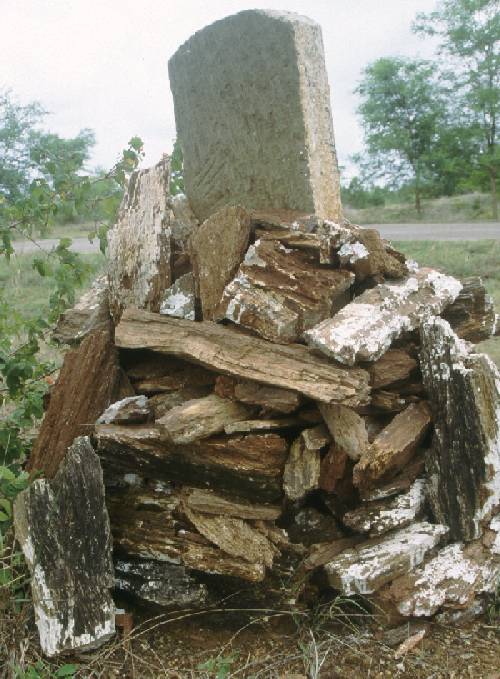
They must think tourists are stupid! *laugh* I managed to pick up a couple of small pieces to take back with me.
As you can see, there are stacks of them around.
And no... this is not a tombstone.
This is actually a road sign.
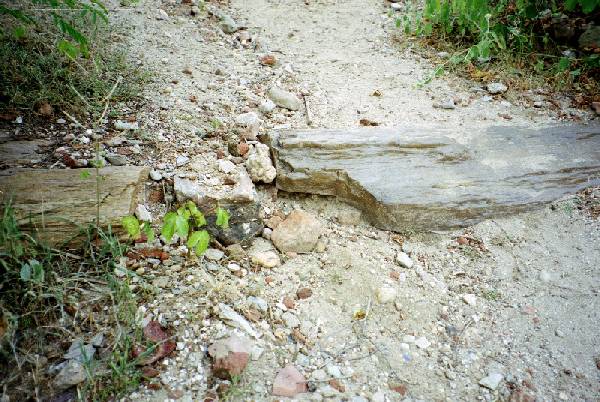
You would be surprised how big some of these pieces are - this piece below was actually about a metre long and 40cm wide.
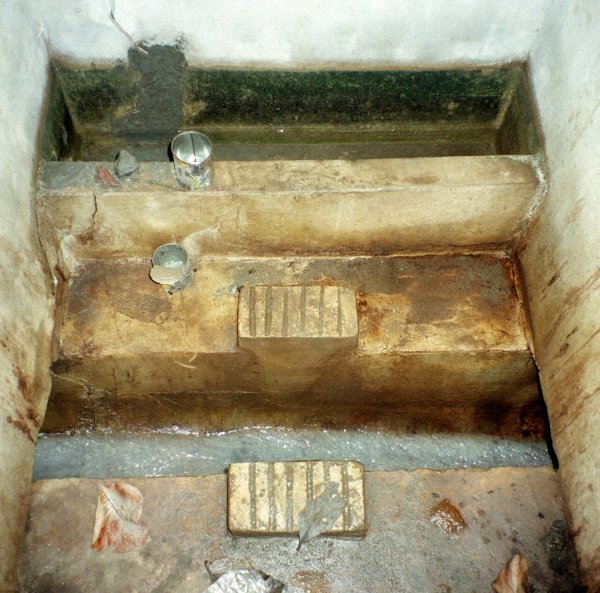
Actually what I found interesting were the toilets in Burma.
My girlfriend tells me that squatting over a toilet is quite common in Asia.
In many of the city areas, they would have toilets as we know them, and they would also have a carved hole in the ground, on which either side, one places their feet on.
Toilets in the rural area are more crude than that - a hole leading into a gaping pit.
However, what I found interesting about these toilets were that recycled running water was used to wash away any excrement. The water is first used for washing one self and then used in the toilets.
As there were a few toilet cubicles a row, sometimes you would see the excrement from a toilet uphill go beneath you! *laugh*
Very clever and environmental system, I think!
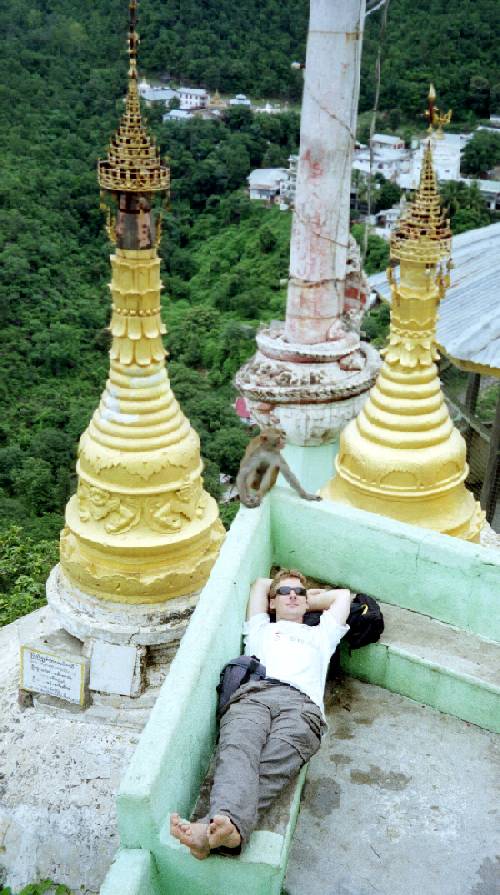
Trying to grab a snooze... *smile*
Like Schweddagon, most of this is real gold as well.
And yes, there is a monkey sitting near my head.
If you click to the next page, you will see that I have taken a series of photos of the monkeys.
28. July 2001 10:49
by Rene Pallesen
0 Comments
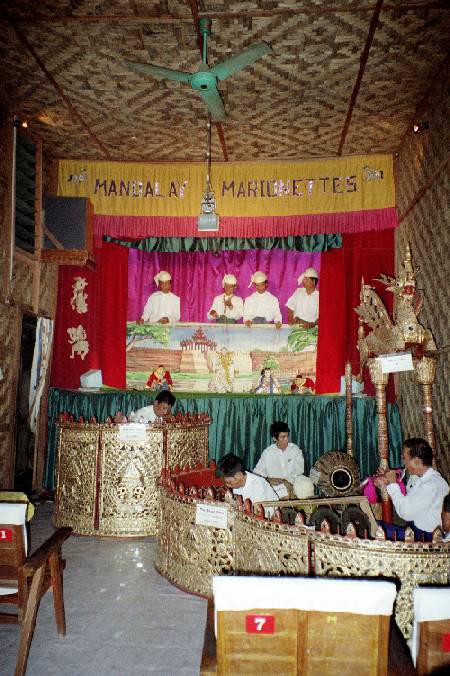
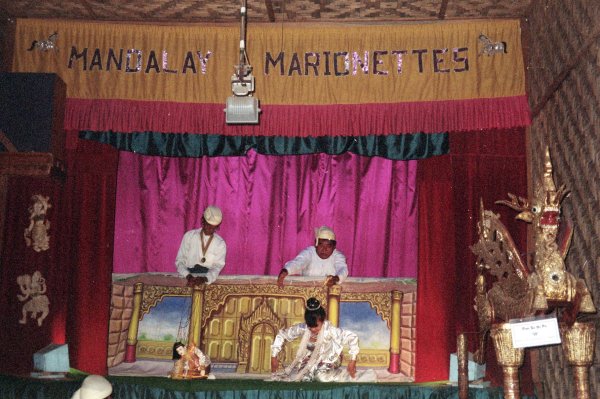
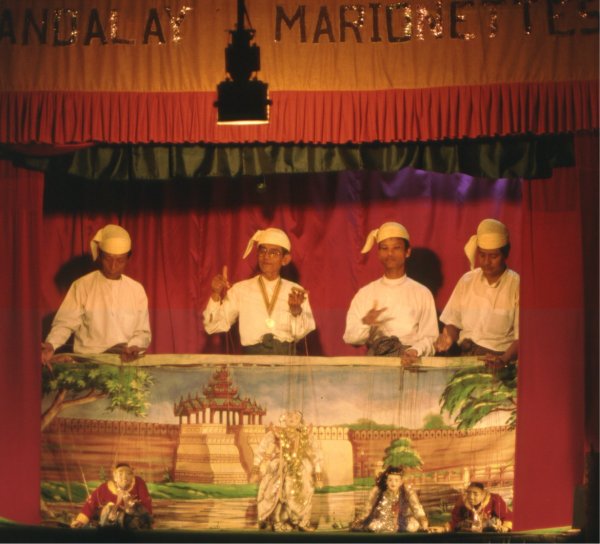
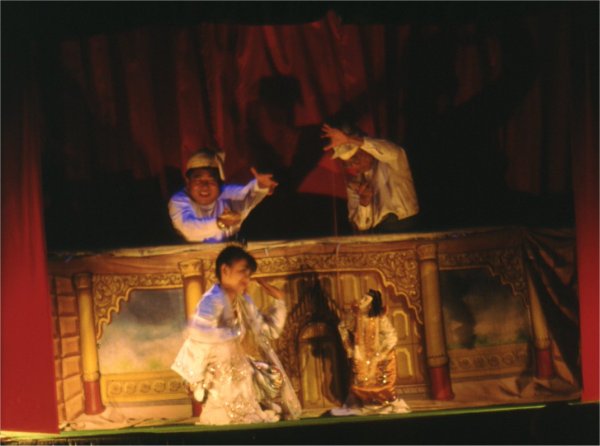
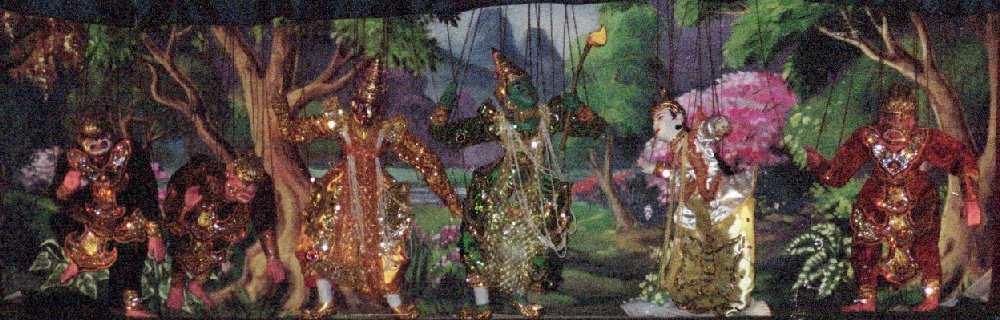
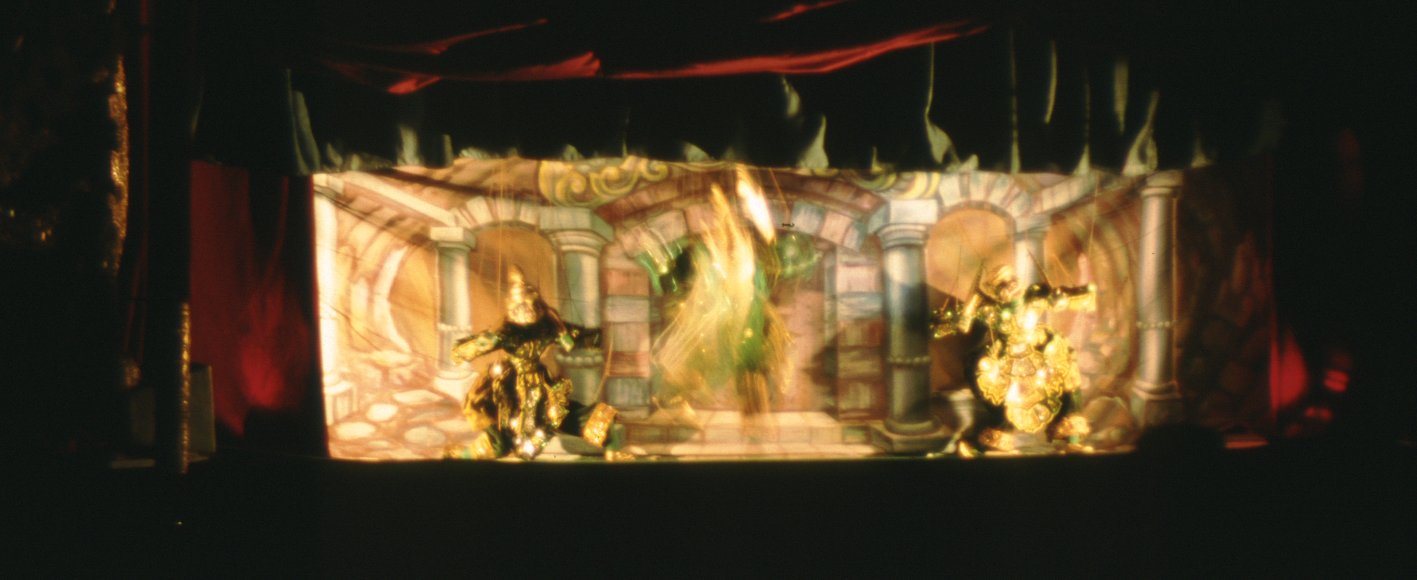
I saw the most interesting puppet show, known as the “Mandalay Marionettes”
There were 2 or 3 puppeteers out the front, with a live band of musicians.
Unfortunately, it was more of a show for the tourists, rather than the locals.
It cost 1,000 chats or US$2 per show.
28. July 2001 10:49
by Rene Pallesen
0 Comments
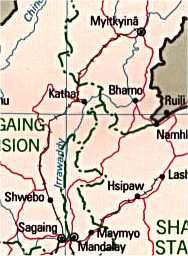
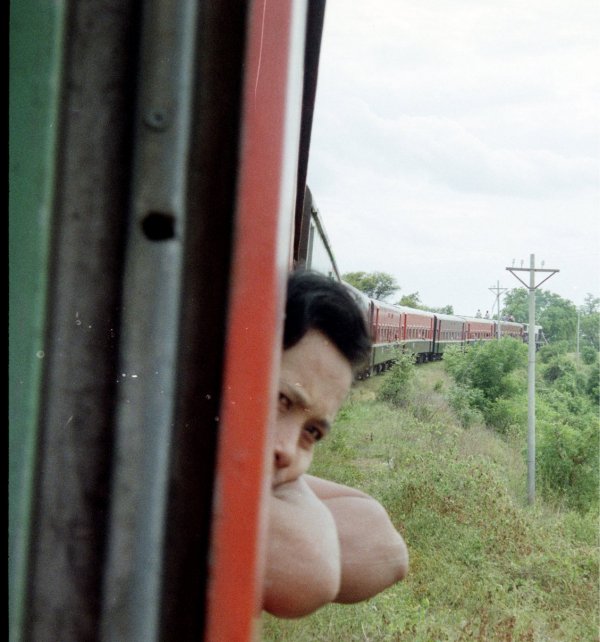
I decided take a 20-hour train-ride to Myitkyinã *laugh* it took 20-hours to get there by train because there was only one track.
It was definitely faster to run next to the train than to travel in it!
We had to wait for the oncoming train to return before we could travel north.
At one point, we crossed a bridge that was so rickety that I thought it would collapse any moment!
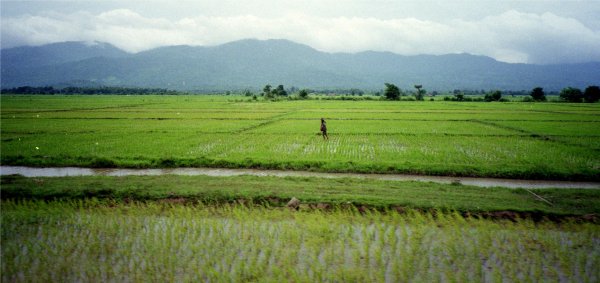
Locals working in the rice fields.
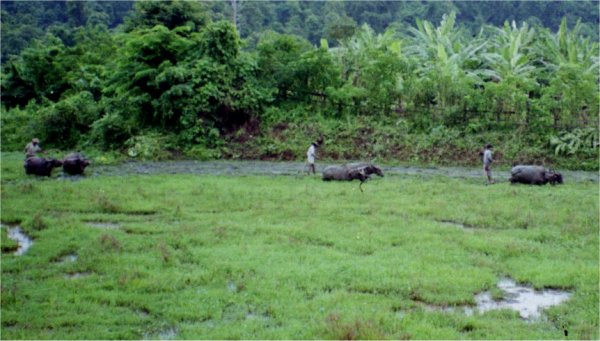
Locals using water-buffaloes to plough rice fields.
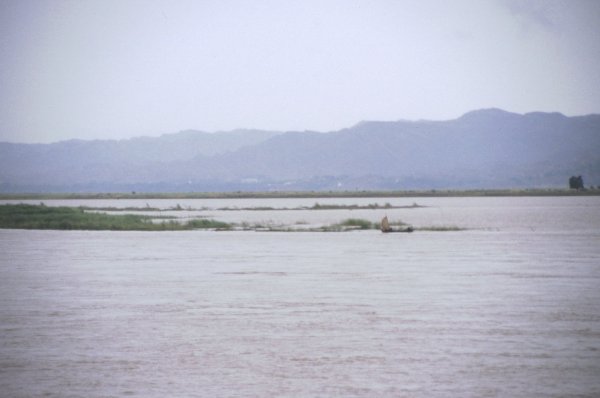
The train travelled along the Jrrawaddy River.
It would have been nice if I was able to travel to Mandalay via a riverboat down the Jrrawaddy River.
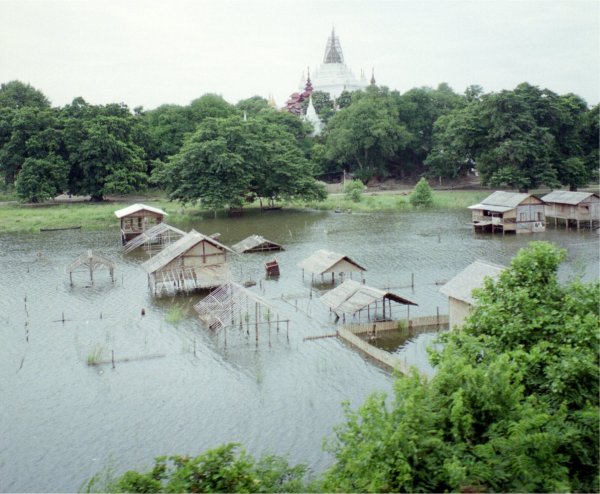
It was amazing to find out that people live “on” these lakes, by building houses on stilts.
This sort of housing is quite common in many parts of Asia, especially areas where monsoons quite frequently flood an area.
It is also very environmentally-sound, I think, and hurts the land less.
Most of the houses are made of wood.
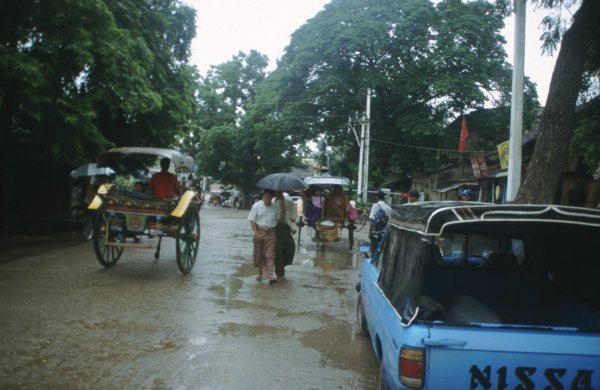
Myitkyinã is pretty dismal in rain!
There is a huge drug problem in Burma, especially through the crossings into China.
I have scanned a copy of a recent newspaper article about this problem in Burma.