Home

14. November 1999 11:10
by Rene Pallesen
0 Comments

Donkey Day Out . . .

14. November 1999 11:10 by Rene Pallesen | 0 Comments

donkey day out
Grandparents on donkeys


Whilst we were in Morocco, our whole family went riding on donkeys.

That included my grandparents! They needed a bit of support to keep their balance, but otherwise they were doing all right.

You can see my grandmother, my brother Claus and my mother in succession behind by grandfather.

My father on a donkey!


Here is my father! Do you not think that he looks so much like his brother in one of the photos on the 80th birthday page?


Claus on a donkey!


Here is my brother on the donkey. It is quite amazing how much these small animals can carry.


Mum on a donkey!


My mum on her donkey. Not quite as elegant (maybe relaxing a bit would have helped) as the rest of the family, but at least she didn’t fall off!


This is one of the few pictures I have of her where she is not smoking! (oh, and the other one at my grandmother's 80th, of course! It was a very nice picture of her smiling!

Me on my donkey!

Finally, someone got a photo of me on my donkey!

14. November 1999 10:59
by Rene Pallesen
0 Comments

Morocco ( 1999 ) . . .

14. November 1999 10:59 by Rene Pallesen | 0 Comments

morocco 1999


Our main reason for the trip to Morocco, was to come together as a family and attend my grandmother's 80th birthday. We also managed to explore Morocco, and even had a fun day riding donkeys - yes, the whole family - my grandparents, parents and brother!

We met different people and there were some really beautiful women in this country. There were some interesting buildings and we even found some strange goats!

The Women of Morocco . . .


One beautiful girlAnother beautiful girl

Girl being offered


People in the city tend to be more extremist/fundamentalist when it comes to religion, then those who come from the country areas.

One reason could be that the people living in the cities are mainly Arabic, and those living in the countryside are Berbers.

Berber women are less dressed up than in the cities.

Some of them are extremely beautiful.

Also, I noticed that those in the city tend to be more self-conscious of photos being taken than those in the country.People are naturally a bit shy, but by showing friendliness, it a makes it a lot easier to take good photos.

Hmmm... Do you know that I was actually offered to buy this girl on the right for two camels? I do not know why they wanted to get rid of her. Maybe she was making too much trouble in the village?

Anyway…I refused the offer.

Henna hands


The girls decorate themselves with what is called henna. It is a dye that stains there hands for a long time. They paint different patterns onto their hands and it actually looks very pretty. Much nicer than tattoos - which are permanent!


Return to Top


Goats . . .

A goat in a treeA goat in a tree (black & white)More goats in a tree!

We came across a couple of trees full of goats. They were climbing around the tree to reach all the green leaves. Our first though was that someone put them there, but they were too much out of reach for that idea.

14. November 1999 10:34
by Rene Pallesen
0 Comments

My Grandmother's Birthday ( Morrocco 1999 )

14. November 1999 10:34 by Rene Pallesen | 0 Comments

my grandmother s birthday morrocco 1999


Mon Grandmere

My whole family was in Morocco to celebrate my grandmother's 80th birthday.

This is my grandmother. Even as an 80-year-old woman, I find her pretty cool (you should see some of the pictures I’ve got of her with dark Blues Brothers sunglasses).

(No need to say that the flags are Danish.)

It was a family reunion. We do not all live in the same place, but all of us make this journey as it is one of the few times that we all get together. Unfortunately, there were a few of us who could not make it.

It was important for me to be there it was hard to tell whether the whole family will ever come together again as a large group, as my grandparents are no longer living there.


My brother


My brother, Claus!

Another person I find pretty cool is my brother.

He has not been well in the last few years, but I love him anyway
( Definitely can't do without my big brother )
My


Mum's pretty cool too! She will probably hate me for putting this photo on my homepage. But it is a really nice photo of Mum with a big smile.

She hates the idea of me climbing mountains, but at the same time she bought me a climbing helmet as a Christmas present. She thought it will keep me safer when I am so far off the ground.

Thanks Mum for supporting me.

I also find my dad pretty cool. He’s a bit of a nerd just like me which means that we probably understand each other better than anyone else in the family.

My Dad's brother & his wife


This is my dads brother and his wife. The resemblance is unequalled. My dad and his brother looks very much like each other. They have the same bad habits (just like my grandfather) and both their wives are smoking like chimneys.
Me stuffing myself!


Finally, a picture of me...

I do belong to the family even though most of them have probably forgotten about it by now!

I am sitting outside one of the food places on the local market. We each got a serve of excellent calamari, shrimp and fish. I think this was the best meal I had while I was in Morocco.

Most tourists would avoid a place like this just because of the hygiene, but I have never had diarrhoea because I had been eating local food.

Perhaps all this travelling I do has made me immune to germs and bugs! Or maybe I just pick good food!


Do you want to see my family on a Donkey Day out?
Click Here!


Created: Jan 2000 Last Updated: 16 Sept 2001

15. March 1999 11:00
by Rene Pallesen
0 Comments

Laos

15. March 1999 11:00 by Rene Pallesen | 0 Comments

laos 1999


Laos is not a place one can forget.

One day I would like to go back there again in my travels.

It is a beautiful place with friendly people who welcomed me with open hearts.

It is also a place of sorrow because of war and loss.
Yet the people try to go on with their lives despite the war.
They live in hope and their beliefs keep them going.

There are tribes there who seem unaffected by western influence and change and keep to their tradition after all this time.

I met many children there, some happy, some sad.

I also spent time with a special family and also managed to enjoy the local food.



War . . .


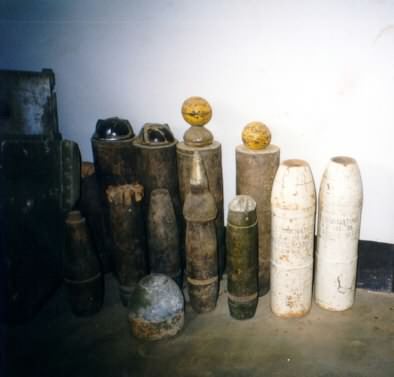
Various types of bombsMore bombs

All the eastern parts of Laos was heavily bombed during the Vietnam War. More bombs were dropped in this area than the number of bombs dropped during the entire Second World War (approximately 10,000 bombs for every citizen of Laos). Laos has the sad reputation of being the most heavily bombed country in the world ...

Ever.

The Ho Chi Min trail went through Laos, and the Americans tried to destroy it with every means. They tried everything from carpet bombing, dropping cases of Budweiser Beer (hoping that the Vietnamese soldiers would get drunk) to dropping washing detergent during the wet season (hoping the trail would get slippery). It is estimated that the Americans only succeeded in stopping 10 percent of the traffic on the trail.


In Vietnam, the Americans were not allowed to bomb within 500 meters from temples and hospitals. Their rules of engagement furthermore said that they were not allowed to return to their home base with a bomb load. The result was that they flew across the border to Laos and dropped all their bombs there. In Laos, there were no rules of engagement. They could bomb whereever they wanted to bomb.
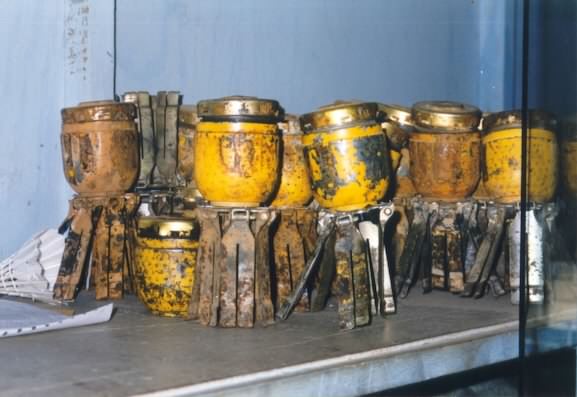
Cluster bombs


This also means that there is quite a large amount of UXO (Unexploded ordnance) in the country. Land mines and unexploded cluster bombs (shown on left) are some of the biggest problems.

In Laos, there are still approximately 4 accidents per day resulting from UXO.

Bombs outside a house


Sad as this may seem, people have been pretty creative about using some of the leftover bombs. In this case they have used a couple of 2000-pound bombs as decoration outside the house.
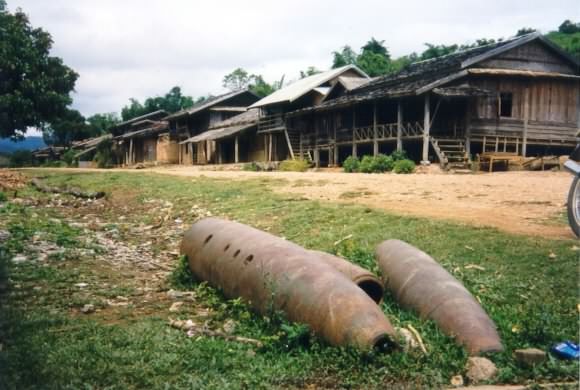
Bombs everywhere


No matter where you go you are reminded of the war.

In all the local villages there are unexploded bombs and shells from the cluster bombs.

Bombs used as scrap metal


A lot of the remains from the war are sold as scrap metal. In this pile there are shells from cluster bombs, wheels from tanks etc. >>>
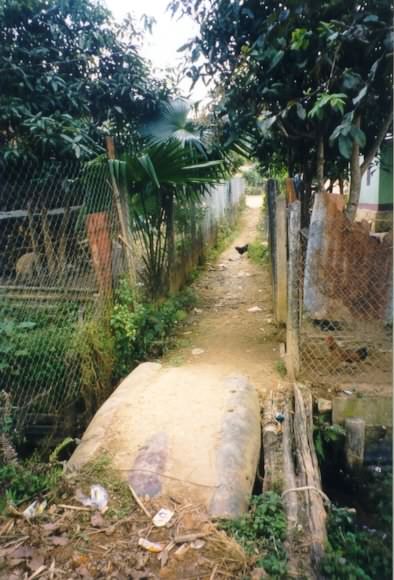

Bridge made from bombs


<<< Shells from the cluster bombs have been used to make this bridge.


Fences made from bombs


Here as fence posts outside a house. >>>
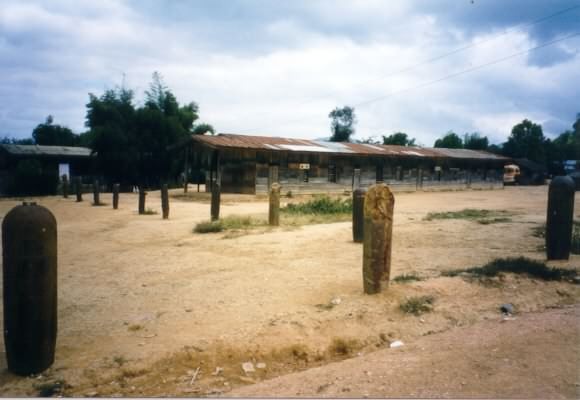
School with bombs


Outside a school, the schoolyard was surrounded by the shells from the American cluster bombs.


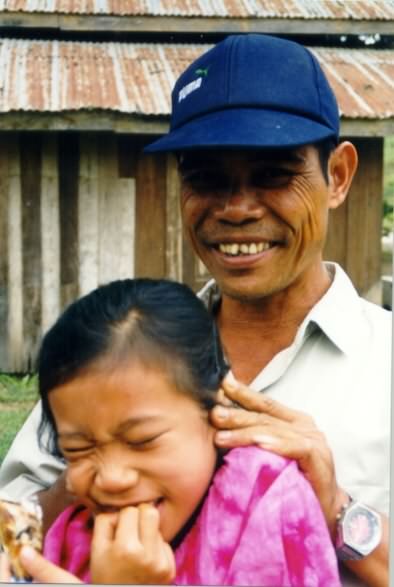
Grandfather  his orphan granddaughterSorrow . . .


This girl's parents were both killed by Hmong guerillas in 1997.

There are still areas where there are lots of problems with guerilla warfare. This is especially the case on Route 7, along the eastern border towards Vietnam and in the western part of Laos west of Vientiane, in the area between the Mekong River and Thailand.

The government is trying to control these problems, but it is difficult with such wast areas of jungle.

Unfortunately such incidents have affected a lot of people. This girl is not the only person in Laos who has lost her family.

Remember that the area has virtually been a permanent warzone since the Vietnam war, until the mid 90’s.

The person behind the girl is her grandfather.
He is now looking after her to make sure that she gets an education

He is after all, her only family left.
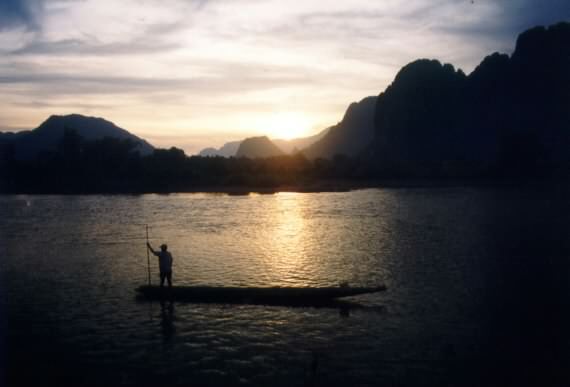


Beautiful SunsetHope . . .


Looking at this beautiful photo, it seems really serene and calm.

You couldn't really tell that things are pretty bad in some parts of the country.

The northern part of Laos is especially poor. The mountainous terrain limits what can be grown. Outdated farming methods using “slash-and-burn” of whole mountainsides are not very appropriate for feeding a growing population. A lot of the western countries are represented in Laos with health care workers. What Laos really needs at the moment is help using more environmentally-friendly farming methods, which at the same time improve the growing of crops. The slash-and-burn method basically means they burn a whole mountainside to grow rice. There is nothing left to hold back the nutrients in the soil, and fertiliser is not added. After a few years there are no more nutrients on this mountainside and they move on to the next mountainside. They need to learn how to grow crops in terraces and add fertiliser from their animals to the soil.
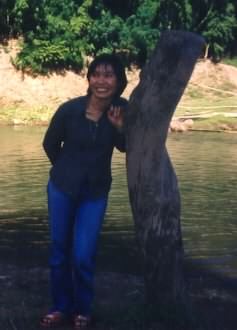

Vinchu - a Red Cross worker

One of the problems with growing rice is that the men are unempleyed most of the year while they are waiting for the rice to grow.

Vinchu is working for the Swiss Red Cross. She intends to buy a piece of land in the 32-kilometre village of Muang Xai, and convert it into a fish farm. This would keep some of the men occupied for most of the year. The profit from the fish farm could be used to take care of the village’s basic needs such as education of the children and buying medicine.

Vinchu is one of the few catholics in the country. She is fluent in English and has had a primary healthcare education. This has enabled her to get a job for one of the foreign representatives in the country, which means she is getting a salary that is considerably higher than what her peers get. Also she gets paid in US dollars instead of kip, the local currency.

On average, the government employed in Laos receives 100.000 kip a month (approx US$30). This is not enough to survive on, so most people have either two jobs or let the wife work as well. Lots of people have small vegetable gardens. This allows them to grow a few things to sell at the markets.
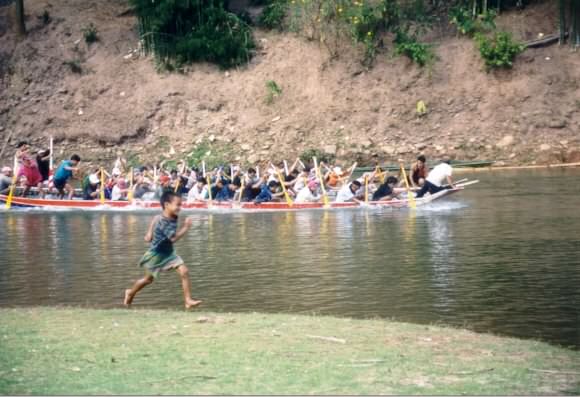

Dragon Boat Race


The employees from the hospital in Muang Xai have not received any money from the government for more than 6 months. The government declared that they should participate in the annual dragon boat race.

Vinchu paid for transportation of the employees to the local river, and other expenses, from her own paycheque.

Most of the people in the boat are doctors and people from the hospital.
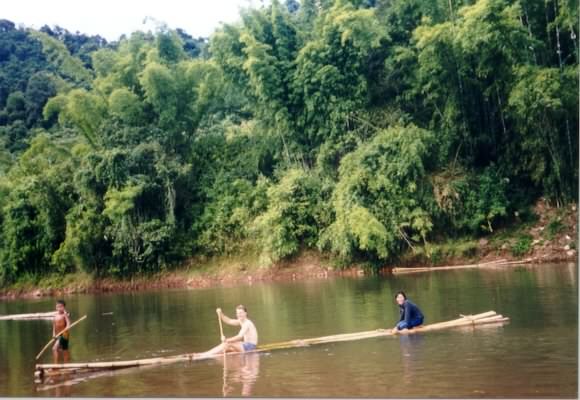


Me in a sailing raft


Vinchu and I in a sailing raft!


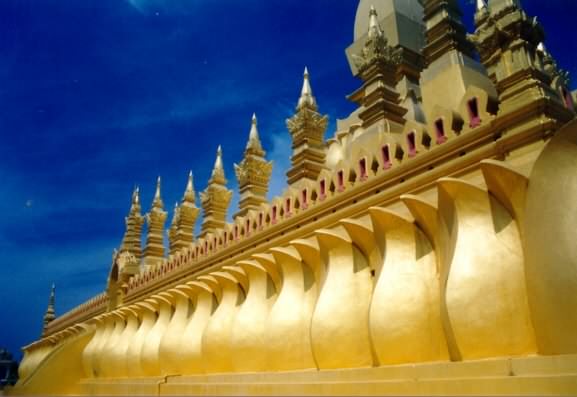
Great Stupa at Vientiene
Religion . . .


Buddhism is a big part of Laos.

The holiest place in Laos is the stupa in Vientiane. There are practically no temples in the eastern part of Laos due to heavy bombardment during the Vietnam War. The only great temples around is the one in Vientiane and Luang Prabang.
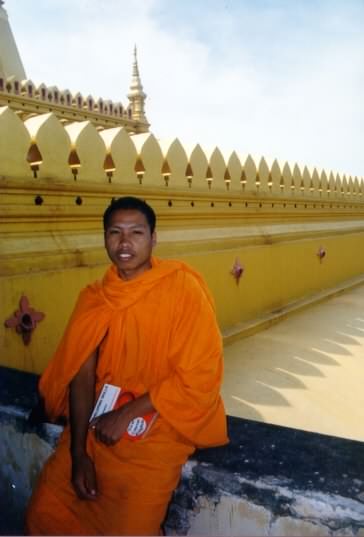

Monk at Great Stupa


The Buddhists in Laos are a bit less extremist than in Thailand. People do not have small alters in their homes, and it is not compulsory for the males to become monks.

In Laos, becoming a monk is voluntary. It is mainly people from the poorer parts of the country that become monks, because it is a good and cheap way to get an education. Some of them are studying English and are therefore very eager to practice their English on the tourists.
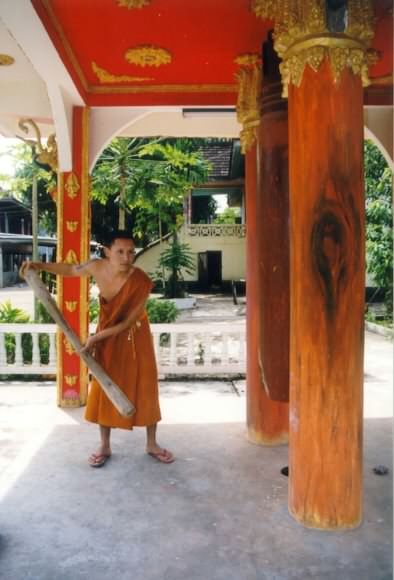
Monk calling for prayer


When they call the monks in for prayer, they either beat a big drum or the use a wooden ram to chime the bell.


Tribes . . .

3 Hmong girls in traditional garb

There are three main tribes in Laos. One of these tribes is called Lao Tsung (or HMong).

They live mainly in the northern part of the country.
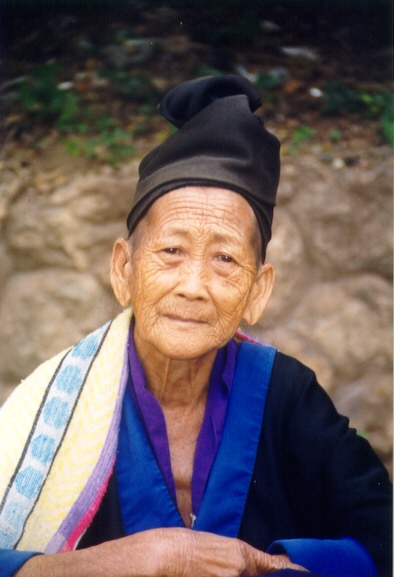
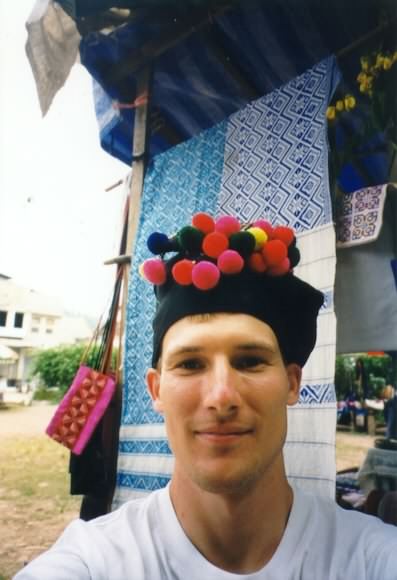
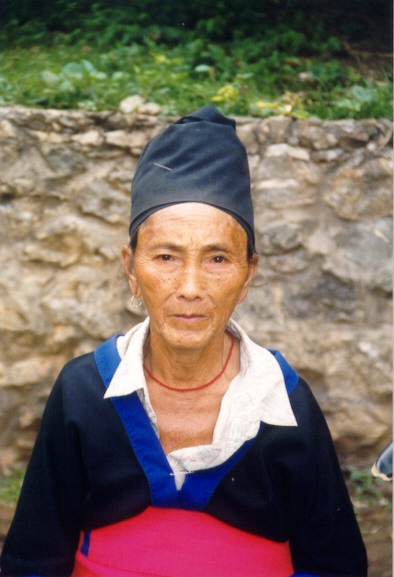
Old Hmong WomanMe wearing a Hmong hatOld Hmong Woman 2

The women still wear traditional clothing. I am wearing a traditional Hmong hat.

A Hmong Woman and I

The Hmong have a dialect that is different from the other tribes. They keep to themselves and are very isolated from the rest of the society.
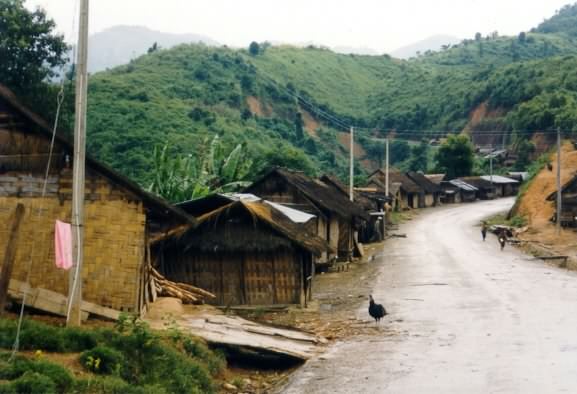
Hmong Village

The difference between the Hmong village and the other villages is that the Hmong build their houses on the ground instead of on stilts.

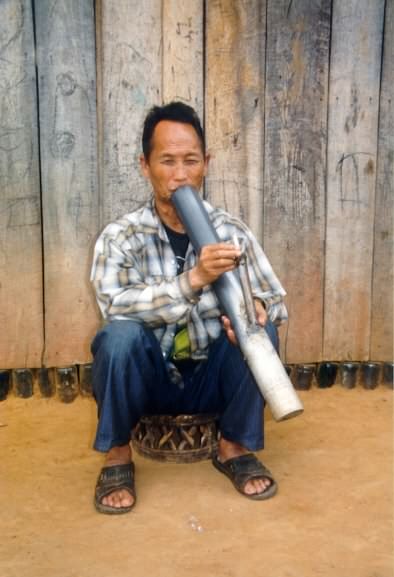
An Opium PortraitMan smoking opium

The Hmong is responsible for most of the opium growing and trading in Laos. The government is trying to stop this trade, but it is difficult as the Hmong live in areas that are not easily accessible.

The Hmong are also responsible for most of the problems in the area around Route 7.


The Children of Laos . . .

The kids in Laos are wonderful. There are always kids around you no matter where you go and they are always very joyful and curious to find out who you are.
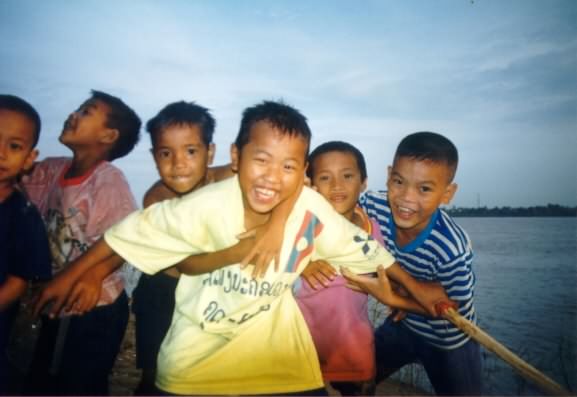
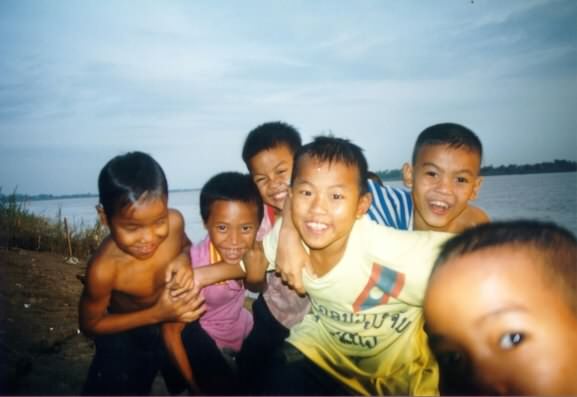
Kids playing by a riverKids playing by a river

You see a lot more kids playing with each other in Laos than in the western world. I guess it also somehow encourages them to grow up being socially responsible. This could be the simple reason why people are so friendly and welcoming in this country.

Lots of people say that it is because of the religion but I believe that it is something more fundamental than that. People in the western world have just forgotten how to be responsible towards each other. Why? Maybe they do not spend enough time in one another's company.
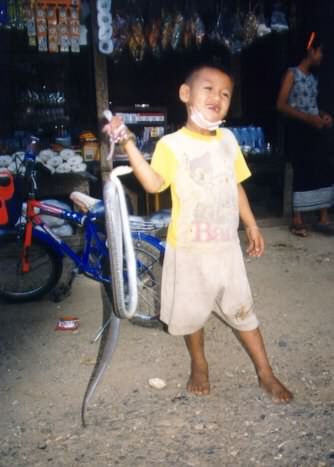
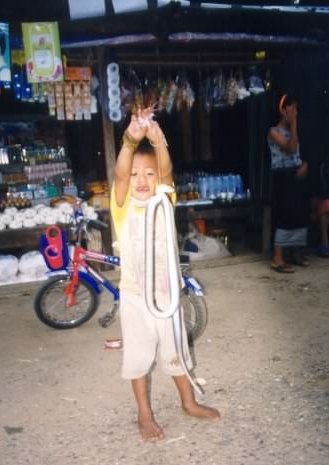
Kid playing snakeKid playing snake

In Vang Vieng, I saw a kid playing around with a snake. It did not seem to bother him or his parents that it might be poisonous.
I don't know if the pad on his chin was caused by the snake. I doubt it though since he had been very sick.

He was pretty proud of his snake.
I am not sure what kind of snake it was. I did see a few other snakes around, especially at the temples.
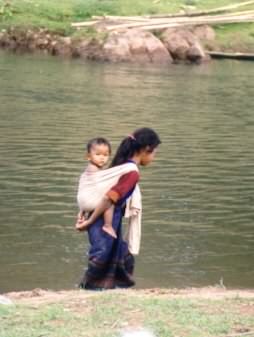
Girl carrying child


It tends to be the elder children’s task to look after their younger brothers and sisters while the parents are busy. The system seems to work fairly well since the whole group of children play together, no matter what their age group. It is therefore not such a big burden as some might think.

The photo was taken approx 40 kilometres north of Muang Xai (where Vinchu was).
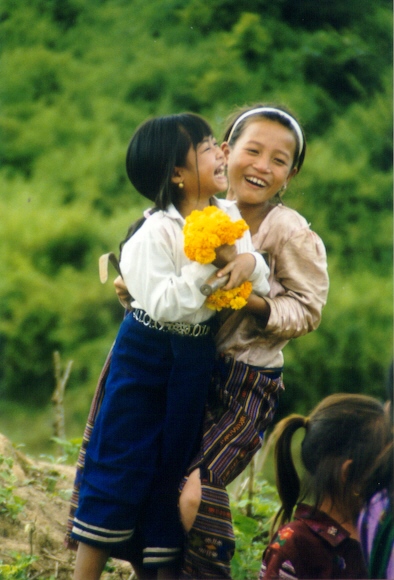
Beautiful flower girls


This photo on the right is one of my favourites.

It was taken in the northern part of Laos, at the 32-kilometer village outside Muang Xai.

The girls were collecting flowers outside one of the local schools.
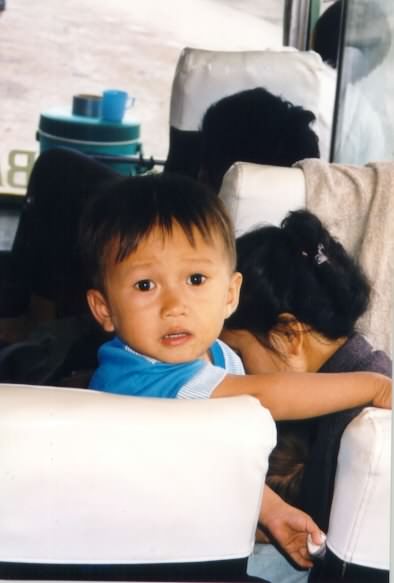
Beautiful flower girls


The younger kids tend to be afraid of Europeans. Most of them have never seen a white face before.

This little fellow here was a bit worried about my presence...
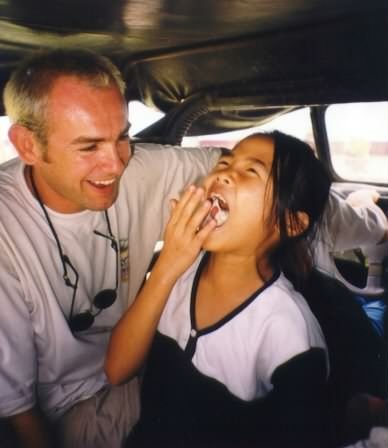
Girl eating chewing gum


This is the girl’s first piece of chewing gum... Pretty interesting to watch! *smile*


In the cities kids love to have their picture taken.
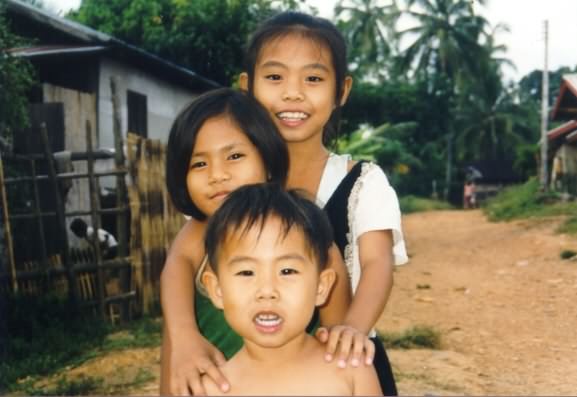
3 kids


Tanoy's mother and friend


The Tanoy Family . . .

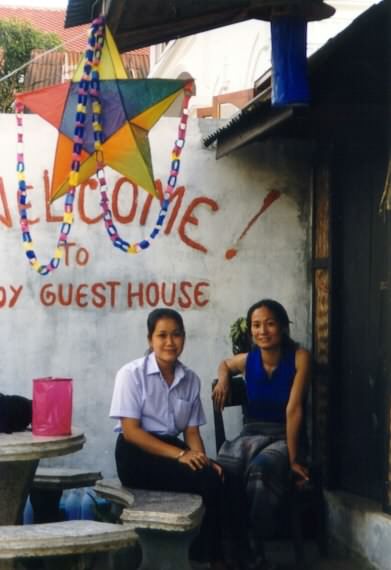
I stayed a few days with a family running the Tanoy Guest house.

The eldest daughter of the place was called Tanoy.

The girl on the left of this photo is one of Tanoy’s friends from school.
The woman on the right is Tanoy's mum. Tanoy’s mum is 40 years old and has had 6 kids. She does not look that old and still looks absolutely stunning.


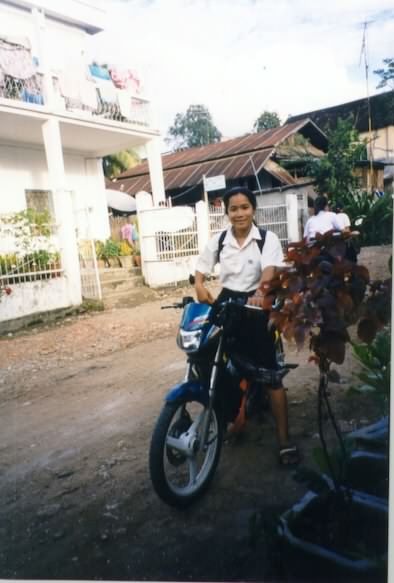
Below are a series of shots of Tanoy herself.

I guess she will one day take over the guest house.


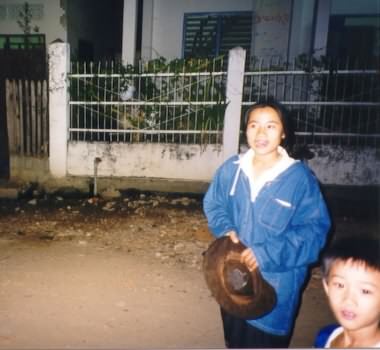
Tanoy herselfTanoyTanoy on scooter

Whilst I was staying at the Tanoy Guest House, I saw the preparations for the annual Water Festival.

Every year when the monsoon ends and Water Festival coincides with the full moon, The festival included Dragon Boat racing.
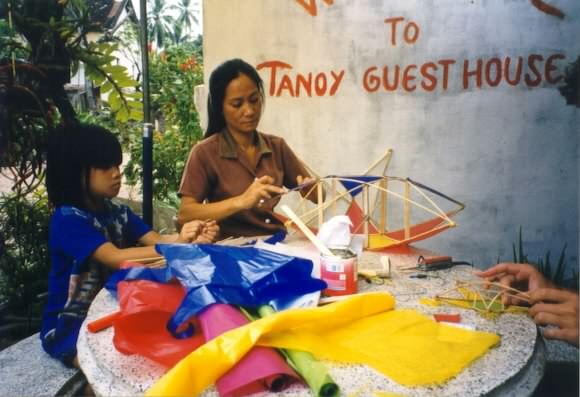
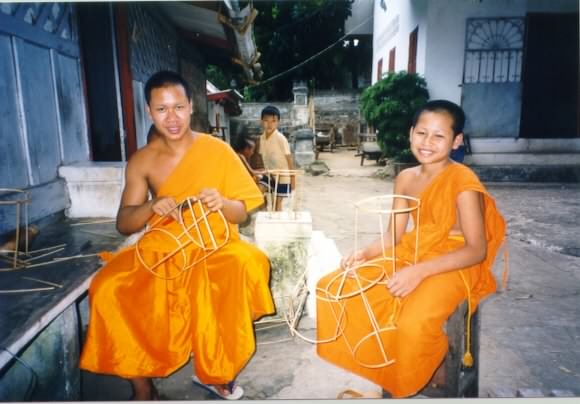
Tanoy's mother making lanterns for the Water FestivalMonks making lanterns for the Water Festival

Everyone was taking part by making lanterns for this festival, including the monks!

All the monks were making lanterns to decorate the temples.

Man drinking already!Party starts!Girl on my shoulders

The festival lasts for three days.

During the festival, they celebrate with all their friends and families. They also drink a lot of “Lao Lao” (or Laos Whisky), which is a kind of rice wine.

Everyone walks down to the river during the day to watch the boat races.

Later in the evening, everyone parties some more and drinks more beer. It does not matter that it is pouring down. The whole village is at the party and everyone is happy.
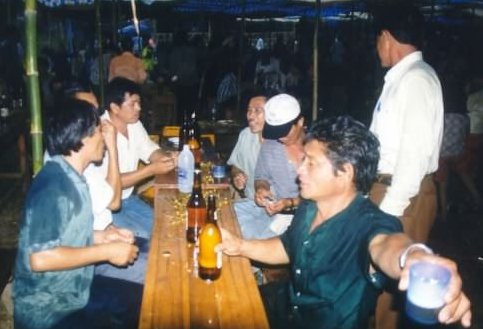
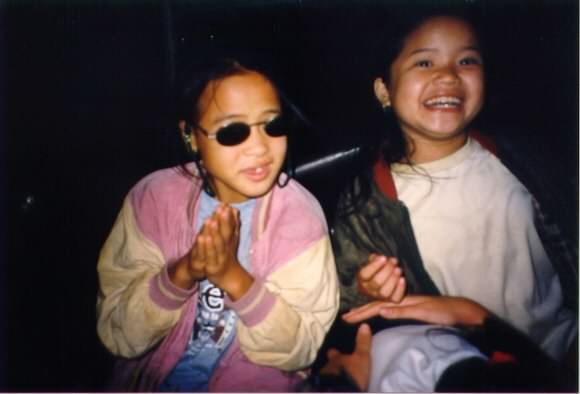
Drinks galore!The kids are also having a good time!

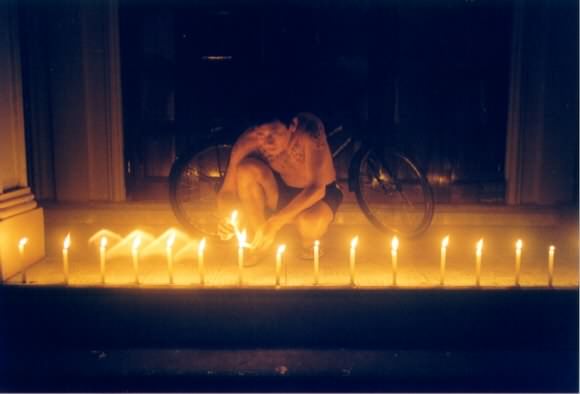
On the night of the festival, people light candles. They also float the candles in the rivers. House lit with candlesMan lighting candles

Unfortunately it was raining a lot that night, so people had difficulties keeping the candles lit.
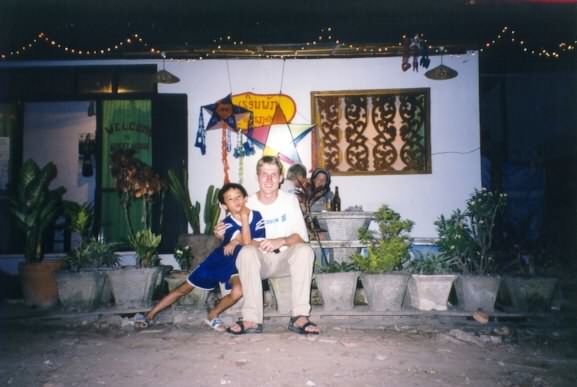
Outside the Tanoy House

At the end of the day, I managed to get a photo of me sitting outside the Tanoy Guest House!


Food . . .
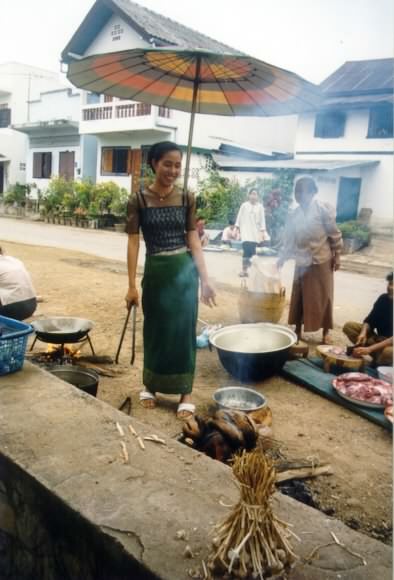
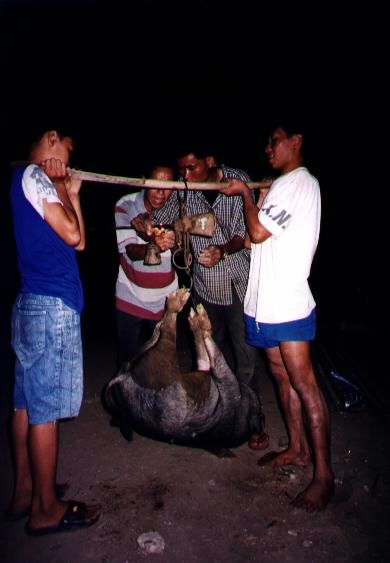
Young woman cookingPig being weighedWater buffalo

The food is excellent in Laos.
It takes some time to get used to eating noodle soup for breakfast, but once you get used to it, it is excellent.

There are pigs and turkeys all over the place. Above is a pig being weighed.

An essential part of farming is the water buffalo - it is important for pulling the heavy plough and there feet are designed to walk in water-logged gxround.

Old woman carrying heavy basketsGirl throwing rice

All ingredients used are very fresh. People are walking around selling vegetables on the streets.

It is hard work getting the rice ready for eating. First the rice is to be pounded to break the husks. Then thrown up in the air to remove the husks from the rice itself.


Created: Jan 2000 Last Updated: 16 Sept 2001

15. March 1999 10:32
by Rene Pallesen
0 Comments

Thailand

15. March 1999 10:32 by Rene Pallesen | 0 Comments

thailand
Statue at Grand Palace
Thailand ( 1999 ) . . .

On my way back from Laos, I stayed in Bangkok for a few days, visiting a friend whom I have known for a long time.

On the right, I am standing in front of a huge statue at the Grand Palace in Bangkok. There are many statues like this, very ornate and detailed. They are brightly coloured and some of them can look scary! As you can see in the background, the architecture and design of the roof is also very detailed and many of these were built a very long time ago by very gifted artists.

Nui


Here is Nui on the left.

She was the girlfriend of one of my friends at University in Denmark. She used to be a lecturer at the University of Bangkok and specialised in software design.

I stayed at her family's house for a few days in the outskirts of Bangkok. It was very nice to get away from all the pollution, noise and chaos of inner city.

You will now be happy to know that Nui has finally married Søren after all these years!

Me on a canal cruise


I am on a canal cruise!

Much of the water near the cities are very polluted, but it is very interesting to see the floating markets in Bangkok - yes, you will see people selling vegetables and meat from little boats...


Created: Jan 2000 Last Updated: 16 Sept 2001

15. March 1999 10:31
by Rene Pallesen
0 Comments

Working in Australia . . .

15. March 1999 10:31 by Rene Pallesen | 0 Comments

work


Dilbert

I can apply a lot of Dilbert's Principles to my work, that is why I always go to the Dilbert website to see what else Dilbert has come up with. More importantly, I thought Dilbert an accurate description of what I do, hence the first think you see on this page is... Dilbert!

The group I worked with at Cochlear

I had the privilege of working as a contractor in the world's leading company in bionic implants, Cochlear. I worked there for 1½ years as the head designer/developer of the software programming the bionic implants. I worked with some of the best developers, and had a lot of fun whilst I was at it.

On the Bridge ClimbOn the Bridge Climb

I had the chance to go on the Harbour Bridge climb, organised by the company. It is quite an expensive trip up over thte top of the bridge and normally would not pay to do it, but had the opportunity to do this with my colleagues. It is very windy up there and the view spectacular. There is quite a lot of people on the bridge climb - average about 10-15 per group, with about 3-5 groups on the bridge at a time. The whole walk from the bottom, to the top and back the other side takes about 2 hours. Many tourists take the opportunity to try out the climb, and I am told that the trip at sunset is spectacular.

Staff at PMP

I took this trip on a Douglas DC-3 (from the 1930-40's) with PMP Software. PMP Software was the company I worked for during the years I was waiting to get my permanent residency in Australia. I had the chance to see this state from an aerial view. There were quite a few Danes working for PMP, and at present, Kenneth is also working for them.


15. June 1998 10:33
by Rene Pallesen
0 Comments

New Zealand South Island 1998

15. June 1998 10:33 by Rene Pallesen | 0 Comments

new zealand south island 1998
Map of New Zealand
New Zealand ( June 1998 ) . . .


My first trip to New Zealand took place in June 1998. I travelled with the Lenehans - friends I have known since my arrival in Australia. This was one of many trips I took with Lance and Anne. We rented a campervan and decided to explore the south island of NZ.

I have since been to New Zealand again - NZ has some of the most beautiful mountains and I had the chance to go there again in January 2001 to do a technical ice-climbing course.

I took so many photos and would have loved to place all of them on this webpage.

Instead, I have selected a few to show some of the places I managed to go to, such as Milford Sound, Nelson, Arthurs Pass and Mt Cook.

There were many glaciers in NZ and lots of seals to go with them!

NZ is a beautiful country with many unusual natural formations. It is a photographer's haven. We ended our trip with a farewell dinner in Christchurch.


Seals . . .

The Lenehans and I decided to spend 2 weeks in New Zealand in the winter of 1998. We flew to Christchurch from Sydney, and drove north to Nelson.

On the way to Nelson, on the east coast of the southern island, there are hundreds of seals. It was a spectacular sight and I managed to get quite close to them to take photos.

SealTired sealWet seal

They did not seem to mind me taking a few photos. Some of the seals look tired - I guess even seals, like humans become tired. Who wouldn't like to pet a seal? They look different when they are wet though.

Anne sitting on stone

This was taken near where the seals were. I like the blend of colours and the harmony of the picture.

A lot of friends have commented on this photo! Most of them really like the photo, and feel there is something calm about it.


Nelson . . .

Nelson is located at the northern most part of the southern island.

We explored the area around Lake Rotoiti.


On the ridgeOn the ridge

These were taken from the ridge itself.

There is a lake at the end of the mountain ridge. From here, it is all downhill. We camped just below the lake at 1,500 metres altitude.

It was snowing the next morning and all water was frozen. We estimated the temperature to be around -7 degrees celcius.


Side of ridgeLenehans  I

The side of the ridge was one big stonefall.

It was very cold and the wind was strong that day so it was necessary to wear gloves hat.

We managed to get a group shot from the top of the ridge. The mountains in the background are knows as the McAngus ridge at Lake Rotoiti. Mountains at Lake Rotoiti

Here are the mountains at Lake Rotoiti.


Morning MistMorning Frost

The mornings are incredibly beautiful at Lake Rotoiti. Here you can see the morning mist floating gently on the water.

It is also very cold here - that is why there is ice on the bridge in the foreground.
Lance  Anne crossing bridge

The photo on the right shows the Lenehans crossing one of the suspension bridges at Lake Rotoiti.

At this point we had walked 15 kilometres, with a 1,000 metre descent. We had yet another 7 to 8 kilometres to go that day!

The Renet

This is what happens when you do not use a tripod. The effect is quiet interesting and makes the photo look like a painting by Monet.

This photo has has been dubbed "The Renet" among my friends.


Ladder at Goat Pass trackArthurs Pass . . .


We drove to Arthurs Pass, on the way from Nelson to Queenstown further south.

There is a place called Goat Pass, and there is only one way in - on foot.

Here, you can see Anne climbing up ladders on the Goat Pass track.

Inside our 'hut'

It was raining so much that we were not able to get down through the canyon on the other side of the Pass. We therefore decided to go back the way we came.

Further down the track, we had passed a bivouak and decided to stay ther during the night. It was very dirty and Anne would rather sleep outside in the rain.

Everything was wet so she changed her mind and came back in. *laugh*

Anne trying to cross a river

She wore plastic bags on her feet, in her boots are so that she could wear her boots without getting cold feet! Aussies will never get used to the cold.

Here is Anne crossing one of the rivers.

Every time she crossed a river, she would sit and massage her feet for 10 minutes until they warm again.

I guess Aussies will never get used to the cold. Neither will Danes for that matter! An Australian winter is like a Danish summer - so you can imagine how cold Denmark is! Still, Danes cannot get used to it - just ask Kenneth or Soeren!

Who's this?

Sleeping ???

Aussies will never learn to live with the cold!

I must admit I hate the cold. I loved it when I lived in Kenya - so hot and humid!

Even living in Denmark for all those year did not make me like cold weather any more than I used to. That is why I love Australia - warm summers and mild winters. Sometimes winter in Australia is a bit too cold for me! But I do not usually wear more than a T-shirt or a thin jumper in winter. My girlfriend was complaining about me having the heater on full-blast in the car during spring!

Okay, so I love the heat!

Lance  Anne in the campervan


Inside the campervan.

Temperature was down to -10 degrees Celcius during the night and there was no heating in the van.


This explains why Anne was wearing a thick blanket. There was only enough water for a two minute shower. That is why Anne is wearing a hat indoors.


See the expression on her face? She knows I will write a stupid description for this photo.

Black  white photo of me


In the campervan I had the top bunk.

This is one of my girlfriend's favourite photos!


On the way to Milford Sound, we saw some unusual formations - The Pancake Rocks. The Pancake Rocks are located near Hokitika, between Kumara and Ross.

Pancake RockPancake Rock

They do not taste as good as real pancakes - you get sand in your teeth...

The Remarkables near QueenstownThe Remarkables at sunset

At Queenstown, we had the most glorious view of "The Remarkables". The Remarkables are the mountains in the background - don't ask me why they call The Remarkables, I don't know. But the photo on the left shows Queenstown with these mountains in the background.

The photo on the right shows the a sunset at The Remarkables (with snow on top!) Pretty 'remarkable', huh?


Putting chains on campervanMilford Sound . . .


Milford Sound is located near the southern-most tip of the south island of NZ. It is the series of 'islands' that you can see on the western tip of NZ on the map.

To get to Milford Sound, we had to take a huge detour from Queenstown. To come back from Milford Sound, we had to take the same detour before heading east from Queenstown.

Driving down to Milford Sound, we had to put chains on the tyres of the campervan.

In the pass, there was at least 10 centimetres of snow on the road, and it was illegal to continue on without chains. Chains help create friction on the roads and makes it easier for the vehicle to drive on in icy conditions.

We managed to rent a set of chains in Te Anau because we had heard rumours about chains being mandatory.

If you go to New Zealand during the winter, then make sure you have a set of chains for the car.

Milford


How many postcards have you seen from Milford Sound, where there was snow on top of the mountains?

It is beautiful, but nothing compared to the Mount Cook area.

Milford


The sun rising in the Milford Sound area.


Glaciers . . .

The Tasman Glacier

Most of the glaciers we went to were located on the main range.

We had to drive inland when we were heading south on the west coast because the Westland was too rough and wild to drive through.

Here on the right is the Tasman glacier near Mt Cook village. It is 35 km long - a hundred years ago it was 85km long. The ice is 600m thick and used to be 1,300m thick.

Where the glacier ends at the water on the photo, the ice is more than 200m thick.

The Fox Glacier


Both the Fox and Franz Josef glaciers are located on the west coast.

On the left is The Fox Glacier.

It is so huge that if you built a house at the end where the ice begins (or ends since it is a glacier), you would not be able to see it on this picture.

Me at the Franz Josef glacier


The pile of ice behind me are 3 to 4 times bigger than the size of a house.

I am standing about half a kilometre from the glacier.


Keas on the campervanA Kea

At the Franz Josef glacier, people have been feeding the keas. The kea is the only alpine parrot in the world.

This means the keas associate every man-made thing with something edible.

They are therefore making the attempt to eat the cars. You can see the keas on the roof of our campervan.

It is a very weird bird. They can survive in extreme conditions with freezing temperatures and snow.


Mt CookMount Cook . . .


On the way back to Christchurch, we went to Mt Cook.

Here is Mt Cook as seen from the west coast.

I achieved my goal to climb it in January 2001! You can see the photos from this trip.


View of Mt Cook from Linde PassAnother view of Mt Cook from Linde Pass

Take a look at the colours. The photos were taken at Lindes Pass, just north of Mount Cook.

There was no sound up there. You could not hear the wind or any birds. The only sound you could hear was yourself breathing.

Lance taking a photo


Lance praying towards Mecca???

No just Lance in a weird posture taking a video of Mt Cook.

My favourite photo of Mt Cook


One of my favorite photos.
"The man and his mountain". Kerenyaga.

Here is Mt Cook in the background (almost 4,000 meters). I am so glad that I had the opportunity to go back to NZ and actually climb on Mt Cook!


Sunrise on the East Coast of New Zealand!Farewell Dinner . . .


From Milford Sound, back to Queenstown, we then drove back to Christchurch via the east coast. We saw some pretty spectacular sunrises along the way.

During our last night in New Zealand, we went to a restaurant called "The Sign of the Takahe". We had our farewell dinner at Christchurch before returning to Sydney.

It is an old castle/house built in the same style as the old English castles. The atmosphere and food is excellent.

This is the place to bring a date.

Someone was playing quiet piano music in the hall.

The photo is taken with a long exposure because I wanted to capture the atmosphere with the woman playing the piano in these old surroundings.

Atmosphere in the restaurantGroup shot at the restaurant


Created: Jan 2000 Last Updated: 19 Sept 2001

15. March 1998 11:09
by Rene Pallesen
0 Comments

Cockatoos . . .

15. March 1998 11:09 by Rene Pallesen | 0 Comments

cockatoos
Cockatoos on my balconyCockatoo up close

I have the most spectacular view from my home in Narrabeen.

It is an apartment on the beach, only 10 metres away from the sand. As you can see from the picture on the left, this was taken from my balcony, with the beach in the background.

Almost every morning, these beautiful white birds, come in abundance to visit me. I usually hand-feed them sunflower seeds, but you have to be extremely careful because sometimes they mistake your fingers for food!

Cockatoos are approximately the same size as a duck. They are very intelligent and not afraid of humans. However, along with the cockatoos, I also get the pesky pigeons - I wish I could get rid of them!!!

Cockatoos on my balconyCockatoos on my balconyCockatoos on my balcony


Created: 12 Aug 2001 Last Updated: 25 Oct 2002
Perfect Moments Photography | A Rene Pallesen Journal

Home

14. November 2004 11:06
by Rene Pallesen
0 Comments

Pyramid of Cheops

14. November 2004 11:06 by Rene Pallesen | 0 Comments

pyramid of cheops


The largest pyramids were built by Khafre (Cheops) and his son Kefren (Chephren).
Khafre's pyramid stood 147 metres tall. Each side was 230 metres (with only 0.2% margin error - can you believe that?)


René's mum stands at the foot of Kefren's pyramid.
It is almost a one-kilometre walk around the whole pyramid.


It is taller than Kefren's pyramid but does not look so as it sits on lower ground.
It is estimated that something like 2.3 million blocks were used to build the pyramid.
Right: There once lay a solar-boat. Khafre's mummy was placed into this boat as the ancient Egyptians believed the pharaoh sailed to the after-life.
The boat is now housed in a building next to the pyramid.


Created: Dec 2004Last Updated: 24-Jan-2005

14. November 2004 11:05
by Rene Pallesen
0 Comments

Cairo's Hotel Pyramisa Coffee-shop

14. November 2004 11:05 by Rene Pallesen | 0 Comments

cairo s hotel pyramisa coffee shop


Whilst we were waiting to check-in, the family decided to get something to eat as we had not eaten anything since breakfast on the plane.


Created: Dec 2004Last Updated: 24-Jan-2005

14. November 2004 11:04
by Rene Pallesen
0 Comments

Bedstemor's 85 års fødselsdag ( 13 - 20 Nov 2004 )b

14. November 2004 11:04 by Rene Pallesen | 0 Comments

bedstemor s 85 rs f dselsdag 13 20 nov 2004 b
Bedstemor's 85 års fødselsdag ( 13 - 20 Nov 2004 )
Oversættelse Freddy Pallesen © 2004


Det gamle Ægyptens historier og legender har længe markeret sig gennem film som "Kleopatra", "Mumien" og begejstret os kvinder med Omar Sharifs optræden i "Lawrence of Arabia" og "Doctor Zhivago og senere i tegnefilm som "The Prince of Egypt". Der er en vis mystik omkring mellemøsten skildret for os i en meget ung alder, når vi hørte godnathistorier som "Ali Baba og de 40 røvere" eller "Sinbad Søfareren" - de fleste af os har en drøm om at se pyramiderne.

Jeg var meget heldig at få muligheden for 20 år siden sammen med mine forældre at komme til Ægypten, men som 10 årig er der ikke så meget et barn kan huske. Men dette år samles Familien Pallesen igen engang for "Matriarkens" 85 års fødselsdag. Det er tradition for familien at samles og rejse til et eksotisk land - tidligere har det været Tunesien, Marokko, Tyrkiet og Gambia - og nu for Bedstemors ønske om at se Ægyptens pyramider, som hendes mand så for 50 år siden.

Bedstemors tre børn, seks børnebørn (Nikolai kunne ikke komme med), fire oldebørn og respektive ægtefæller, alle tog sammen til det magiske Ægypten. Det er efterår med varme dage og kølige nætter - en kontrast til den kommende vinter i Danmark.


Lørdag 13. November 2004
Afrejse til Ægypten

Vores familie måtte af sted kl. 3.30 for at nå flyet kl. 6.55; 4½ time senere ankom vi til Cairo lufthavn. Jeg har en svag hukommelse om en meget varm lufthavn med komplet kaos, med mennesker, der skubber for at få deres kufferter igennem, råbende gennem en masse larm. Nu fandt vi en næsten ren og ikke tætpakket lufthavn.Vi mødte AP-Travels repræsentant, som tog os til Hotel Pyramissa, hvor vi tilsyneladende blev glemt i Pianobaren, til en af os fik den lyse ide, at bede om vores værelsesnøgler.Pallesen familie venter på værelser

Vores familie deltes om en toværelses suite med et stort fællesrum. Vores første eftermiddag blev brugt til en spadseretur rundt i kvarteret for evt. at finde et sted for familien at spise. Vores hotel lå på den anden side af floden i forhold til centrum, så der var ikke meget at se på sammen med, at mange butikker var lukket p.g.a. Ramadanen, den Islamiske fasteperiode fra daggry til solnedgang. Søndag var sidste dag i Ramadanen, så mange var i gang med at forberede den sidste faste.

Sluttelig spiste familien til aften i hotellets "Orientel" restaurant i Ægyptisk stil. Vi regnede med at få ordentlig Ægyptisk mad, men blev skuffede over at få lunkent mad. Risen var meget tør, lammekødet var meget småt og maden var en blandet fornøjelse. Til vores overraskelse, efter vores kommentarer, fik vi serveret ekstra tallerkner med lokal Ægyptisk frugt så som friske dadler og duava. Til vores morskab smagte alle Ægyptiske vine ens, uanset mærke. Der var masser af Ægyptisk øl og selvfølgelig levede danskerne op til deres drikkeevner og Bedstemor gav maden til alle.


Søndag 14. november 2004

Første nat sov vi ikke så godt - at sove i en fremmed seng kombineret med koranbøn fra en nærliggende moske gav os ikke ligefrem en fredfyldt søvn. Imidlertid var vi alle tidlig oppe for at mødes i Bedstemors værelse for at overraske hende med danske fødselsdagssange til flimmer med danske flag og små gaver. Denne familie overrasker fødselaren og alle synger unisont denne meget søde fødselsdagssang.

Citadellet Muhammad Ali Moskeen

Udsigten fra CitadelletVores første besøg gjaldt Citadellet. Det er byens fort og husede engang den kongelige familie og skønt det meste af komplekset er åben for besøgende, besidder militæret stadig en del, som er lukket område. Det tager en halv dag at komme gennem hele Citadellet, hvilket vi ikke havde mulighed for. I stedet tilbragte vi vores tid i Muhammed Ali moskeen.

<== Der er en fantastisk panorama over byen fra den Vestlige terrasse - fantastisk at Cairo ikke et bygget af ens mudderfarvede stenbygninger. Det mest bemærkelsesværdige ved Cairo er imidlertid mangelen på farver og farverne stemmer overens med ørkenens farver.

Mohammed Ali MosqueVores guide Adam/Mohammed gav os en ringe indsigt i funktionen eller historien af Citadellet, og i stedet pladserede gruppen i hjørnet i hjørnet af Muhammed Ali moskeen som en gruppe skolebørn, og gav en lektion om Islamisk lov og sædvane.

Da René vovede sig til at spørge om mere om Citadellet, blev han skældt ud for at afbryde og fik besked på at lytte. Vi fik aldrig muligheden for at finde 7-tallet Napoleons tropper hade malet over port for at undgå de uvante arabiske navne, eller det halvrunde tårn, da vores guide simpelthen ikke vidste, hvor de var.

Ind i Mohammed Ali Mosque


I den tid havde jeg muligheden for at spadsere lidt for mig selv og gå i moskeens skønne alabaster arkader. Den himmelhvælvede centrale bederum var et glimmer af hundrede af lys, der hang i koncentriske cirkler. På loftet var der arabiske inskriptioner i guld. Kvinder skulle være anstændig klædt og kunne ikke bære ærmeløse trøjer eller korte shorts eller skørter. I et hjørne af rummet lå sarkofaget med Muhhamed Ali - grundlægger af moskeen og Albanisk handelsmand, grundlægger af dynastiet, som herskede til revolutionen i 1952.

Cairo Ægyptisk Museet

Jeg huske turen rundt i dette museum, hvor jeg kiggede ind i smudsige glas montre og stirrede på de rynkede ansigter af nogle engang kendte faroer som Ramses II og undrede mig over, om disse gamle Ægyptere var giganter i deres store kister.
20 år senere var det næsten umuligt at skubbe sig gennem mængderne af turister - kun nyttigt fordi deres guider gav flere informationer end vores. Med kun to timer var det umulig at se hele museet og slet ikke de kongelige mumier.
Museet fejrede sit hundred år med en speciel udstilling omkring TutAnkhAmun - det mest berømte fund. Med rejseguiden i hånden "aaaede" og "åååede" vi over guldskattene fundet i hans grav - en guldtrone med den berømte scene med TutAnkhAmons dronning, der tilbeder ham, kister af ibenholt og elfenben, jagtskjolde beklædt med gepardskin, buer og pile, alabaster krukker med kong Tuts mummificerede organer, guld sarkofager - da Howard Carter havde fundet sådanne skatte for en lille kendt drenge-konge, forestil jer, hvad Ramses II´s grav har indeholdt. Kong Tuts inderste kiste af rent guld og og den berømte maske af guld, som alle gerne vil se, er trykt i mange Ægyptiske billedmaterialer.
Museet er blevet en ny pengemaskine for Ægypterne med yderligere en entre for at se de kongelige mumier. Vi måtte være tilfreds med at se dyremumierne - katte, hunde, fugle, geder, Nile Perch (ja, også fisk!) og mest fantastisk var en 7 meter krokodillemumie.
Udstillingerne var på øverste etage opsat efter emne og på underste etage i kronologisk orden uret rundt fra det Gamle Kongerige, til det midterste og sluttende med de Nye og Sidste Kongedømmer. Der var værelser fyldt med kæmpe sarkofager (kister), som hver ville veje en tons, et værelse fyldt med miniaturer, der viste daglig liv i Ægypten, et værelse fuld af falmede gamle papyrusskrifter og værelser fulde af brokker og stykker fra ruiner, statuer, palads gulve - et sted, man kan tilbringe dage med en ordentlig rejse guide.


Khan Al-Khalili

På gaderne af Ægypts største bazar, Khan Al KhaliliEfter et stop på en Ægyptisk parfumefabrik og en frokostpause, kom vi til Khan Al-Khalili, det ældste basar i Ægypten, som går tilbage til 1300-tallet. Gamle tiders købere besøgte Khanen for at kigge på varerne bragt dertil af handelskaravanerne. Vi finder ikke længere slaver, silke, juveler eller diamanter, men træ guitarer, skønne klude tæpper, klæder, t-shirts, papyrustryk, vandpiber, bunker af tøj, aromaen af krydderier breder sig og boder med stakke af rødt, guld og blå pulver og sække med frø og bønner. Kobbersmede udhamrer fade, terriner, kaffekander og enorme halvmåneformede toppe til minareter. Det er et ritual i basarer at tinge om priserne, lokale såvel som gæster - almindeligvis til en tiendedel af den budte pris - har du betalt en tredjedel, har du betalt for meget. Vi havde kun en time til vores rådighed, men mange af boderne var lukkede for siesta og for ramadanen. Ulla og jeg pegede på nogle sække af mangefarvede krydderier. Han ville have 50£ (50 kr.), men efter jeg sagde "da ketir awi" (det koster for meget) og gik, fulgte sælgeren efter os en kilometer mens han reducerede prisen fra 40£ til 30£, 25£, 20£, og efter vi i spøg råbte 10£, tilbød han 15£, 10£ og endelig 5£ før han opgav os. Efter megen tingen lykkedes det os få to udsmykkede parfumeglas flasker for 20£ (20 kr.).


Bedstemor's fødselsdagfest

Bedstemors festIrene og Ole havde sørget for et privat værelse til Bedstemors fødselsdagsfest. Et enkelt langt bord i et værelse i Ægyptisk stil. Sølv fade i to rækker midt på bordet med ild under holdt maden varm.

Vi fik kommen-panneret stegt fisk, kyllinge filleter på Ægyptisk stil, kanel-krydret ravioli, ris, kartoffelmos og steg i pebbersauce, "sang" og brød med Ægyptisk vin og øl til Bedstemor.

Mens børnene legede i et hjørne, var der meget snak bordet rundt, og aftenen sluttede med chokolade og frugt kage pyntet med "Happy Pirthday" (det er ikke en fejl) og vi morede os over os over overfloden af Ægyptiske kager - bagværk, semulje tærte, rosenvands krydrede tærter og tærter, der smagte af flydende honning… Ulla ville gerne have resten af desserten med sig (undtagen den rosenvands krydrede - det var morsomt at se hendes udtryk - rosenvand dufter næsten som parfume). Tjenerne var hele tiden meget opmærksomme, passerede hver andet minut for at opvarte os.

Det bedste var, at Bedstemor blev som to årig, da hun skulle puste lysene på kagerne ud. Som danskerne ville sige, "det var meget hyggeligt!"


Mandag 15. november 2004 (start 7:30)

Fra de grå bygninger og gader I Cairo kørte vi 24 km mod sydøst til Saqqara, skiftende fra ensartet brun til frodige grøne marker med grøntsager og hundrede af dadelpalmer. Det var som en oase, hvor et fint slør gav en uvirkelig følelse af de frodige områder i det gamle Ægypten. Kvinder i hellange sorte "abeeyas" fordelt i markerne, den gamle mand, der vandrede omkring - en stor kontrast til mylderet i Cairos centrum.

Saqqara's Trin Pyramide

Grundlagt som et nekropolis (begravelses by) for det gamle Kongedømme og et af de rigeste arkæologiske områder i Ægypten.

Trin pyramiden er mindre end halv så høj, som den største pyramide ved Giza, men dette monument var en forløber for de glatte pyramider. Tidligere var gravene bygget af soltørrede muddersten, rektangulære byggesten, der dækkede gravstedet. Men arkitekten Imhotep havde Zosers trinpyramide i Sakkaraden lyse ide at bygge med sten og bygge den trinagtige struktur fen gange ovenpå hinanden, og skabte den første pyramide.

Vi kom ind gennem den store sydlige gård - på størelse med en fodboldbane - gennem en koridor af 40 søjler inspireret af bundter af bundne rør. Mens Adam holdt endnu en af sine taler, blev jeg antastet af en klæde og turbanklædt Ægypter, som førte mig op til toppen, hvor jeg fik et godt skud af de fantastiske søjlers top, før jeg blev skældt ud af Adam og tigget for "baksheesh". Jeg var taknemmelig for at blive reddet fra Ægypteren, som ikke ville lade mig gå uden baksheesh, af et par Italienere. Da jeg kom ud fra koridoren blev jeg imidlertid blændet af det hvide sand og den enorme pyramide alene omgivet af sten fra andre ruiner og en meget mindre trekantet høj af sten i baggrunden. Selv om morgenen var køkig, så varmede solen os, mens vi vandrede nord omkring pyramiden.


Memphis

Ramses II ligger på Memphis' lille museetEngang hovedstaden i det gamle Ægypten, uudgravet på grund af landsbyen, bygget over den gamle by, og det hævede grundvandsspejl på grund at Asuan-dæmningen. Der er en lille park med nogle få fund, brokker og stykker, men den mest spændende ting at se er en kolos af Ramses II, der ligger på ryggen og mangler den nederste del af benene. Kolossen ville have været 5 etager høj, hvis den havde været hel. Midt i parken ligger den største alabaststatue, der er fundet - en sphinx på 80 tons - tænk hvilke skatte, der kunne have været fundet, hvis Memphis kunne udgraves, især da denne gamle by lå på halvvejen mellem Øvre og Nedre Ægypten.


Vores sidste stop før frokost var ved en papyrus butik - endnu et sted med kommission til Adam. Bedstemor købte en papyrus med det Ægyptiske alfabet i heroglypher. Nogle af papyrusbillederne kostede 3500£ (3500 kr). Til frokost fik vi et udmærket Ægyptisk måltid ude midt i ingenting. Vi fik glimrende mezza (ægyptiske tapas) af baba ghanoush (ristet aubergine dip), tzatziki (agurke dip), hummus (kikærte dip), fuul (bønner) serveret med friskbagte pitabrød, varme vinblade ruller, lamme kofta og ny grillet kylling med timian. Det var et måltid for konger og det bedste Ægyptiske måltid, vi fik på hele turen.


Pyramider af Giza

De store fantastiske pyramider i Giza. Her ses vi den største pyramid - Cheops/Khufus pyramidFra luften ligger ørkenen og pyramiderne lige op til byen, 16 km fra Cairo.

Jeg husker svagt at blive puklet op ad en overraskende varm skakt, oplyst af en enkelt lyspære, og komme ind i et meget køligt, mørk rum, hvor der stod en enkel stensarkofag; rummet var tomt, men med tilfældige firkantede huller i væggen til mad til livet hinsides.

Jeg var inde i Dronningerummet i den største pyramide og nu 20 år senere kan kun de første 300 gæster daglig komme ind i disse pyramider - for en anseelig entre.


René står næste pyramiden
Den største af de tre, Kheops pyramide, er 146 meter høj, 920 meter i omkreds og består af 2,3 millioner stenblokke! Hver blok var mindst en meter høj, så man kan forestille sig hvor massive disse pyramider var.


Den anden største pyramid - Chephrens pyramid


Den næststørste Khefrens (Kheops søn) pyramide har stadig noget af de glatte skinnende kalkstens dækning, som engang dækkede alle pyramiderne.==>

Den massive solbåd, som engang bragte faraos krop fra Memphis til Giza og de tre mindre Dronninge pyramider står ved foden af den massive Kheops pyramide. Vi havde ikke mulighed for at komme ind i gravkammeret denne gang, men jeg føler mig privilegeret over at jeg var derinde, og stadig har nogle minder fra begivenheden.


Sphinxen

SfinxenPyramiderne rejser sig i baggrunden, mens den sider stille på det varme sand under den bagende sol i 4000 år. Napoleons tropper brugte den som målskive, så næsen og faraos skæg er for længst faldet af og findes i British museum. Grækerne kaldte den "Sphinx", som var basseret på en mærkelig skikkelse med hovedet af et menneske og kroppen af en løve, som ville stoppe enhver rejsende langs vejen med en gåde - hvis gåden ikke blev gættet, blev man måltid for Sphinxen. Trængslen af skarerne omringede Sphinxen og vi kunne kun bevæge os i gåsegang. Gennem tiden ser det ud til, at turisterne må se Sphinxen på længere og længere afstand. For 50 år siden kunne Bedstefar røre ved Sphinxen og også klatre op på toppen af pyramiden; for 20 år siden var Sphinxen hegnet inde med et lille trådhegn, men jeg kunne stå tæt ved den; nu ligger den i et stort hul, hvor besøgende kun kan se den tæt på gennem zoomen på deres kameraer. 4 tusind år senere bjergtager den stadig os alle.


Tirsdag 16. november 2004 (start 2:30)

Ja, du læste rigtig - vi ventede alle I receptionen kl. 2.30. I aftes diskede Bedstemors børnebørn op med Spansk-Ægyptisk-Italiensk middag til hele familien. Dette fulgtes op af en Familien i en larm fra tamboriner, obo og trommer, der spillede til forlovelsesfest for et Ægyptisk par I receptionen.

Denne morgen fløj vi til Asuan for at gå ombord til et Nilkryds på 4 dage op til Luxor. Da vi ankom, tog vi på en "felucca" (nilbåd) tur på Nilen med en fantastisk panorama til "Tomb of Nobles" (de overordnedes grave). Da vi kom tilbage fik vi vores værelser på en fire etages krydstogt skib, der havde motionsrum, svømmebassin og soldæk øverst oppe. Selv fra vores værelser i bunden, havde vi en fantastisk udsigt til de små moskelignende bygninger på toppen af de store sandbjerge med små huler.

Om aftenen havde vi mulighed for at besøge byens lille souq (locale bazaar), hvor de solgte t-shirts, papyrusbilleder, dynger af safran og tørret vellugtende lotusblomster, brun, rød, gul og indigo bjerge af duftende krydderier - alt noget som nogle af os tingede om - det dyreste køb var 25£ for papyrus billede og billigst 15£ for en broderet t-shirt med hieroglyffer. Sidst brugte vi 5£ til en hestevogn tilbage til skibet.

Den anden papyrus har jeg købt fra bazaren


Onsdag 17. november 2004 (start 7:30)

Det ser ud til, at nogle I familien har pådraget sig en maveonde. Vi andre undgik uvasket frugt, frisk salat, rå grøntsager og drinks med vand fra vandhane. Dette forhindrede os imidlertid ikke i at tage på sightseing.

Den ufærdige Obelisk

Hvis denne obelisk var blevet færdig, ville det have været den højeste og tungeste nogensinde fremstillet på 142 meter. Den ligger i et granitstenbrud, færdighugget på tre sider, men opgivet da en revne viste sig i stenen. Det er næsten umulig at forestille sig, hvordan de gamle ægyptere kunne flytte selv en enkelt sten fra dette stenbrud, da dette sted er ganske mange mile fra alle monumenterne, som er færdigfremstillet. Uheldigt for Ægypten er de fleste obelisker blevet spredt til andre lande - til Italien, England, Frankrig og selv Argentina - af fremmede arkæologer gennem de sidste århundreder. Mange af os havde ikke tid til at se hele obelisken før Adam ringede med sin klokke, som han medbragte (for at genere os, tror jeg).

Den ufuldendte ObeliskDe meste familier kom ikke så langt til her


Den Høje Dæmning

I århundreder har Nilen styret Ægypternes liv - hvad enten der var oversvømmelse eller for lidt vand, var det skæbnesvangert for folket, hvis liv afhang af denne store vandkilde. Da Asuandæmningen blev bygget mistede nogle af landsbyerne i det sydlige deres vandforsyninger.

For 30 år siden blev den nye Høje Dæmning bygget, hvilket resulterede i den menneskeskabte Nasser sø mod syd. ==>

Det betød, at mange mennesker måtte flyttes, da landsbyerne og bopladserne blev oversvømmet, ligesom også nogle af de gamle Ægyptiske monumenter som Philae templet.


Aswan dæmningPå sit højeste er den Høje Dæmning 111 m, 3,8 km lang og 980 m bred ved foden.

Der er blevet brugt tre gange så mange sten, som der var i Kheops pyramiden til bygningen af dæmningen.

Da dæmningen er militært område, må man ikke bruge videokamera - hvis der blev rettet et angreb på dæmningen kunne meget af Ægypten blive oversvømmet, hvilket ville være en katastrofe for landet.


Efter kun 10 minutter "ringede" Adam os tilbage til bussen igen.


Philae templet

Vi sejler til Philae templetEfter den første Asuan dæmning blev bygget, var Philae templet oversvømmet 6 måneder om året, og turisterne måtte se templet gennem Philae søens mudrede vand. Da den Høje Dæmning blev bygget, truede det med at oversvømme templet for evigt. Templet blev da flyttet sten for sten til en ø med et lignende landskab. Philae er speciel i, at den kun kan nås med båd og at solnedgangen giver et spektakulært bagtæppe. Templet, som er bygget til Isis (gudinden for kvinder, sexualitet og renhed), var en af de sidste hedenske udsteder og på grund af Isis popularitet, blev det også brugt af de tidlige Kristne. Templets vægge og mange af søjlerne var fra top til fod fyldt med hieroglyffer og billeder af Isis - mange af billedernes ansigter var ødelagt af de tidlige Kristne, som anså de gamle Ægyptiske guder for hedenske. Jeg havde en fantastisk eftermiddag med at vandre ind og ud af gennem alle krogene og sprækkerne - besøge Fødselshuset, Nilometeret, Faraos sengested og meget mere og til stor morskab for familien, var jeg den sidste til at møde op.


Kom Ombo templet i aftenKom Ombo

Skibet sejlede fra Asuan kl. 15.45 efter en eftermiddag tilbragt med solbadning og øldrikning (typisk dansk med solbadning og øl). Vi sejlede 48 km. nord for Asuan til Kom Ombo - den gamle by med tilbedelsen af krokodilleguden Sobek. Den gamle by er for længst forsvunden og krokodillernes eksistens på de nærliggende sandbanker er blevet jagtet til udryddelse.

I solnedgangen besøgte vi Kom Ombo templet, opført til både krokodilleguden Sobek og Horus, den falkehovede himmelgud og Isis søn. Selvom vi ikke havde tiden til at fordybe os i 2 crocodil mumie på Kom Ombo templedette tempen, var det både imponerende og sælsomt med store projektører, der belyste templet. Der var en brønd med vand og en afsats halvvejs nede, hvor krokodiller gennem en gang blev lokket ind fra Nilen med menneskekød, og den største krokodille blev fanget og mumificeret som et offer til Sobek. Ved kapellet for Hathor (Horus hustru) var der en Amerikaner, der udbrød "Gud, jeg troede jeg skulle se krokodillestatuer!" - latter - Kapellet indeholdt to krokodillemumier fundet i templet.

Vi returnerede til et lille cocktail party før middagen, givet af skibet for at introducere de ansvarlige for personalet og for at gøre vores tur behagelig.


Tirsdag 18. november 2004 (start 7.00)

Gennem natten sejlede vi fra Kom Ombo til Edfu, et lille regionalt center for sukkerrørshandlen, besøgte Horus templet og sejlede videre til broen over Nilen og slusesystemet ved Esna.

Horus templet

Den smukke Horus temple i EdfuDette er det mest komplette tempel i Ægypten, et Græsk-Romansk tempel, helt bygget efter ga Perfect Moments Photography | A Rene Pallesen Journal

Home

17. November 2013 08:42
by Rene Pallesen
0 Comments

5 years wedding anniversary

17. November 2013 08:42 by Rene Pallesen | 0 Comments

5 years wedding anniversary


Kim and I just had our 5th wedding anniversary.


She still looks as beautiful today as she did when I first met her.

We celebrated by going out having dinner at Darling Harbour and watched the weekly fireworks.

12. November 2013 01:23
by Rene Pallesen
0 Comments

International Fleet Review 2013

12. November 2013 01:23 by Rene Pallesen | 0 Comments

international fleet review 2013


We recently had the international fleet review in Sydney with lots of navy ships from international countries visiting Sydney to celebrate the 100th anniversary of the Australian fleet.

This also meant that not only were there lots of sailors in town, but also lots of navy cadets.


Aiden and I chose to visit the American USS Chosin and British HMS Daring.

The US ship is an older class ship, and from the outside fairly unimpressive.


but on closer inspection it had an impressive arsenal of missiles.


As well as guns.


The crew were very friendly and were happy to have their photo taken.


The British vessel on the other hand is a very modern ship, again with a very impressive firepower.


The crew again were happy to have their photos taken.


After this Aiden was over the ships and when he spotted a firetruck he got very excited. Lucky the firemen were pretty bored so they were pretty happy to entertain him for a while and it also gave me a bit of a break from carrying Aiden in my backpack.


After that he was hungry and wanted something to eat.

1. November 2013 02:40
by Rene Pallesen
0 Comments

Halloween 2013 - Steampunk Vampire

1. November 2013 02:40 by Rene Pallesen | 0 Comments

halloween 2013 steampunk vampire


Last night was Halloween and we walked around with the kids (KC's and our kids) to do trick or treat.

Aiden was a little sick with gastro but we did managed to get him along dressed in his spider man shirt.

I was dressed up as a steam punk vampire.


When we came back I did the photo above in my home studio.

14. October 2013 02:53
by Rene Pallesen
0 Comments

Lucas 1 year portrait

14. October 2013 02:53 by Rene Pallesen | 0 Comments

lucas 1 year portrait


I finally managed to take the 1 year portrait of Lucas that I had planned and it turned out really well I think.


He is a big boy now and he is able to walk by himself (took his first unassisted steps just before his birthday).

13. October 2013 03:05
by Rene Pallesen
0 Comments

Lucas 1yo Centennial park photos

13. October 2013 03:05 by Rene Pallesen | 0 Comments

lucas 1yo centennial park photos


The other day we went to Centennial park to take some 1yo photos of Lucas using a balloon.


What we had in mind was to take the photo down a row of trees.


...but it was impossible to get both the balloon and Lucas to behave in the same photo and the light wasn't great anyway with patches of sun and shade in the middle of the day.

We instead tried to be creative with other photos.


13. October 2013 02:57
by Rene Pallesen
0 Comments

Aiden on the bridge at Centennial Park

13. October 2013 02:57 by Rene Pallesen | 0 Comments

aiden on the bridge at centennial park


A couple of weeks ago we went to centennial park to take some photos of Lucas for his birthday (see separate post).

I also took this photo of Aiden running across the bridge at Centennial park.

12. October 2013 06:01
by Rene Pallesen
0 Comments

Test portraits of Lucas

12. October 2013 06:01 by Rene Pallesen | 0 Comments

test portraits of lucas


Here is some more test shots of Lucas...his facial expressions are priceless.


12. October 2013 03:01
by Rene Pallesen
0 Comments

Self test portrait

12. October 2013 03:01 by Rene Pallesen | 0 Comments

self test portrait


The other day I was setting up for a portrait using my new beauty dish strobe.

I was using myself as a subject and this one turned out rather well.

12. October 2013 02:49
by Rene Pallesen
0 Comments

Sculptures by the sea 2013

12. October 2013 02:49 by Rene Pallesen | 0 Comments

sculptures by the sea 2013


Sculptures by the sea is on again and Kim and I managed to find a couple of hours to go and have a look.

I was carrying Lucas in my backpack and didn't bring my camera, so these photos are all shot with my phone...I seriously regret that I didn't bring my larger camera.


11. October 2013 05:24
by Rene Pallesen
0 Comments

Working in the Sydney

11. October 2013 05:24 by Rene Pallesen | 0 Comments

working in the sydney


Recently I have been doing a lot of work with a client in the Governor Macquarie Tower in Sydney CBD.

It has been great working in the city as the commute is a lot easier and more interesting in general.

This is the building I have been working in.