Home

15. August 2000 10:42
by Rene Pallesen
0 Comments

The Wildlife in Borneo . . .

15. August 2000 10:42 by Rene Pallesen | 0 Comments

the wildlife in borneo
Ecochallenge ( Sabah 2000 )

Magellan HotelMoving into SilamRepeater StationInjured CompetitorTransporting a Repeater StationBeetleKids in Village
ArrivalSilam / Jungle OpsRepeater StationsThe CompetitorsHelicopterJungle Around UsThe Village

Jungles of Borneo
The Wildlife in Borneo . . .


The jungles in Borneo are really dense, dark and humid.

You will find that some of the photos look as though they have been over-exposed, but in reality, it is just the humidity in the air.

Me in the jungle


I have a photo of this at home - Glen enlarged it for me, and framed it!

Don't ask me why - I think I look rather wasted there.

Glen and I tried to race through the jungle.

The climb to the top of the mountain is rated as a 1.5 hour climb... Glen and I have done it in 26 minutes... actually I was confident that I could do it in less than 20 and so I did!

I held the record of taking 17 minutes to race to the top of Mt Silam, covering a distance of approx 4 kilometres through the jungle, up a mountain.

I was getting really fit (My girlfriend was proud of me).

Glen in the jungleGlen in the jungleGlen in the jungle

This photo shows how dense and dark the jungle can be. It was so humid there... no, not because I hadn't cleaned my lenses.

Glen in the jungleMe in the jungle


You can see how muddy it is in the jungle - I became quite dirty after many trips into the jungle.

Look how big these trees are!Me standing in front of one of these big trees!They look almost as big as the Californian Redwoods!

I think these trees are just as big as the Californian Redwoods. They might not be as old, but definitely just as big.

Beetle


This was taken with a 300mm lens, from 1.5 metres.


The most amazing thing about them, is when they are scared, the curl up into little "marbles".

It looks like a small bug, but it is actually at least 7cm long, which is actually quite big.

Moth in palm of hand


I noticed in Borneo, most of the insects there were huge.


The wingspan of the brown moth was about 15cm wide - huge!

They are mostly active at night, which is quite common for creatures in the jungle.

A couple of the girls stationed in the jungles, was stationed here. Not a wise decision, considering these girls were paranoid about the insects.

(Note: in the photo below, I still had conjunctivitis) I had the red eyes for most of the trip.
Moth on my elbowBrown moth

Big and beautiful, don't you think? You can see how big the black moth is compared to the size of the telephone.

Black mothMoth on wall

Plant with leaves in hexagon formation


These plants were kind of special because each branch split into two, so by the end of it, they formed a hexagonal pattern.


Below, are plants known as the "pitcher" plant.

The pitcher plants are meat-eating plants - you have watch out not to fall into them because they will swallow you whole.

Pitcher plant

If you just believed that, you are very gullible! *laugh*


The pitcher plant, like other carnivorous plants, feed on insects.

They have sweet-smelling nectar that attract the unsuspecting insect to it.

When the insect lands, it finds the surface slippery and fall straight into the “pitcher”, where the plants juices drowns it and is digested by the plant.

You may have heard of other type of carnivorous plants such as the Venus Fly Trap, and the Sundew plants.

Me holding a dead snake

Yes, you see me holding the snake with a leaf.


It was a poisonous snake, and I was worried about it's venom getting on my skin.

For example a puff adder, contact with the venom numbs the skin.

I was not familiar with the snakes in Borneo, and was not about to risk it.
A Tarantella


The tarantella was sitting inside the catering tent hunting.

Everyone was looking at it and admiring it, which was pretty amazing, considering I know many people who would willingly kill a spider in sight.

Back to Top
Return to Borneo Homepage


Created: 7 Dec 2001

15. August 2000 10:42
by Rene Pallesen
0 Comments

Helicopters . . .

15. August 2000 10:42 by Rene Pallesen | 0 Comments

helicopters
Ecochallenge ( Sabah 2000 )

Magellan HotelMoving into SilamRepeater StationInjured CompetitorTransporting a Repeater StationBeetleKids in Village
ArrivalSilam / Jungle OpsRepeater StationsThe CompetitorsHelicopterJungle Around UsThe Village

Helicopters . . .
The radio communications team had to arrive a few days before that because we had to hand out over 2,000 pieces of radio equipment. We had problems getting the necessary approvals for helicopters so they were grounded! I ended having to hand out most of the equipment as Glen and Paul had to sort out our use of the helicopters.

We had to fly all the equipment to Silam before the start of the race, and our team managed to fly to Silam the day before the race started.

Do you believe that Paul managed to take a photo of me whilst I was flying the chopper? He was standing to the side of me, and took the photo at night time, with the door open ...

Jeez, I would love to be the pilot!Don't you think I look good as the chopper's pilot?

Just kidding.

A couple of days before the race started, I was at the airport most of the day. We had some problems with the radios in the helicopters... I must have been in and out of those helicopters at least 200 times.

I did manage to get someone to take some photos of me in a helicopter, looking very much like the pilot!

I had hoped that I had the time to explore Kota Kinabalue, but we were so busy, it had to wait.

Helicopters at HQ

Here is the 212 or "Huey" - a twin-turbine Vietnam helicopter taking off. It is a hell a lot more powerful than some of the other helicopters we were using, which were 206s.
Landing at HQ


Here are the medical guys practising abseiling out of the helicopters (Aussie style)!

At the start of the race, I was sitting there listening to the first rescue on the radio.

3 hours after the start, four boats had capsized... helicopters and boats were very busy!

The competitors were due to arrive at Silam (another checkpoint) the next day (21st Aug).

For the first few days after the race started, I had to help organise to get the fuel to the top of the mountain.

After that the helicopter came in useful. It brought up 100 litres of fuel on the 4th day so I did not have to ferry fuel anymore!

Glen with repeater stationAt site of repeater station

At the end of the race, we had to sling-load the repeaters, to get them off the mountain. That means we had to strap them onto the helicopters, and pull them off the mountains that way - quite effective really.

Transporting Equipment Photo 2Transporting Equipment Photo 6Transporting Equipment Photo 4Transporting Equipment Photo 5
Transporting Equipment Photo 1Transporting Equipment Photo 3


Repeater station finally airborne!


You can see a pole in the right photo.
My girlfriend asked me what it was for - it helps balance the load so that it does not keep swinging whilst airborne.


Below, you will see some pretty good photos from the chopper.

View from chopper - over the riverView from chopper of jungles belowView from chopper - over the river


Towards the end of the race, we had to scan the rivers for the last competitors coming in - to make sure they had completed this section of the race course. It was low-altitude flying of the river-bed.

The photo on the left shows the chopper approaching Silam Village. This village was located just outside of Silam HQ.

Aerial view of the villageMe sitting in helicopter


Glen liked wanted to have a photo of the back of my head - and I ruined the photo by turning my head as he took it...

Here's a sunset shot of the helicopters flying around.

I had to put in this fantastic photo - the lighting gives a really nice feel to the photo.

Sunset shot


Back to Top

Return to Borneo Homepage


Created: 7 Dec 2001

15. August 2000 10:41
by Rene Pallesen
0 Comments

Repeater Stations . . .

15. August 2000 10:41 by Rene Pallesen | 0 Comments

repeater stations
Ecochallenge ( Sabah 2000 )

Magellan HotelMoving into SilamRepeater StationInjured CompetitorTransporting a Repeater StationBeetleKids in Village
ArrivalSilam / Jungle OpsRepeater StationsThe CompetitorsHelicopterJungle Around UsThe Village

Repeater Stations . . .

Paul and repeater Station in aircraftMe and repeater Station in aircraft

Here, you see Paul and I transporting some of the repeater stations by air.

From Silam, we flew down to DFVC. We stayed there for three days before going back to Silam.

Me at site of repeater station

I am at one of the repeater sites. Here, the top of one of the mountains was cleared, so we could safely land a helicopter there.

Oh... did I forget to mention that I almost chopped one of my fingers in half at the repeater site?

On top of my infected eye, I had another thing for the medical team to look at. The fingernail had been chopped in half and there was not much I could do about it except clean it up and try to avoid infections. The medical team was great there... they were extremely good.

Site of Repeater Station


We had a few problems with some of the communications gear.


Paul and Glen were handling it, and at times I tried to assist.

The first few days had been really tough.

Solar Panel Photo 1Solar Panel Photo 2
The top of Silam is covered in clouds for most of the afternoons, so the solar panels are quite useless. A survey of the conditions made prior to the race was useless.


If you ask any of the locals, they would have told us that the peak is always covered in clouds... but apparently no-one asked them!!!

Generator


We had problems keeping the generators running - they were using more power than predicted and there was no sun on the top of Silam to recharge the batteries.


The generator itself was a re-built petrol engine with a car alternator on it.

We basically tried to use a system where we used a jerry can, cut holes into it, and relied on the force of gravity to transport the fuel to the generator.

This design ended up working best for us.

Site of repeater stationSite of repeater station
Our helicopter pilot sitting on the side there, just grinning...


On the third day of the race, I hiked up the mountain three times. I was really tired and all I could think of was getting a bit of a rest and some food. I managed to get a bit once I got to Danum. In Danum I managed to get 6 hours sleep before someone woke me up and told me that the repeater had died in Silam... again all the cars had to leave in a convoy... so rush, rush to find my driver and managed (just) to get into the convoy!

The road to Danum closes at 6.30pm and all the cars had to go in the convoy.

Helicopter at Repeater Site Photo 1Helicopter at Repeater Site Photo 2
The helicopter flew all of us to the top of the mountain, and waited there for us till we were finished. Glen quite often told the pilot, "You don't have to shut down, because we'll only be here for 5 minutes." Well... quite often, we were there for as long as an hour and half! (Don't worry, the pilot was sensible enough to shut down immediately... he got to know Glen very well.)


I went up there often make sure that it was still running. It is much better getting a helicopter to fly me up there so that I can bring some fuel with me !

Glen fixing generator Photo 1Glen fixing generator Photo 2

Glen has mostly been on top of the mountain getting the generator back online.
We have to keep the generator running 24 hours per day until the end of the race.


Glen fixing repeater Photo 1


On the third night after the race started, one of the repeaters went dead.


I had to hike up the mountain on the previous day as the generator had died.

I did not leave the mountain until it was dark, so I had to climb down through the jungle in the dark!

Fortunately I had my torch with me!

Glen fixing repeater Photo 4


Paul later gave me strict instructions to make sure that I leave the mountain so that I could be back at HQ while there was still light!


I found out that I did not have any problems navigating at night... I even offered Paul to go back up when the repeater died!

Anyhow, we ended up having to send the airborne repeater up!

Helicopter at Repeater Site Photo 3Helicopter at Repeater Site Photo 4
Glen fixing repeater Photo 2Glen fixing repeater Photo 3


Back to Top


Return to Borneo Homepage


Created: 7 Dec 2001

15. August 2000 10:41
by Rene Pallesen
0 Comments

The Competitors . . .

15. August 2000 10:41 by Rene Pallesen | 0 Comments

the competitors
Ecochallenge ( Sabah 2000 )

Magellan HotelMoving into SilamRepeater StationInjured CompetitorTransporting a Repeater StationBeetleKids in Village
ArrivalSilam / Jungle OpsRepeater StationsThe CompetitorsHelicopterJungle Around UsThe Village

The Competitors . . .

The competitors did not rest... three of the teams were half way through the 600 kilometre course after only three days... pretty amazing!

Two of the teams were Australian. 18 teams were out of the race. At least 10 of these were due to medical problems.

Hardly any people around here get enough sleep... the place is active 24 hours per day because there are always competitors coming in!

I was keen to find out how the Danish team would turn out. At the beginning of the race, they were not very sociable. But by the end of the race, I think the tension of the race had gone, and I managed to have a chat with them. By the third day, the Danes are doing pretty well... they had a 22nd place!

Race on mountain bikesRace on mountain bikes

This was the mountain-bike leg of the race.

The guy you see being transported to hospital in the helicopter (photos below), was doing this part of the race. He was rounding a corner on his bike and rode straight into a large branch.

Rush to medical facilitiesRush to medical facilities

We had a lot of medical urgencies... we almost lost a guy with a punctured lung !
I got some great photos and helped getting the guy into the mobile hospital. There was a lot publicity on the website and through the media about it.


Fortunately, he was only 15 minutes away from HQ, so it was possible for us to get him to the helicopter very quickly, and to the nearest hospital.

River Race

Another leg of the race involved rowing in these “sampans”, a Malay term for “boat”. At some point, the teams in the race had to also split up - some of them swimming, some of them rowing, to complete the water leg of the race.

Below, the competitors had to use a flying fox to cross the canyons. I managed to have a go at it - compared to rock-climbing... well, I found it pretty boring *smile*. I imagine most people would find it quite fun though.

Setting up of flying foxSetting up of flying fox


There are no places to climb here.

I had hoped to take one of the helicopters to Madai Caves to check out the 200 metre abseil. The road to the Madai Caves lead directly through the tiny village of Gua Madai - a small cluster of homes, their wood bleached grey.

The town’s main sources of income are tourism and birds’ nests. The nests are found high up the walls of the cave, tucked away in cracks and crevasses, and can command thousands of dollars. They are harvested about three times a year.

My girlfriend mentioned trying "bird's nest soup" whilst I was there. She said normally the bird's nest they use belong to the swallow. It is a delicacy to many Asians, and similar to shark's fin soup - that is if you have tried it. Normally the nests are made out of the birds' saliva.
Headquarters flooded!


There was so much rain at Silam that HQ was often flooded.


Many of the competitors took the opportunity to get some sleep and the slept on whatever they could find.


Back to Top

Return to Borneo Homepage


Created: 7 Dec 2001

15. August 2000 10:40
by Rene Pallesen
0 Comments

Silam and Jungle Ops . . .

15. August 2000 10:40 by Rene Pallesen | 0 Comments

silam and jungle ops
Ecochallenge ( Sabah 2000 )

Magellan HotelMoving into SilamRepeater StationInjured CompetitorTransporting a Repeater StationBeetleKids in Village
ArrivalSilam / Jungle OpsRepeater StationsThe CompetitorsHelicopterJungle Around UsThe Village

Silam and Jungle Ops . . .
It is so bloody hot in Silam! It must have been at least 40 degrees and 100% humidity!

Silam was the overall headquarters, and Danum Valley Field Centre (DVFC) was referred to as Jungle Ops. Jungle Ops controlled all radio communications and conducted the race through the the jungle.

From Kota Kinabalu, we flew to Lahad Datu and drove the rest of the way to Silam. Silam was the site of one of the repeater stations. We had to set up a HQ a few kilometres from this station... heaps of opportunities for a few walks in the jungle.

The operation at Silam was huge!... I had never seen such a busy place before. The place was crawling with energy. It was bigger than any military operation I had ever seen! You would be amazed to see the logistics involved in this project ! At the time I did not have the time to take a lot of photos.

We had many army trucks transporting the competitors' equipment - very good cooperation from the military. They helped out with the preparation and set-up of HQ, and with the transportation of fuel.

Arrival of army trucks at SilamArrival of army trucks at Silam

Office at HQ

This is the headquarters on the left.

The whole Ecochallenge race is governed from this office.

The map in the background contains the position of all the checkpoints at which the competitors have to go through.

View from helipcopter

Aerial view of headquarters
Both of the above photos are aerial shots of HQ and were taken from a helicopter.


I managed to get a nice aerial shot of Silam HQ. The big white patch in the middle is where the competitors stored all their equipment. Just to the left are the containers from where the race is controlled. The 4 'finger-like' white pads on the right are the heli-pads. The long rectangle to the left is the eating area, and just above it is the hospital.

Aerial view of Jungle Ops HQ


Approaching DVFC in helicopter.


This is actually a research centre in the middle of the jungle - commonly known as DVFC (Danum Valley Field Centre).

DVFC is not normally accessible the tourists and the general public, only to researchers.

DVFC is concerned about contamination into the jungle.

Jungle Ops HQ


Outside Jungle Ops HQ.

The green boxes contain bottled drinking water.

By the time the race was over, most of this had been consumed - quite amazing really, considering there were really only 10 people at Jungle Ops.

During the competitors were not allowed any help from us, and that included the provision of drinking water.

Paul at HQ


Paul with some of the radio equipment at Silam.


He is standing next to the HQ matrix, which contained all the communications equipment for headquarters.

Paul is also standing next to the only 2 beds in the HQ building. These were used by the radio operators to nap in between shifts.


Below, you see me sitting in the catering tent at Silam.


I think it must have been a good day, to have been sitting there, smiling... I am just guessing here, because obviously I did not take the photo, and I cannot remerber the place.

Me relaxing at Silam

Bad hair day

Bad hair day?


I did not have a shower for a very long time, and to hold my hair in place, I adopted various techniques, such as the sunglasses-hairband...

This place is a breathing ground for tropical diseases!

As you can see, my right eye is really red. I somehow managed to get conjunctivitis and did not know it was contagious. I did not want to trouble the medics as they were pretty tied up with the competitors. When my vision on the left eye was getting blurry and I had problems seeing what was in front of me, I was ordered to get it checked. Just as well I did!

In Kota Kinabalu, I had the same problem on the other eye... at one point both my eyes were infected. It started on my left eye on the way to Kota Kinabalu in the plane ! It then spread to my right eye. The nurse at Silam told me that I should be careful because it could re-infect to my left eye. It started to look and feel a lot better after using the eyedrops that they gave me.

Back to Top

Return to Borneo Homepage


Created: 7 Dec 2001

15. August 2000 10:39
by Rene Pallesen
0 Comments

Ecochallenge ( Sabah 2000 )

15. August 2000 10:39 by Rene Pallesen | 0 Comments

ecochallenge sabah 2000
Ecochallenge ( Sabah 2000 )

Magellan HotelMoving into SilamRepeater StationInjured CompetitorTransporting a Repeater StationBeetleKids in Village
ArrivalSilam / Jungle OpsRepeater StationsThe CompetitorsHelicopterJungle Around UsThe Village

Click here for full size map of Sabah, Borneo

Ecochallenge in 2000 was held on the east coast of Borneo, in the jungles of Sabah. It was an extreme race where the competitors taking part have to endure 10 days of running through the jungles; kayaking and swimming many kilometres offshore; and mountain-biking for 150km on dirt roads. All in all, the fastest competitors travelled 600km in a space of just over 5 days!


I had the privilege of being there, being the developer of software that was used by the radio communications team. I also helped out with the setting up of all equipment and made many trips to the repeater stations.

Being in the jungles of Sabah, let alone part of the Ecochallenge preparations, has proved to be a challenge and an experience worth remembering, and hope to be part of any future Ecochallenge events.

As shown in the map, the red trails are where most of the competitors either ran or walked. The purple trail was the kayaking/canoeing leg. The orange trail was the mountain-bike leg and the blue trail was where the competitors had to swim with all their equipment.

Back to Top


Return to Contents page


Created: 7 Dec 2001

15. August 2000 10:39
by Rene Pallesen
0 Comments

Preparations at the Magellan Hotel

15. August 2000 10:39 by Rene Pallesen | 0 Comments

preparations at the magellan hotel
Ecochallenge ( Sabah 2000 )

Magellan HotelMoving into SilamRepeater StationInjured CompetitorTransporting a Repeater StationBeetleKids in Village
ArrivalSilam / Jungle OpsRepeater StationsThe CompetitorsHelicopterJungle Around UsThe Village

View from from balcony of our room


Preparations at the Magellan Hotel
( Kota Kinabalu ) . . .


All the Ecochallenge teams gathered together at the Magellan Hotel in anticipation of the race, which was due to start on 20th August.

During our stay at Kota Kinabalu, we were staying at the most extravagant hotel - as pictured on the right. It is huge! It has 3 swimming pools, and takes us an hour to walk around the perimeter.

The radio communications team had to arrive a few days before the start of the race because we had to hand out over 2,000 pieces of radio equipment. We had problems getting the necessary approvals for helicopters so I ended up having to hand out most of the equipment whilst Glen and Paul sorted out the issue of the helicopters. We had to get all the equipment and our team to Silam before the the race started.

Paul & Glen preparing the equipmentPaul & Glen preparing the equipmentPaul & Glen preparing the equipment

Glen and Paul checking all the equipment and re-programming some of the radios.
Yes, I'm busy working too!


Behind me are all the radio equipment, ready to be handed out. I am standing here waiting for the competitors to arrive as I have to sign out the equipment as I give them out.


We had to improvise a lot of the furniture, using old crates to set up tables.

Vegging in really nice rooms


After the race, Glen and I decided to make most of the luxury and just veg... aaahhh... bliss!

Relaxing on our balcony


Created: 7 Dec 2001

4. March 2000 11:07
by Rene Pallesen
0 Comments
Chilli Festival ( 4th March 2000 ) . . .

4. March 2000 11:07 by Rene Pallesen | 0 Comments

chilli festival 4th march 2000
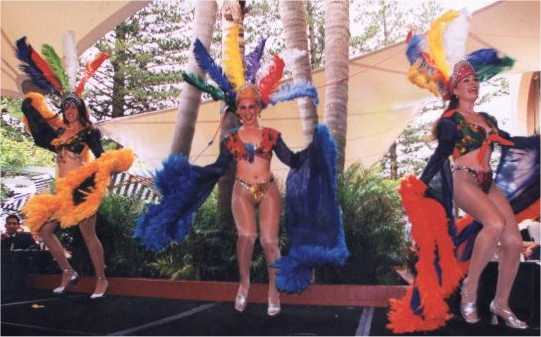
Three Dancing girls


On this particular Saturday, I drove to Terrigal to see the Mexican Chilli Festival... it was excellent. I shot two rolls of film up there. Some of these pictures have turned out beautifully!

A couple of my Mexican friends were doing the entertainment there. Victor is very good at playing the mexican harp. His wife, Shiraz, is an excellent dancer.

I took a series of shots in colour and a series in black & white. I shall first show you the ones in colour and then in b&w, as the b&w ones are very artistic!
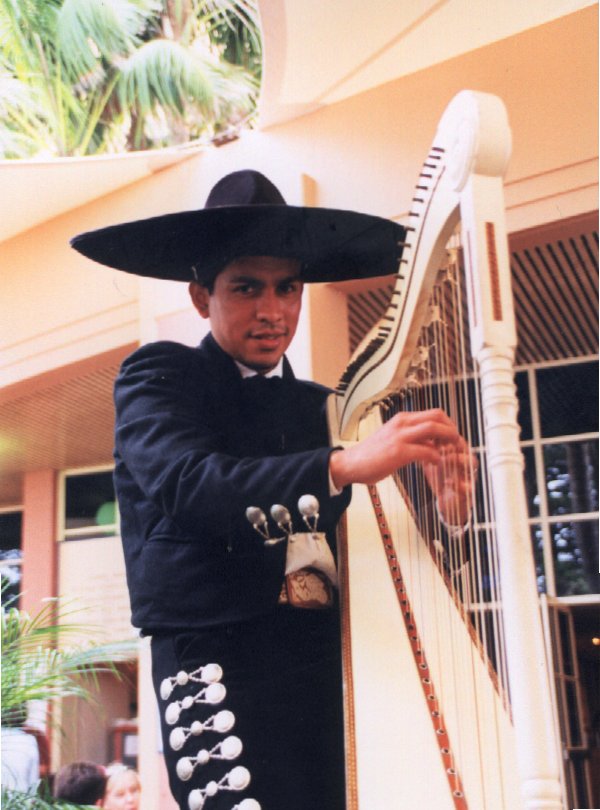
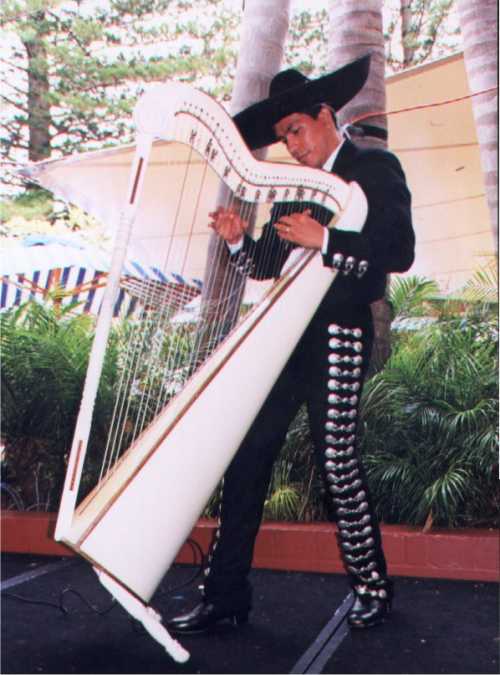
Victor playing the harp

Victor playing the harp

Victor playing the harp

Victor plays the harp like a dream!

I was once at Lance's place - Lance was helping Victor record his music onto CD. The harp does not look like your ordinary orchestral harp. It was ornate and somehow different. It is was a very beautiful instrument.


One of 3 dancers

Shiraz

One of 3 dancers

As you can see, these women are gorgeous! Something about silk stockings, I think...

Shiraz is the photo in the middle. She did quite a few numbers, and this was one of them. All 3 girls danced in a colourful combination!

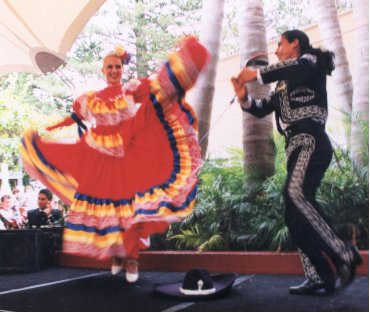
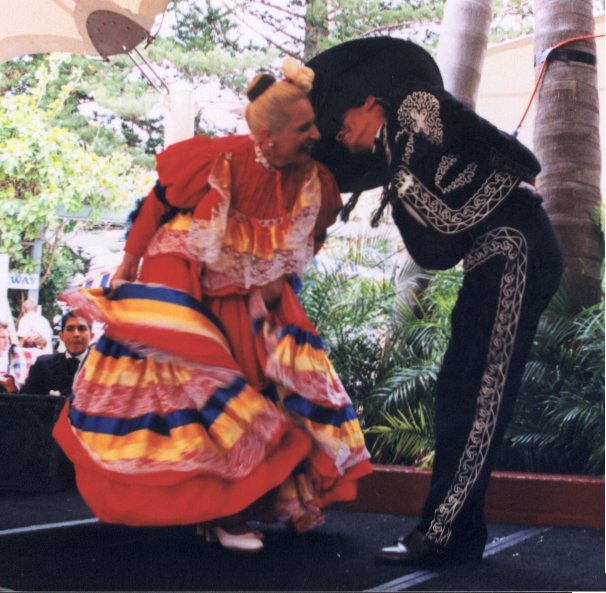
Dancing couple

Dancing couple

Dancing couple

Here you see Shiraz dancing in a duet.

I have seen her do this dance at a similiar concert May last year, here in Lindfield. Victor and a couple of guitarists provided accompaniment to the dancing. Shiraz moved so fast that at times, all you could see was this colourful wave of skirts.

Her partner's costume reminded me of the costumes the Spanish toledos wore (except without the cape).
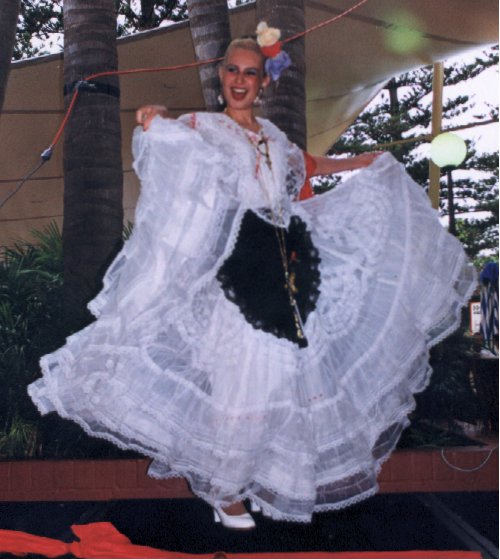
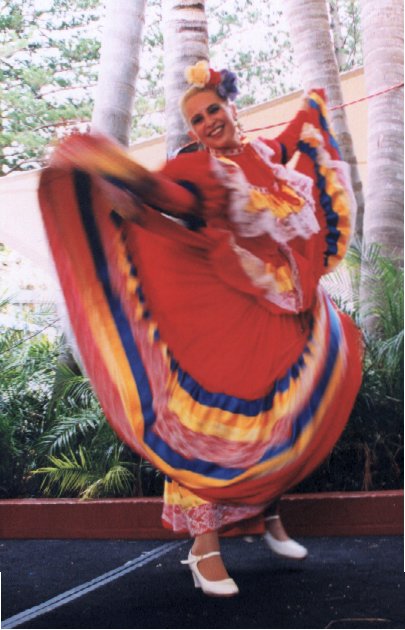

Shiraz in white

Shiraz with feathers

Shiraz in red

As you can see, Shiraz danced a number of dances that day.

It takes a lot of energy to do those dances!

14. November 1999 11:10
by Rene Pallesen
0 Comments

Donkey Day Out . . .

14. November 1999 11:10 by Rene Pallesen | 0 Comments

donkey day out
Grandparents on donkeys


Whilst we were in Morocco, our whole family went riding on donkeys.

That included my grandparents! They needed a bit of support to keep their balance, but otherwise they were doing all right.

You can see my grandmother, my brother Claus and my mother in succession behind by grandfather.

My father on a donkey!


Here is my father! Do you not think that he looks so much like his brother in one of the photos on the 80th birthday page?


Claus on a donkey!


Here is my brother on the donkey. It is quite amazing how much these small animals can carry.


Mum on a donkey!


My mum on her donkey. Not quite as elegant (maybe relaxing a bit would have helped) as the rest of the family, but at least she didn’t fall off!


This is one of the few pictures I have of her where she is not smoking! (oh, and the other one at my grandmother's 80th, of course! It was a very nice picture of her smiling!

Me on my donkey!

Finally, someone got a photo of me on my donkey!
Perfect Moments Photography | A Rene Pallesen Journal

Home

24. April 2026 16:04
by Rene Pallesen
0 Comments

China 2026 Guangzhou

24. April 2026 16:04 by Rene Pallesen | 0 Comments

First Shamian Island in GuangzhouThen sight seeingDinner with one of Kims friends at exclusive priva
Guangzhou was our gateway into China — just the four of us: Rene, Kim, Aiden and Lucas.

Arriving into Guangzhou, the sheer size hits you first. This isn’t just a big city — it’s a sprawling megacity built on more than 2,000 years of history, now layered with relentless modern growth. Yet it is super clean everywhere and despite all the traffic it is super quiet due to everyone driving electric bikes and cars.

First stop in the morning was Shamian Island. Walking onto Shamian Island feels like stepping into Europe. Tree-lined streets, colonial mansions, quiet cafés — it couldn’t be more different from the rest of the city.

But this place carries a complicated history. After the Opium Wars in the 19th century, this small island was carved out and divided between British and French control, becoming a foreign enclave in China.

What remains today is a fascinating blend of cultures — European architecture, Chinese life, and a sense of calm that feels almost surreal in a city like this.

For us, it was one of those rare travel moments where everything slows down. The boys could wander, Kim could soak in the atmosphere, and I found myself drawn to the history that I have read about in numerous books.


It’s easy to be distracted by Guangzhou’s scale — the towers, the traffic, the constant movement — but the real character of the city reveals itself when you step off the main roads and into the narrow alleyways.

These laneways are where life compresses.

The streets tighten, the noise softens into something more human, and suddenly you’re walking through someone’s everyday world. Open doorways reveal small kitchens in full swing, laundry hangs overhead like a patchwork sky, and scooters squeeze past with barely enough room to spare.

This is where Guangzhou slows down.

We wandered without much of a plan, turning corners simply because they looked interesting. The boys quickly realised this was a different kind of exploring — not landmarks, but observation. Small moments. A nod from a local, a curious glance, someone going about their day completely unfazed by four outsiders passing through.

For me, this was where the camera came alive. Not because of anything grand, but because of the texture — worn walls, layered history, faces that told stories without words.


Not far from the bustle of the city, we found ourselves wandering into the area around the Guangdong Cantonese Opera Museum — and it turned out to be one of the most unexpectedly fascinating parts of Guangzhou.

The museum itself is beautifully designed, built in the style of traditional Lingnan architecture, with ornate roofs, carved woodwork, and peaceful courtyards. But what really drew us in wasn’t just the building — it was what was happening around it.

Locals were gathering, dressed in elaborate Cantonese opera costumes — vibrant silks, intricate embroidery, and dramatic makeup. Some were performers, others simply enthusiasts, but all of them carried a quiet pride in what they were part of.

What made it so compelling was how natural it all felt.

People were chatting, adjusting costumes, helping each other prepare, and taking photos — not for tourists, but for themselves. It wasn’t staged or curated. It was a living tradition, still very much part of everyday culture.

Cantonese opera has deep roots in southern China, blending music, storytelling, martial arts, and symbolism into a highly stylised art form that dates back hundreds of years. And here, in this small pocket of Guangzhou, it wasn’t something preserved behind glass — it was still alive.


Beyond the main roads, the city unfolds through a rhythm of small shops and daily rituals. Narrow storefronts spill out onto the pavement — fruit stacked in careful pyramids, hardware stores packed floor to ceiling, tiny eateries with a handful of stools and a constant flow of regulars. There’s no clear boundary between business and street; everything blends together into one continuous, living space.


And then, almost quietly, you start to notice them — the bronze statues.

They’re scattered throughout the city, often without fanfare. A fisherman hauling in a net. A street vendor mid-sale. Children playing. Scenes from another time, frozen in metal but placed right in the middle of modern Guangzhou.

They’re easy to walk past if you’re not paying attention.

But once you notice them, they change the way you see the city.

These aren’t grand monuments to emperors or victories — they’re tributes to everyday life. They reflect the trading roots of Guangzhou, once one of China’s most important ports and the starting point of the Maritime Silk Road. For centuries, this was a city defined by commerce, movement, and connection to the outside world.

And those stories are still here — just told in quieter ways.


One evening in Guangzhou took a different turn.

Kim had arranged to meet an old colleague, and instead of the street-side eateries and small local restaurants we’d been exploring, we were taken somewhere altogether more elaborate.

From the outside, it didn’t immediately give much away. But once inside, the scale revealed itself.

The restaurant unfolded like a maze — long corridors branching into more corridors, each lined with private dining rooms hidden behind heavy doors. It felt less like a restaurant and more like a series of discreet, self-contained worlds. Every group tucked away in their own space, out of sight, out of earshot.

You couldn’t help but wonder what kinds of conversations these rooms had hosted over time. Business deals, family negotiations, celebrations, quiet discussions — the kind of interactions that are never meant to spill into the public space.

There’s a long tradition of private dining in China, especially in cities like Guangzhou where relationships — guanxi — are central to both business and social life. Meals aren’t just about food; they’re about trust, hierarchy, and connection. And spaces like this are designed for exactly that.

For us, it felt like stepping briefly into that world.

The food itself was exceptional — beautifully presented, carefully paced, and clearly designed to impress. But interestingly, it wasn’t the local Cantonese street-style cuisine we’d been expecting. This was something more refined, more international in influence, almost curated to suit a different kind of audience.

For the boys, the novelty was in the setting — their own private room, the formality of it all. For Kim, it was a chance to reconnect. And for me, it was the atmosphere that lingered — the sense that behind every closed door, a different story was unfolding.

It was a completely different side of Guangzhou.

Not the chaotic, open, street-level city we’d come to know — but something quieter, more controlled, and in its own way, just as revealing.


After dinner, we stepped back out into the night and made our way down to the river, drawn by the glow of the Canton Tower rising in the distance.

If the restaurant had felt enclosed and hidden, this was the complete opposite.

The Pearl River opens everything up. Wide promenades, open air, and a steady flow of people out enjoying the evening — families, couples, groups of friends, all moving at a slower, more relaxed pace than the daytime rush.

And then there’s the tower.

Up close, the Canton Tower doesn’t just dominate the skyline — it feels almost unreal. Its twisting structure is lit in shifting colours, constantly changing, reflecting off the river below. Boats drift past, their own lights adding to the scene, and the whole area takes on a slightly surreal, almost cinematic feel.

The boys were immediately drawn to the energy of it — the lights, the movement, the scale. For them, this was Guangzhou at its most exciting.

The Pearl River has been the lifeblood of Guangzhou for centuries — the reason the city became one of China’s most important trading ports, connecting it to the outside world long before the skyscrapers arrived.

Now, instead of trading ships, it’s light shows and river cruises.


Somewhere in the middle of Guangzhou’s busy streets, we stumbled across something completely unexpected — and for Lucas, it may well have been the highlight of the entire city.

A shop where everything looked like it belonged in a museum… but was made entirely of chocolate.

Not just small displays or decorative pieces, but full-scale creations. Life-sized animals stood frozen mid-step — elephants, giraffes, creatures you’d expect to find on the African savannah, not in a shop in southern China. Alongside them were intricate replicas of local architecture, temples and buildings recreated in astonishing detail, all in chocolate.

At first, it didn’t quite register. The level of craftsmanship made it hard to believe it wasn’t carved wood or painted resin. But the closer you looked, the more surreal it became — every surface, every texture, every tiny detail… chocolate.

Lucas was completely in his element.

You could see the internal conflict playing out — admiration versus appetite. Was this something to photograph, or something to eat? (The answer, unfortunately, was mostly the former.)


5. February 2026 16:02
by Rene Pallesen
0 Comments

Cook Islands - Snorkeling

5. February 2026 16:02 by Rene Pallesen | 0 Comments

We went snorkeling in the lagoon


5. February 2026 16:02
by Rene Pallesen
0 Comments

Cook Islands - Long Boat

5. February 2026 16:02 by Rene Pallesen | 0 Comments

On a rainy afternoon we went in a longboat. The idiot at the back almost got all of us killed by hav
On a rainy afternoon we went in a longboat. The idiot at the back almost got all of us killed by having no idea how to steer (that was his one job) and landed us on the outer reef.


5. February 2026 16:02
by Rene Pallesen
0 Comments

Cook Island - Turtles

5. February 2026 16:02 by Rene Pallesen | 0 Comments

One day we went snorkeling with the turtles in the lagoon.


5. February 2026 16:02
by Rene Pallesen
0 Comments

Cook Islands - Boys at Black Rock Beach

5. February 2026 16:02 by Rene Pallesen | 0 Comments

I also took some photos of the boys at Black Rock Beach.


5. February 2026 15:02
by Rene Pallesen
0 Comments

Cook Islands 2026

5. February 2026 15:02 by Rene Pallesen | 0 Comments

This year we decided to travel to Rarotonga in Cook Islands. Some of the immediate family booked at

This year we decided to travel to Rarotonga in Cook Islands. Some of the immediate family booked at the same time so that we 
had some days together.


5. February 2026 15:02
by Rene Pallesen
0 Comments

Cook Islands - dogs and other animals

5. February 2026 15:02 by Rene Pallesen | 0 Comments

The islands have a lot of very friendly dogs. A lot of them are unique that they are large dogs with
The islands have a lot of very friendly dogs. A lot of them are unique that they are large dogs with very short legs.

They are also able to feed themselves by catching and eating fish in the lagoon. There are also a lot of chicken (especially roosters) on the island.


5. February 2026 15:02
by Rene Pallesen
0 Comments

Cook Islands - Games

5. February 2026 15:02 by Rene Pallesen | 0 Comments

Other times were spent playing games - Dark, Snooker Fuzball, building cairns and chasing crabs.