Laos is not a place one can forget.
One day I would like to go back there again in my travels.
It is a beautiful place with friendly people who welcomed me with open hearts.
It is also a place of sorrow because of war and loss.
Yet the people try to go on with their lives despite the war.
They live in hope and their beliefs keep them going.
There are tribes there who seem unaffected by western influence and change and keep to their tradition after all this time.
I met many children there, some happy, some sad.
I also spent time with a special family and also managed to enjoy the local food.
 War . . .
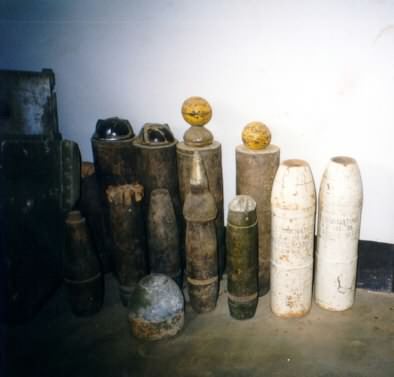
All the eastern parts of Laos was heavily bombed during the Vietnam War. More bombs were dropped in this area than the number of bombs dropped during the entire Second World War (approximately 10,000 bombs for every citizen of Laos). Laos has the sad reputation of being the most heavily bombed country in the world ...
Ever.
The Ho Chi Min trail went through Laos, and the Americans tried to destroy it with every means. They tried everything from carpet bombing, dropping cases of Budweiser Beer (hoping that the Vietnamese soldiers would get drunk) to dropping washing detergent during the wet season (hoping the trail would get slippery). It is estimated that the Americans only succeeded in stopping 10 percent of the traffic on the trail.
In Vietnam, the Americans were not allowed to bomb within 500 meters from temples and hospitals. Their rules of engagement furthermore said that they were not allowed to return to their home base with a bomb load. The result was that they flew across the border to Laos and dropped all their bombs there. In Laos, there were no rules of engagement. They could bomb whereever they wanted to bomb.
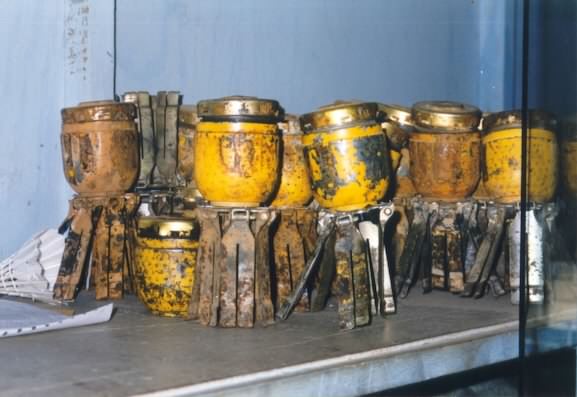
This also means that there is quite a large amount of UXO (Unexploded ordnance) in the country. Land mines and unexploded cluster bombs (shown on left) are some of the biggest problems.
In Laos, there are still approximately 4 accidents per day resulting from UXO.

Sad as this may seem, people have been pretty creative about using some of the leftover bombs. In this case they have used a couple of 2000-pound bombs as decoration outside the house.
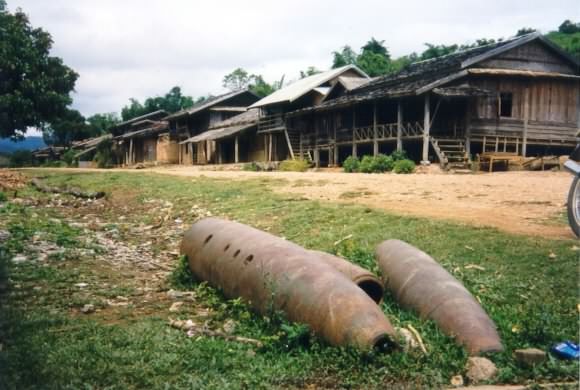
No matter where you go you are reminded of the war.
In all the local villages there are unexploded bombs and shells from the cluster bombs.

A lot of the remains from the war are sold as scrap metal. In this pile there are shells from cluster bombs, wheels from tanks etc. >>>
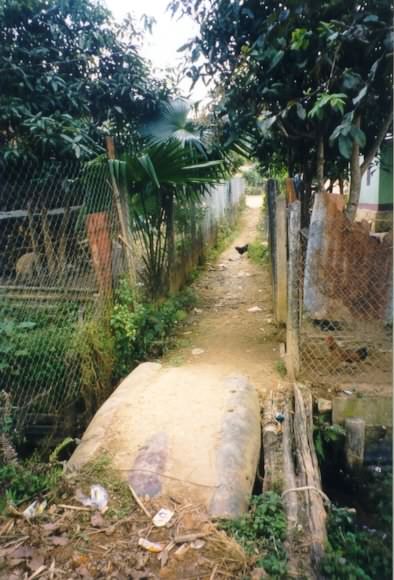
<<< Shells from the cluster bombs have been used to make this bridge.

Here as fence posts outside a house. >>>
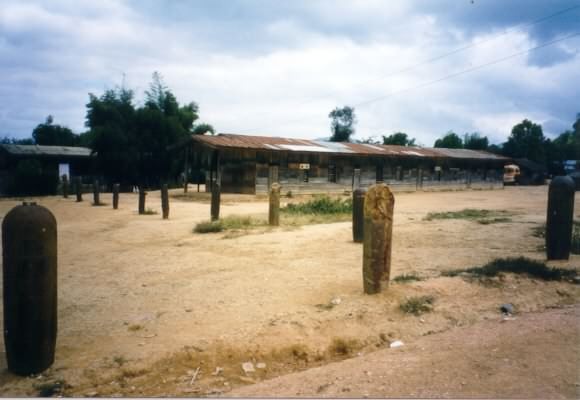
Outside a school, the schoolyard was surrounded by the shells from the American cluster bombs.

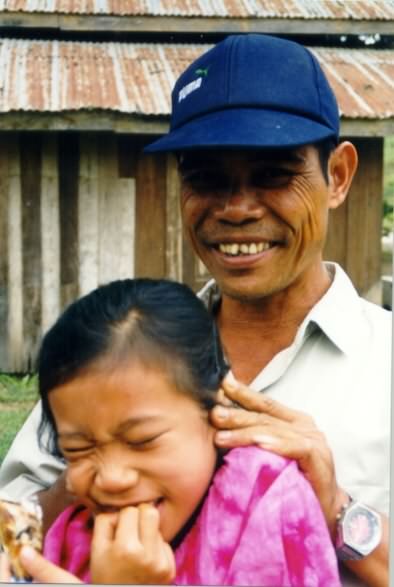 Sorrow . . .
This girl's parents were both killed by Hmong guerillas in 1997.
There are still areas where there are lots of problems with guerilla warfare. This is especially the case on Route 7, along the eastern border towards Vietnam and in the western part of Laos west of Vientiane, in the area between the Mekong River and Thailand.
The government is trying to control these problems, but it is difficult with such wast areas of jungle.
Unfortunately such incidents have affected a lot of people. This girl is not the only person in Laos who has lost her family.
Remember that the area has virtually been a permanent warzone since the Vietnam war, until the mid 90’s.
The person behind the girl is her grandfather.
He is now looking after her to make sure that she gets an education
He is after all, her only family left.
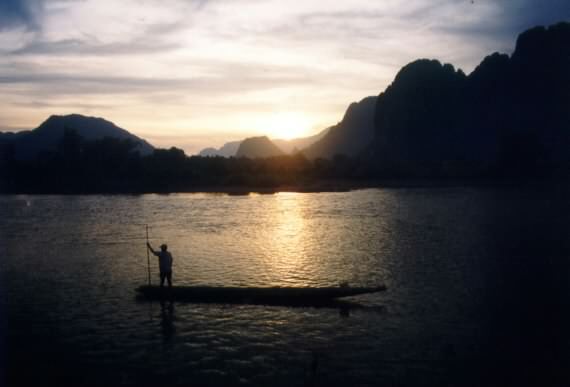 Hope . . .
Looking at this beautiful photo, it seems really serene and calm.
You couldn't really tell that things are pretty bad in some parts of the country.
The northern part of Laos is especially poor. The mountainous terrain limits what can be grown. Outdated farming methods using “slash-and-burn” of whole mountainsides are not very appropriate for feeding a growing population.
A lot of the western countries are represented in Laos with health care workers. What Laos really needs at the moment is help using more environmentally-friendly farming methods, which at the same time improve the growing of crops. The slash-and-burn method basically means they burn a whole mountainside to grow rice. There is nothing left to hold back the nutrients in the soil, and fertiliser is not added. After a few years there are no more nutrients on this mountainside and they move on to the next mountainside. They need to learn how to grow crops in terraces and add fertiliser from their animals to the soil.
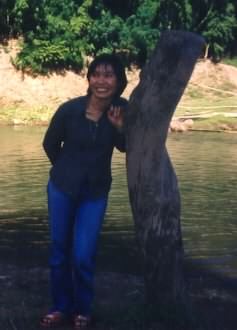
One of the problems with growing rice is that the men are unempleyed most of the year while they are waiting for the rice to grow.
Vinchu is working for the Swiss Red Cross. She intends to buy a piece of land in the 32-kilometre village of Muang Xai, and convert it into a fish farm. This would keep some of the men occupied for most of the year. The profit from the fish farm could be used to take care of the village’s basic needs such as education of the children and buying medicine.
Vinchu is one of the few catholics in the country. She is fluent in English and has had a primary healthcare education. This has enabled her to get a job for one of the foreign representatives in the country, which means she is getting a salary that is considerably higher than what her peers get. Also she gets paid in US dollars instead of kip, the local currency.
On average, the government employed in Laos receives 100.000 kip a month (approx US$30). This is not enough to survive on, so most people have either two jobs or let the wife work as well. Lots of people have small vegetable gardens. This allows them to grow a few things to sell at the markets.
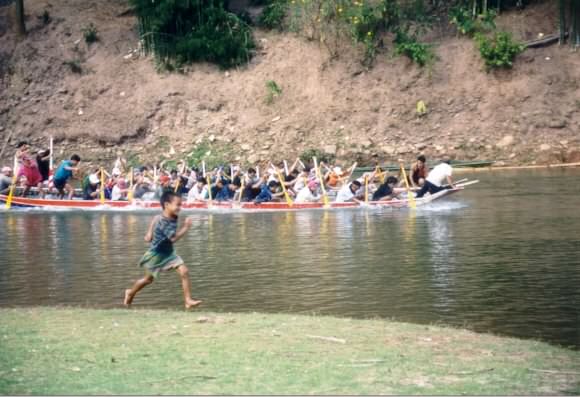
The employees from the hospital in Muang Xai have not received any money from the government for more than 6 months. The government declared that they should participate in the annual dragon boat race.
Vinchu paid for transportation of the employees to the local river, and other expenses, from her own paycheque.
Most of the people in the boat are doctors and people from the hospital.
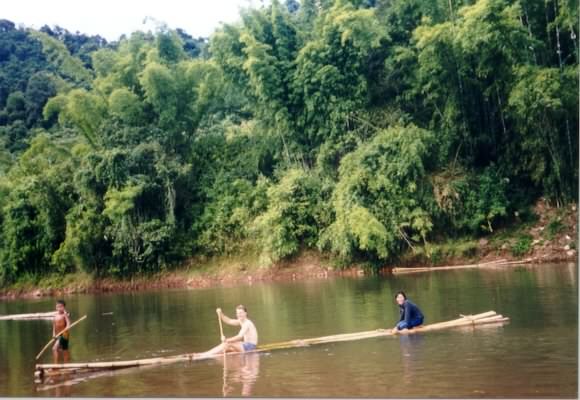
Vinchu and I in a sailing raft!
 Religion . . .
Buddhism is a big part of Laos.
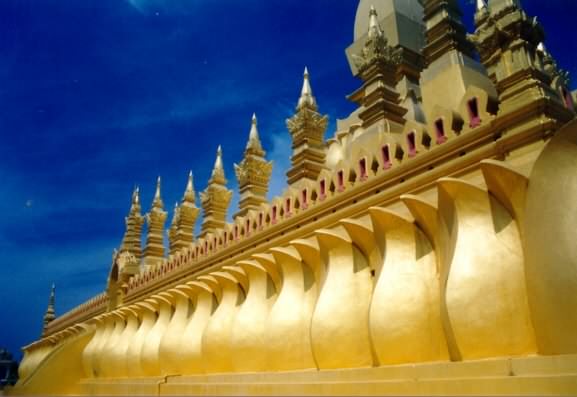
The holiest place in Laos is the stupa in Vientiane. There are practically no temples in the eastern part of Laos due to heavy bombardment during the Vietnam War. The only great temples around is the one in Vientiane and Luang Prabang.
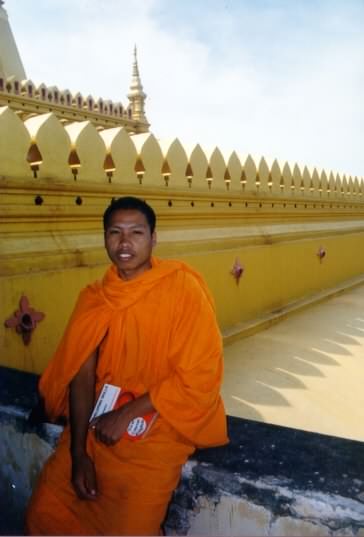
The Buddhists in Laos are a bit less extremist than in Thailand. People do not have small alters in their homes, and it is not compulsory for the males to become monks.
In Laos, becoming a monk is voluntary. It is mainly people from the poorer parts of the country that become monks, because it is a good and cheap way to get an education.
Some of them are studying English and are therefore very eager to practice their English on the tourists.
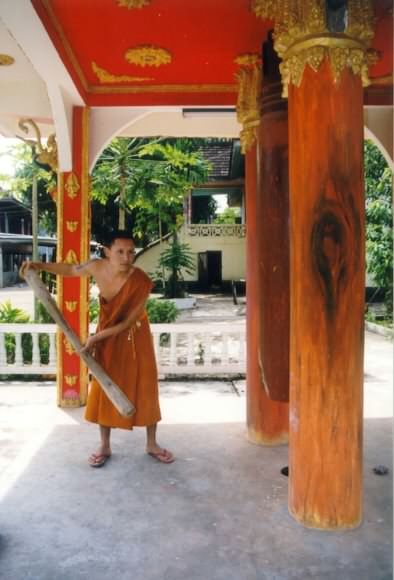
When they call the monks in for prayer, they either beat a big drum or the use a wooden ram to chime the bell.
Tribes . . .
There are three main tribes in Laos. One of these tribes is called Lao Tsung (or HMong).
They live mainly in the northern part of the country.
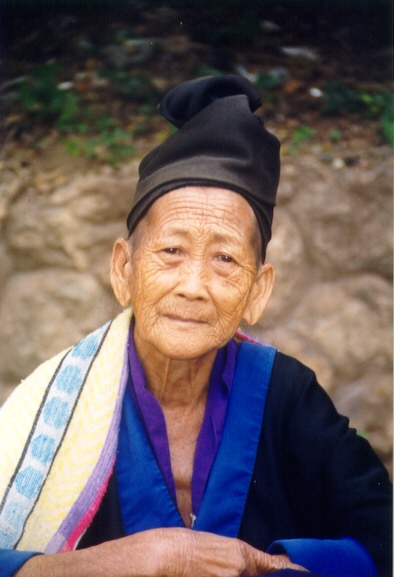
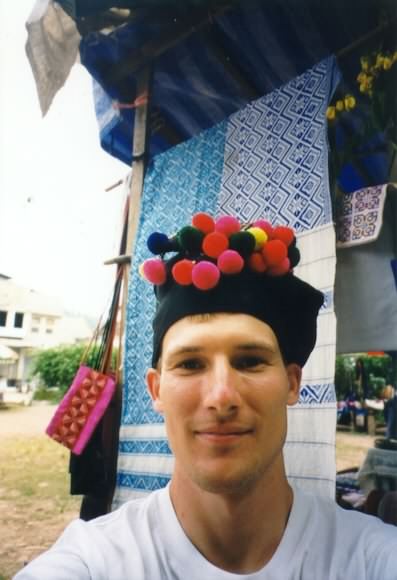
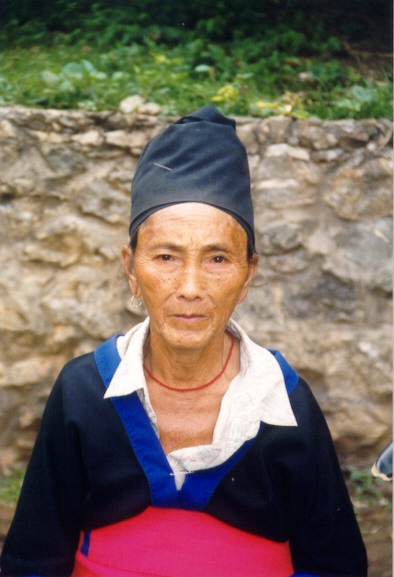
The women still wear traditional clothing. I am wearing a traditional Hmong hat.

The Hmong have a dialect that is different from the other tribes. They keep to themselves and are very isolated from the rest of the society.
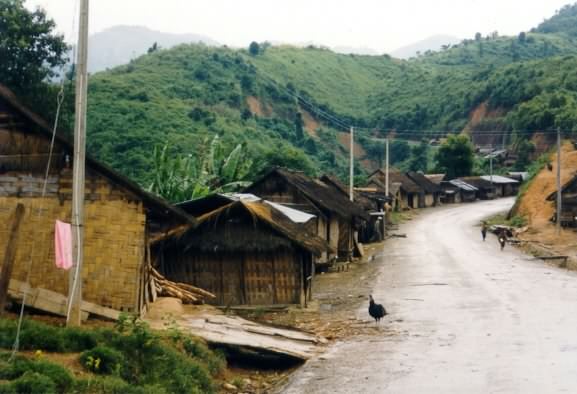
The difference between the Hmong village and the other villages is that the Hmong build their houses on the ground instead of on stilts.

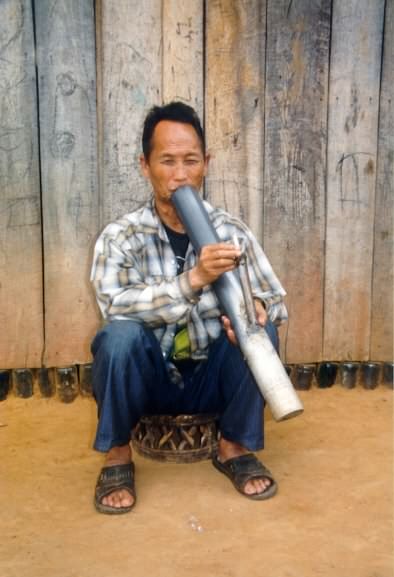
The Hmong is responsible for most of the opium growing and trading in Laos. The government is trying to stop this trade, but it is difficult as the Hmong live in areas that are not easily accessible.
The Hmong are also responsible for most of the problems in the area around Route 7.
The Children of Laos . . .The kids in Laos are wonderful. There are always kids around you no matter where you go and they are always very joyful and curious to find out who you are.
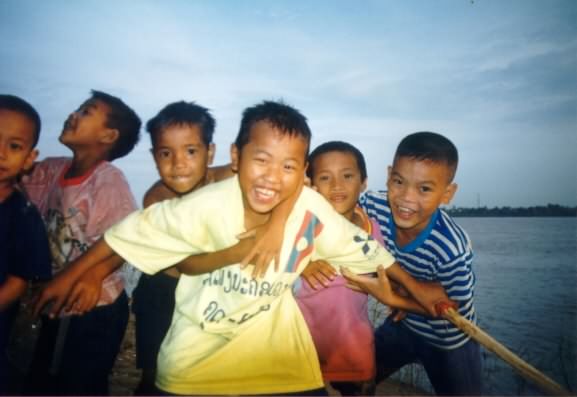
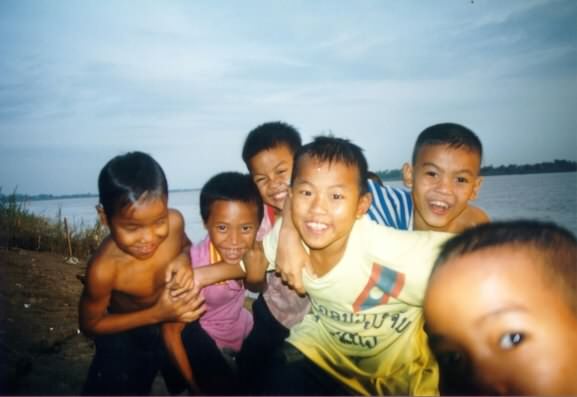
You see a lot more kids playing with each other in Laos than in the western world. I guess it also somehow encourages them to grow up being socially responsible. This could be the simple reason why people are so friendly and welcoming in this country.
Lots of people say that it is because of the religion but I believe that it is something more fundamental than that. People in the western world have just forgotten how to be responsible towards each other. Why? Maybe they do not spend enough time in one another's company.
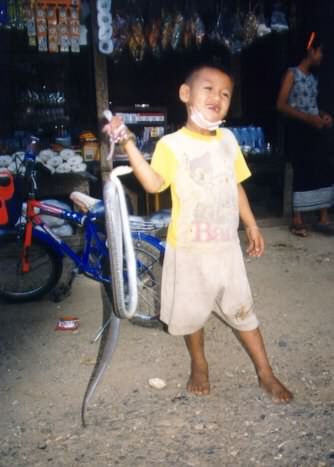
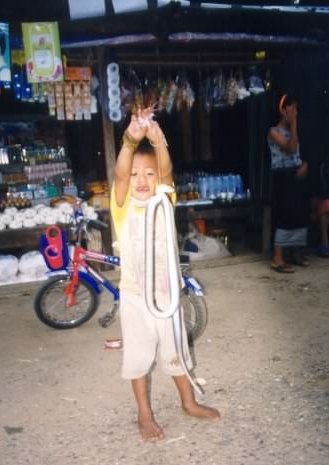
In Vang Vieng, I saw a kid playing around with a snake. It did not seem to bother him or his parents that it might be poisonous.
I don't know if the pad on his chin was caused by the snake. I doubt it though since he had been very sick.
He was pretty proud of his snake.
I am not sure what kind of snake it was. I did see a few other snakes around, especially at the temples.
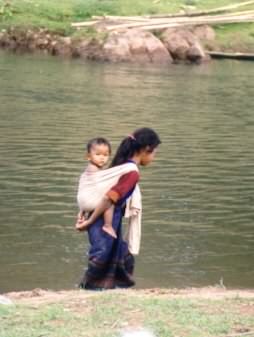
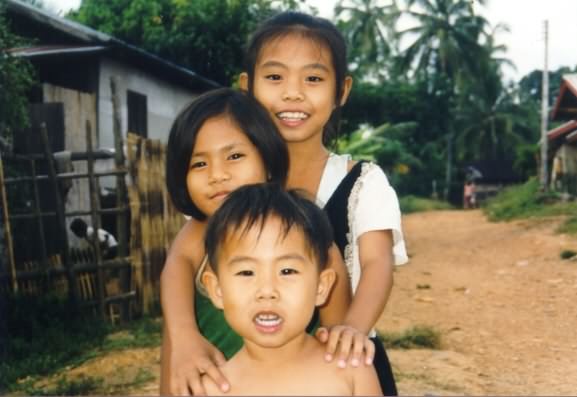
It tends to be the elder children’s task to look after their younger brothers and sisters while the parents are busy. The system seems to work fairly well since the whole group of children play together, no matter what their age group. It is therefore not such a big burden as some might think.
The photo was taken approx 40 kilometres north of Muang Xai (where Vinchu was).
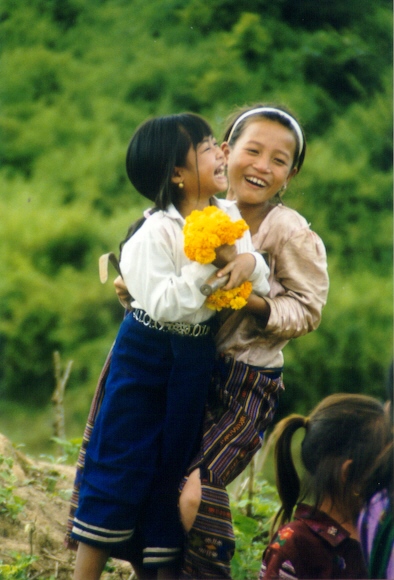
This photo on the right is one of my favourites.
It was taken in the northern part of Laos, at the 32-kilometer village outside Muang Xai.
The girls were collecting flowers outside one of the local schools.
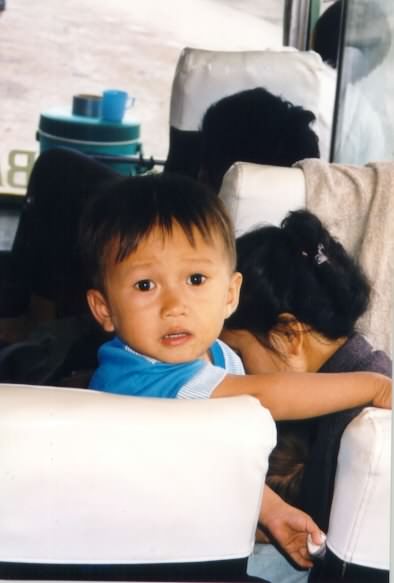
The younger kids tend to be afraid of Europeans. Most of them have never seen a white face before.
This little fellow here was a bit worried about my presence...
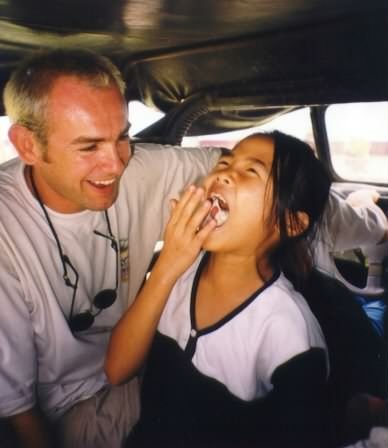
This is the girl’s first piece of chewing gum... Pretty interesting to watch! *smile*
In the cities kids love to have their picture taken.
 The Tanoy Family . . .
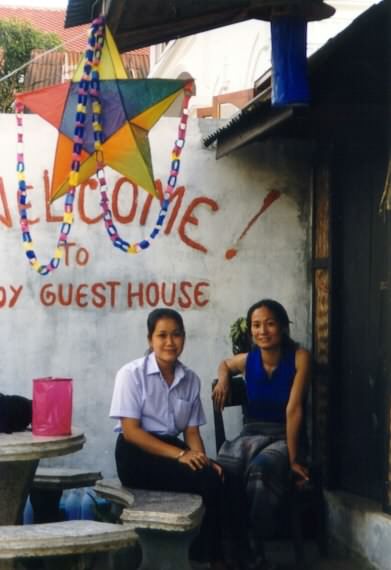
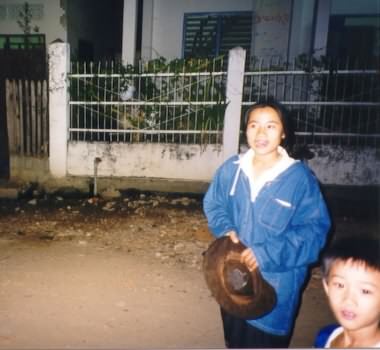
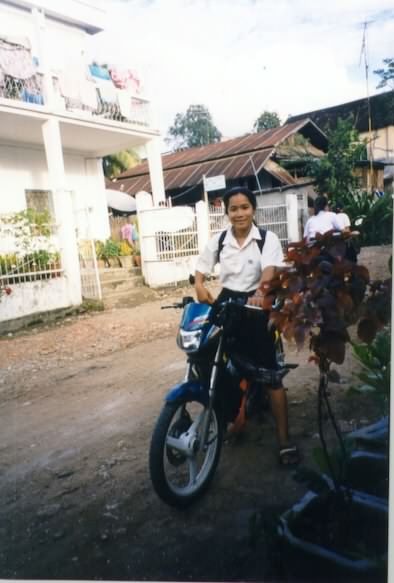
I stayed a few days with a family running the Tanoy Guest house.
The eldest daughter of the place was called Tanoy.
The girl on the left of this photo is one of Tanoy’s friends from school.
The woman on the right is Tanoy's mum. Tanoy’s mum is 40 years old and has had 6 kids. She does not look that old and still looks absolutely stunning.
Below are a series of shots of Tanoy herself.
I guess she will one day take over the guest house.

Whilst I was staying at the Tanoy Guest House, I saw the preparations for the annual Water Festival.
Every year when the monsoon ends and Water Festival coincides with the full moon, The festival included Dragon Boat racing.
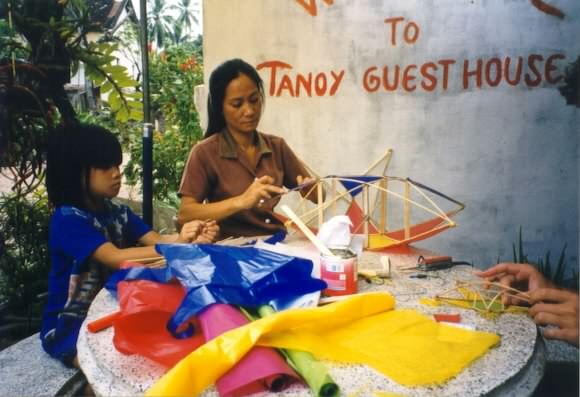
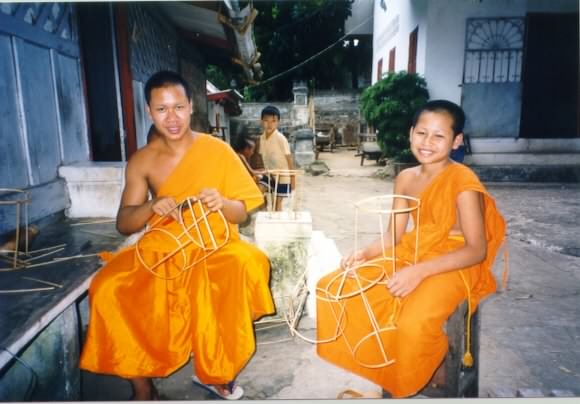
Everyone was taking part by making lanterns for this festival, including the monks!
All the monks were making lanterns to decorate the temples.

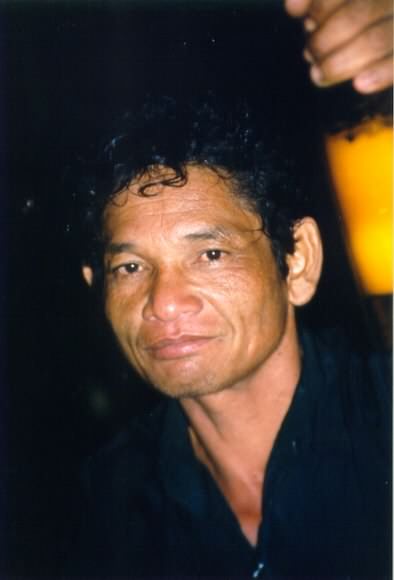

The festival lasts for three days.
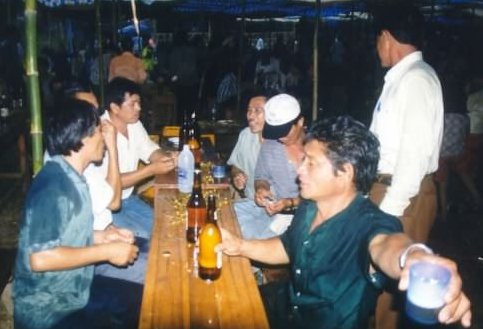
During the festival, they celebrate with all their friends and families. They also drink a lot of “Lao Lao” (or Laos Whisky), which is a kind of rice wine.
Everyone walks down to the river during the day to watch the boat races.
Later in the evening, everyone parties some more and drinks more beer.
It does not matter that it is pouring down. The whole village is at the party and everyone is happy.
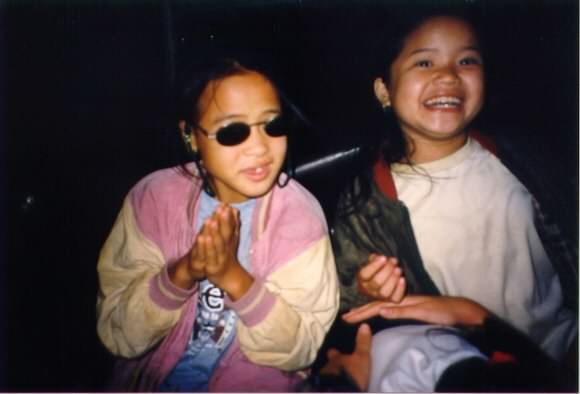
On the night of the festival, people light candles. They also float the candles in the rivers.

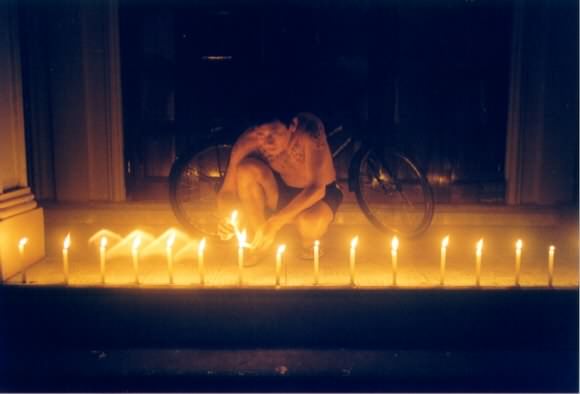
Unfortunately it was raining a lot that night, so people had difficulties keeping the candles lit.
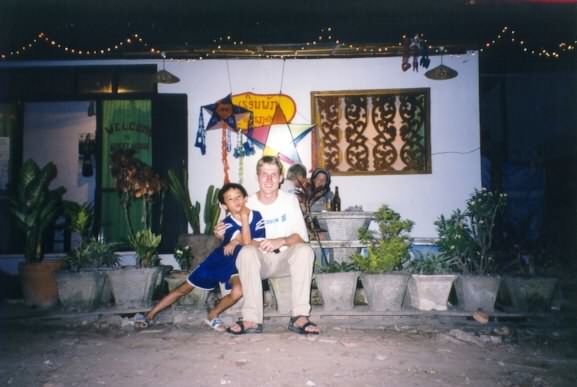
At the end of the day, I managed to get a photo of me sitting outside the Tanoy Guest House!
Food . . .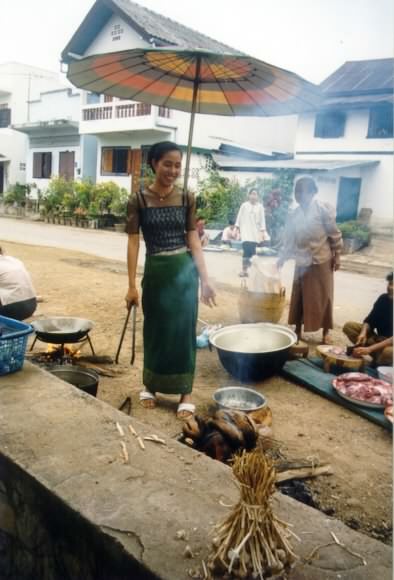

The food is excellent in Laos.
It takes some time to get used to eating noodle soup for breakfast, but once you get used to it, it is excellent.
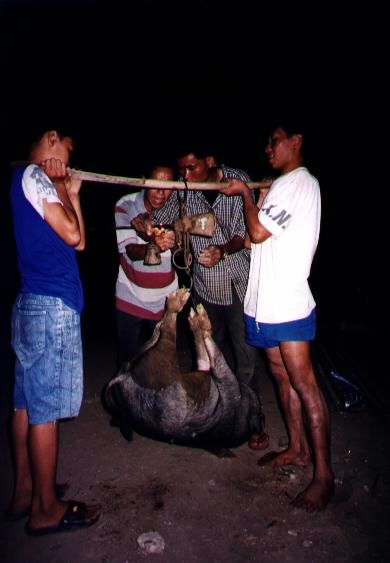
There are pigs and turkeys all over the place. Above is a pig being weighed.
An essential part of farming is the water buffalo - it is important for pulling the heavy plough and there feet are designed to walk in water-logged gxround.


All ingredients used are very fresh. People are walking around selling vegetables on the streets.
It is hard work getting the rice ready for eating. First the rice is to be pounded to break the husks. Then thrown up in the air to remove the husks from the rice itself.
Created: Jan 2000 Last Updated: 16 Sept 2001


