Home

14. November 1999 11:10
by Rene Pallesen
0 Comments

Donkey Day Out . . .

14. November 1999 11:10 by Rene Pallesen | 0 Comments

donkey day out
Grandparents on donkeys


Whilst we were in Morocco, our whole family went riding on donkeys.

That included my grandparents! They needed a bit of support to keep their balance, but otherwise they were doing all right.

You can see my grandmother, my brother Claus and my mother in succession behind by grandfather.

My father on a donkey!


Here is my father! Do you not think that he looks so much like his brother in one of the photos on the 80th birthday page?


Claus on a donkey!


Here is my brother on the donkey. It is quite amazing how much these small animals can carry.


Mum on a donkey!


My mum on her donkey. Not quite as elegant (maybe relaxing a bit would have helped) as the rest of the family, but at least she didn’t fall off!


This is one of the few pictures I have of her where she is not smoking! (oh, and the other one at my grandmother's 80th, of course! It was a very nice picture of her smiling!

Me on my donkey!

Finally, someone got a photo of me on my donkey!

14. November 1999 10:59
by Rene Pallesen
0 Comments

Morocco ( 1999 ) . . .

14. November 1999 10:59 by Rene Pallesen | 0 Comments

morocco 1999


Our main reason for the trip to Morocco, was to come together as a family and attend my grandmother's 80th birthday. We also managed to explore Morocco, and even had a fun day riding donkeys - yes, the whole family - my grandparents, parents and brother!

We met different people and there were some really beautiful women in this country. There were some interesting buildings and we even found some strange goats!

The Women of Morocco . . .


One beautiful girlAnother beautiful girl

Girl being offered


People in the city tend to be more extremist/fundamentalist when it comes to religion, then those who come from the country areas.

One reason could be that the people living in the cities are mainly Arabic, and those living in the countryside are Berbers.

Berber women are less dressed up than in the cities.

Some of them are extremely beautiful.

Also, I noticed that those in the city tend to be more self-conscious of photos being taken than those in the country.People are naturally a bit shy, but by showing friendliness, it a makes it a lot easier to take good photos.

Hmmm... Do you know that I was actually offered to buy this girl on the right for two camels? I do not know why they wanted to get rid of her. Maybe she was making too much trouble in the village?

Anyway…I refused the offer.

Henna hands


The girls decorate themselves with what is called henna. It is a dye that stains there hands for a long time. They paint different patterns onto their hands and it actually looks very pretty. Much nicer than tattoos - which are permanent!


Return to Top


Goats . . .

A goat in a treeA goat in a tree (black & white)More goats in a tree!

We came across a couple of trees full of goats. They were climbing around the tree to reach all the green leaves. Our first though was that someone put them there, but they were too much out of reach for that idea.

14. November 1999 10:34
by Rene Pallesen
0 Comments

My Grandmother's Birthday ( Morrocco 1999 )

14. November 1999 10:34 by Rene Pallesen | 0 Comments

my grandmother s birthday morrocco 1999


Mon Grandmere

My whole family was in Morocco to celebrate my grandmother's 80th birthday.

This is my grandmother. Even as an 80-year-old woman, I find her pretty cool (you should see some of the pictures I’ve got of her with dark Blues Brothers sunglasses).

(No need to say that the flags are Danish.)

It was a family reunion. We do not all live in the same place, but all of us make this journey as it is one of the few times that we all get together. Unfortunately, there were a few of us who could not make it.

It was important for me to be there it was hard to tell whether the whole family will ever come together again as a large group, as my grandparents are no longer living there.


My brother


My brother, Claus!

Another person I find pretty cool is my brother.

He has not been well in the last few years, but I love him anyway
( Definitely can't do without my big brother )
My


Mum's pretty cool too! She will probably hate me for putting this photo on my homepage. But it is a really nice photo of Mum with a big smile.

She hates the idea of me climbing mountains, but at the same time she bought me a climbing helmet as a Christmas present. She thought it will keep me safer when I am so far off the ground.

Thanks Mum for supporting me.

I also find my dad pretty cool. He’s a bit of a nerd just like me which means that we probably understand each other better than anyone else in the family.

My Dad's brother & his wife


This is my dads brother and his wife. The resemblance is unequalled. My dad and his brother looks very much like each other. They have the same bad habits (just like my grandfather) and both their wives are smoking like chimneys.
Me stuffing myself!


Finally, a picture of me...

I do belong to the family even though most of them have probably forgotten about it by now!

I am sitting outside one of the food places on the local market. We each got a serve of excellent calamari, shrimp and fish. I think this was the best meal I had while I was in Morocco.

Most tourists would avoid a place like this just because of the hygiene, but I have never had diarrhoea because I had been eating local food.

Perhaps all this travelling I do has made me immune to germs and bugs! Or maybe I just pick good food!


Do you want to see my family on a Donkey Day out?
Click Here!


Created: Jan 2000 Last Updated: 16 Sept 2001

15. March 1999 11:00
by Rene Pallesen
0 Comments

Laos

15. March 1999 11:00 by Rene Pallesen | 0 Comments

laos 1999


Laos is not a place one can forget.

One day I would like to go back there again in my travels.

It is a beautiful place with friendly people who welcomed me with open hearts.

It is also a place of sorrow because of war and loss.
Yet the people try to go on with their lives despite the war.
They live in hope and their beliefs keep them going.

There are tribes there who seem unaffected by western influence and change and keep to their tradition after all this time.

I met many children there, some happy, some sad.

I also spent time with a special family and also managed to enjoy the local food.



War . . .


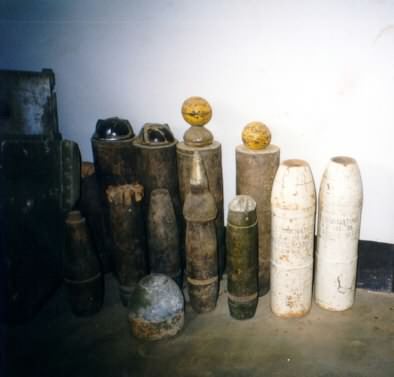
Various types of bombsMore bombs

All the eastern parts of Laos was heavily bombed during the Vietnam War. More bombs were dropped in this area than the number of bombs dropped during the entire Second World War (approximately 10,000 bombs for every citizen of Laos). Laos has the sad reputation of being the most heavily bombed country in the world ...

Ever.

The Ho Chi Min trail went through Laos, and the Americans tried to destroy it with every means. They tried everything from carpet bombing, dropping cases of Budweiser Beer (hoping that the Vietnamese soldiers would get drunk) to dropping washing detergent during the wet season (hoping the trail would get slippery). It is estimated that the Americans only succeeded in stopping 10 percent of the traffic on the trail.


In Vietnam, the Americans were not allowed to bomb within 500 meters from temples and hospitals. Their rules of engagement furthermore said that they were not allowed to return to their home base with a bomb load. The result was that they flew across the border to Laos and dropped all their bombs there. In Laos, there were no rules of engagement. They could bomb whereever they wanted to bomb.
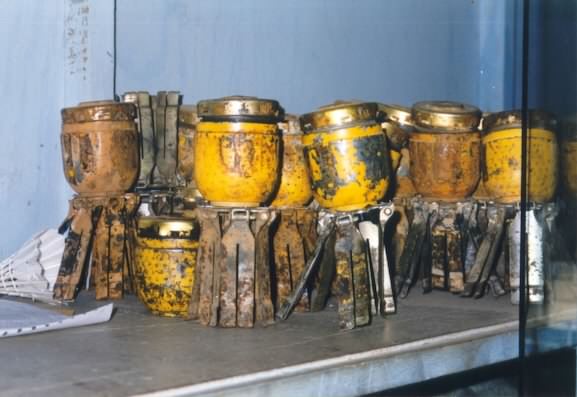
Cluster bombs


This also means that there is quite a large amount of UXO (Unexploded ordnance) in the country. Land mines and unexploded cluster bombs (shown on left) are some of the biggest problems.

In Laos, there are still approximately 4 accidents per day resulting from UXO.

Bombs outside a house


Sad as this may seem, people have been pretty creative about using some of the leftover bombs. In this case they have used a couple of 2000-pound bombs as decoration outside the house.
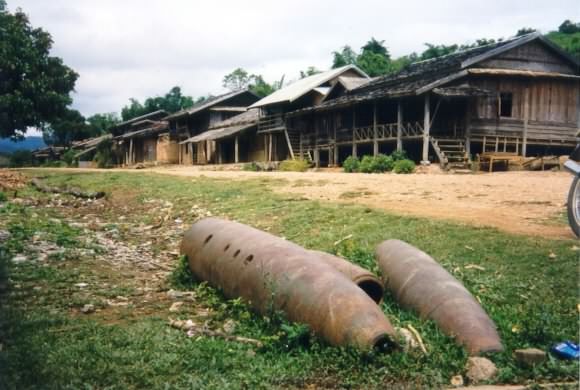
Bombs everywhere


No matter where you go you are reminded of the war.

In all the local villages there are unexploded bombs and shells from the cluster bombs.

Bombs used as scrap metal


A lot of the remains from the war are sold as scrap metal. In this pile there are shells from cluster bombs, wheels from tanks etc. >>>
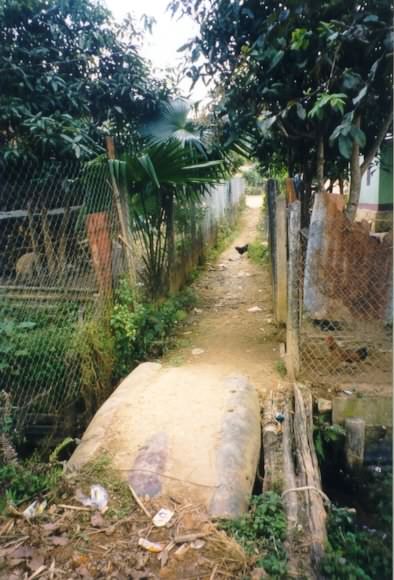

Bridge made from bombs


<<< Shells from the cluster bombs have been used to make this bridge.


Fences made from bombs


Here as fence posts outside a house. >>>
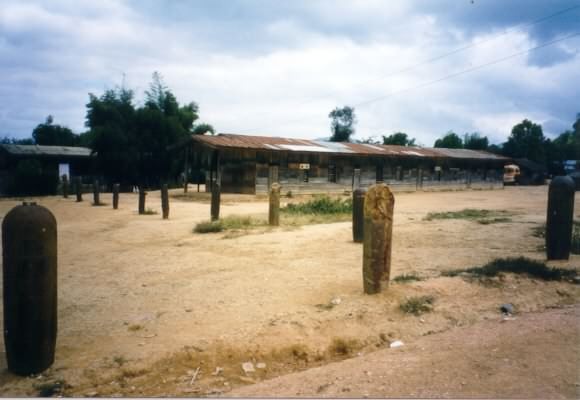
School with bombs


Outside a school, the schoolyard was surrounded by the shells from the American cluster bombs.


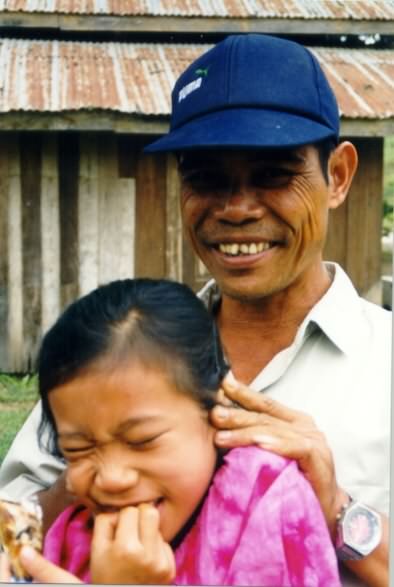
Grandfather  his orphan granddaughterSorrow . . .


This girl's parents were both killed by Hmong guerillas in 1997.

There are still areas where there are lots of problems with guerilla warfare. This is especially the case on Route 7, along the eastern border towards Vietnam and in the western part of Laos west of Vientiane, in the area between the Mekong River and Thailand.

The government is trying to control these problems, but it is difficult with such wast areas of jungle.

Unfortunately such incidents have affected a lot of people. This girl is not the only person in Laos who has lost her family.

Remember that the area has virtually been a permanent warzone since the Vietnam war, until the mid 90’s.

The person behind the girl is her grandfather.
He is now looking after her to make sure that she gets an education

He is after all, her only family left.
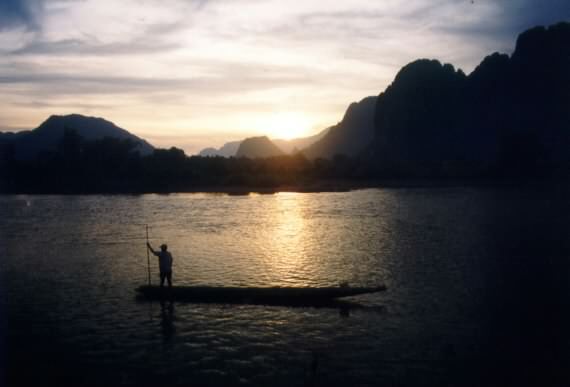


Beautiful SunsetHope . . .


Looking at this beautiful photo, it seems really serene and calm.

You couldn't really tell that things are pretty bad in some parts of the country.

The northern part of Laos is especially poor. The mountainous terrain limits what can be grown. Outdated farming methods using “slash-and-burn” of whole mountainsides are not very appropriate for feeding a growing population. A lot of the western countries are represented in Laos with health care workers. What Laos really needs at the moment is help using more environmentally-friendly farming methods, which at the same time improve the growing of crops. The slash-and-burn method basically means they burn a whole mountainside to grow rice. There is nothing left to hold back the nutrients in the soil, and fertiliser is not added. After a few years there are no more nutrients on this mountainside and they move on to the next mountainside. They need to learn how to grow crops in terraces and add fertiliser from their animals to the soil.
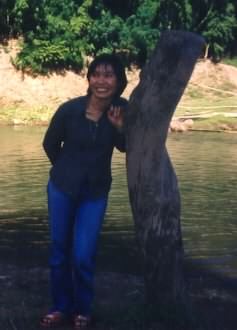

Vinchu - a Red Cross worker

One of the problems with growing rice is that the men are unempleyed most of the year while they are waiting for the rice to grow.

Vinchu is working for the Swiss Red Cross. She intends to buy a piece of land in the 32-kilometre village of Muang Xai, and convert it into a fish farm. This would keep some of the men occupied for most of the year. The profit from the fish farm could be used to take care o Perfect Moments Photography | A Rene Pallesen Journal

Home

15. September 2000 11:05
by Rene Pallesen
0 Comments

New Car in 2000 . . .

15. September 2000 11:05 by Rene Pallesen | 0 Comments

new car in 2000


In September 2000, just after I returned from my trip to Borneo, I had to buy this new car because my girlfriend had written off my car whilst I was away! *smile*

I did not look forward to hunting around for a new car, but I found a good buy locally. This car is a 1997 Ford Futura, with 4.0 litre, 6-cylinder, 220-horsepower, power-steering, central locking and electronic windows (I think I am starting to sound like a car advertisement...)

Frontal view of car


Side view of car

It is pretty much the same colour as my old car, and it feels so nice to drive!

As you can see, pretty similar, but I also really miss my old car! It had a lot of computerised features - from a digital odometer, to adjusting the internal temperature of the car. It was a pretty cool car and wished I could have kept it for another few more years.

Frontal view of car


Side view of car

My first car in Australia!

A huge contrast to my first car!

It is a red hatchback that I bought early 1998, a few months after I arrived in Australia. But someone wrote it off a few months after I bought it. It was a pretty bad accident, but luckily I was alright. I was only covered by Third Party insurance, and to go through a lot of paperwork just to get reimbursement for the car!

15. August 2000 10:43
by Rene Pallesen
0 Comments

Away from Headquarters . . .

15. August 2000 10:43 by Rene Pallesen | 0 Comments

away from headquarters
Ecochallenge ( Sabah 2000 )

Magellan HotelMoving into SilamRepeater StationInjured CompetitorTransporting a Repeater StationBeetleKids in Village
ArrivalSilam / Jungle OpsRepeater StationsThe CompetitorsHelicopterJungle Around UsThe Village

Village people
Away from Headquarters . . .

I managed to explore the villages at Silam.

The people here wore this white stuff on their faces - I guess their form of sunscreen.

These people were refugees from the Philippines.

Kids in the village

The kids were fighting to fit into the photo!

Kids in the village


The kids here were really cute.Caught Monkey

These kids here, had caught a monkey and was trying to sell it at the camp for 5 ringgit (AUD$2.50).


No-one wanted to buy it because they knew if they bought it, and set it loose, the kids would just catch it again, and try to sell it.

In general, there were lots of great photos at Silam village.

Car in a ditch


One of the helicopter pilots was driving through the jungle roads, took a corner too fast, and had a minor mishap.


All of us having dinnerHuge crab dinner!

We headed into Lahad Datu to get some seafood!

An escape from camp food. Camp food was disgusting. There were live worms in the vegetables (yes, after cooked). Most of the food was not fresh, and was pretty boring. The seafood was fantastic here. Whenever we had the chance, we ate lots of seafood.

Yum... Paul did not get to eat all of the crabs - all of us had a portion of it.

Huge lobsterHuge lobster

Yummm... they were huge, but we did not eat them. They were too big for us to eat, pretty impressive though. They were the biggest lobsters I have seen in my life. We saw these at the same place we ate our seafood and frogs (below).

Frog


We had this frog for dinner about 2 min after I took the photo.


This was actually when I went out with Glen in Kota Kinabalu - he asked me to pick some food and to surprise him.

I did not tell him till a year later that he ate frog meat. He asked me what it was, because he reckoned it tasted funny, but I did not tell him at the time.

I think he will only eat it again. Only if he really had to.

The tallest building in the world


Petronis Towers - the tallest twin towers in the world.

Actually, they are the tallest buildings in the world, followed by the Sears Towers in Chicago.

The towers are joined by some sort pedestrian platform.

These towers are located in Kuala Lumpur.

I went to Kuala Lumpur to pick up my Permanent Residency for Australia.

Woohoo!!! After 2 years of lots of paperwork, and correspondence back and forth with Berlin, I finally managed to get it!

The inconvenience of it all, was that I actually had to leave Australia ie collect my PR before re-entering Australia.


Below, is the only photo I have of the Lateral Linking Team that I worked with during the race.

The radio communications team

Back to Top

Return to Borneo Homepage


Created: 7 Dec 2001

15. August 2000 10:42
by Rene Pallesen
0 Comments

Helicopters . . .

15. August 2000 10:42 by Rene Pallesen | 0 Comments

helicopters
Ecochallenge ( Sabah 2000 )

Magellan HotelMoving into SilamRepeater StationInjured CompetitorTransporting a Repeater StationBeetleKids in Village
ArrivalSilam / Jungle OpsRepeater StationsThe CompetitorsHelicopterJungle Around UsThe Village

Helicopters . . .
The radio communications team had to arrive a few days before that because we had to hand out over 2,000 pieces of radio equipment. We had problems getting the necessary approvals for helicopters so they were grounded! I ended having to hand out most of the equipment as Glen and Paul had to sort out our use of the helicopters.

We had to fly all the equipment to Silam before the start of the race, and our team managed to fly to Silam the day before the race started.

Do you believe that Paul managed to take a photo of me whilst I was flying the chopper? He was standing to the side of me, and took the photo at night time, with the door open ...

Jeez, I would love to be the pilot!Don't you think I look good as the chopper's pilot?

Just kidding.

A couple of days before the race started, I was at the airport most of the day. We had some problems with the radios in the helicopters... I must have been in and out of those helicopters at least 200 times.

I did manage to get someone to take some photos of me in a helicopter, looking very much like the pilot!

I had hoped that I had the time to explore Kota Kinabalue, but we were so busy, it had to wait.

Helicopters at HQ

Here is the 212 or "Huey" - a twin-turbine Vietnam helicopter taking off. It is a hell a lot more powerful than some of the other helicopters we were using, which were 206s.
Landing at HQ


Here are the medical guys practising abseiling out of the helicopters (Aussie style)!

At the start of the race, I was sitting there listening to the first rescue on the radio.

3 hours after the start, four boats had capsized... helicopters and boats were very busy!

The competitors were due to arrive at Silam (another checkpoint) the next day (21st Aug).

For the first few days after the race started, I had to help organise to get the fuel to the top of the mountain.

After that the helicopter came in useful. It brought up 100 litres of fuel on the 4th day so I did not have to ferry fuel anymore!

Glen with repeater stationAt site of repeater station

At the end of the race, we had to sling-load the repeaters, to get them off the mountain. That means we had to strap them onto the helicopters, and pull them off the mountains that way - quite effective really.

Transporting Equipment Photo 2Transporting Equipment Photo 6Transporting Equipment Photo 4Transporting Equipment Photo 5
Transporting Equipment Photo 1Transporting Equipment Photo 3


Repeater station finally airborne!


You can see a pole in the right photo.
My girlfriend asked me what it was for - it helps balance the load so that it does not keep swinging whilst airborne.


Below, you will see some pretty good photos from the chopper.

View from chopper - over the riverView from chopper of jungles belowView from chopper - over the river


Towards the end of the race, we had to scan the rivers for the last competitors coming in - to make sure they had completed this section of the race course. It was low-altitude flying of the river-bed.

The photo on the left shows the chopper approaching Silam Village. This village was located just outside of Silam HQ.

Aerial view of the villageMe sitting in helicopter


Glen liked wanted to have a photo of the back of my head - and I ruined the photo by turning my head as he took it...

Here's a sunset shot of the helicopters flying around.

I had to put in this fantastic photo - the lighting gives a really nice feel to the photo.

Sunset shot


Back to Top

Return to Borneo Homepage


Created: 7 Dec 2001

15. August 2000 10:42
by Rene Pallesen
0 Comments

The Wildlife in Borneo . . .

15. August 2000 10:42 by Rene Pallesen | 0 Comments

the wildlife in borneo
Ecochallenge ( Sabah 2000 )

Magellan HotelMoving into SilamRepeater StationInjured CompetitorTransporting a Repeater StationBeetleKids in Village
ArrivalSilam / Jungle OpsRepeater StationsThe CompetitorsHelicopterJungle Around UsThe Village

Jungles of Borneo
The Wildlife in Borneo . . .


The jungles in Borneo are really dense, dark and humid.

You will find that some of the photos look as though they have been over-exposed, but in reality, it is just the humidity in the air.

Me in the jungle


I have a photo of this at home - Glen enlarged it for me, and framed it!

Don't ask me why - I think I look rather wasted there.

Glen and I tried to race through the jungle.

The climb to the top of the mountain is rated as a 1.5 hour climb... Glen and I have done it in 26 minutes... actually I was confident that I could do it in less than 20 and so I did!

I held the record of taking 17 minutes to race to the top of Mt Silam, covering a distance of approx 4 kilometres through the jungle, up a mountain.

I was getting really fit (My girlfriend was proud of me).

Glen in the jungleGlen in the jungleGlen in the jungle

This photo shows how dense and dark the jungle can be. It was so humid there... no, not because I hadn't cleaned my lenses.

Glen in the jungleMe in the jungle


You can see how muddy it is in the jungle - I became quite dirty after many trips into the jungle.

Look how big these trees are!Me standing in front of one of these big trees!They look almost as big as the Californian Redwoods!

I think these trees are just as big as the Californian Redwoods. They might not be as old, but definitely just as big.

Beetle


This was taken with a 300mm lens, from 1.5 metres.


The most amazing thing about them, is when they are scared, the curl up into little "marbles".

It looks like a small bug, but it is actually at least 7cm long, which is actually quite big.

Moth in palm of hand


I noticed in Borneo, most of the insects there were huge.


The wingspan of the brown moth was about 15cm wide - huge!

They are mostly active at night, which is quite common for creatures in the jungle.

A couple of the girls stationed in the jungles, was stationed here. Not a wise decision, considering these girls were paranoid about the insects.

(Note: in the photo below, I still had conjunctivitis) I had the red eyes for most of the trip.
Moth on my elbowBrown moth

Big and beautiful, don't you think? You can see how big the black moth is compared to the size of the telephone.

Black mothMoth on wall

Plant with leaves in hexagon formation


These plants were kind of special because each branch split into two, so by the end of it, they formed a hexagonal pattern.


Below, are plants known as the "pitcher" plant.

The pitcher plants are meat-eating plants - you have watch out not to fall into them because they will swallow you whole.

Pitcher plant

If you just believed that, you are very gullible! *laugh*


The pitcher plant, like other carnivorous plants, feed on insects.

They have sweet-smelling nectar that attract the unsuspecting insect to it.

When the insect lands, it finds the surface slippery and fall straight into the “pitcher”, where the plants juices drowns it and is digested by the plant.

You may have heard of other type of carnivorous plants such as the Venus Fly Trap, and the Sundew plants.

Me holding a dead snake

Yes, you see me holding the snake with a leaf.


It was a poisonous snake, and I was worried about it's venom getting on my skin.

For example a puff adder, contact with the venom numbs the skin.

I was not familiar with the snakes in Borneo, and was not about to risk it.
A Tarantella


The tarantella was sitting inside the catering tent hunting.

Everyone was looking at it and admiring it, which was pretty amazing, considering I know many people who would willingly kill a spider in sight.

Back to Top
Return to Borneo Homepage


Created: 7 Dec 2001

15. August 2000 10:41
by Rene Pallesen
0 Comments

Repeater Stations . . .

15. August 2000 10:41 by Rene Pallesen | 0 Comments

repeater stations
Ecochallenge ( Sabah 2000 )

Magellan HotelMoving into SilamRepeater StationInjured CompetitorTransporting a Repeater StationBeetleKids in Village
ArrivalSilam / Jungle OpsRepeater StationsThe CompetitorsHelicopterJungle Around UsThe Village

Repeater Stations . . .

Paul and repeater Station in aircraftMe and repeater Station in aircraft

Here, you see Paul and I transporting some of the repeater stations by air.

From Silam, we flew down to DFVC. We stayed there for three days before going back to Silam.

Me at site of repeater station

I am at one of the repeater sites. Here, the top of one of the mountains was cleared, so we could safely land a helicopter there.

Oh... did I forget to mention that I almost chopped one of my fingers in half at the repeater site?

On top of my infected eye, I had another thing for the medical team to look at. The fingernail had been chopped in half and there was not much I could do about it except clean it up and try to avoid infections. The medical team was great there... they were extremely good.

Site of Repeater Station


We had a few problems with some of the communications gear.


Paul and Glen were handling it, and at times I tried to assist.

The first few days had been really tough.

Solar Panel Photo 1Solar Panel Photo 2
The top of Silam is covered in clouds for most of the afternoons, so the solar panels are quite useless. A survey of the conditions made prior to the race was useless.


If you ask any of the locals, they would have told us that the peak is always covered in clouds... but apparently no-one asked them!!!

Generator


We had problems keeping the generators running - they were using more power than predicted and there was no sun on the top of Silam to recharge the batteries.


The generator itself was a re-built petrol engine with a car alternator on it.

We basically tried to use a system where we used a jerry can, cut holes into it, and relied on the force of gravity to transport the fuel to the generator.

This design ended up working best for us.

Site of repeater stationSite of repeater station
Our helicopter pilot sitting on the side there, just grinning...


On the third day of the race, I hiked up the mountain three times. I was really tired and all I could think of was getting a bit of a rest and some food. I managed to get a bit once I got to Danum. In Danum I managed to get 6 hours sleep before someone woke me up and told me that the repeater had died in Silam... again all the cars had to leave in a convoy... so rush, rush to find my driver and managed (just) to get into the convoy!

The road to Danum closes at 6.30pm and all the cars had to go in the convoy.

Helicopter at Repeater Site Photo 1Helicopter at Repeater Site Photo 2
The helicopter flew all of us to the top of the mountain, and waited there for us till we were finished. Glen quite often told the pilot, "You don't have to shut down, because we'll only be here for 5 minutes." Well... quite often, we were there for as long as an hour and half! (Don't worry, the pilot was sensible enough to shut down immediately... he got to know Glen very well.)


I went up there often make sure that it was still running. It is much better getting a helicopter to fly me up there so that I can bring some fuel with me !

Glen fixing generator Photo 1Glen fixing generator Photo 2

Glen has mostly been on top of the mountain getting the generator back online.
We have to keep the generator running 24 hours per day until the end of the race.


Glen fixing repeater Photo 1


On the third night after the race started, one of the repeaters went dead.


I had to hike up the mountain on the previous day as the generator had died.

I did not leave the mountain until it was dark, so I had to climb down through the jungle in the dark!

Fortunately I had my torch with me!

Glen fixing repeater Photo 4


Paul later gave me strict instructions to make sure that I leave the mountain so that I could be back at HQ while there was still light!


I found out that I did not have any problems navigating at night... I even offered Paul to go back up when the repeater died!

Anyhow, we ended up having to send the airborne repeater up!

Helicopter at Repeater Site Photo 3Helicopter at Repeater Site Photo 4
Glen fixing repeater Photo 2Glen fixing repeater Photo 3


Back to Top


Return to Borneo Homepage


Created: 7 Dec 2001

15. August 2000 10:41
by Rene Pallesen
0 Comments

The Competitors . . .

15. August 2000 10:41 by Rene Pallesen | 0 Comments

the competitors
Ecochallenge ( Sabah 2000 )

Magellan HotelMoving into SilamRepeater StationInjured CompetitorTransporting a Repeater StationBeetleKids in Village
ArrivalSilam / Jungle OpsRepeater StationsThe CompetitorsHelicopterJungle Around UsThe Village

The Competitors . . .

The competitors did not rest... three of the teams were half way through the 600 kilometre course after only three days... pretty amazing!

Two of the teams were Australian. 18 teams were out of the race. At least 10 of these were due to medical problems.

Hardly any people around here get enough sleep... the place is active 24 hours per day because there are always competitors coming in!

I was keen to find out how the Danish team would turn out. At the beginning of the race, they were not very sociable. But by the end of the race, I think the tension of the race had gone, and I managed to have a chat with them. By the third day, the Danes are doing pretty well... they had a 22nd place!

Race on mountain bikesRace on mountain bikes

This was the mountain-bike leg of the race.

The guy you see being transported to hospital in the helicopter (photos below), was doing this part of the race. He was rounding a corner on his bike and rode straight into a large branch.

Rush to medical facilitiesRush to medical facilities

We had a lot of medical urgencies... we almost lost a guy with a punctured lung !
I got some great photos and helped getting the guy into the mobile hospital. There was a lot publicity on the website and through the media about it.


Fortunately, he was only 15 minutes away from HQ, so it was possible for us to get him to the helicopter very quickly, and to the nearest hospital.

River Race

Another leg of the race involved rowing in these “sampans”, a Malay term for “boat”. At some point, the teams in the race had to also split up - some of them swimming, some of them rowing, to complete the water leg of the race.

Below, the competitors had to use a flying fox to cross the canyons. I managed to have a go at it - compared to rock-climbing... well, I found it pretty boring *smile*. I imagine most people would find it quite fun though.

Setting up of flying foxSetting up of flying fox


There are no places to climb here.

I had hoped to take one of the helicopters to Madai Caves to check out the 200 metre abseil. The road to the Madai Caves lead directly through the tiny village of Gua Madai - a small cluster of homes, their wood bleached grey.

The town’s main sources of income are tourism and birds’ nests. The nests are found high up the walls of the cave, tucked away in cracks and crevasses, and can command thousands of dollars. They are harvested about three times a year.

My girlfriend mentioned trying "bird's nest soup" whilst I was there. She said normally the bird's nest they use belong to the swallow. It is a delicacy to many Asians, and similar to shark's fin soup - that is if you have tried it. Normally the nests are made out of the birds' saliva.
Headquarters flooded!


There was so much rain at Silam that HQ was often flooded.


Many of the competitors took the opportunity to get some sleep and the slept on whatever they could find.


Back to Top

Return to Borneo Homepage


Created: 7 Dec 2001

15. August 2000 10:40
by Rene Pallesen
0 Comments

Silam and Jungle Ops . . .

15. August 2000 10:40 by Rene Pallesen | 0 Comments

silam and jungle ops
Ecochallenge ( Sabah 2000 )

Magellan HotelMoving into SilamRepeater StationInjured CompetitorTransporting a Repeater StationBeetleKids in Village
ArrivalSilam / Jungle OpsRepeater StationsThe CompetitorsHelicopterJungle Around UsThe Village

Silam and Jungle Ops . . .
It is so bloody hot in Silam! It must have been at least 40 degrees and 100% humidity!

Silam was the overall headquarters, and Danum Valley Field Centre (DVFC) was referred to as Jungle Ops. Jungle Ops controlled all radio communications and conducted the race through the the jungle.

From Kota Kinabalu, we flew to Lahad Datu and drove the rest of the way to Silam. Silam was the site of one of the repeater stations. We had to set up a HQ a few kilometres from this station... heaps of opportunities for a few walks in the jungle.

The operation at Silam was huge!... I had never seen such a busy place before. The place was crawling with energy. It was bigger than any military operation I had ever seen! You would be amazed to see the logistics involved in this project ! At the time I did not have the time to take a lot of photos.

We had many army trucks transporting the competitors' equipment - very good cooperation from the military. They helped out with the preparation and set-up of HQ, and with the transportation of fuel.

Arrival of army trucks at SilamArrival of army trucks at Silam

Office at HQ

This is the headquarters on the left.

The whole Ecochallenge race is governed from this office.

The map in the background contains the position of all the checkpoints at which the competitors have to go through.

View from helipcopter

Aerial view of headquarters
Both of the above photos are aerial shots of HQ and were taken from a helicopter.


I managed to get a nice aerial shot of Silam HQ. The big white patch in the middle is where the competitors stored all their equipment. Just to the left are the containers from where the race is controlled. The 4 'finger-like' white pads on the right are the heli-pads. The long rectangle to the left is the eating area, and just above it is the hospital.

Aerial view of Jungle Ops HQ


Approaching DVFC in helicopter.


This is actually a research centre in the middle of the jungle - commonly known as DVFC (Danum Valley Field Centre).

DVFC is not normally accessible the tourists and the general public, only to researchers.

DVFC is concerned about contamination into the jungle.

Jungle Ops HQ


Outside Jungle Ops HQ.

The green boxes contain bottled drinking water.

By the time the race was over, most of this had been consumed - quite amazing really, considering there were really only 10 people at Jungle Ops.

During the competitors were not allowed any help from us, and that included the provision of drinking water.

Paul at HQ


Paul with some of the radio equipment at Silam.


He is standing next to the HQ matrix, which contained all the communications equipment for headquarters.

Paul is also standing next to the only 2 beds in the HQ building. These were used by the radio operators to nap in between shifts.


Below, you see me sitting in the catering tent at Silam.


I think it must have been a good day, to have been sitting there, smiling... I am just guessing here, because obviously I did not t