more photos" alt="Click here for more photos" height="283" width="425">

We didn't get back to the hotel until very late and I promised that I would never again walk back to the hotel that late at night. There were people from the slums everywhere and I didn't feel safe walking back...so next time we definitely take a taxi. In the daytime you see quite a few police cars and police officers around...but at night they are very hard to spot. It is almost like the movie 'I am Legend'...you are safe during the day, but as soon as night falls and most people have gone off the streets then the kids from the slums rule the city. It is truly a dangerous place at night...not that we were carrying any valuable on us whatsoever except for whatever cash we needed on the night, but the question is....would these kids believe that that was all we were carrying?
All houses an properties in the more wealthy areas are all surrounded by big fences and cages to keep the kids out...but really...not a very comforting way to live if you cant leave your house.

Another thing I noticed is that there also still is a class difference between the white/light and the black. The blacks have all the lowest paid jobs and the ones requiring manual labour. It is also the black people you see living on the street and going through the garbage every night (and there are a lot of these). So even through slavery was abolished several hundred years ago doesn't mean that everyone is equal.

In the morning I had caught some sort of a stomach bug...probably from the one drink I had at the beach and was feeling really weak so we spend the day doing a bit of shopping locally and then went to Ipanema.

Click here for more photos

Click here to see more photos

In the evening I started to feel really weak and felt like vomiting so dinner consisted of some light vegetables followed by coca cola (The ultimate remedy for any stomach problems).


Last day we slept in (ignored the hotel checkout time) and packed out stuff. I still felt a bit weak but otherwise ok (My bug lasted for two days after which I felt really weak but a dose of Imodium eventually took care of it).

Next back to Santiago overnight and then back to Sydney

Click here to see more photos from Brasil

14. March 2008 10:23
by Rene Pallesen
0 Comments

Sucre - Bolivia

14. March 2008 10:23 by Rene Pallesen | 0 Comments

sucre bolivia


Wow, wow, wow...Sucre is everything that La Paz isn´t...it is fantastic.

Click here to see more photos

We took the bus from Potosi yesterday afternoon and drive through a fantastic landscape of deep canyons and high mountains and through passes of 4800 meters altitude. As soon as we arrived into Sucre we fell in love with it. Right from the start at the bus terminal they had fixed prices on taxis. We drove into town with an old gentleman that had a 1970´s Datsun.
He held the door for us at the hoteland made sure we had accomodation.

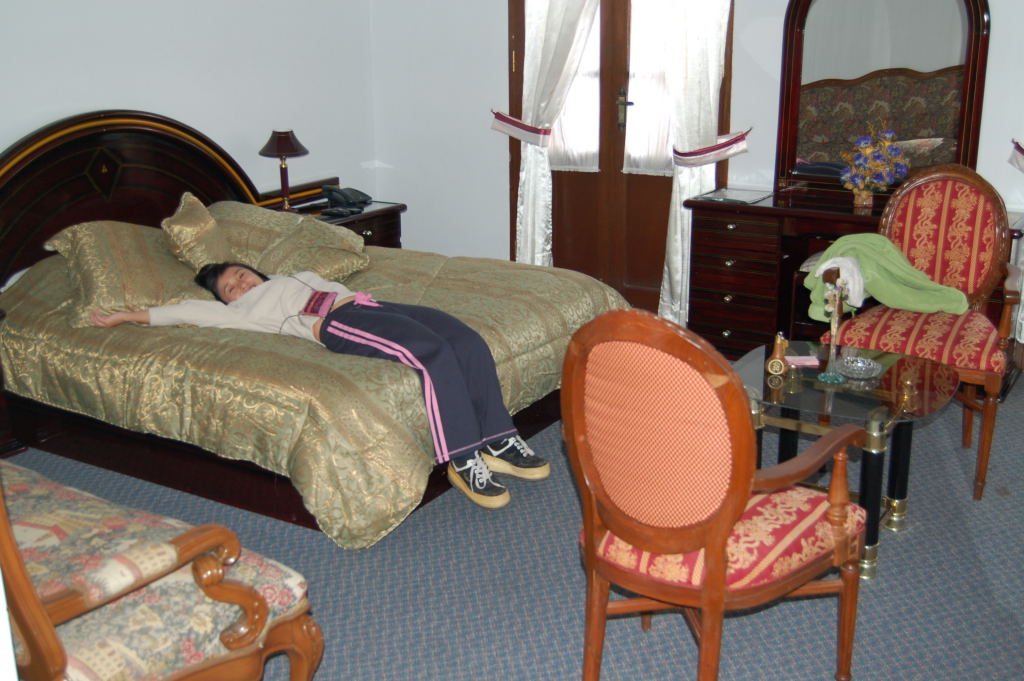
Oh..yeah...did I mention accomodation. Kim had booked the Hotel Real Audencia the night before and received confiemation. When we got to the Hotel they didn´t have our booking but fortunately the hotel is empty (I think we are the only ones here). They told us that it was $60 per night...Kim said that the booking we had was $45 and they agreed to this price. It later turned out that she by mistake had booked the Real Audencia in Quito Equador 2000km from here...LOL.
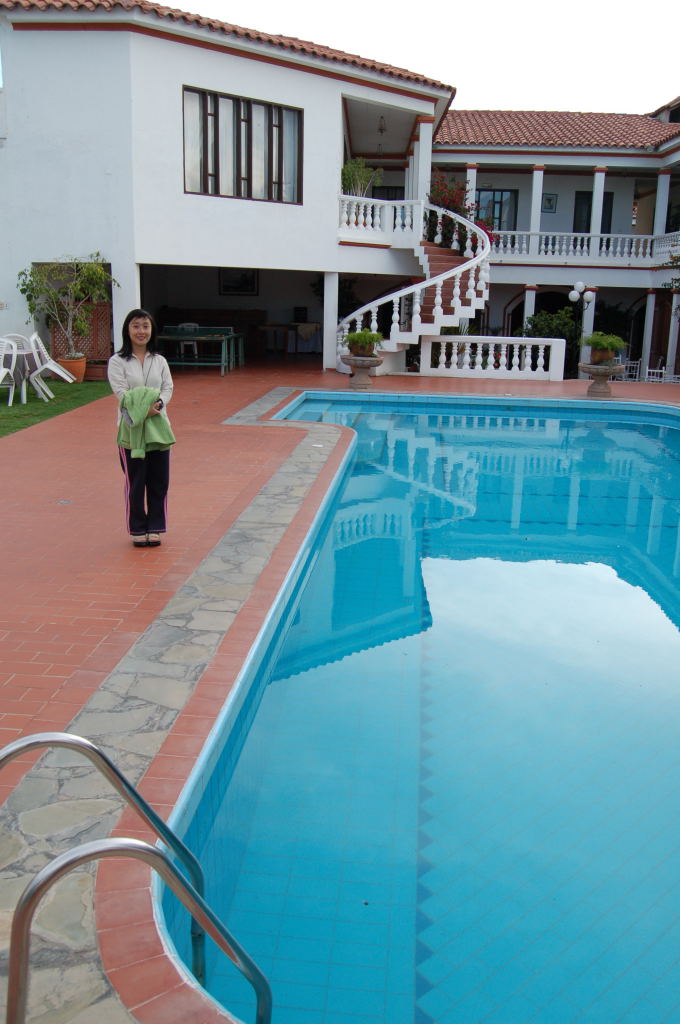
Anyway the hotel is fantastic and Kim loves the luxery...not even Hilton compares and it is 1/20th of the price of a similar hotel.

Click here for more photos

Click here for more photos

We then went to this French restaurant La Taverne...fantastic. I spoiled Kim with a 5 star meal that we would have a hard time finding in sydney...price for the two of us...less than $10.

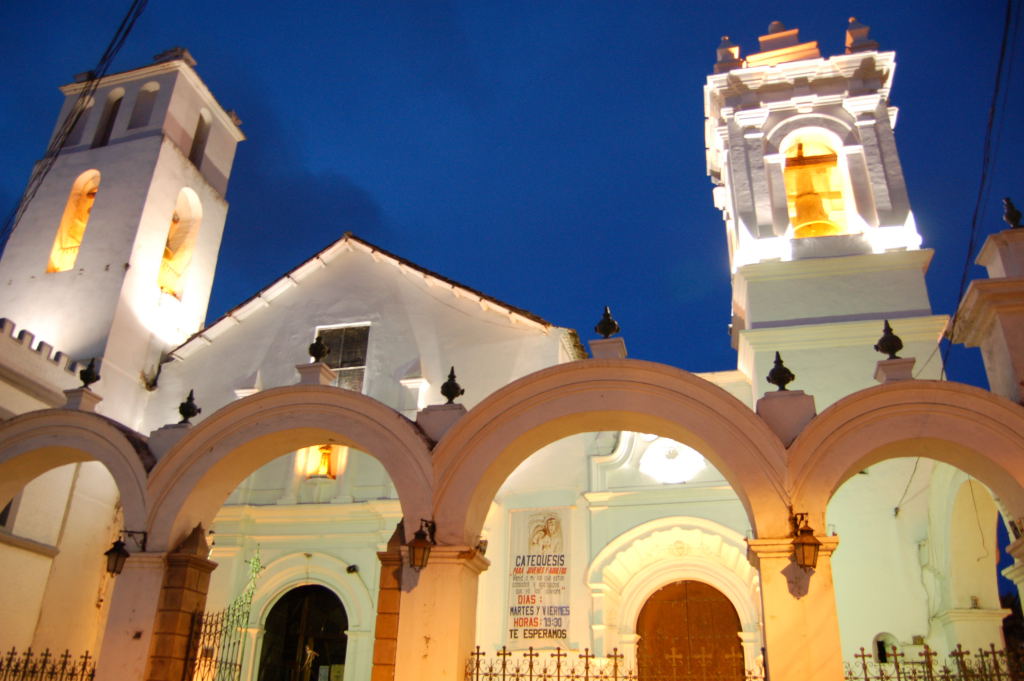
Sucre is a nice and quiet city...it is beautiful with all the old colonial white washed buildings and it is clean and not polluted. There are far less beggers and street kids and far less social problems. Everything is getting very well maintained and it is a really romantic place to walk around at night through the plazas...with people everywhere at night.

Click here for more photos

We were initially planning to go back to Santiago one day early...but because this is such a nice place we stay here another night and then spend as little time as possible in La Paz. We also treat ourselves to a flight to La Paz which takes 45 minutes rather than a terrible 14 hour bus ride.

Sucre is at 2800 meters altitude but probably 20 degrees warmer than Potosi (4000-4500 meters). It is so nice being able to walk around in a T-Shirt during the day and just a thin Alpaca (I´ve bought two for less than $15 each)jumper during the night.

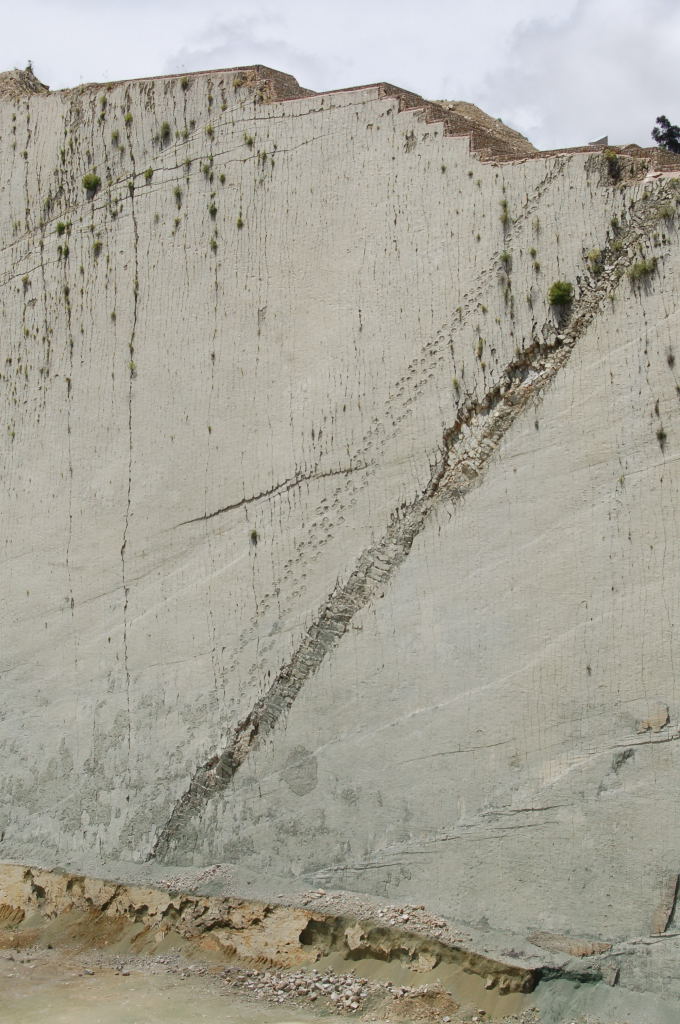
We went out to the dinosaur park. In some limestone they have found some 5000 tracks from more than 400 different species of dinosaurs. The park has only been open for less than two years and will be a major attraction once they get the place conserved and once the word spreads.

Click here for more photos

We also had lunch at this fantasic Cafe Mirador overlooking the whole city...very nice.

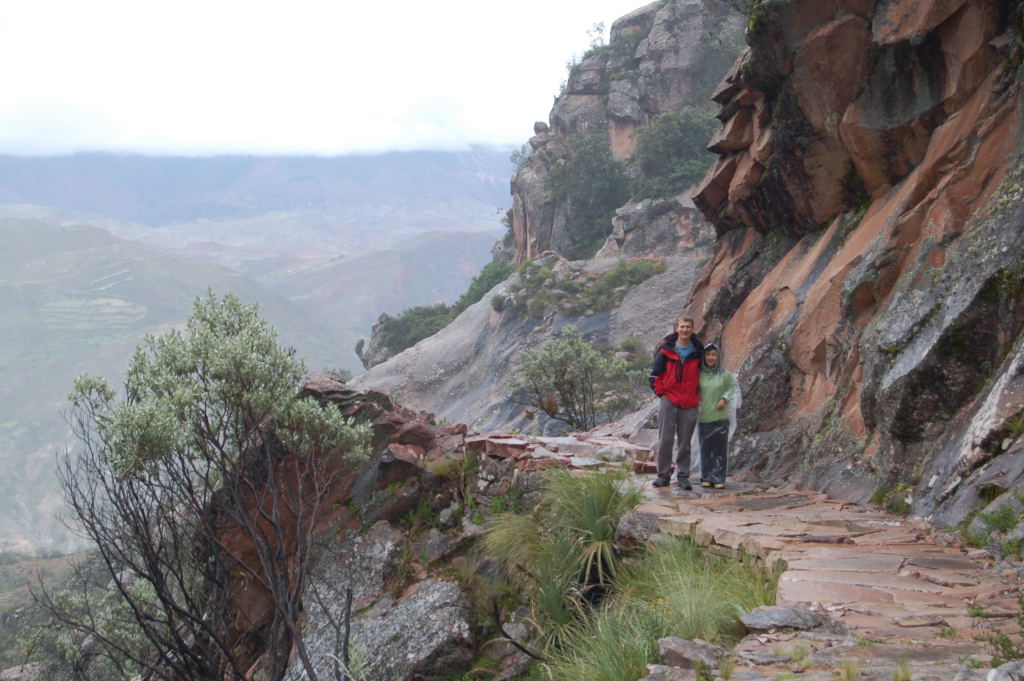
Next day we hired a guide to take us through one of the local Inca trails as well as to a small village called Potola. It was raining so in the beginning it was pretty cold and miserable but eventually it stopped and we had a really nice day on the Inka trail (by the way there are thousands of Inka Trails around the Andes...most of them still in use by the locals as the main mode of transport still is on foot).

Click here for more photos

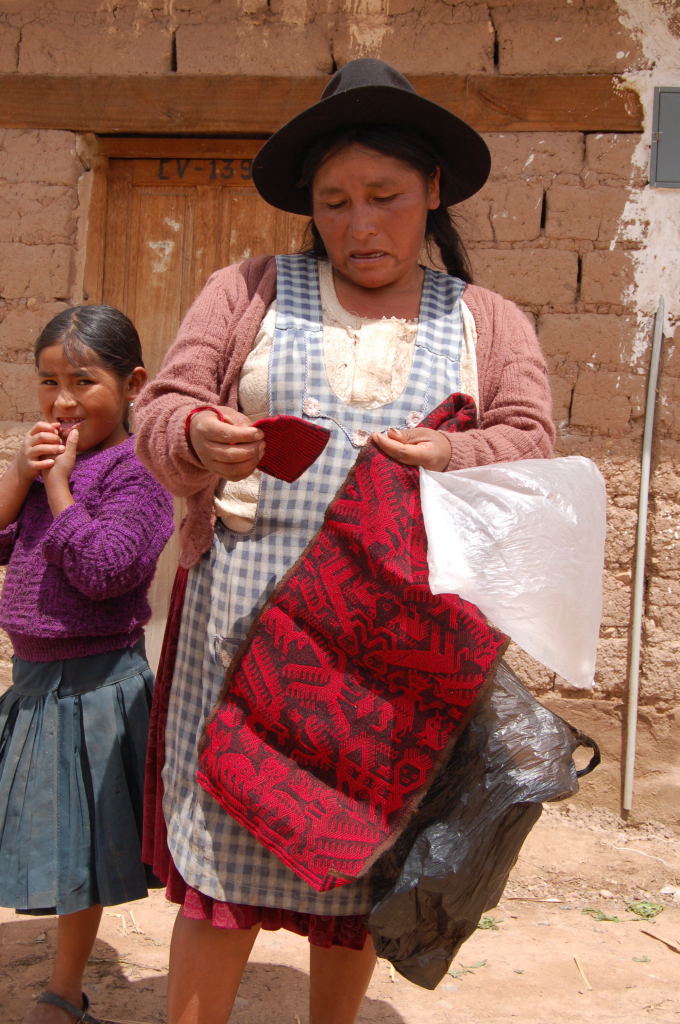
Potola is a small village west of Sucre. It is supposed to have a lot of local still dressed in their local costumes and lost of local handicraft...but really is has none of that. There was far more dressed in local costumes in Copacabana.

Click here for more photos

As such for Bolivia it has got a huge potential for developing tourism...but the people there don't understand how to do it.

Tomorrow...onto Santiago and then continue to Rio De Janeiro

Click here to see more photos from Bolivia

12. March 2008 11:54
by Rene Pallesen
0 Comments

Potosi, The Mines - Bolivia

12. March 2008 11:54 by Rene Pallesen | 0 Comments

potosi the mines bolivia


Today was a really positive day compared to yesterday after I'd written my last post. We found an excellent restaurant (much better than most restaurants in Sydney) called El Meson...and the food was cheap as. For around USD 13 we got a three course dinner that was absolutely fantastic including drinks. It was so good that we decided to go back there tonight.

This morning we had to move hotel. We did try to extend one night at Hotel Eldorado...but everything in this town is fully booked. Late last night we had managed to put through a couple of bookings at other places, but the only one that came through was a local hostel...so this morning we moved there. It is a nice enough place...but the personnel is totally disinterested in providing a service (and no smiling please)...there is no heat in the room so it could be a cold night...but everything else is ok once you chase them for towels, blankets etc.
The told us that we couldn't have the room until 11.30am...so in the mean time we decided to go to the mint museum.

The Mint museum was really good. They had a lot of interesting items there and they provided an english speaking guide for free to explain how the silver was mined in Potosi, the historical significance as well as went through the whole process of producing silver coins which were produced in the same building (All the original equipment is still there). They also have a fantastic art collection there.
We joined the guided tour a bit late, but the guide was kind enough to repeat the first part of the collection so that we didn't miss out.

The highlight for Kim was when I made her a copper coin using an original minting stamp using a large hammer...she got to keep the coin as a souvernir.

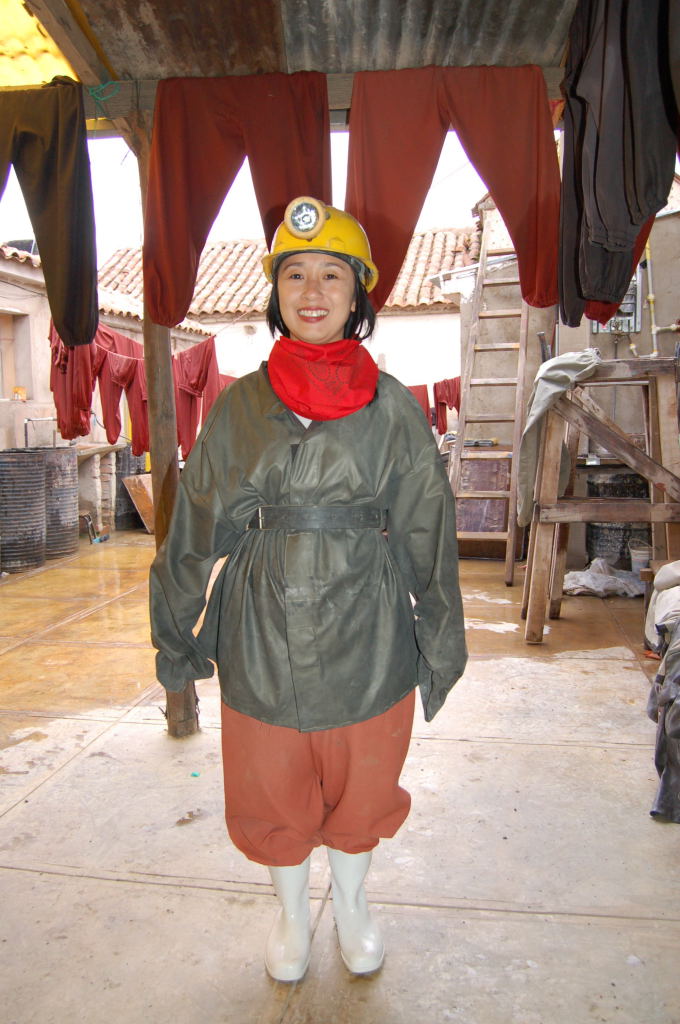
After a lunch at La Plata (With the thickest hit chocolate we've ever seen...the spoon could stand upright) we went down to join a tour of the mines in Potosi. It turned out that Kim and I were the only ones on the tour and the guide spoke perfect English.

First we were fitted with overalls and helmets and afterwards the tour went to the miners market. I bought a stick of dynamite for around 5 Bolivianos (75 cents) and our guide gave Kim a fright when he threw the stick at her.
Click here for more photos Click here for more photos

Click here for more photos


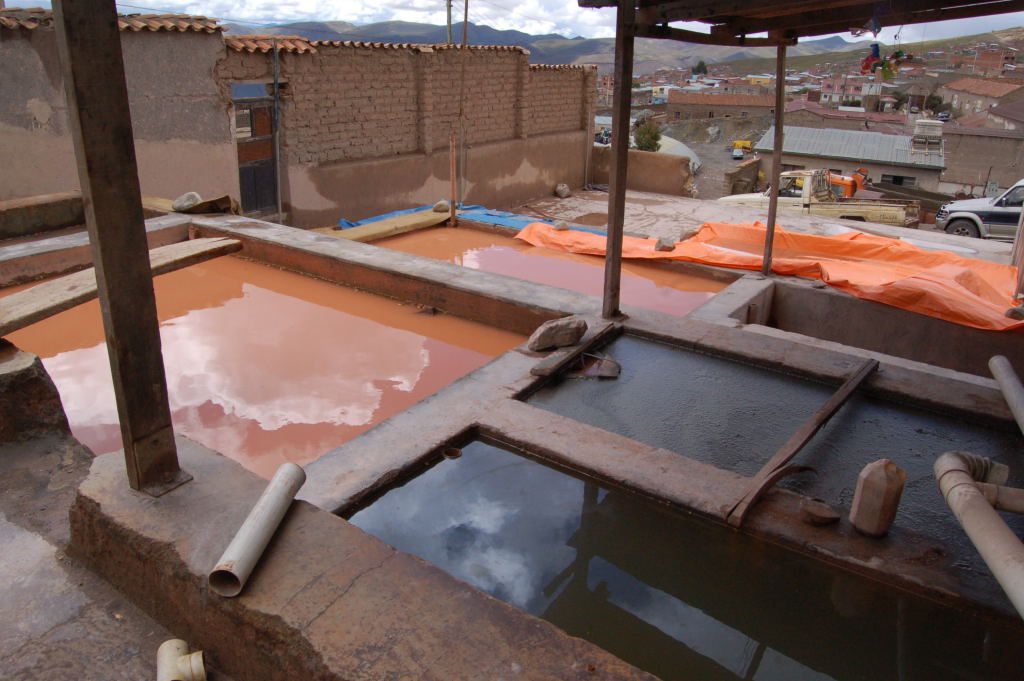
After this we went to the processing plant where they do the first extraction of the metals from the rock. We saw how they crush the rock into a fine powder and then using various chemicals extract the metals from the rock as well as using gravity. All the chemicals and side products are then flushed into the Rio Negra where it then is washed into Paraguay and Argentina. Both BHP and Rio Tinto buy minerals from here processed in this way (It it great to see my shares at work). There are 42 such processing plans here in Potosi...because everything is working as coorporatives there is no investing in processing plants and machinery and the various plants refuse to work together although this would benefit everyone...but more about that later.
Click here for more photos

Afterwards we drove up to the mine itself. We expected to be visiting a part of the mine that was no longer being used but this is not the case...the mine was fully functioning so once in a while we had to run for our lives to a location where the tunnel was wide enough for us to jump to the side when one of the small trains came zooming past.

Click here for more photos

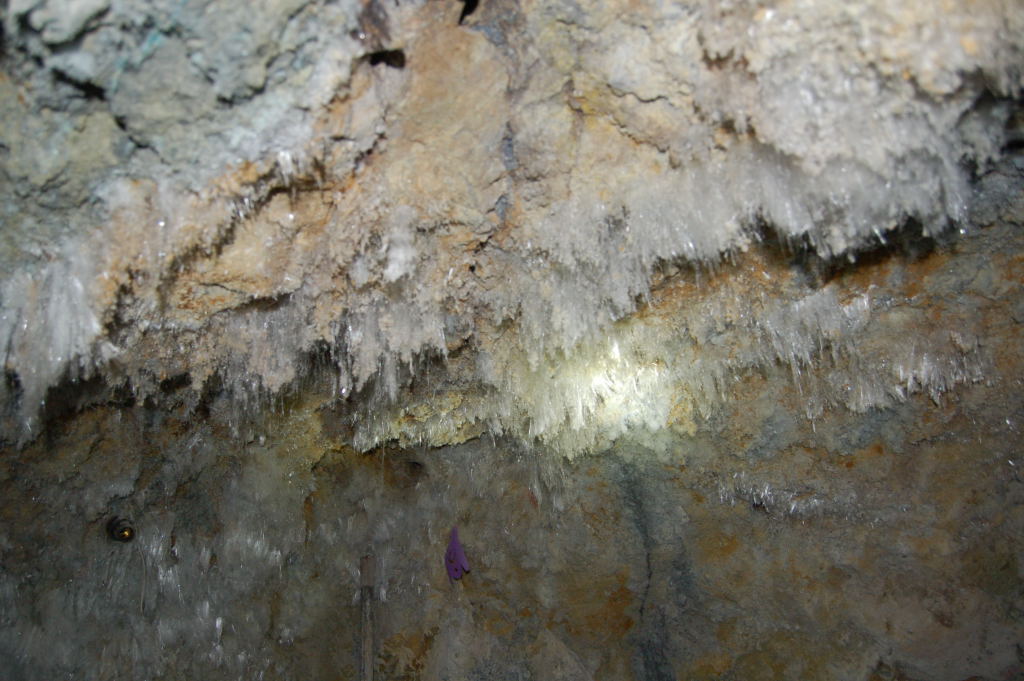
As we went further and further into the tunnels the gasses became thicker and thicker. I have never seen so many visible minerals in one location before...you could actually see the zinc, lead, copper, iron and bronce in the walls all over the place. The yellow sulphur was sitting in 2cm thick layers on the wall (but they don't mine this) and there was Albestos hanging in long threads off the ceiling all over the place and the air was think of asbestos dust.
Click here for more photos Click here for more photos


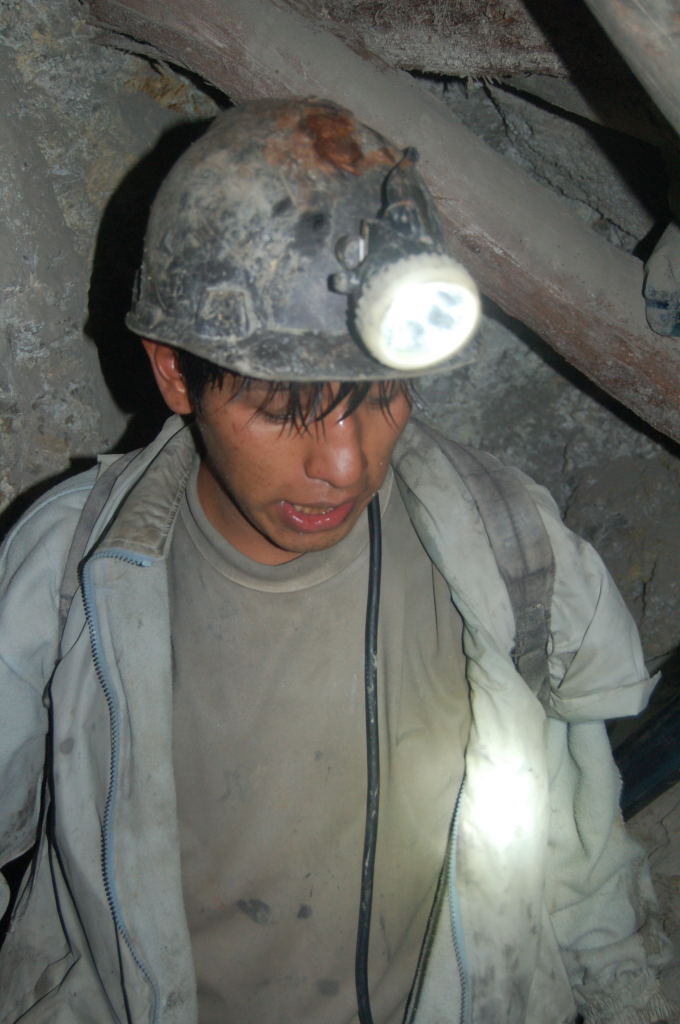
We were covering our mouthes with bandannas but running through the tunnels, the cramped places, the dust and the gasses in the air made it really hard to breathe through the bandanna (Remember that this is all happening at 4500 meters altitude where there is only 25% of the oxygen as at sea level...so there is not much air in the first place!). The miners themselves were chewing coca leaves to tolerate the gasses.
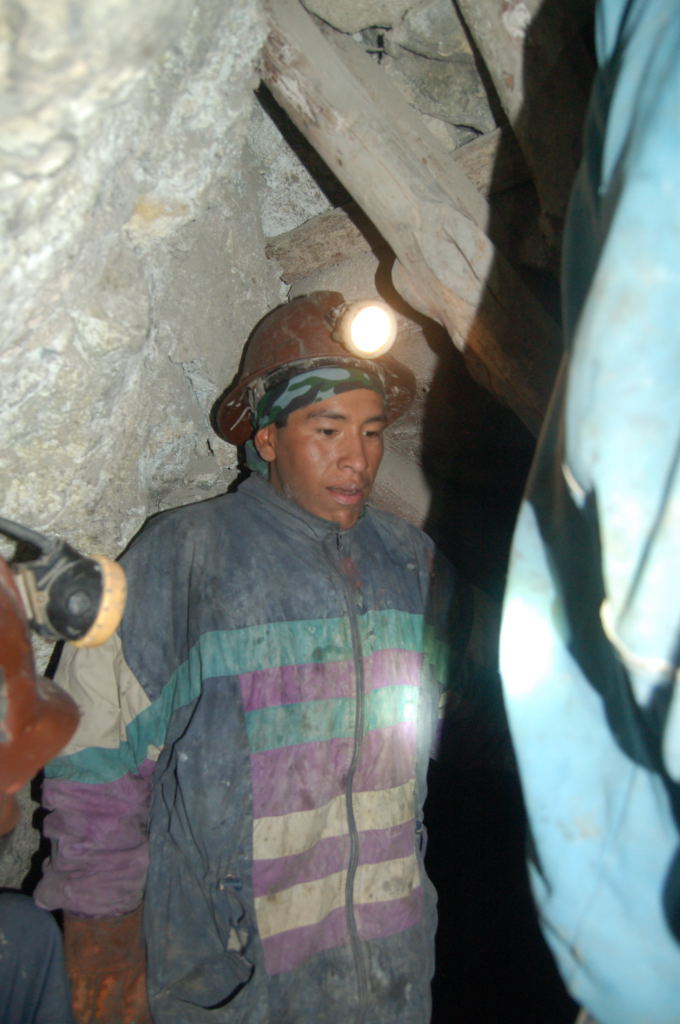
Click here for more photos Click here for more photos


Normally I would be fine, but at one point I thought I'd die and decided to not use the bandanna (I'd rather die young than die instantly)...and at this point we were still only on the first level (3 additional levels and appx 80 meters below us).
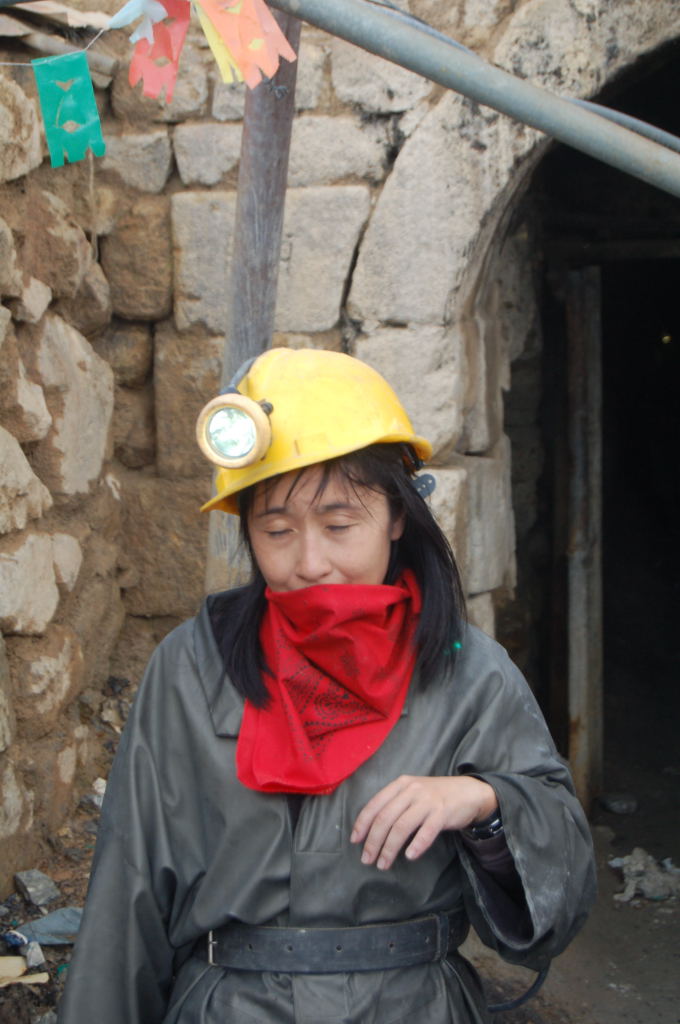
Click here for more photos


We got to a 20 meter almost vertical tunnel and halfway down we took a break where we got the chance to ask a lot of questions about the mine. We also asked if the gasses became worse than here and the reply was yes. We were also told that the tunnels were very similar so Kim and I decided that we'd had enough and would like to breathe clean air...also because the mines are still working and a lot of the supporting structures are from the colonial spanish times 350 years ago the mines are really dangerous places.
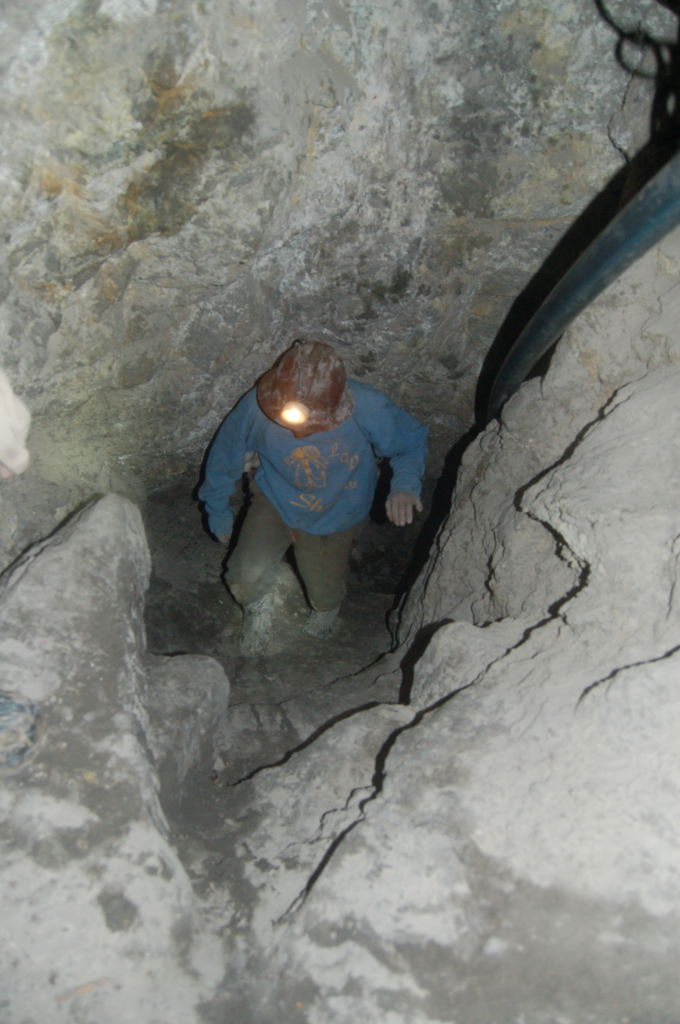
Click here for more photos

On the way out we say how the used an old electric motor to pull up the rocks from 80 meters below to our level and then dump it onto the trains. They actually have a champer above the level and then use a big hole in the floor to fill the trains...unsuspecting I walked across the pile 2 minutes prior to them opening up the while whereafter a 1 meter whole appeared in the floor.
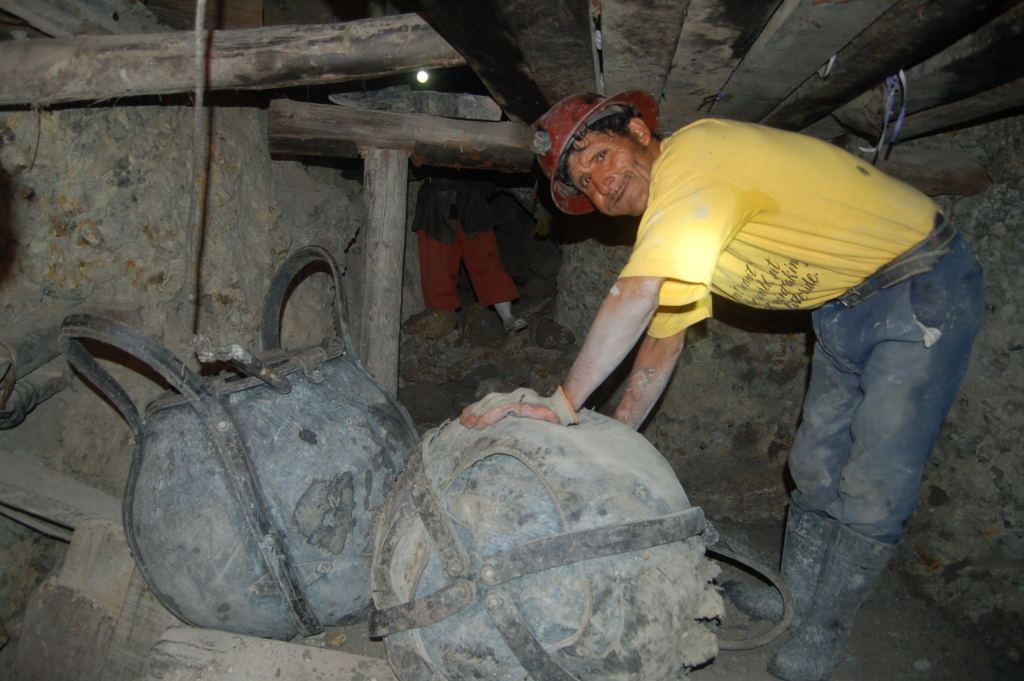
Click here for more photos

The whole mountain has got more than 700 mines most existing several hundred years where more than 400 of them are in use today. There is no backfilling taking place and there are no geologists or engineers working on stabilising the mines so the whole place is like a swiss cheese that can collapse any time.

Each individual mine is working as a small collective of maybe 50 miners. There is no coordination between the different mines and most regard eachother as enemies. Because of this they still use old inefficient and very dangerous mining methods and equipment. If they instead coordinated their efforts they would be able to mine the whole mountain in a very modern way which would benefit the whole town and actually earn the individual miners 50-100 more money than they do today. The same goes for the processing plants as they currently don't extract the minerals efficiently and have too high production costs. They haven't even bothered exploring the area for other mining sites, but instead mine the same mountain they have done for several hundred years.

The average age in the mine is 25 years old. The youngest is 10 years old and the estimated lifespan is about 10 years before dying from lung cancer from inhaling gasses and asbestos. The miners are chewing coca leaves and their eyes are blood red. On the weekend they drink 96% pure alcohol (50 cents a bottle).

Click here for more photos

For both Kim and I it was real eye openers...we now love our 9-5 jobs. I think everyone should at least once in their life try and enter such a mine...but for me...never again.

Was it a positive experience? Yes absolutely...I have always wanted to see these mines with my own eyes how dangerous they are. Are they dangerous...yes undescribable...I cannot describe with words what a horrible feeling it was just being on the first level of these mines. I have been in other mines and enjoyed it immensely...but this was truly scary and awful. It took several hours before I could breathe normally again from inhaling all the dust and sulpher gasses.


One more night in Potosi and then we continue to Sucre. Click here to see more photos from Bolivia

11. March 2008 10:00
by Rene Pallesen
0 Comments

Potosi - Bolivia

11. March 2008 10:00 by Rene Pallesen | 0 Comments

potosi bolivia


The drive from La Paz was pretty uneventful. The bus was a double decker as promised and our seat was in the front of the bus...but so was the toilet. Fortunately they kept the toilet locked pretty much the whole trip so no-one could use it (except Kim because we figured out how to fiddle the lock to get her access). Kim had bought herself a cheap headtorch so the toilet wa now lit.

The drive turned out to only be 9.5 hours as opposed to the promised 14 hours so that was a nice surprise. We arrived at Potosi at 6am in the morning it being freezing cold and pouring down with rain. We got a taxi to drive us to our preferred hotel and it turned out to be fully booked. Our second preference has only got room for one night and is then fully booked (and so is every other hotel in town)...we have a booking confirmation from a hostel tomorrow as a backup but we are not sure if it has got hot water and heating.

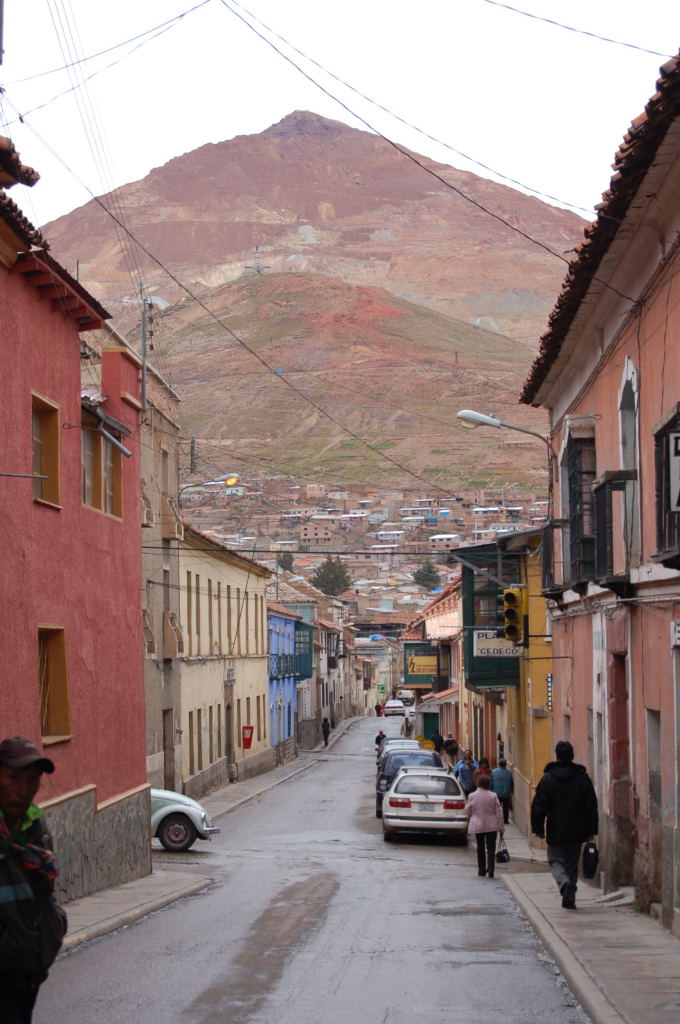
Potosi is a lot different from what I had expected. I had expected that the deeper we entered into Bolivia the more traditional it would get...but to the contrary. Potosi is another polluted city with little infrastructure...although a great number of travellers pass through the city there is no restaurants or cafes or even proper accomodation to cater for them. Someone with flair forwhat travellers desirecould make a killing here as well as in La Paz.
It wouldn´t take much...proper accomodation with heating and hot water, A heated restaurant serving a good selection of western style and local dishes (NOOO...Pizza and pasta does not count) an some evening or afternoon entertainment in the form of Bolivian music and dancing.

Click here for more photos

Also Potosi is totally void of any souvernirs (but also beggers etc.)...and again they could make a killing by start selling some of those lovely locally made handicrafts that we could but up near lake Titacaca.

Because of the cold, the rain and the fact that all museeums are closed today because it is Monday makes it pretty depressing to here. We have however booked a tour into the mines tomorrow afternoon which should be exciting and I´d like to see the Mint museum.

Click here for more photos

We are also considering what to do next before going to Brazil on the 17th...so far looks like we will go to Sucre (3 hours from here) day after tomorrow and then fly to La Paz from there (maybe even re-shedule flight to go to Rio a day or two earlier). Click here to see more photos from Bolivia
10. March 2008 08:29
by Rene Pallesen
0 Comments

La Paz - Bolivia

10. March 2008 08:29 by Rene Pallesen | 0 Comments

la paz bolivia


The bus ride to La Paz was interesting. It was a local bus so full of locals heading into La Paz 4 hours away. After about one hours drive through the high plains (4300 meters altitude) we suddenly arrived to a strait. I hadn´t studies the map properly and hadn´t realised that Copacabana was on a peninsular with no Bolivian direct access to mainland Bolivia (you would have to pass back into Peru to drive directly)...so at the strait we got offloaded from the bus and then had to get onto a smaller boat for the passengers while the bus was ferried across on a big wooden pram.

Click here to see more photos

Also at this strait is the only division of Bolivias Navy (I think they still hope to eventually get access to the ocean through Chile (They lost 350 kilometers of coastline in a war with Chile back in time).
On the other side Kim missed using the toilet so when we stopped at a petrol station a couple of hours later we took the oppertunity...when the bus took off she wasn´t back yet...and she would have been standing there alone if I hadn´t told the bus driver that we were missing a passenger.
Unfortunately it was cloudy so we could only see the bottom bits of the Huyana Potosi and Illimani (6500 meters).

The drive into La Paz is stunning...they outer suburbs is totally disorganised with mud houses and mud roads...but suddenly you drive over the escarpment and see all of La Paz in a big crater below.

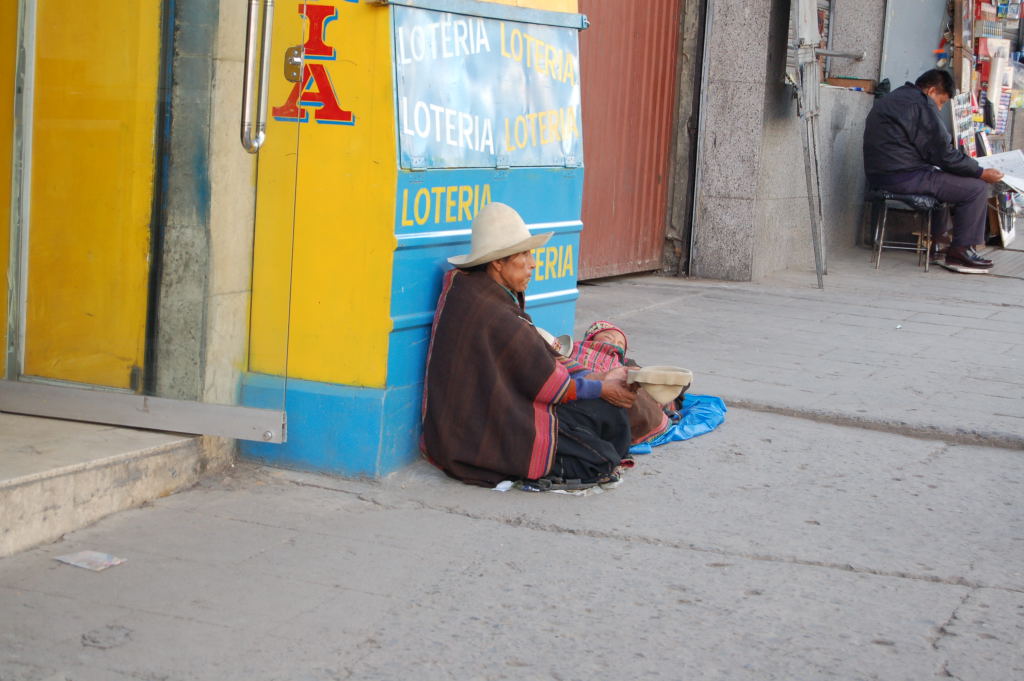
Once we got out of the bus we were however less impressed. La Paz is a town like any other...it is full of traffic, pollution and there has been no city planning whatso ever. Once you get over the escarpment wow factor it is really an ugly city full of social problems, beggers, street kids, pollution, crime etc.
Even the backpacker area is totally uninteresting and has been totally spoiled by young kids going for white water rafting, mountain biking without any interest whatsoever in the local culture.

Our plan was to spend a day here and then continue down to Potosi and we decided we would spend the next day before heading south looking around and see if the city would reveal its more beautiful side. In the morning I went to the bus station to organise bus tickets and I hope I´ve got the promised ticket (sleeper bus, with toilet onboard and sitting in the front of the bus away from the toilets...but Bolivia is full of surprises...but that is part of the adventure).
Afterwards wewent for a walk around the city and found a couple of nice spots but not enough to convince us that this is a city worthwhile spending a lot of time in.

Click here for more photos Click here for more photos


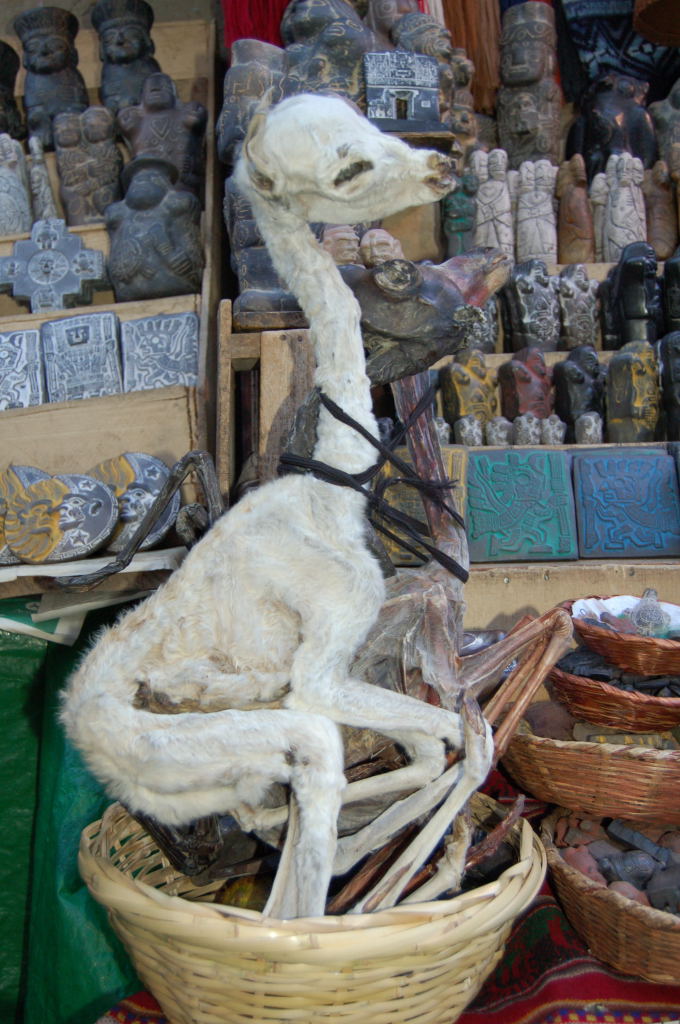
The witches market if full of souvernirs that are no-where near as good quality as what we saw in Copacabana, The museums were all closed on Sundays (except the music instrument museum which was interesting), and we are unable to find any decent local food in La Paz (only pizza, pasta etc.).

Click here for more photos Click here for more photos

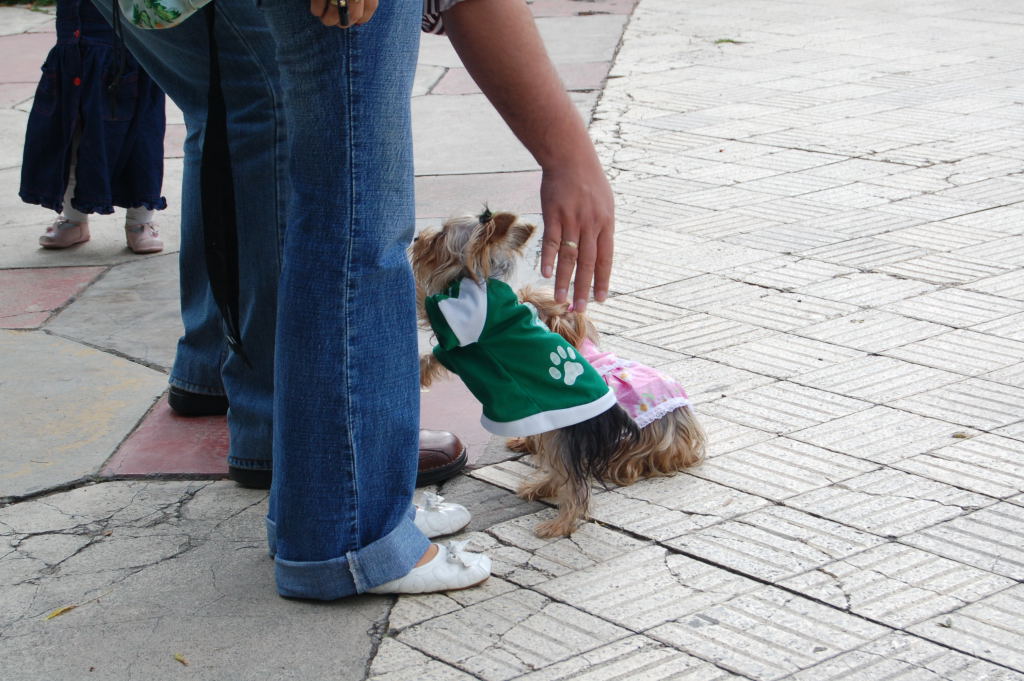
We did however have a good laugh sitting observing people at Plaza Avaroa close to our hotel. People were out walking their dogs and they were all dressed in cute little costumes like small humans...and I thought the Honkies were crazy.

Click here for more photos


I am hoping that the south is nice. I have kept Kim from buying too many things so far promising her that there would be plenty of chances...I hope that this is correct as some of the things we saw up north were really nice.

Bolivia is pretty cheap to travel in (same prices as Thailand) and my dad would love it here (as well as in Peru). I could however travel a lot cheaper if I got to choose the mode of transport and the hotels...Kim gets to choose the hotels we stay in which from a local aspect is the upper range hotels (but still cheap by australian standards) and the criteria is hot water, blankets, heating, cleanetc. We have however been lucky with a couple of hostels we have found (one that we will stay in once we return to La Paz and we stayed in one in Copacabana). I think over time I will get her hardened up enough to check out the hostels first and then afterwards increase the comfort levels if we dont find anything of a decent standard...but so far it is ok that she gets a bit of comfort...it is her first backpacking/roughing trip and she is doing really well so far (getting into the spirit of finding cheap restaurants etc.). Click here to see more photos from Bolivia
Perfect Moments Photography | A Rene Pallesen Journal

Home

6. December 2013 07:18
by Rene Pallesen
0 Comments

Big foot playing soccer

6. December 2013 07:18 by Rene Pallesen | 0 Comments

big foot playing soccer


Aiden is still playing soccer once a week. Last week he insisted on wearing my shoes instead of his own.


Maybe he was hinting that his old shoes are getting too small.

6. December 2013 07:16
by Rene Pallesen
0 Comments

Fun on a rainy day

6. December 2013 07:16 by Rene Pallesen | 0 Comments

fun on a rainy day


We have had a lot of rain lately. On one of the days I was showing Aiden and Lucas how to make a pair of funny glasses out of an egg crate and a piece of string.

They got to paint the glasses afterwards.


6. December 2013 07:14
by Rene Pallesen
0 Comments

A helping hand vacuuming

6. December 2013 07:14 by Rene Pallesen | 0 Comments

a helping hand vacuuming


The other day I picked up Aiden and Lucas pretty late from daycare.

They were in the process of cleaning and Aiden was eagerly waiting for them to turn on the vacuum cleaner so he could play with it.

20. November 2013 10:15
by Rene Pallesen
0 Comments

De knoklede - page 007

20. November 2013 10:15 by Rene Pallesen | 0 Comments

de knoklede page 007


I have already gone out too far. I cannot return and jump over the stream because it is growing inside of me and is becoming a roaring river.
What are these strange thoughts I am having?
Were these free farmers in the hills above Varde Aaa more free at year 900 than they were in year 1100?
The only difference was christianity.

Off to the library
The landowner at Noerholm
The Herredfoged.
The Bishop in Ribe
It is all written here

I start thinking about hunting
A good hunter makes sure that they keep a healthy game on the property. He will feed the game during tough winters and make sure that the the overall health is there and have to most productive game survive.
No, it is not right to have these thoughts here in the library when it is the farmers I need to find information on.

Queen Margaret..
Make a claim on Noerholm..
Maybe there is something here..

Wasn't it the landowner of Noerholm that owned Noerholm?
Has he just built up Noerholm and then put his filthy hand on every surrounding piece of land and property?
Which the church was claiming that it should own?
Or was it the Bishop in Ribe?

This was not what I was supposed to find here at the library. It was the farmer - farmers!

Hunting...

What rubbish was that. I must get rid of these thoughts, this has nothing to do with hunting.

20. November 2013 08:59
by Rene Pallesen
0 Comments

De knoklede - page 006

20. November 2013 08:59 by Rene Pallesen | 0 Comments

page 6 de knoklede


It wouldn't have been the lord who was out there beginning to move large boulders.

And not the bishop -

Christianity had just been introduced but building that many churches required a lot of workforce.

My thoughts are diverted.

Has this big change in faith based activity created communities, something in common because surely it was the farmers who built the churches.
This introduction was it something that made the existence easier for the farmers, my old roots.
It must have been, a lot of other things to believe in has been forgotten and the church is now a gathering place.

You should never start researching your ancestry.
You encounter one surprise after another and will never finish. There is always more.
There is changes in ones beliefs for every new discovery.

Of cause it was the farmers who built the churches. Who else would have?
They probably started with the words; "On the day of honour I am with you".

My thoughts are again left astray.

Russia build the aswan dam in Egypt.

Yes, I saw it myself with my own eyes. I drove in my car along the large canals they were digging.

How was it that they explained it to me?
This canal was to be dug 5 metres deep, 100 metres wide and should extend 800km out into the desert.

There were thousands of workers, it all looked like a large ants nests.
Men with baskets full of soil on their heads.

There was not a single Russian in this ants nest.

- Who actually built the Aswan Dam? -


20. November 2013 08:48
by Rene Pallesen
0 Comments

De knoklede - page 005

20. November 2013 08:48 by Rene Pallesen | 0 Comments

page 5


Farmers


My grandads memoirs.

-

My Memoirs.

-

But there has to be something before us.

Our family of farmers from Kongeaaen at Toboel to Lyngbakkerne across Varde Aa - Mejls - Hornelund - Sig.

How did they live in the last 1000 years?

I rush to the library but it feels like hitting a miss in the lottery.

Have my ancestors, the farmers, not accomplished anything that made it worthy for a couple of pages in the danish history?

Yes, they have of cause not walked about killing each other to get hold of their neighbors possessions. Rather the opposite, from the looks of it, it was the farmers that were killed.

And for this the killers deserved a rather prominent mentioning in the history.

Yes, there was built a number of churches in the 1100's, but my relatives, the farmers are not mentioned.

I start to think.

- Who actually built these churches? -.

20. November 2013 03:11
by Rene Pallesen
0 Comments

De Knoklede - page 009

20. November 2013 03:11 by Rene Pallesen | 0 Comments

de knoklede page 009


..as a couple of cows and a bull out on the feeding grounds. Something that can work and reproduce.

There is an old say like this - The devil looks after his own.
Let me immediately point out that the Devil didn't look after the farmers in the area around Varde and it was obvious that it was the met in power that were looked after by the Devil.

Here I would like to jump forward to 1300-1400 in the Danish history (Queen Margaret I). It is like my ancestors roots here start sprouting quickly. It is not quite clear who owns then, the church or the landowner at Noerholm.
Queen Margaret interfere in the argument and this gives the farmers a bit of breathing space.
A few farmers become more established and become independent (owns their land).
How should all these farmers see all the trouble ahead? Yes, even the Danish history has forgotten them.
It is only all the bad evil, power hungry people that are written about.
The more bloodthirsty the more pages they get in the book.

How mush is described about the farmers fight for independence against Kristian the 3rd?

The farmers at Varde invaded the river fortres at Varde and destroyed it but then had to retreat north with Captain Clement pursued by Johan Rantzau the kings right hand.
The farmers were at last defeated at Aalborg so that they would not appear in the history books. Not even crying and mourning by women and children behinds the hills at Varde river.

Honour becomes he who should be honoured.

20. November 2013 02:57
by Rene Pallesen
0 Comments

De knoklede - page 008

20. November 2013 02:57 by Rene Pallesen | 0 Comments

de knoklede page 008


I am stuck.

There is something peculiar about this study.

Why do I still return to - in a time of hunting?

Right! I remember, there is a book by that name.

I tell myself to think about something else - And he thoughts saw wide views.
And the neighbours wife said to her mum - That decease looks just like...

No, this is enough...

Were the farmers the hunted game or not?
Were the king, the lords, the church, the bishop the hunters?

Were the farmers the game and the hunting so good that the hunters couldn't agree on splitting the game?
Was it like that all over Denmark? Of cause it was. the Varde area was no exception.

It is something strange you are getting involved in when you study your ancestors.
The farmers had to live, otherwise there was nothing to hunt, but when the land owner was about to loose his hunting rights then the hunting escalated to the point where the game was about to go extinct.
The hunters would then loose interest and start hunting elsewhere.

Here we can mention the war against Sweden with its following plague as well as Napoleon with his Spanish troops in Denmark.

The farmers always recovered, because they were the lifeline for Denmark.
Children are born and new generations grow up between the marshes and hills without knowing whether they in years to come will be valuable as game and hence again be hunted to extinction.

It is the owners of the hunting grounds, their mentality and actions that is written into the Danish history. They have been lifted onto the podium for their dishonest behaviour.

On the contrary is just mentioned as an afterthought...

17. November 2013 08:42
by Rene Pallesen
0 Comments

5 years wedding anniversary

17. November 2013 08:42 by Rene Pallesen | 0 Comments

5 years wedding anniversary


Kim and I just had our 5th wedding anniversary.


She still looks as beautiful today as she did when I first met her.

We celebrated by going out having dinner at Darling Harbour and watched the weekly fireworks.

12. November 2013 01:23
by Rene Pallesen
0 Comments

International Fleet Review 2013

12. November 2013 01:23 by Rene Pallesen | 0 Comments

international fleet review 2013


We recently had the international fleet review in Sydney with lots of navy ships from international countries visiting Sydney to celebrate the 100th anniversary of the Australian fleet.

This also meant that not only were there lots of sailors in town, but also lots of navy cadets.


Aiden and I chose to visit the American USS Chosin and British HMS Daring.

The US ship is an older class ship, and from the outside fairly unimpressive.


but on closer inspection it had an impressive arsenal of missiles.


As well as guns.


The crew were very friendly and were happy to have their photo taken.


The British vessel on the other hand is a very modern ship, again with a very impressive firepower.


The crew again were happy to have their photos taken.


After this Aiden was over the ships and when he spotted a firetruck he got very excited. Lucky the firemen were pretty bored so they were pretty happy to entertain him for a while and it also gave me a bit of a break from carrying Aiden in my backpack.


After that he was hungry and wanted something to eat.