Home

28. July 2001 10:46
by Rene Pallesen
0 Comments
Schwedagon . . .

28. July 2001 10:46 by Rene Pallesen | 0 Comments

schwedagon
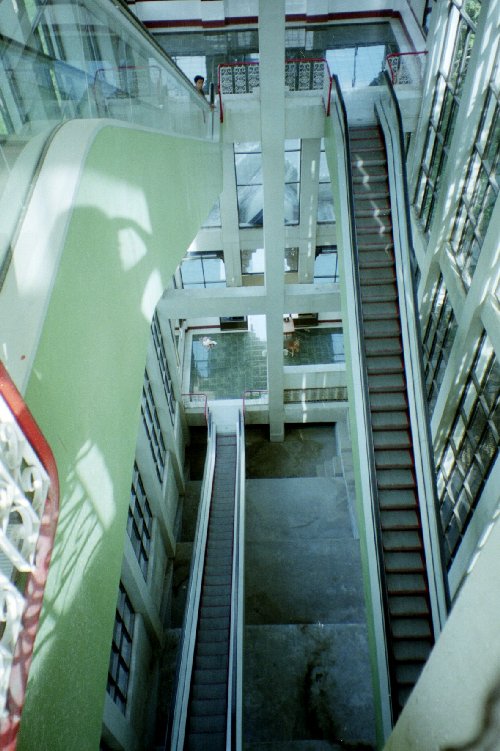
Escalator leading up to Schwedagon


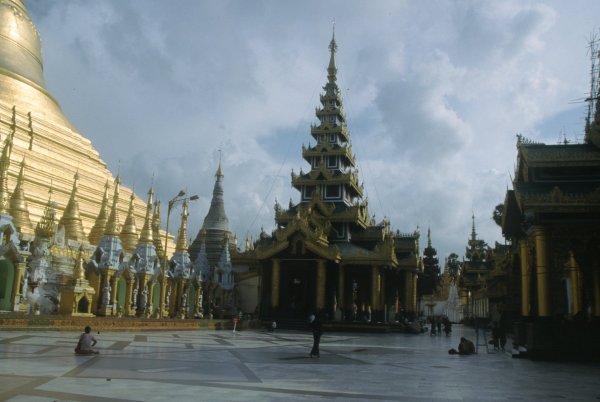
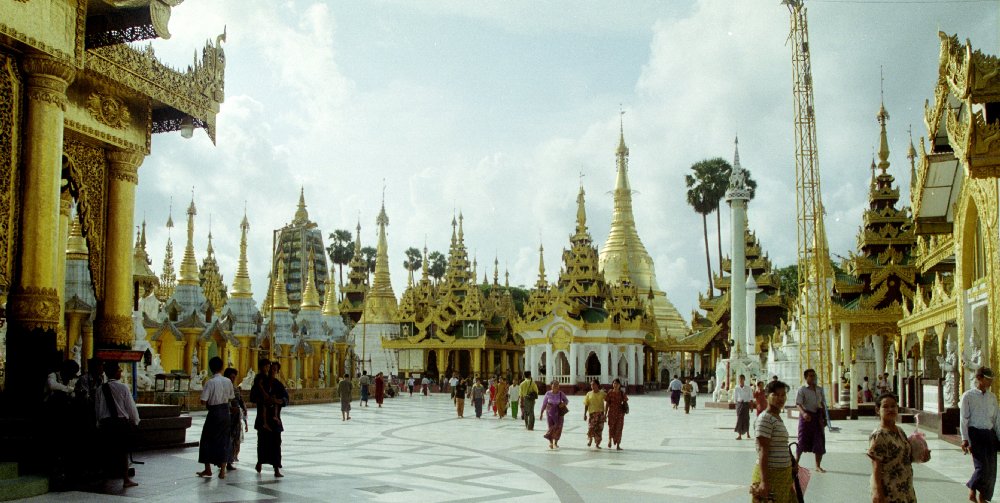
Schwedagon was a holy place with extremely large and beautiful temples.

To get to Schwedagon, you had to travel up very long escalators. I took this photo because these escalators were the only escalators I had seen during my whole trip in Burma. As Schwedagon is a very religious place for the locals, I guess to travel up these escalators give the sense of travelling to a higher and holier place.
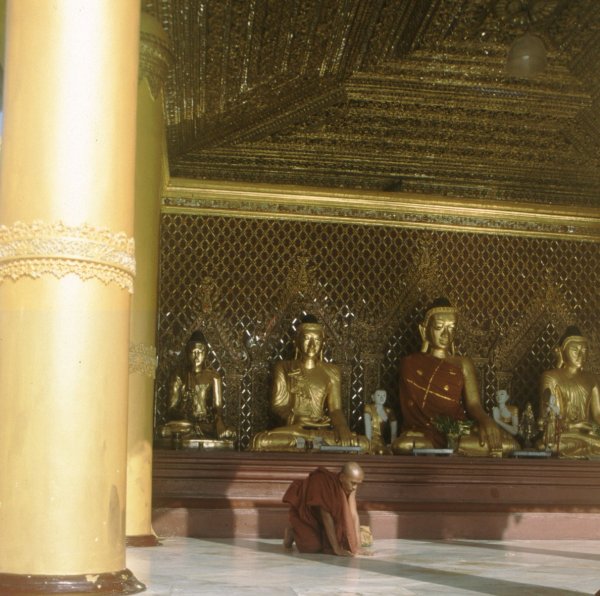
Temples at Schwedagon Photo 1

The temples at Schwedagon were really impressive.
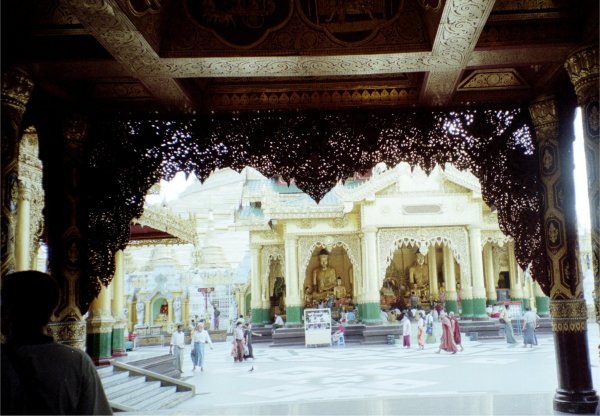
Temples at Schwedagon Photo 2
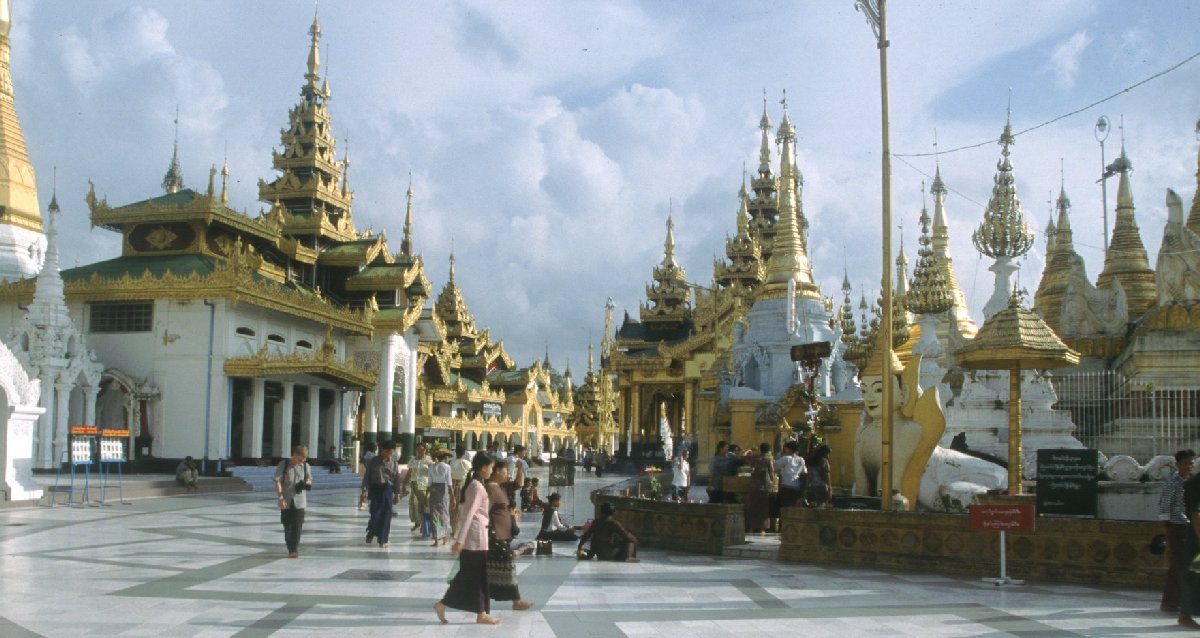
Another Temple


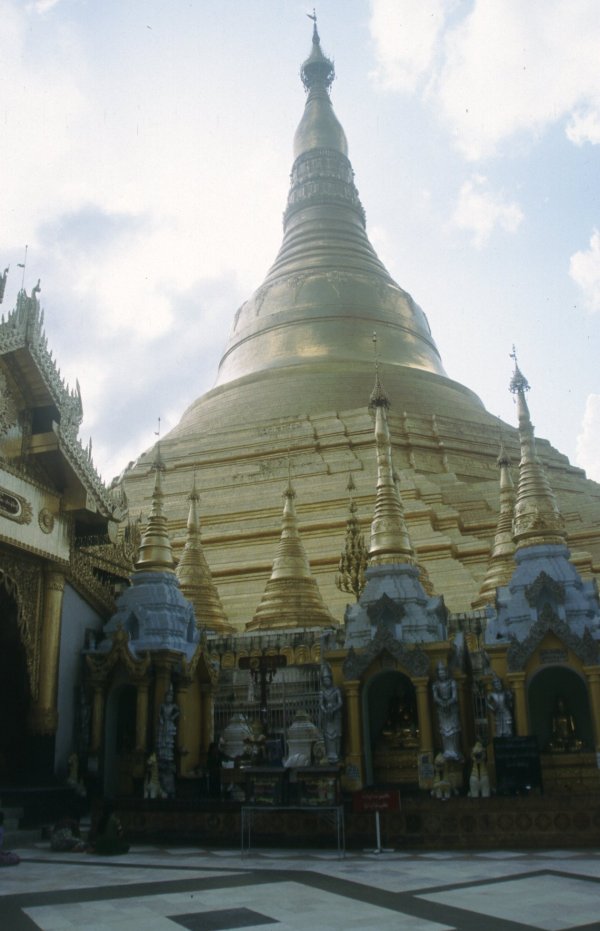
I was told that collectively, these temples were built with 39 tonnes of pure gold.
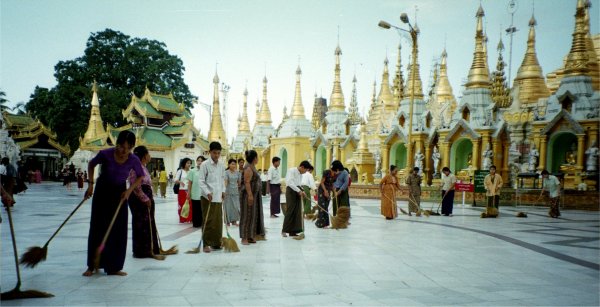
Cleaning Up


At the end of the day, the locals all contributed in cleaning the place. They clean all the tiles and are very organised.
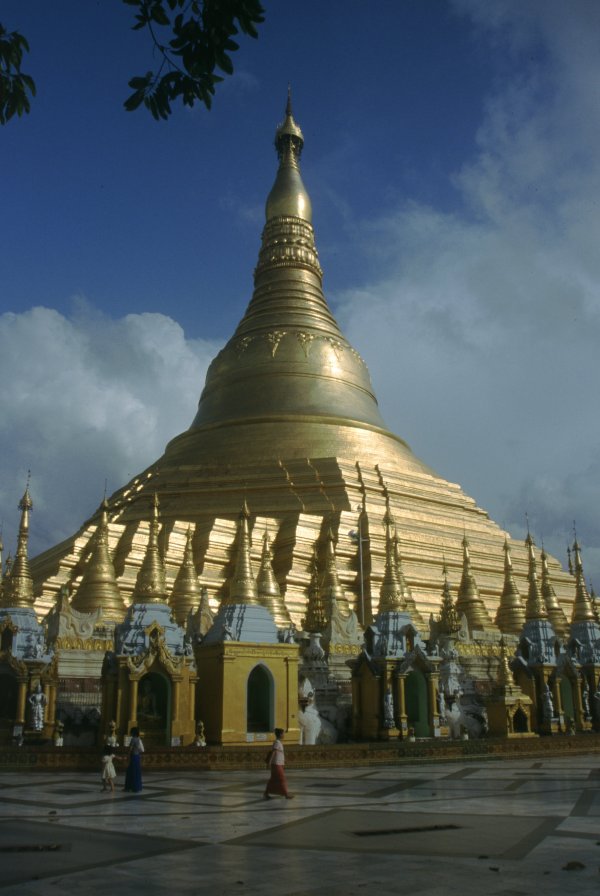
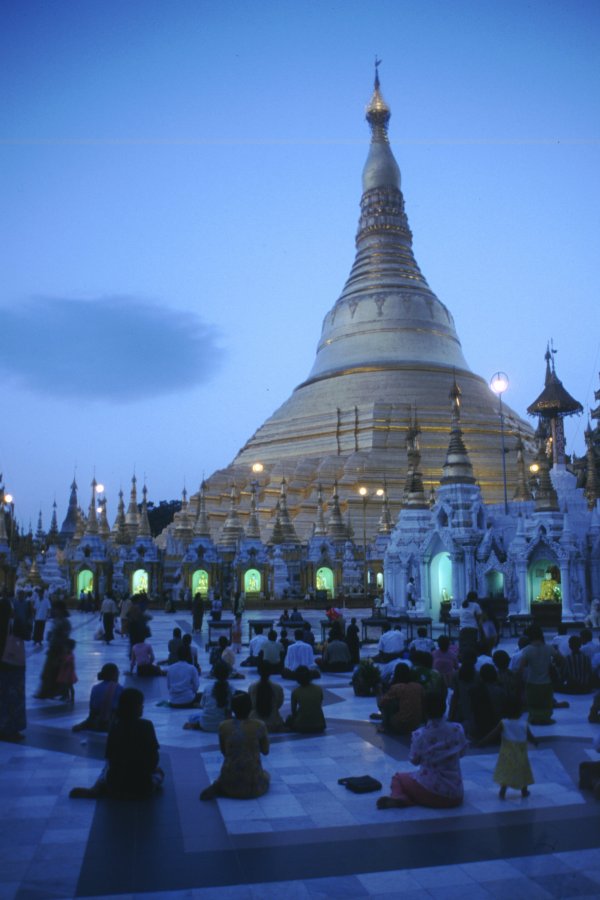
Big StubaBig Stuba at Night

Buddhas at base of Big Stuba


Here is the 'Big Stuba'. All that gold...


Up close, the temples are a glorious sight. Especially at night!

Can you see those lights at the base of the Big Stuba? Each is a 'mini temple', illuminating a Buddha.
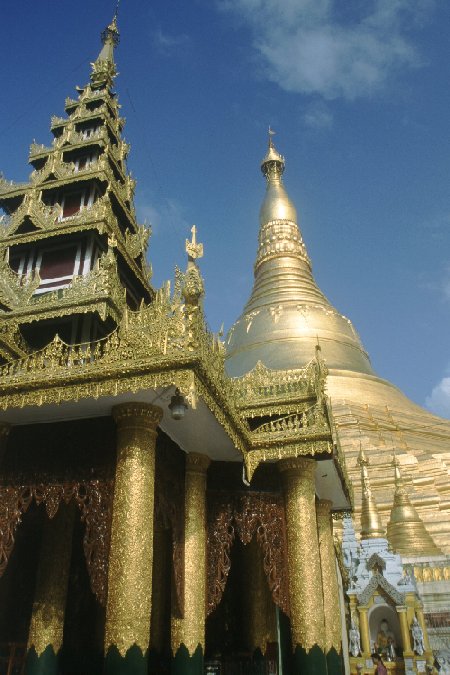


Lots of Gold


You can really see the magnificence of these temples!
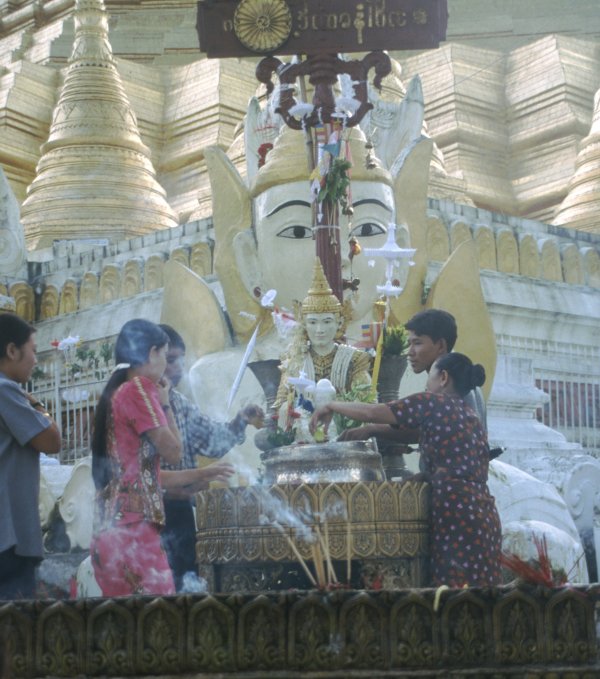
Praying to BuddhaPraying to BuddhaIntricate Carvings


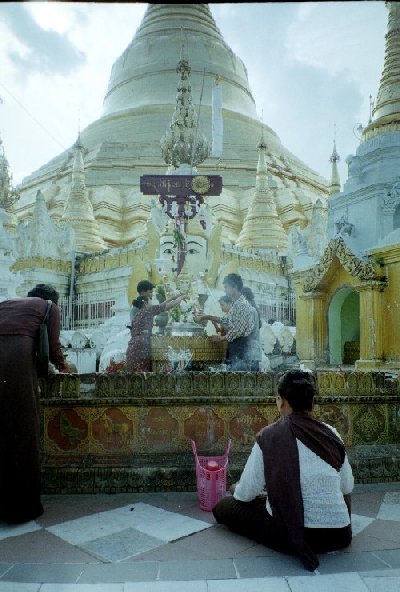
There are lots of rules or procedures about the way one prays to the Buddhas - very complicated to an outsider!

I saw a couple of the buddhists pour water onto the statue of the Buddha. Depending on the day of the week a buddhist is born, the individual would pour the respective number of bowls for the day of the week. A buddhist believes that by doing this, it would bring them luck.

At Schwedagon, I noticed there were hardly any tourists, mostly locals paying homage.

Can you see how intricate the carvings are in the foreground?
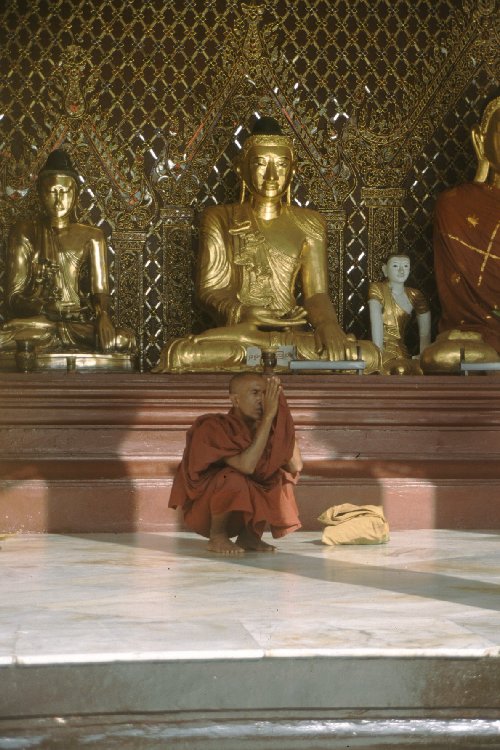
Praying Monk 1Praying Monk 2

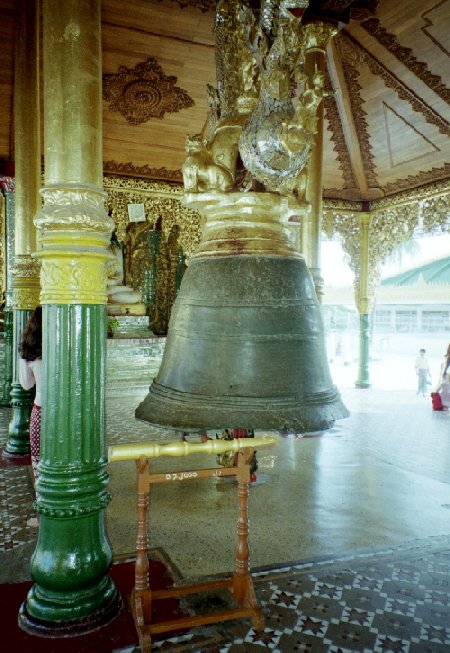
Large Bell


The monks rung this bell to announce prayer times.


It brought luck to ring the bell.
For example, if you were born on the 1st day of the week, you rung it once to bring good luck. If you were born on the 6th day of the week, you rung it 6 times etc.


28. July 2001 10:45
by Rene Pallesen
0 Comments
Myanmar ( Burma ) 23 July ~ 5 Aug 2001 . . .

28. July 2001 10:45 by Rene Pallesen | 0 Comments

myanmar burma 23 july 5 aug 2001
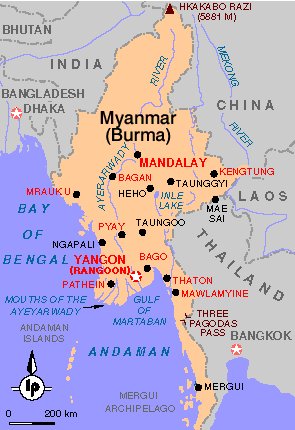
Click here for full size Map of Burma


Burma/Myanmar surprised me in many ways. I would have liked to see more of Burma than I did, but due to military restrictions, I only had access to certain parts of Burma and was not able to see any of the indigenous people along the border as I had initially planned.Burma is a very poor country. It was difficult to travel... travelling 100 kilometres could sometimes take up to 6 hours.

One of the most beautiful places in Burma, I thought, was Bagan.

I took many photos in Burma, and tried to order them in the following pages:
  • I spent some days in Yangon, which had a heavy colonial influence.
  • Schwedagon was another place full of temples, a place laden with pure gold.
  • Whilst travelling, I could not help notice how influenced the people were by religion, and Burma's politics is one thing an outsider should not get involved in.
  • I was fascinated by what the Burmese used for medicine. They also had some rather interesting local fruit.
  • Mandalay also had an interesting colonial battle history. Whilst there, I watched the “Mandalay Marionettes”.
  • With the restrictions up north, I did not get to see much. But you would not believe how the Burmese play volleyball!
  • Finally, at Mt Popa, I went there to see a local monastry, and saw a lot of wild monkeys there.


Yangon ( Rangoon ) . . .

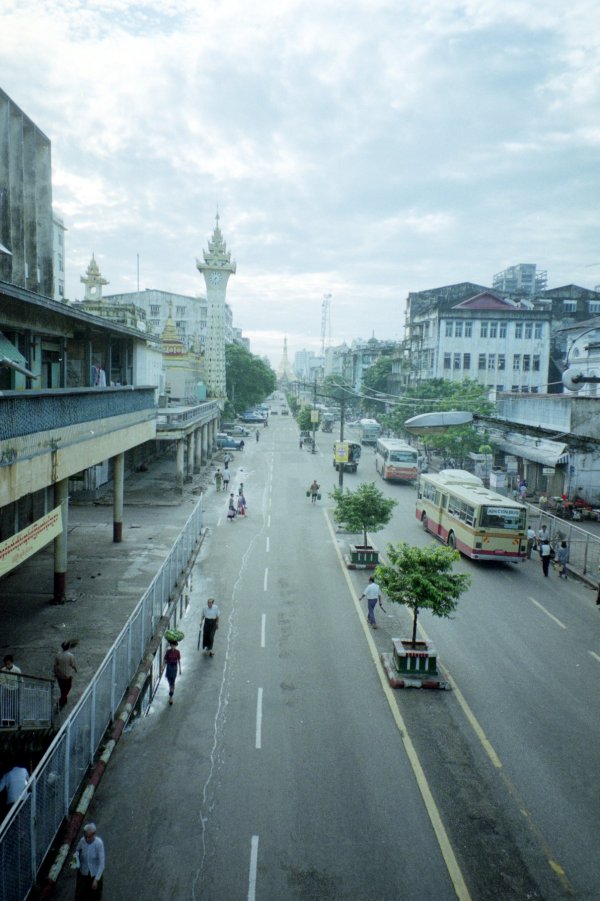
One of the main streets in Burma


This is the city-centre of Rangoon. Rangoon is the capital city of Burma.


It is actually a pretty big city if you compare it with other parts of Burma on a map.

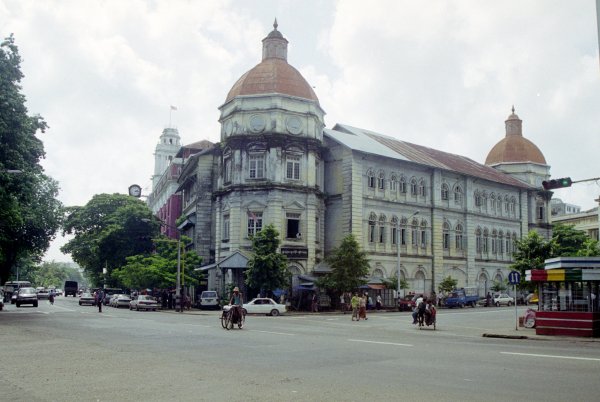
Most of the buildings are from the old colonial period when the British occupied Burma. Unfortunately they have not been very well-maintained.

Can you see the green bits on the clocktower?
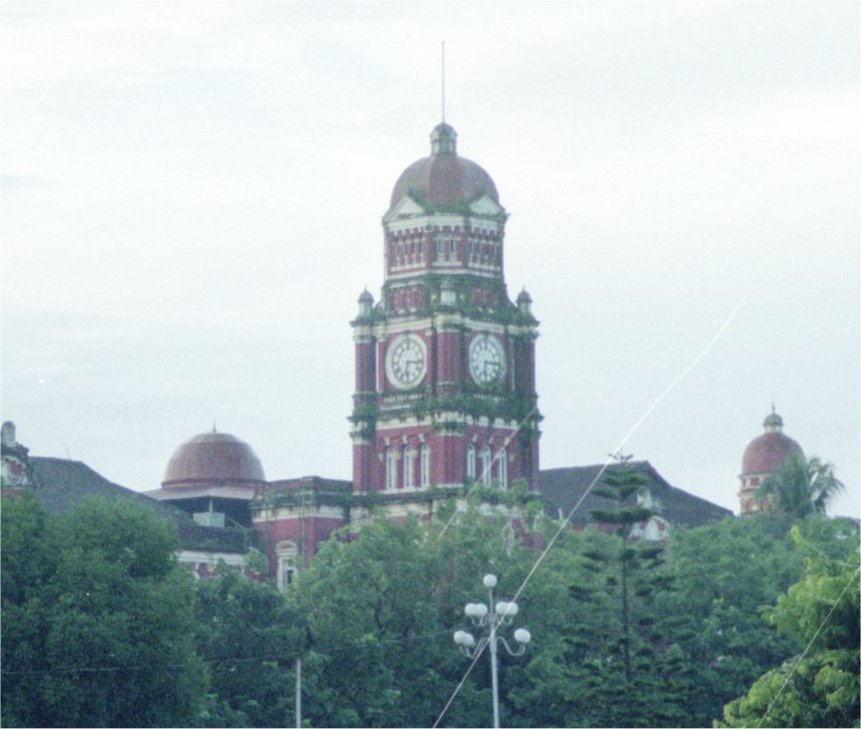
Clocktower with vegetation growing on it


If you are thinking it is vegetation growing on it, you are right! There is quite a bit growing on most of the buildings in the city.
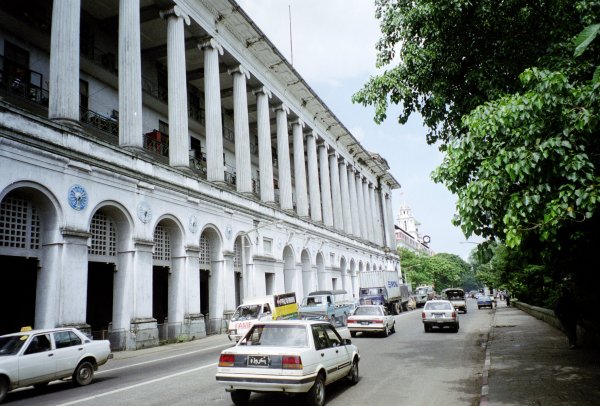
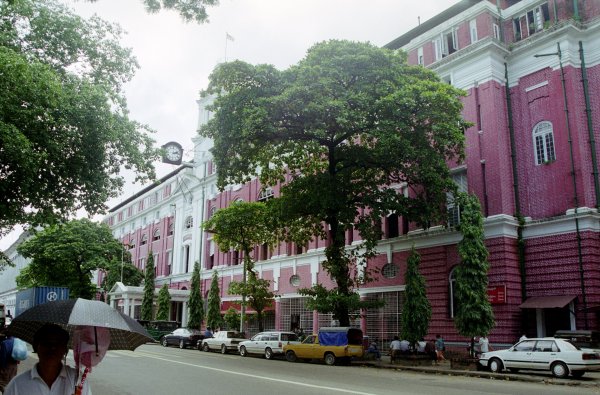
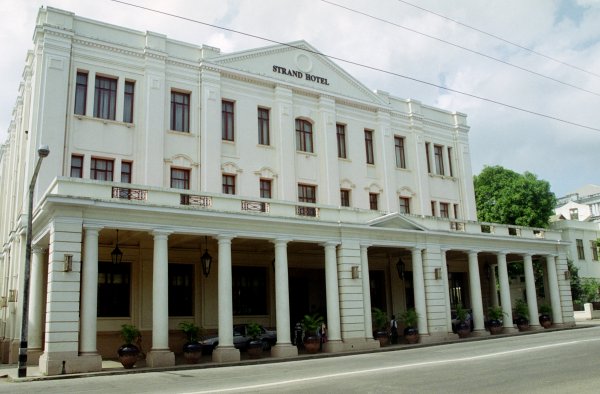
Colonial Building 1Colonial Building 2The Strand HotelColonial Building 3

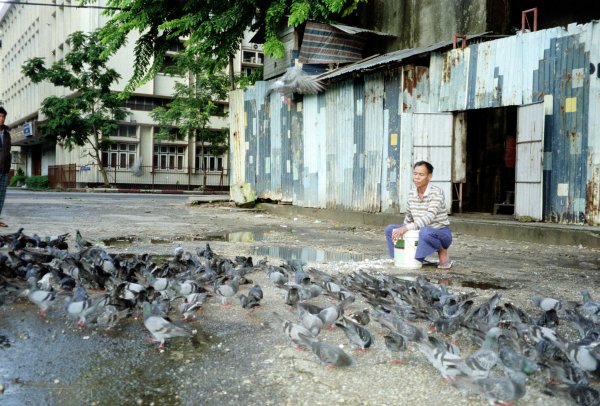
Man feeding pigeons


There were so many pigeons!


I managed to catch a pictures of a pigeon flying mid-air - can you see the blurred grey thing near the tree in the middle of the photo?


NextNext Page


Return to SE Asia menu

Return to Top


Created: 22 Sept 2001

15. June 2001 10:27
by Rene Pallesen
0 Comments

3rd Place in Photo Competition!

15. June 2001 10:27 by Rene Pallesen | 0 Comments

competition photo 2001


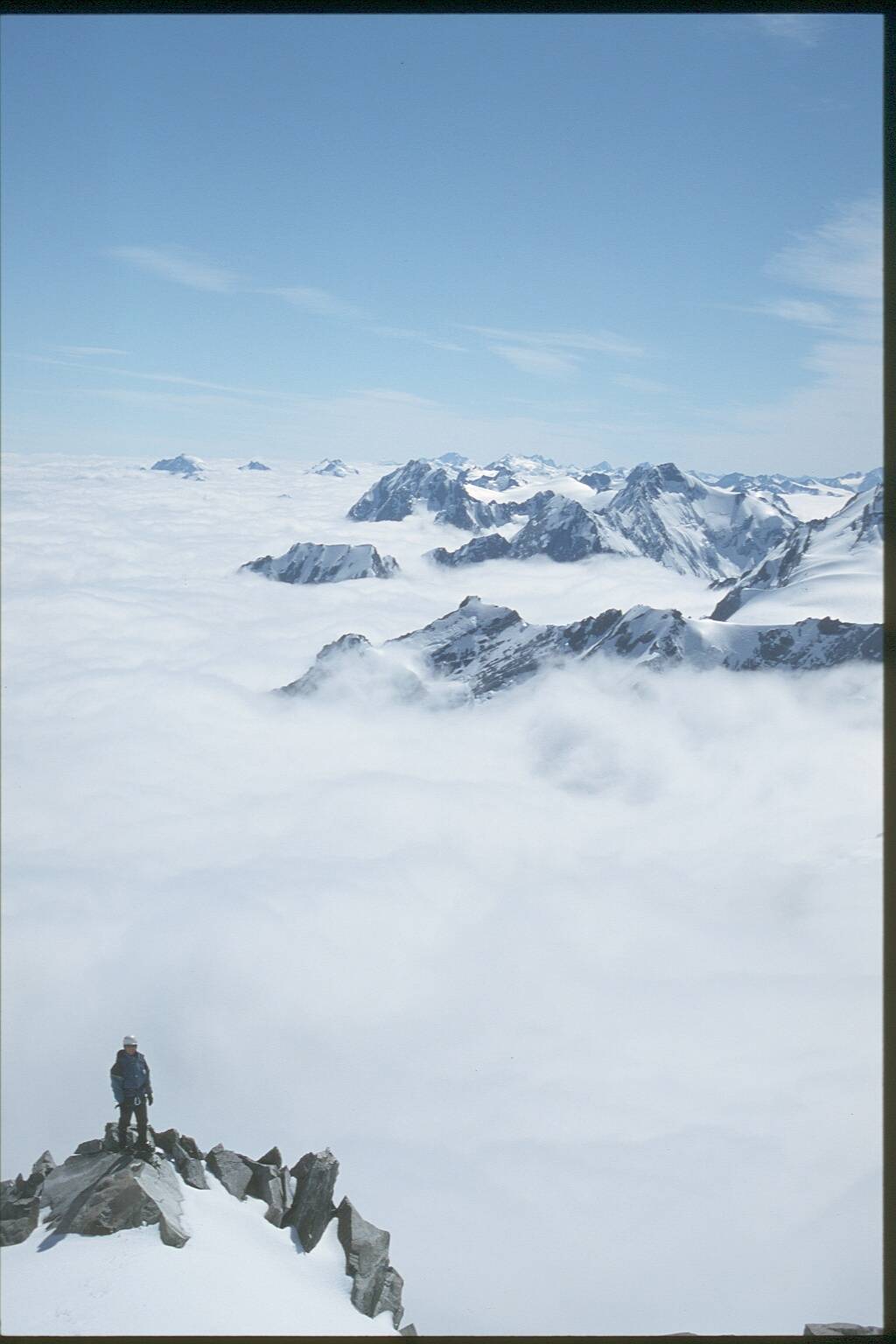
I took part in a photo competition in November 2001, using one of the photos I had taken during my trip to Mt Cook in January 2001. This photo was of Kevin, the alpine guide from my group in the technical climbing course.

The following photo and comments appeared on the Planet Fear website, in the Front Line Photography Competition - not long after I was notified that I was one of 20 winners, and I was even more surprised to find out that I had come third!

The comments above the photo were my comments that I had emailed to them when I sent the photo. The comments below the photo were (one of the judges) comments about my photo.
3. Rene Pallesen

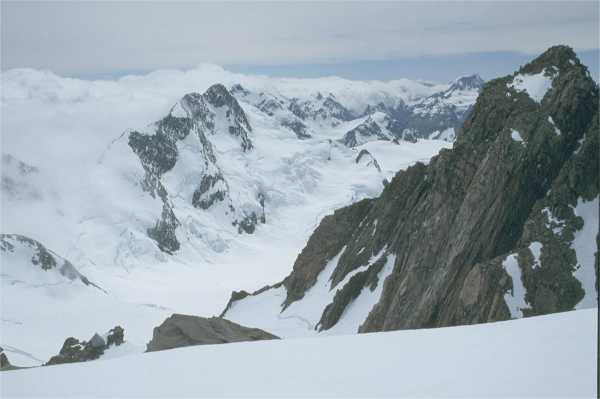
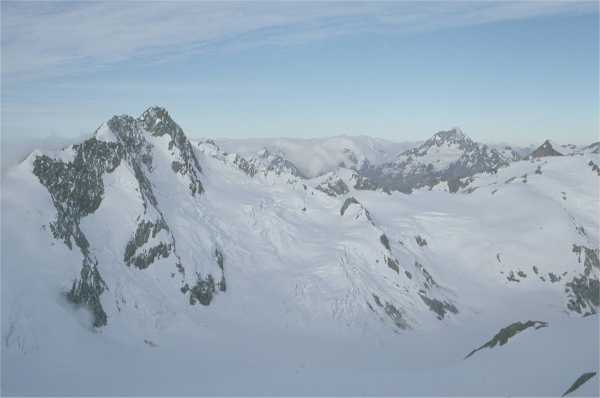
The attached photo was taken in New Zealand on the main range near Mount Cook. The valleys to the west are filled with clouds formed by the moisture from the forests underneath. The snowcovered mountains in the north are visible through the clouds. The photo was taking using a Nikon FM10 using a Fuji Sensia 100 film.
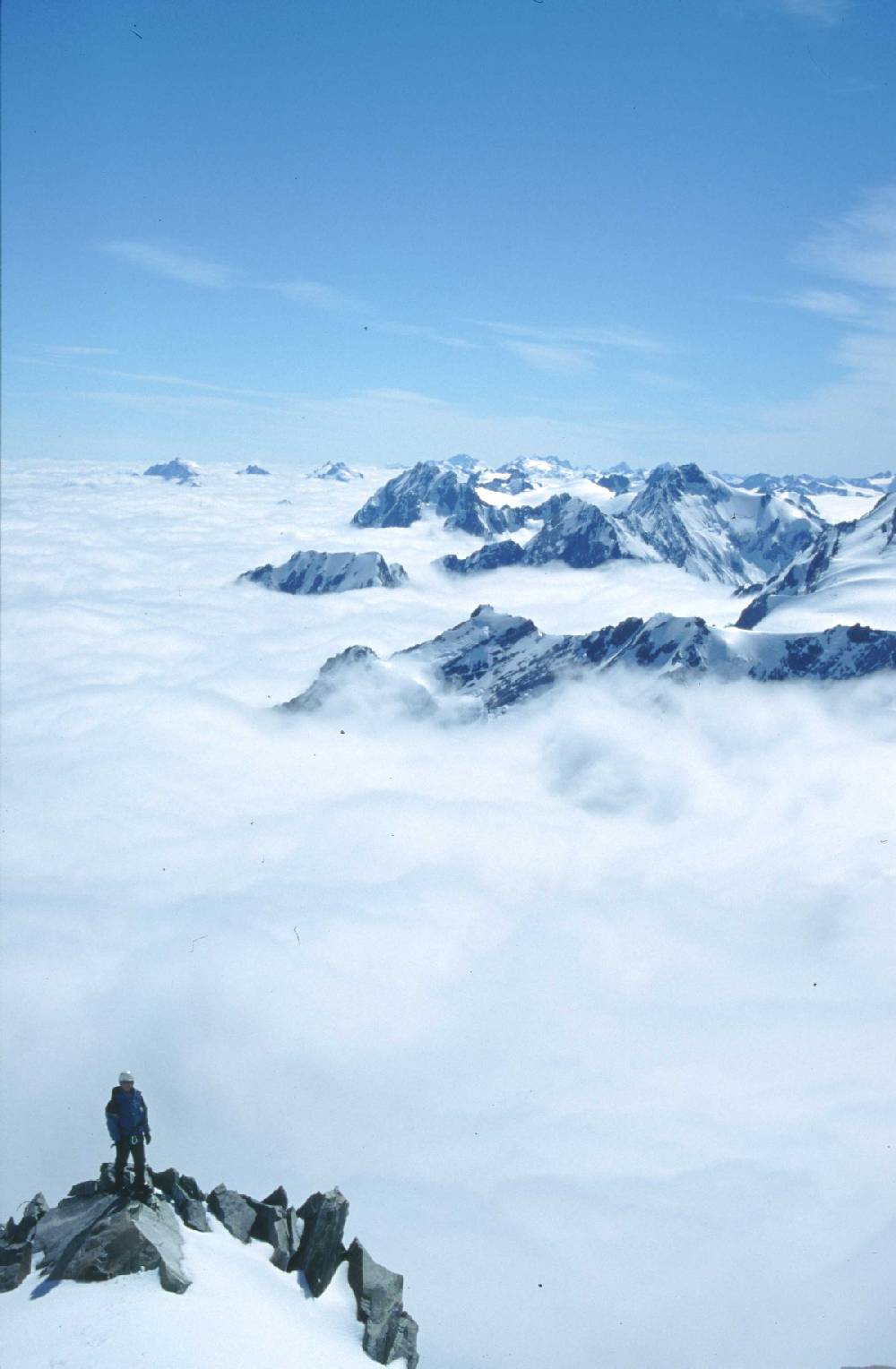
Kevin in the Clouds

Literally bathed in atmosphere. It would be easy to muff this high key exposure but Rene is spot on. The vertical format adds to a shot capturing all the euphoria of life on the tops. Reminds me of the legendary Mountain mag front covers.
~ Comment by Ian Parnell, Planet Fear
Feel free to see my photo on their website.

Also, you could go to the Planet Fear website to view the other winning photos.

15. January 2001 11:14
by Rene Pallesen
0 Comments
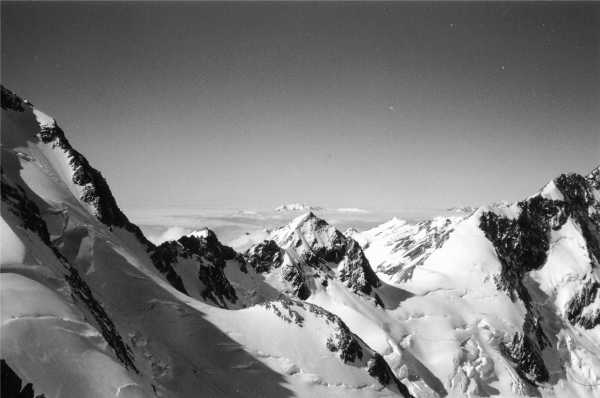
Mt Cook

15. January 2001 11:14 by Rene Pallesen | 0 Comments

mt cook


Mt Cook

Mt Cook
Our ice-climbing group

Alan


Created: 18 Aug 2001 Last Updated: 16 Sept 2001

15. January 2001 10:59
by Rene Pallesen
0 Comments
Mt Cook ( 15 ~ 28 January 2001 )

15. January 2001 10:59 by Rene Pallesen | 0 Comments

mt cook 15 28 january 2001
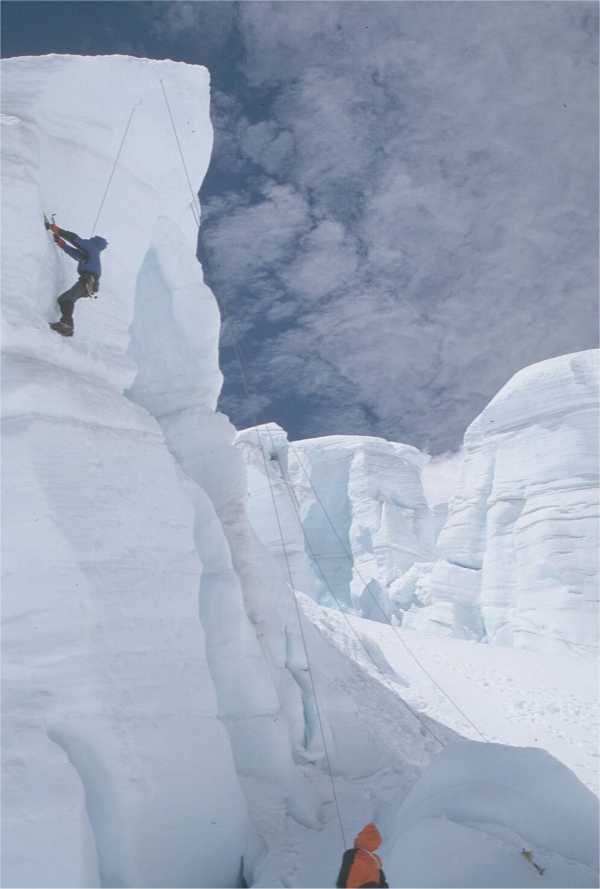
Above the clouds at Mt Cook - photo competition winner!Mt Cook ( 15 ~ 28 January 2001 )


I decided to do a Technical Ice-Climbing course with Alpine Guides in New Zealand.

I spent 10 days at Mt Cook doing a very challenging course, but I learnt a lot. I learnt all the techniques required to do ice-climbing safely. I also learnt the necessities of surviving in the icy mountains.

Prior to the trip, a lot of preparation was required. Everyday, I went jogging to build up my fitness, so by the time I left for New Zealand, I could run 3km on the sand without getting puffed. I also had to buy some of the equipment. I had to buy cramp-ons (looks like spiked metal soles) to attach to my boots; ice-axe and ice-hammer; a new Gore-tex jacket (I needed a new one anyway) and some other clothing and equipment.

The photo on the right became a 3rd-place winner in a photo competition.
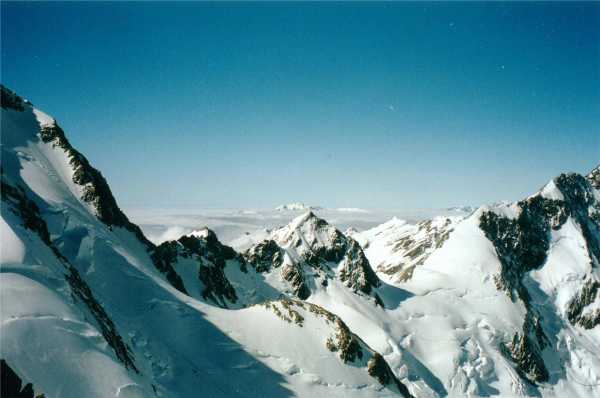
Mt Cook

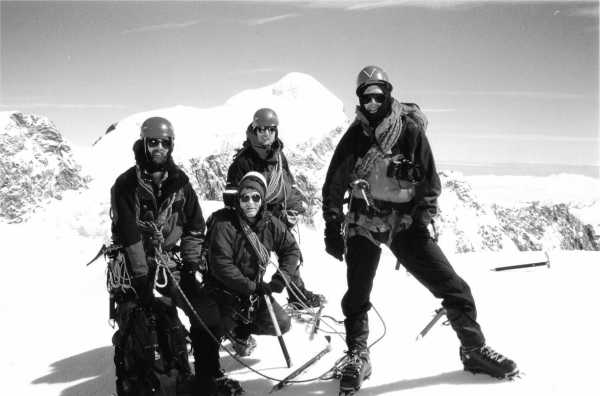
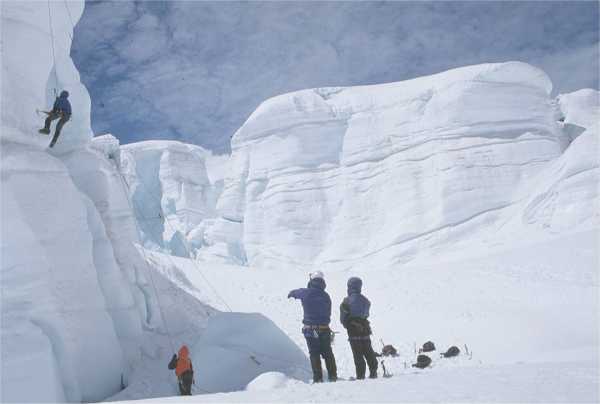
Our group consisted of 4 other doing the course. There were no prerequisites, other than a love for the mountains and a very high fitness level. Not all of us who do this course go on to climb the great mountains. We also discovered it takes guts and courage to stand on top of the world and feel confident. One cannot be an ice-climber if there is a fear of heights or if unsteady on the feet.
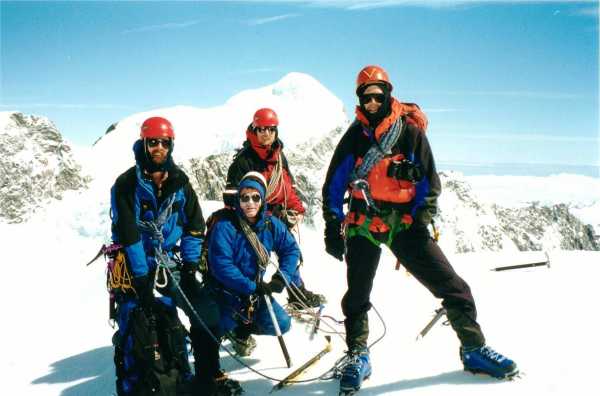
Our ice-climbing group


All of us in the group had come from different backgrounds. Søren was an experienced climber, who had aspirations of going to the Himalayas. Alan was a rock-climber who wanted to try the challenge of ice-climbing. Rob too loved the mountains and wanted the experience and challenge of being on the icey slopes of New Zealand. I had had quite a lot of climbing and mountaineering experience, but this was my first time ice-climbing.


The person holding the camera is Søren. I met him in NZ, whilst waiting for the bus for Mt Cook. To my surprise, he was a Dane living here in Sydney. He was a professional photographer (hence you see him holding the Nikon). He and I had similiar experience so our speed through the course was pretty much the same.
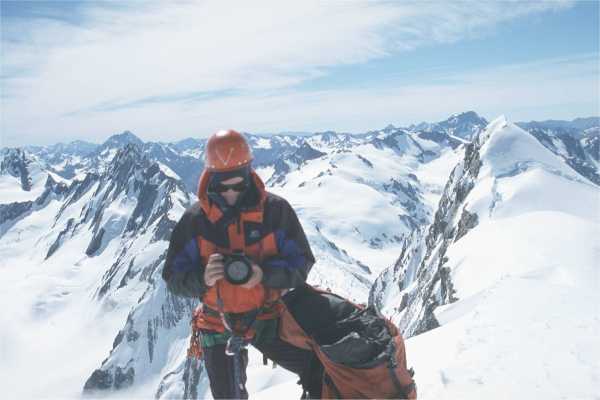
Soren


I actually ended up cracking a rib whilst on the course. I did this during a 'self-arrest' technique, where we actually throw ourselves down a steep slope and try to use our ice-axe to stop ourselves from falling any further. This technique is used in case you fall down a crevass and have nothing to hold onto.

Rob was the other person doing the course. He once dropped his ice-axe and one of us had to abseil down to collect it, as an ice-axe is a piece of equipment that is vital and you only carry one of these each.

We worked in pairs, but had to swap partners as our guide took turns working with each of us.
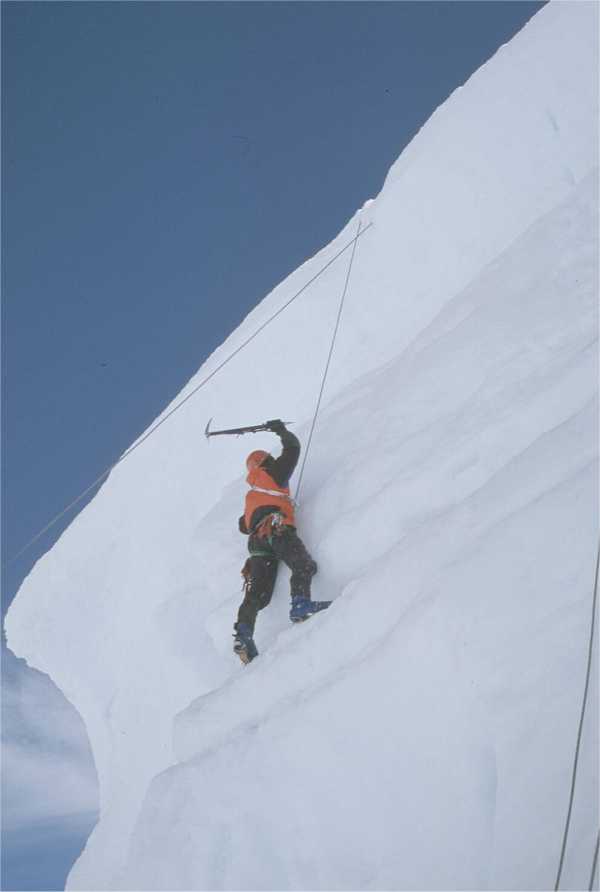
Søren doing a climbAlan doing a climb
Alan doing a climb


Ice-climbing is nothing like rock-climbing. You cannot use your fingers (well, they will freeze if you take your gloves off), so you really on equipment like ice-axe and ice-picks to anchor yourself into the ice. These pieces of equipment are really important, especially if you are sleeping on a ledge or stopping for a rest. Other than someone belaying you, using ice-picks to secure yourself into the ice is the backup should your belay fail.

We each took turns at ice-climbing! Alan is the one in the blue jacket, Søren is the one in the red.

I guess Søren has more photos of me climbing, whereas I can't take photos of myself!


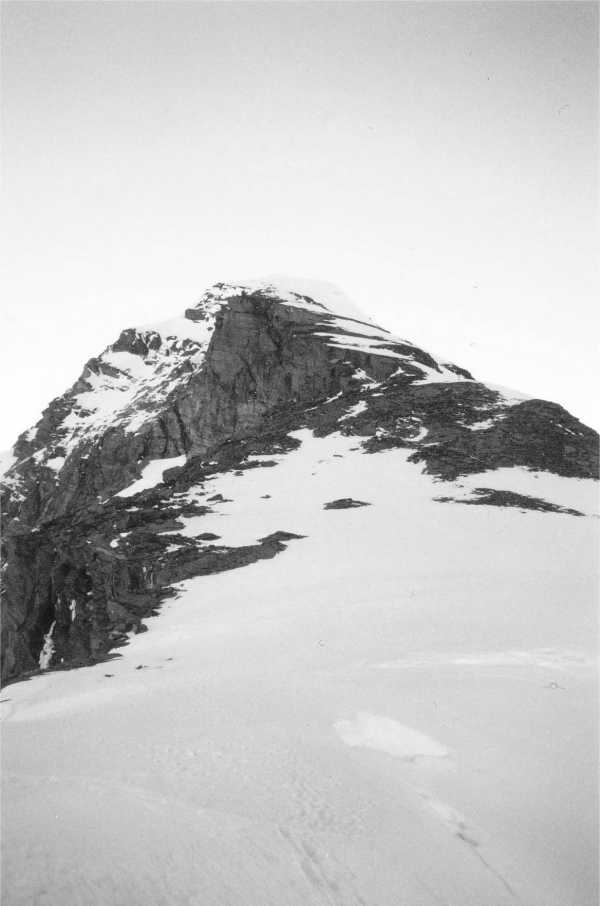
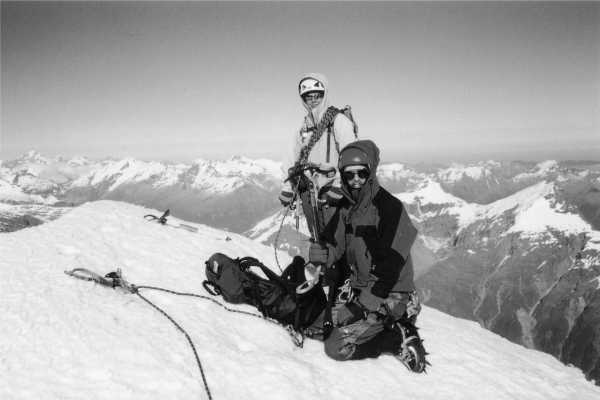
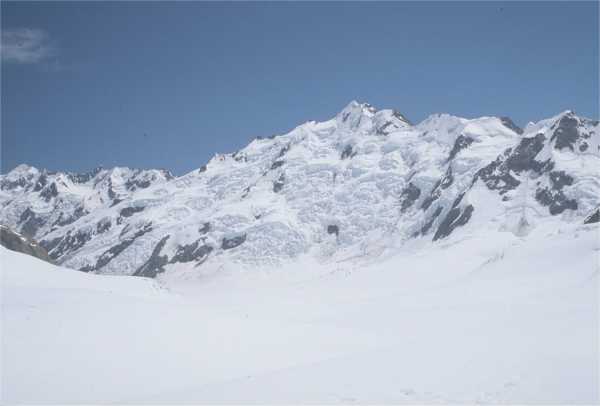
In the following section, you will see a series of photos of Mt Cook.
If you want to have a look at the black & white version of this (quite artistic), click here.
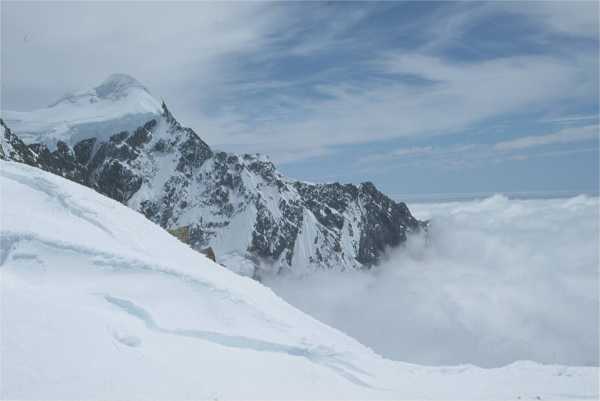
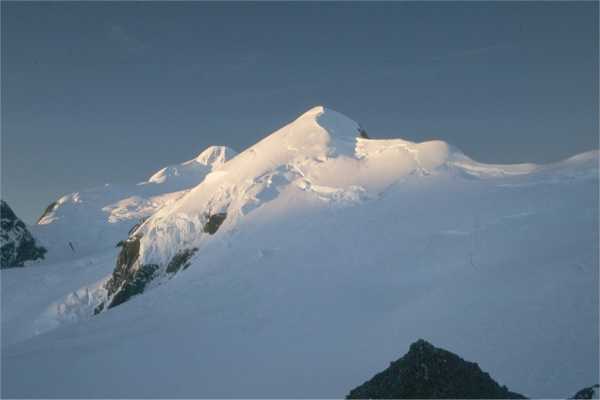
Photo 1 of Mt CookPhoto 2 of Mt CookPhoto 3 of Mt Cook
Photo 4 of Mt CookPhoto 5 of Mt Cook


17. September 2000 10:58
by Rene Pallesen
0 Comments
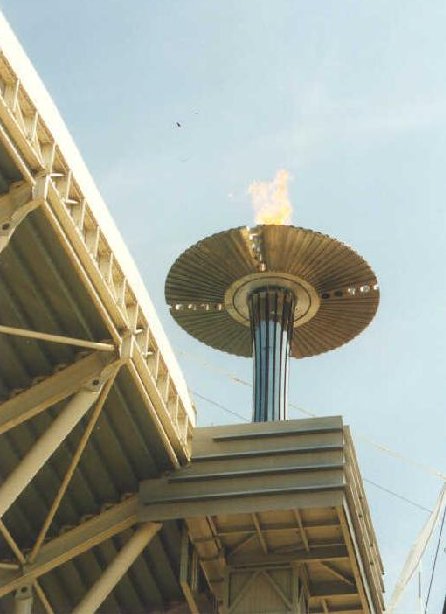
Olympic Day Out ( 17th Sept 2000 )

17. September 2000 10:58 by Rene Pallesen | 0 Comments

olympic day out 17th sept 2000
Olympic torch - lit


Last September, Sydney held the Olympic Games. I saw a lot of the events on TV but was disappointed with the coverage of other countries' involvement.

However, I did manage to be at Olympic Park during the Games and also see the first handball match - Denmark vs Norway.

I managed to get tickets for the game and had a very nice day with my girlfriend and the Lenehans. I also managed to get some pretty spectacular photos of the Olympic torch.
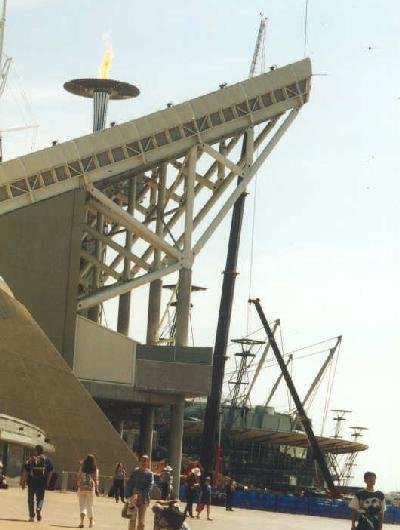
Olympic torch from afar

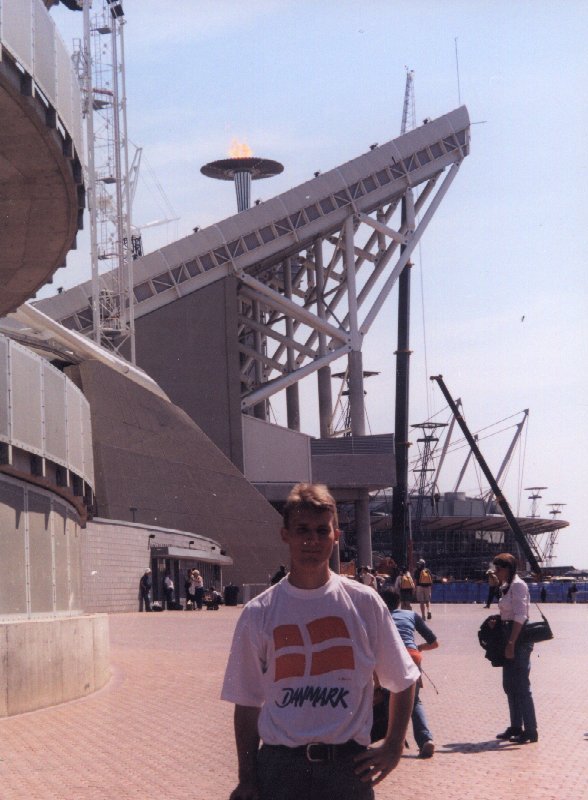
Me with Stadium Australia


Here is Stadium Australia, where the Olympic torch is held. Most of the major track & field events, as well as athletics were held here. It is a pretty spectacular building - and HUGE. During the Olympics, you could not go into just any of the buildings at Olympic Park. You had to have a ticket for an event before you could enter the building.
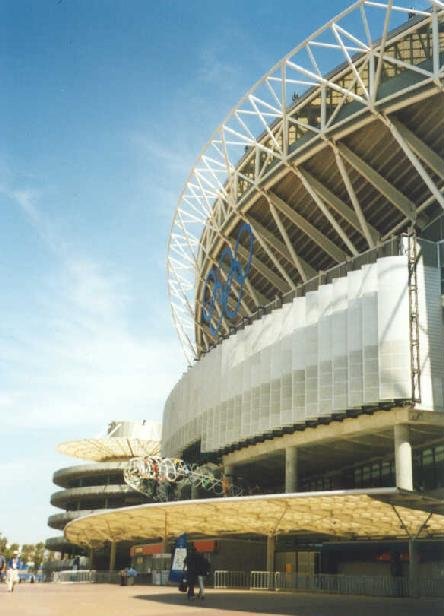

Stadium Australia

As you can see me, I am wearing my T-shirt supporting Danmark! This is one of the few days that I can wear the T-shirt.


It was a very sunny and warm day and the place was full of people. During the Olympics, you could only get access to the whole of the Olympic Park if you had a ticket. They had quite tight security, and had to go through a detector on the perimeter of the grounds after you got off the train/bus.
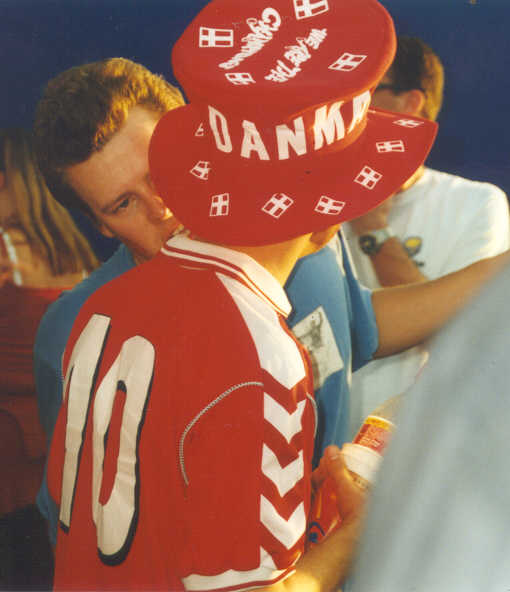
Dane in true colours!


The handball game started at about 2pm and we managed to wander round for quite a bit before going into the arena wear the handball was.


The food as amazingly expensive! Normally a fruit salad would only cost about AUD$3, cost up to AUD$8 that day!. Bottles of water was double the price. They really made it a money-making event for tourists! The funny thing too, we noticed that as you entered Olympic Park, all of the signs were in French and English, and all the announcements were given in French first, then English. It was most peculiar!

As we got closer to where the handball games were being held, we saw a lot of Danes and Norwegians dressed in country colours! Danes in red and white and Norwegians... well, there was a guy there who had lots of cow bells around his neck and attached to his clothes. He was wearing a traditional metal helmet and dressed in old-fashioned gear. It was amazing to feel all the atmosphere - just to be there.
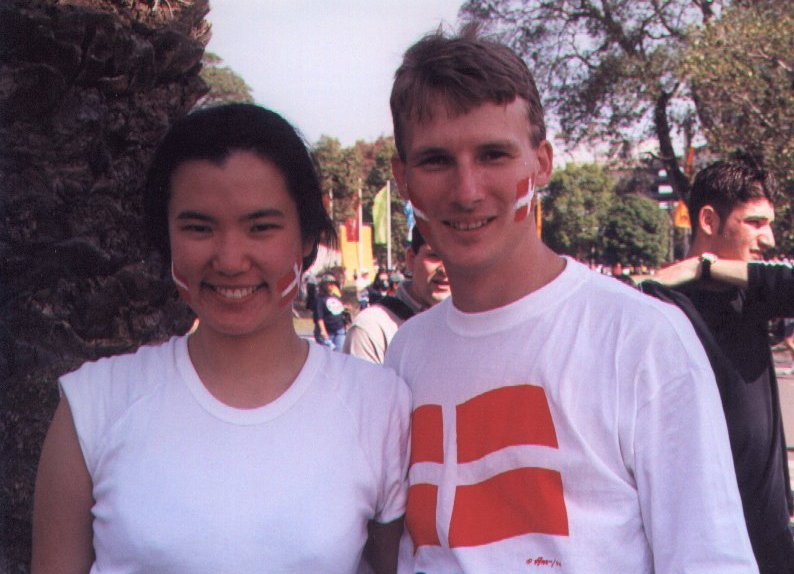
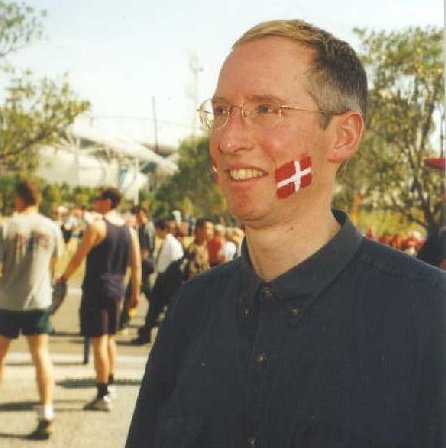
True Danish spirit!Lance with Danish flags


We were all in the true Danish spirit! Even my girlfriend was dressed in a white T-shirt and red pants! We painted flags on our faces with some face paint. We were definitely there to support the Danish team!

Even Lance could not help get caught in the moment with us! *smile*
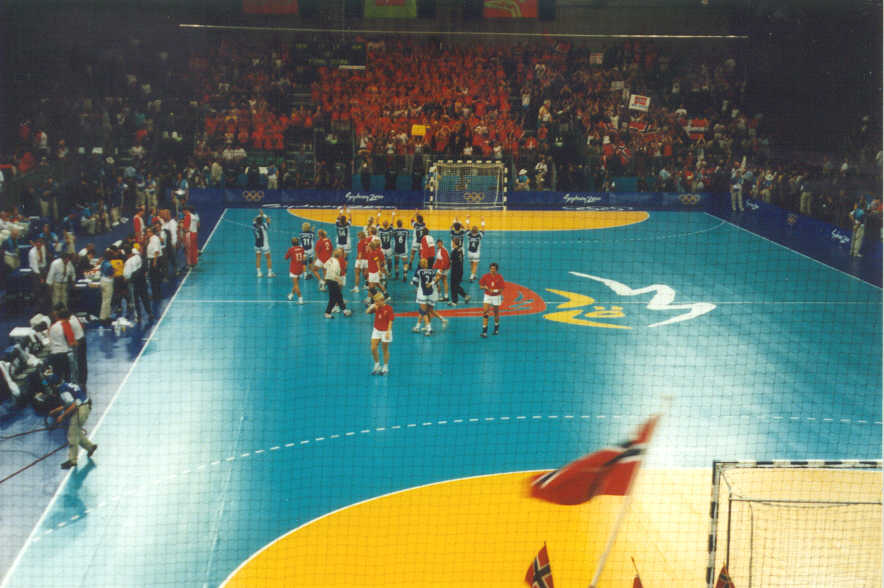

Handball match


A break in the handball game - Danmark vs Norway!

Danmark in red & white, Norway in blue & white.

We had pretty good seats - it was a matter of whoever got there first, had the best seats, although we had to enter through certain doors.

All the journalists and officials sat on the left. We even heard that the crown prince of Danmark was there for the game, even though we could not spot him. There were flags everywhere, Danish and Norwegian waving about. Everytime Norway scored, you could hear countless numbers of cow-bells being rung! A few times, some of the people tried to start a Mexican wave, but that did not work out.

It was a very fast and furious game. It was the only handball game that the Danish lost in the whole Olympic Games, and they eventually came first in the finals!
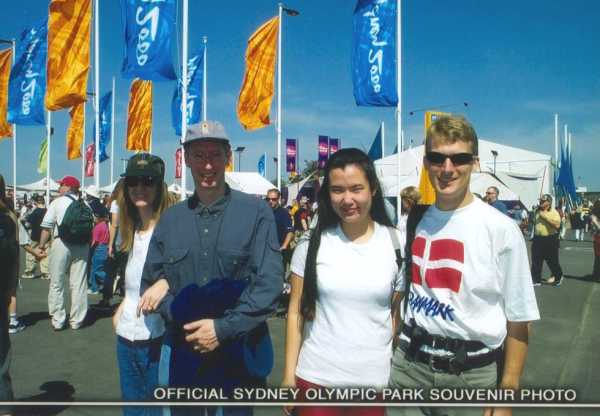
Group photo


Just after entering Olympic Park, we managed to get a group photo!


As you can see the place is very crowded but very festive - you just had to be there!
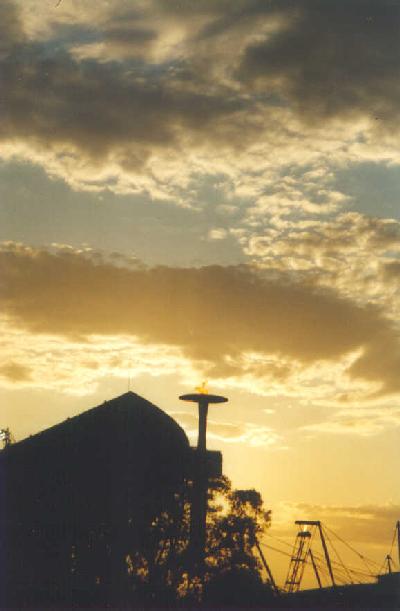


Olympic Torch at Sunset


A most glorious sunset!


After the handball match, we wandered around for a bit longer. The day had been quite warm, so the night was a beautiful clear night.

After the Lenehans left, Arumi and I had a look at a small Aboriginal art exhibition located at the Park. We sat on one of the few grassy patches, to watch the flickering of the lights and just enjoy the day.

We eventually went home, but Olympic Park was still swarming with people, who were there to watch events that went on later into the night. Although we did not get the chance to see any other events during the Olympics, it was definitely worth the day we spent there. We would have loved to see the final game when Danmark won, but as usual, we were not very organised...


Below, I have included photos taken on the night of the Closing Ceremony.


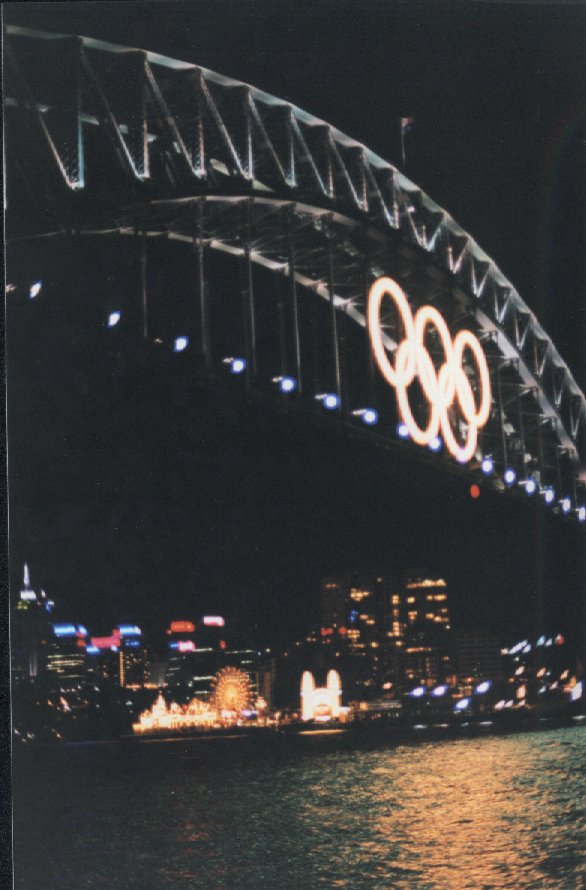
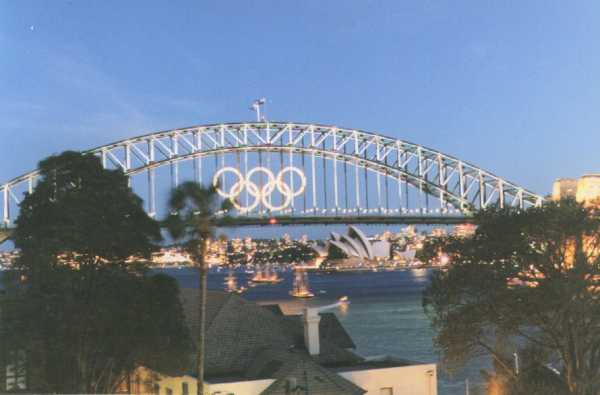
These were taken from Graham's apartment on a hill at McMahons Point. We had a spectacular view of the fireworks that went off after the Closing Ceremony. It was really windy on the balcony, but I managed to get some photos of the Olympic rings that were placed on Sydney Harbour Bridge.

Beautiful, isn't it?
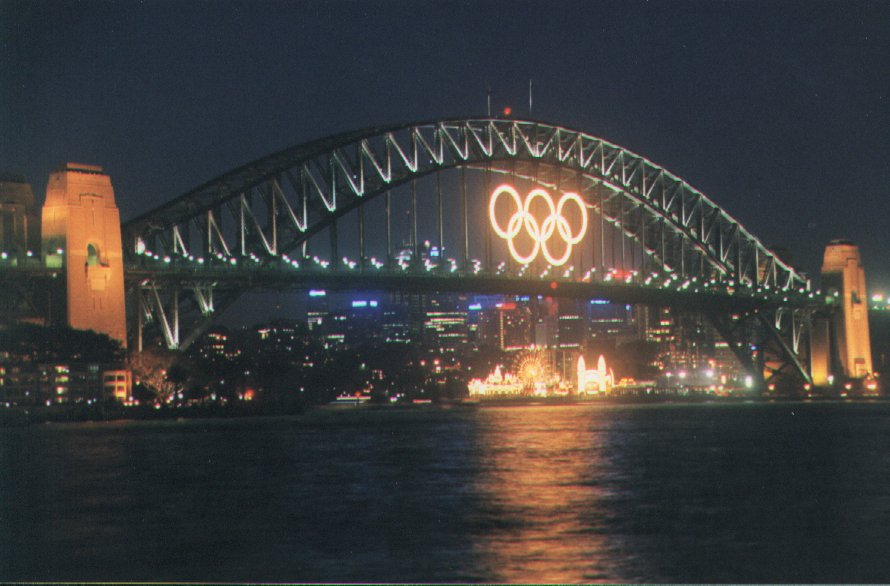
Sydney Harbour Bridge at nightSydney Harbour Bridge at nightSydney Harbour Bridge at sunset


15. September 2000 11:05
by Rene Pallesen
0 Comments

New Car in 2000 . . .

15. September 2000 11:05 by Rene Pallesen | 0 Comments

new car in 2000


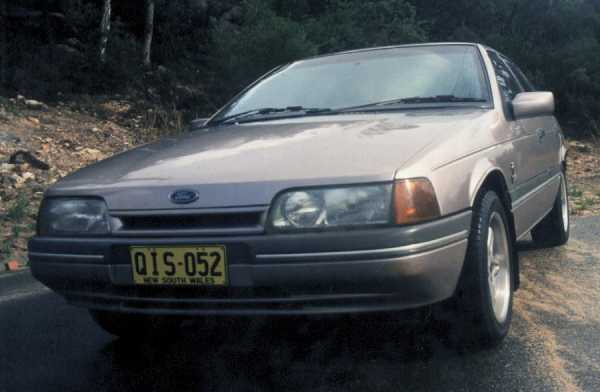
In September 2000, just after I returned from my trip to Borneo, I had to buy this new car because my girlfriend had written off my car whilst I was away! *smile*

I did not look forward to hunting around for a new car, but I found a good buy locally. This car is a 1997 Ford Futura, with 4.0 litre, 6-cylinder, 220-horsepower, power-steering, central locking and electronic windows (I think I am starting to sound like a car advertisement...)
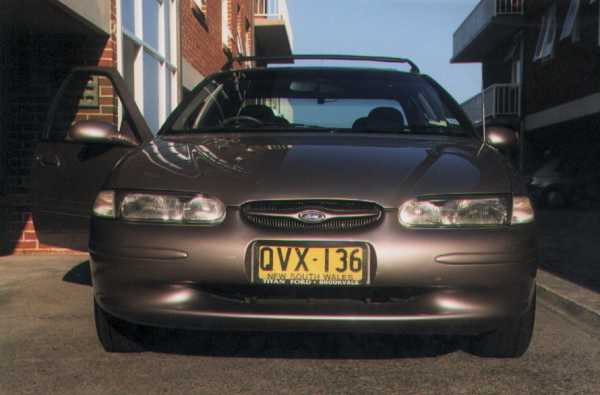
Frontal view of car


Side view of car

It is pretty much the same colour as my old car, and it feels so nice to drive!

As you can see, pretty similar, but I also really miss my old car! It had a lot of computerised features - from a digital odometer, to adjusting the internal temperature of the car. It was a pretty cool car and wished I could have kept it for another few more years.
Frontal view of car


Side view of car

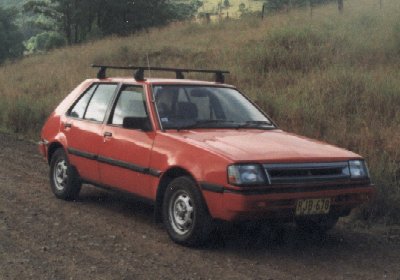
My first car in Australia!

A huge contrast to my first car!

It is a red hatchback that I bought early 1998, a few months after I arrived in Australia. But someone wrote it off a few months after I bought it. It was a pretty bad accident, but luckily I was alright. I was only covered by Third Party insurance, and to go through a lot of paperwork just to get reimbursement for the car!

15. August 2000 10:43
by Rene Pallesen
0 Comments

Away from Headquarters . . .

15. August 2000 10:43 by Rene Pallesen | 0 Comments

away from headquarters
Ecochallenge ( Sabah 2000 )

Magellan HotelMoving into SilamRepeater StationInjured CompetitorTransporting a Repeater StationBeetleKids in Village
ArrivalSilam / Jungle OpsRepeater StationsThe CompetitorsHelicopterJungle Around UsThe Village

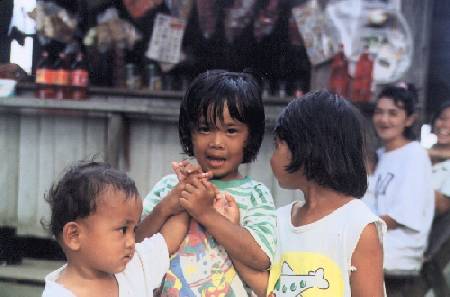
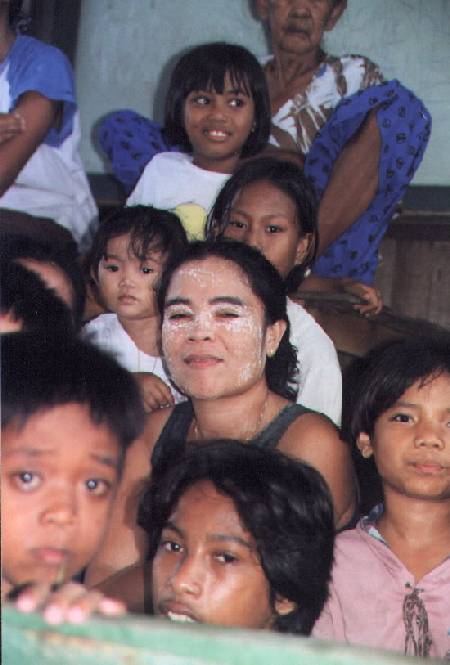
Village people
Away from Headquarters . . .

I managed to explore the villages at Silam.

The people here wore this white stuff on their faces - I guess their form of sunscreen.

These people were refugees from the Philippines.

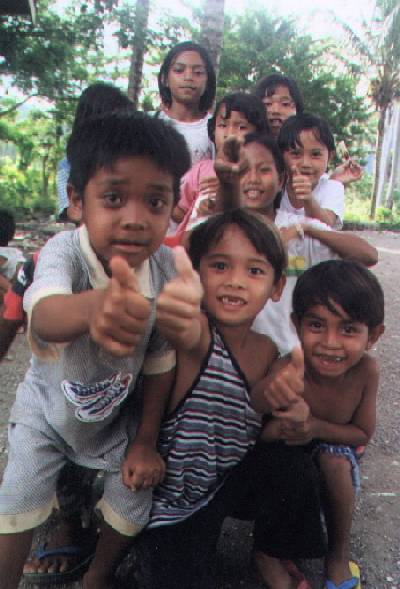
Kids in the village

The kids were fighting to fit into the photo!

Kids in the village


The kids here were really cute.Caught Monkey

These kids here, had caught a monkey and was trying to sell it at the camp for 5 ringgit (AUD$2.50).


No-one wanted to buy it because they knew if they bought it, and set it loose, the kids would just catch it again, and try to sell it.

In general, there were lots of great photos at Silam village.

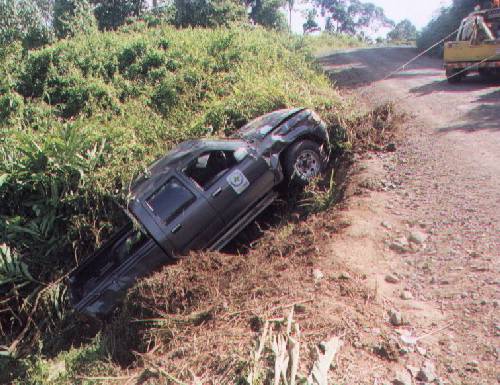
Car in a ditch


One of the helicopter pilots was driving through the jungle roads, took a corner too fast, and had a minor mishap.


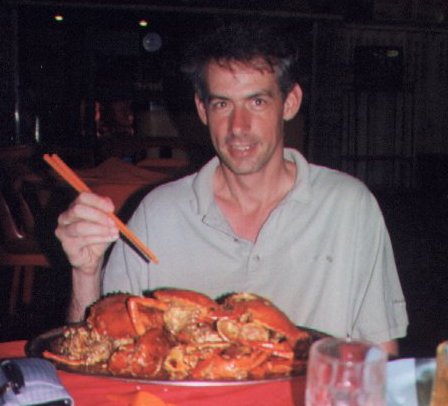
All of us having dinnerHuge crab dinner!

We headed into Lahad Datu to get some seafood!

An escape from camp food. Camp food was disgusting. There were live worms in the vegetables (yes, after cooked). Most of the food was not fresh, and was pretty boring. The seafood was fantastic here. Whenever we had the chance, we ate lots of seafood.

Yum... Paul did not get to eat all of the crabs - all of us had a portion of it.

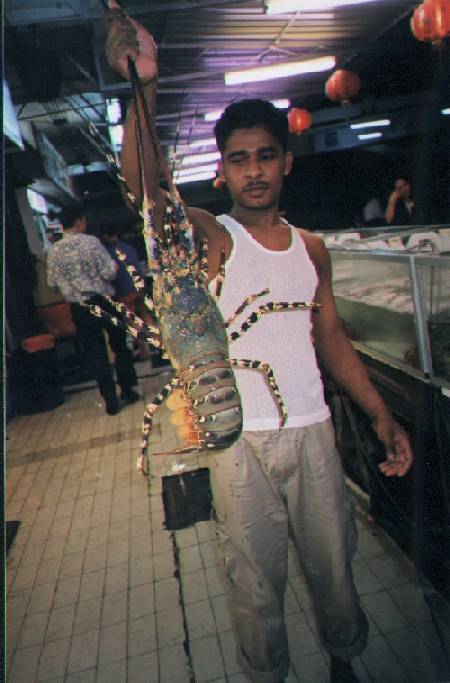
Huge lobsterHuge lobster

Yummm... they were huge, but we did not eat them. They were too big for us to eat, pretty impressive though. They were the biggest lobsters I have seen in my life. We saw these at the same place we ate our seafood and frogs (below).

Frog


We had this frog for dinner about 2 min after I took the photo.


This was actually when I went out with Glen in Kota Kinabalu - he asked me to pick some food and to surprise him.

I did not tell him till a year later that he ate frog meat. He asked me what it was, because he reckoned it tasted funny, but I did not tell him at the time.

I think he will only eat it again. Only if he really had to.

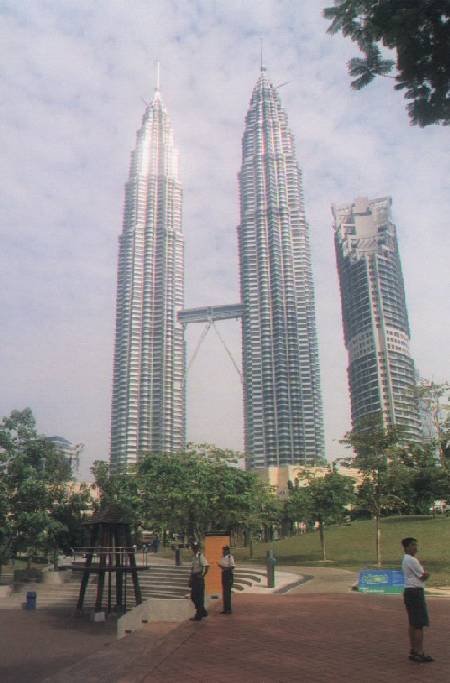
The tallest building in the world


Petronis Towers - the tallest twin towers in the world.

Actually, they are the tallest buildings in the world, followed by the Sears Towers in Chicago.

The towers are joined by some sort pedestrian platform.

These towers are located in Kuala Lumpur.

I went to Kuala Lumpur to pick up my Permanent Residency for Australia.

Woohoo!!! After 2 years of lots of paperwork, and correspondence back and forth with Berlin, I finally managed to get it!

The inconvenience of it all, was that I actually had to leave Australia ie collect my PR before re-entering Australia.


Below, is the only photo I have of the Lateral Linking Team that I worked with during the race.

The radio communications team

Back to Top

Return to Borneo Homepage


Created: 7 Dec 2001

15. August 2000 10:42
by Rene Pallesen
0 Comments

Helicopters . . .

15. August 2000 10:42 by Rene Pallesen | 0 Comments

helicopters
Ecochallenge ( Sabah 2000 )

Magellan HotelMoving into SilamRepeater StationInjured CompetitorTransporting a Repeater StationBeetleKids in Village
ArrivalSilam / Jungle OpsRepeater StationsThe CompetitorsHelicopterJungle Around UsThe Village

Helicopters . . .
The radio communications team had to arrive a few days before that because we had to hand out over 2,000 pieces of radio equipment. We had problems getting the necessary approvals for helicopters so they were grounded! I ended having to hand out most of the equipment as Glen and Paul had to sort out our use of the helicopters.

We had to fly all the equipment to Silam before the start of the race, and our team managed to fly to Silam the day before the race started.

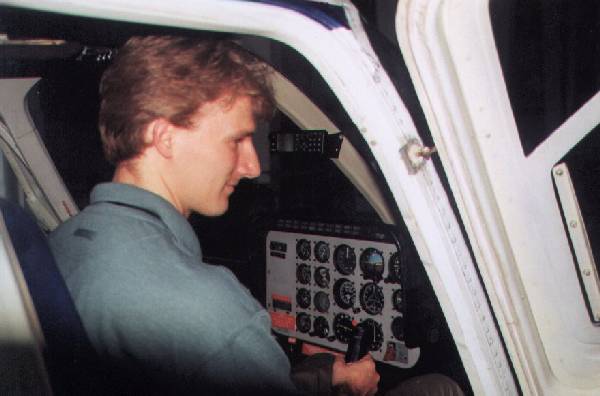
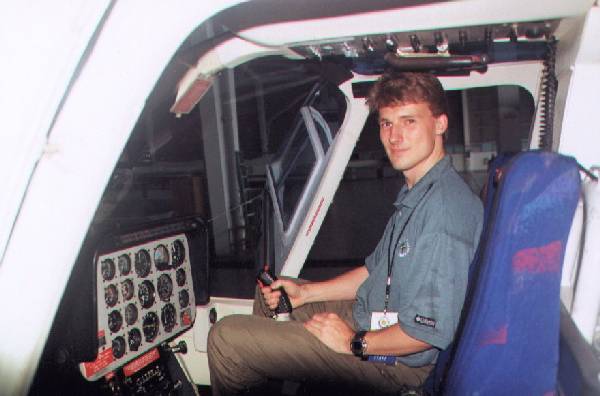
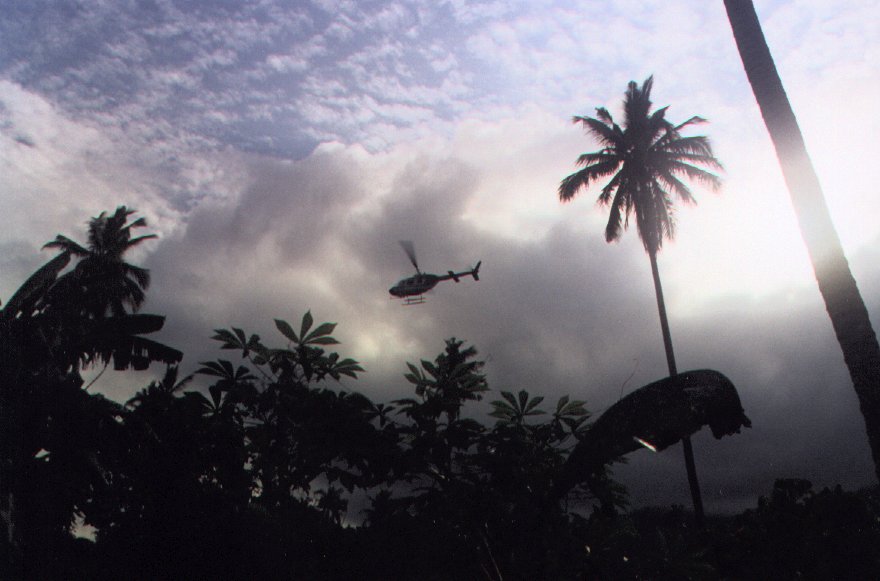
Do you believe that Paul managed to take a photo of me whilst I was flying the chopper? He was standing to the side of me, and took the photo at night time, with the door open ...

Jeez, I would love to be the pilot!Don't you think I look good as the chopper's pilot?

Just kidding.

A couple of days before the race started, I was at the airport most of the day. We had some problems with the radios in the helicopters... I must have been in and out of those helicopters at least 200 times.

I did manage to get someone to take some photos of me in a helicopter, looking very much like the pilot!

I had hoped that I had the time to explore Kota Kinabalue, but we were so busy, it had to wait.

Helicopters at HQ

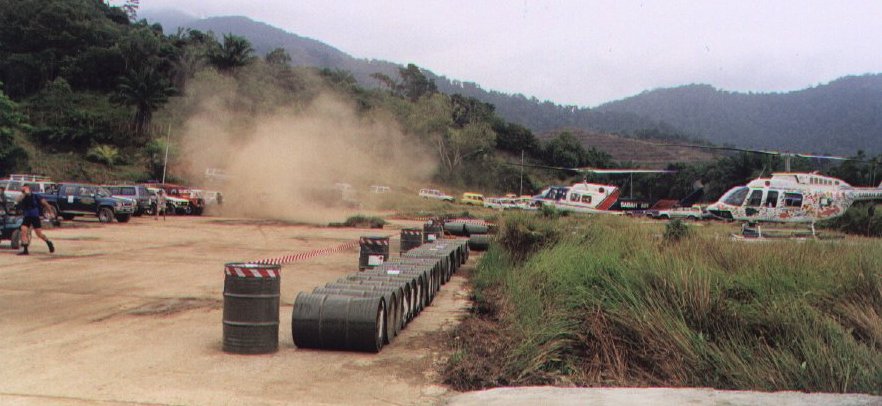
Here is the 212 or "Huey" - a twin-turbine Vietnam helicopter taking off. It is a hell a lot more powerful than some of the other helicopters we were using, which were 206s.
Landing at HQ


Here are the medical guys practising abseiling out of the helicopters (Aussie style)!

At the start of the race, I was sitting there listening to the first rescue on the radio.

3 hours after the start, four boats had capsized... helicopters and boats were very busy!

The competitors were due to arrive at Silam (another checkpoint) the next day (21st Aug).

For the first few days after the race started, I had to help organise to get the fuel to the top of the mountain.

After that the helicopter came in useful. It brought up 100 litres of fuel on the 4th day so I did not have to ferry fuel anymore!

Glen with repeater stationAt site of repeater station

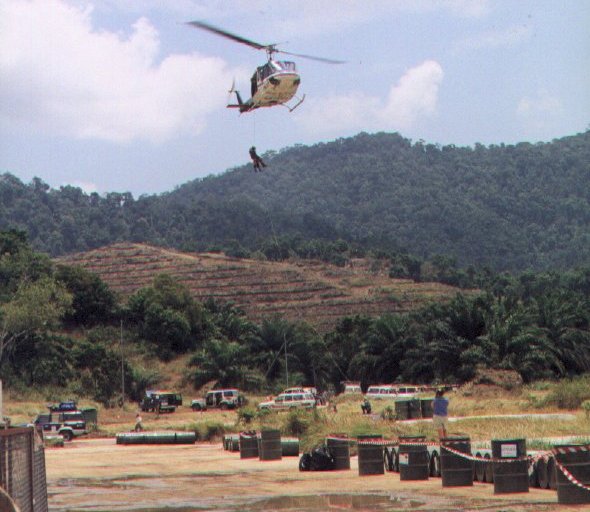
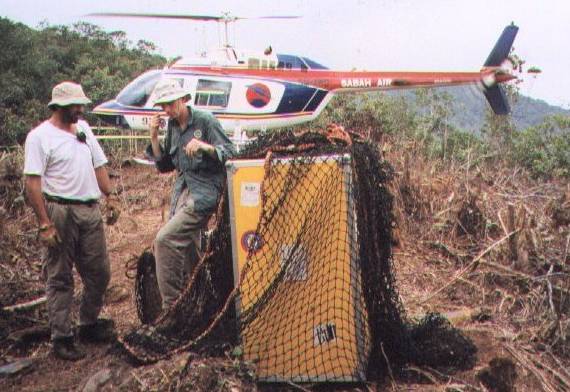
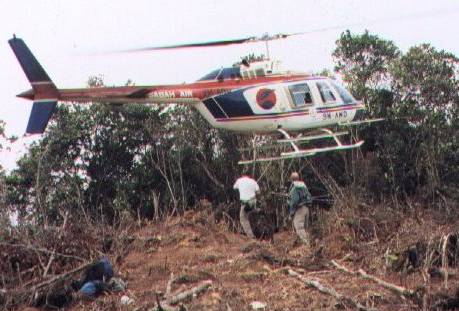
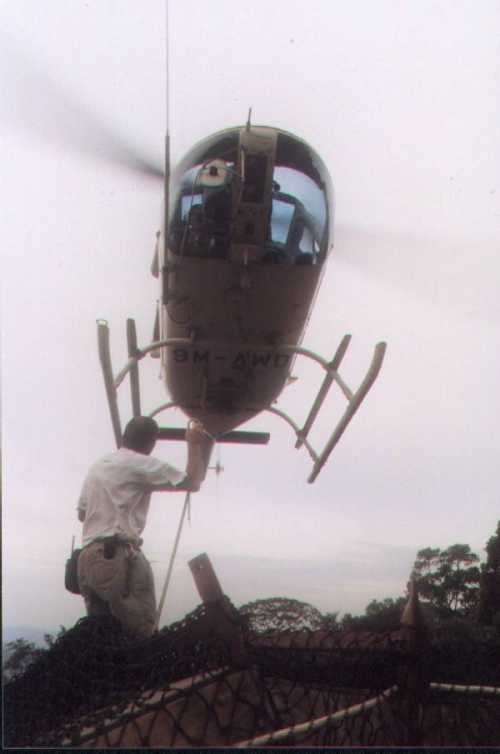
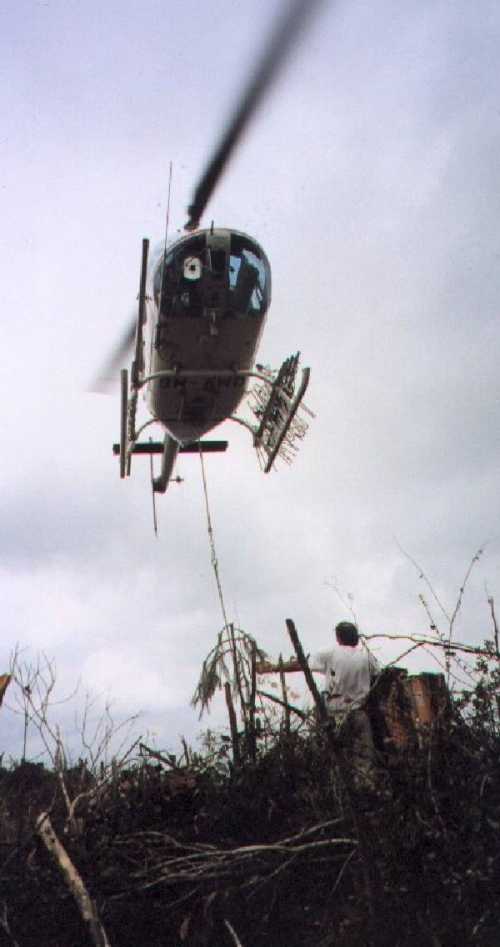
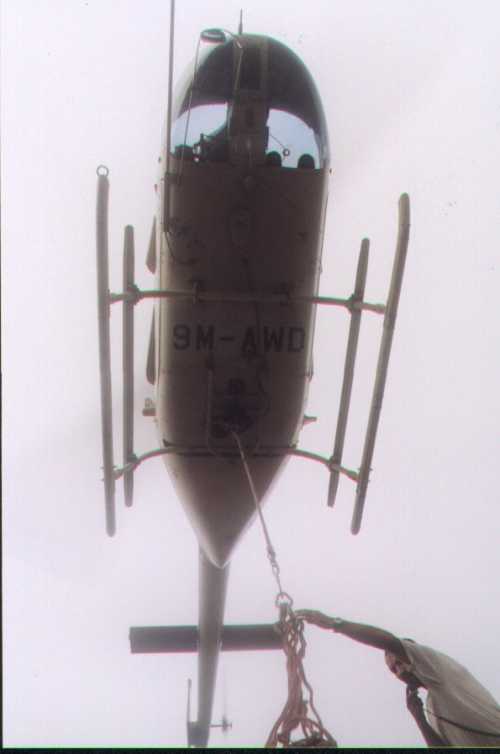
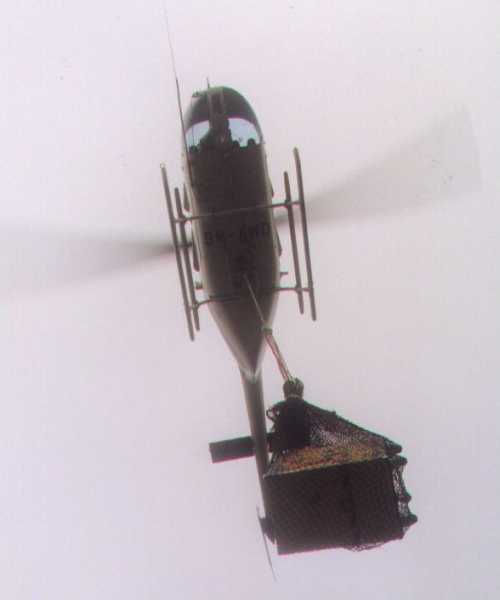
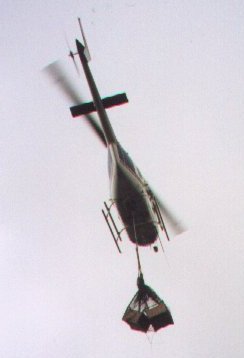
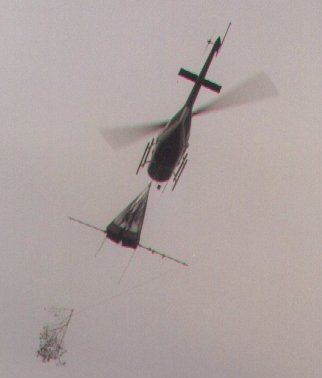
At the end of the race, we had to sling-load the repeaters, to get them off the mountain. That means we had to strap them onto the helicopters, and pull them off the mountains that way - quite effective really.

Transporting Equipment Photo 2Transporting Equipment Photo 6Transporting Equipment Photo 4Transporting Equipment Photo 5
Transporting Equipment Photo 1Transporting Equipment Photo 3


Repeater station finally airborne!


You can see a pole in the right photo.
My girlfriend asked me what it was for - it helps balance the load so that it does not keep swinging whilst airborne.


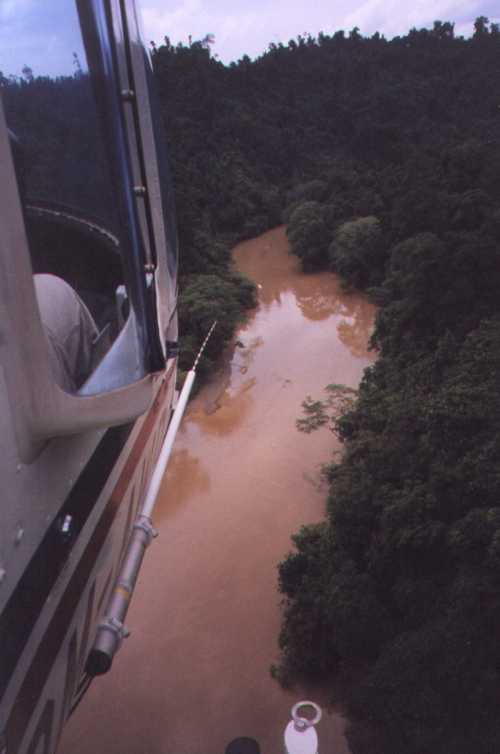
Below, you will see some pretty good photos from the chopper.

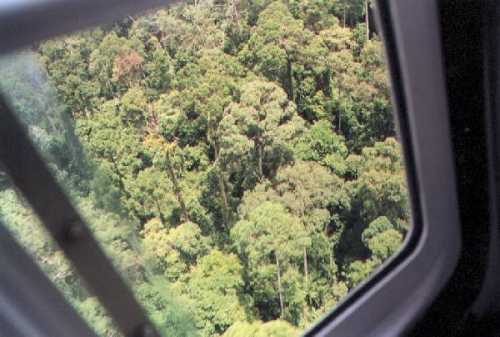
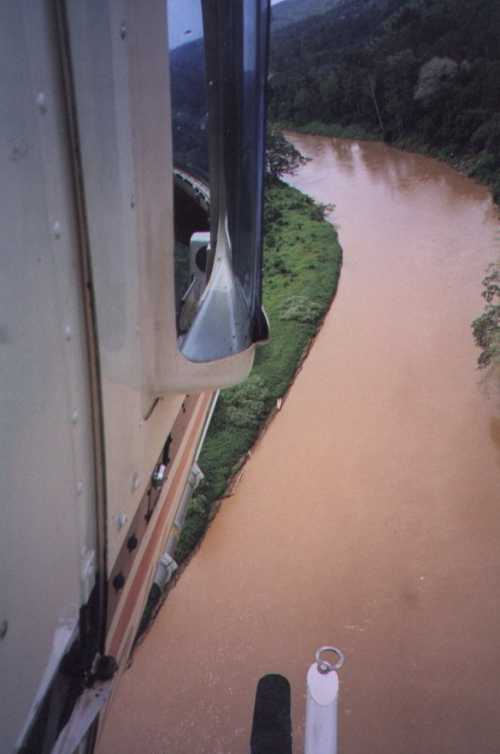
View from chopper - over the riverView from chopper of jungles belowView from chopper - over the river


Towards the end of the race, we had to scan the rivers for the last competitors coming in - to make sure they had completed this section of the race course. It was low-altitude flying of the river-bed.

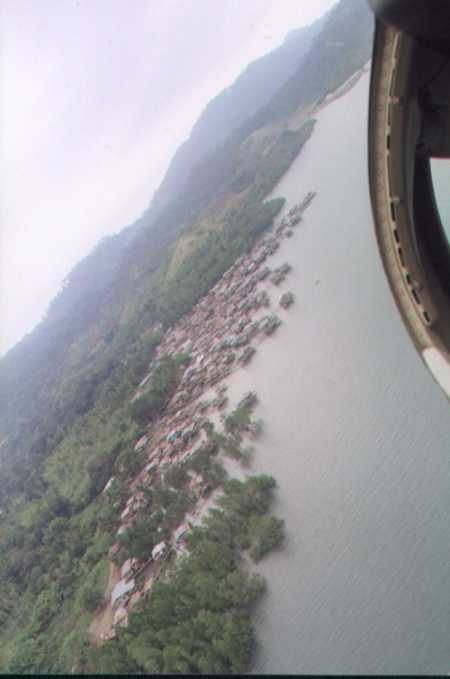
The photo on the left shows the chopper approaching Silam Village. This village was located just outside of Silam HQ.

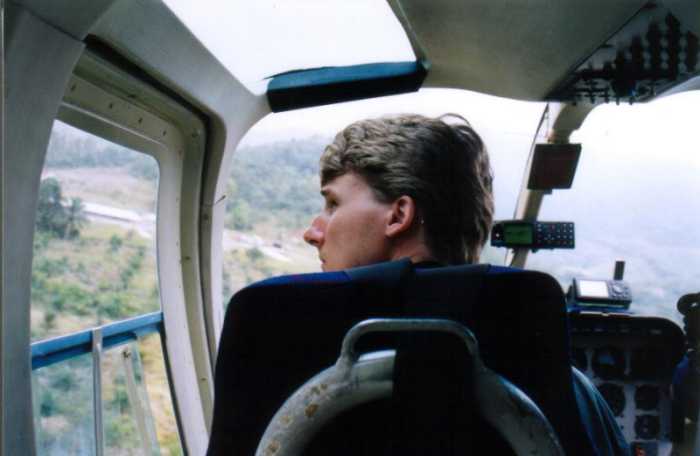
Aerial view of the villageMe sitting in helicopter


Glen liked wanted to have a photo of the back of my head - and I ruined the photo by turning my head as he took it...

Here's a sunset shot of the helicopters flying around.

I had to put in this fantastic photo - the lighting gives a really nice feel to the photo.

Sunset shot


Back to Top

Return to Borneo Homepage


Created: 7 Dec 2001
Perfect Moments Photography | A Rene Pallesen Journal

Home

7. January 2018 21:01
by Rene Pallesen
0 Comments

Tribes - Laos

7. January 2018 21:01 by Rene Pallesen | 0 Comments

The tribes of Laos still exist although it is no longer as noticeable. They no longer wear their tra
The tribes of Laos still exist although it is no longer as noticeable.

They no longer wear their traditional costumes but it is possible to glimpse the occasional traditional head wear or dress in one of the shops.


It is especially sad to see the Hmong tribal wear gone as worn below by Mavis and Kim. The Hmong traditionally lived in the mountains. The government has forced them down into the lowlands where they can be controlled and 'integrated' into the the rest of Laos.


6. January 2018 20:01
by Rene Pallesen
0 Comments

Vang Vieng Countryside - Laos

6. January 2018 20:01 by Rene Pallesen | 0 Comments

On the first day in Vang Vieng we hired a local guide to take us through the country side and some o
On the first day in Vang Vieng we hired a local guide to take us through the country side and some of the villages around Vang Vieng.


Hiking through the countryside in Laos is partly magical and at the same time an eye opener. It is not until you get into the country side that you get a glimse of the real Laos and its people, the way of living and their beliefs.

Walking into the first village a group of boys came walking towards us. One of the kids was holding his head with blood dripping down his face. The other boys were taking him home to his parents. I couldn't help but notice that there was a green substance smeared across the wound and asked our guide is he knew what it was. He went over to some bushes and plucked a couple of leaves and said that if you crush them then they will help stop the bleeding. This is when you realise that a lot of the plants in the villages serve a purpose as natural herbal medicine or for eating.

The village was a HMong village and at one of the houses we spotted the little girl above standing in a door opening with her grand mother. There are very few of the traditional bamboo shacks still standing and instead being replaced with brick buildings.


A bit further up the road we heard a sound. Someone was hitting a gong and chanting. Thinking it might be a monk we went to investigate. The sound was coming from one of the local houses. At the back of the house the family was in the process of preparing food, but we couldn't see where the sound was coming from. Our guide asked them and was told that they had a newborn (possibly sick) child and that the Shaman was in the house talking to the 'other world to' attract the good spirits and chase the evil spirits away.


As we walked on we could see him through the opening of the door and I snapped the above photo which is one of my favourite photos of the trip.

In the village people go about their normal life such as this woman removing lice from her daughters hair.


As we walked on we had to walk through the local school. It happened to be recess and the kids in the smaller classes were outside playing.


There was a small stand selling them lunches who also sold lollies, so Kim got the idea to spoil the kids with lollies - but also turned out to be a great opportunity for our kids to interact and see what a classroom in Laos looks like.


The area is still very un-developed. Although there seems to be electricity, this is mainly used for lighting. Cooking is still done by collecting wood and done on wood fired stoves and people still wash their clothes in the rivers and streams.


Although there are still a number of water buffaloes these are mainly used for eating along with any other non-human living animal - such as pigs, dogs, birds etc.


It was very healthy for the boys to see where their food 'potentially' comes from and understand that this is part of life.

The area is full of rice paddies, but these are now worked with mechanical tools rather than buffaloes.


The government has built bridges across the large river to allow access to the villages.


But the smaller streams have bamboo bridges - in this case wide enough to drive a motorbike across, others just a single bamboo to allow a person walk across.


At the far village (Lao and not Hmong) there was a limestone cliff with a small cave in it. This was called elephant cave and inside there was a small shrine along with some bizarre images.


The whole area is spectacular - I can only imagine what it would be like during rice planting season - yes it would be muddy but also stunningly beautiful.


During this whole hike we saw no other travelers. Other than at the cave we didn't get a sense that there frequently came any groups through and I think the feedback from all of us was that this was one of the highlights of the trip - no adrenaline required.

5. January 2018 16:01
by Rene Pallesen
0 Comments

Vang Vieng - Laos

5. January 2018 16:01 by Rene Pallesen | 0 Comments

Vang Vieng is an interesting tourism destination in Laos that has undergone several iterations of re
Vang Vieng is an interesting tourism destination in Laos that has undergone several iterations of re-inventing itself.


When I first visited for an overnight stopover it was a sleepy little town with maybe a handful of backpackers going tubing (more on that later).
I also remember the deserted airport runway from the 'secret war' going through the sleepy little village (Lima site 6) and the stunning mountain scenery in the background. Other than that there wasn't much there.


Ten years later my mum and dad visited the place and told me stories how the place had transformed. It had grown and was full of drunk backpackers with loud rave music and parties throughout the night. During the day they were floating down the river in car tubes again with beers and drinks in their hands.


Then again about 5 years ago, Laos appeared in the Australian news media with stories of young backpackers breaking their necks doing somersaults off the tree branches on the river and lagoons and hitting the rocks. Stories of high highly available drugs were also emerged.

The Lao government stepped in and closed the majority of the bars along the river, stopped the parties and the drugs and implemented a number of other safety restrictions.
It worked, the parties stopped and the young party seeking backpackers fled.

A new crowd has now moved in - this is bus loads of adrenaline seeking Koreans. They go there to go kayaking, zip lining, tubing, buggy riding etc. They eat at the Korean restaurants and stay at the same hotels, but otherwise mostly keep to themselves. This also means that some of the same old sleepy feeling has returned to this town. It also meant that is was easy (or just plain luck from our side) to avoid the tourists.

The airstrip is still there, but I recon most visitors would walk across it and not notice and definitely wouldn't know the history behind the secret war in Laos, let alone the American involvement and the little airstrips around the place. It is a fascinating story and has very much shaped Laos into what it is today.


The area is just absolutely stunning with steep limestone cliffs and rice paddies. I could easily have spent more time there taking photos in the surrounding area.


3. January 2018 21:01
by Rene Pallesen
0 Comments

Pha That Luang - Laos

3. January 2018 21:01 by Rene Pallesen | 0 Comments

A must see in Vientiane is Pha That Luang - It is on every bank note in Laos and they are very proud
A must see in Vientiane is Pha That Luang - It is on every bank note in Laos and they are very proud of it.


Unlike Buddha Park it is surprisingly quiet when it comes to tourists. The majority of people visiting seems to be either Laos or Thai people offering a prayer. The correct way here is to get the insense and flowers and then walk clockwise around the Stuba on the inside of the covered corridor (mostly to keep out of the sun I assume).


Although it is not particularly old (The original 1st century structure was mostly destroyed and has undergone a number of more recent restorations), it is stunningly beautiful and impressive in size.


For me to get some of the panorama photos here with the selection of lenses I'd brought along I had to take multiple photos that I then had to stitch together.

Outside there is a temple that is equally interesting, although nothing compared to further north in Luang Prabang.


There are also street vendors selling cage birds that are supposed to bring good luck and prayers to anyone releasing them.


2. January 2018 10:01
by Rene Pallesen
0 Comments

Buddha Park - Laos

2. January 2018 10:01 by Rene Pallesen | 0 Comments

One of the sights we wanted to visit was Buddha Park outside Vientiane (close to the border crossing
One of the sights we wanted to visit was Buddha Park outside Vientiane (close to the border crossing back into Thailand).


Trying to figure out the most comfortable way to get there we settled on taking the local bus. There aren't any taxis as such in Vientiane and we weren't keen taking a tuk-tuk for 30 kilometers. Most of the tuk-tuks are in an extremely poor shape with failing brakes, wobbling wheels and thick smoke coming out of the exhaust pipes.
They are perfectly fine for shorter trips inside the city (such as hotel to bus station), but not recommended for longer trips.

The bus turned out to be easy to find and we were early enough to all get a seat. The bus was later packed with passengers going to Thailand and it would have been tough to stand up for the one hour bus ride.

The bus is also really convenient in that it stops right outside Buddha Park which is the last stop before the bus turns around and heads back to Vientiane.


Buddha Park itself was apparently established by a Monk building the statues for religious purposes as education of his religious beliefs.


It is actually a nice little area and quite interesting with lots of (to us) weird statues showing bizarre things.


The most obvious is the massive 'pumpkin' at the entrance that you can climb. Each level inside the the sculpture itself represents hell, earth and sky.


The entrance is a head with a clock above it - meaning swallowed up by time?


There is also a massive reclining buddha.


And my favourite was the large centre sculpture carrying the body of a woman...no idea what this is supposed to represent.

2. January 2018 09:01
by Rene Pallesen
0 Comments

Vientiane - Laos

2. January 2018 09:01 by Rene Pallesen | 0 Comments

Vientiane is no longer the sleepy capital city it used to be. It is hustling and bustling with peopl
Vientiane is no longer the sleepy capital city it used to be. It is hustling and bustling with people, cars, motorbikes and shops everywhere.


The once neglected colonial buildings have all been renovated and the red dust flying everywhere is long gone as the roads have been paved. In the outskirts of the city high-rise office towers have started shooting up and I think that given another decade this city will look like any other East Asian capital.


The most striking difference was the banks of the Mekong River. Last time I was there it was really just a dirty path and following it north long enough there would be a string of wooden shacks with local restaurants that would serve some beautiful local dishes, fish and other seafood.
The water then would come right up to the bank and the boats could pull up and during the day the local kids would jump from the trees and swim in the river.
The old path has been replaced by a modern walk way (which actually is really nice) and the shacks have been replaced by some bars closer to the centre catering more for a western clientel - still with some nice seafood on the menu. The water of the Mekon has receeded and there is now a massive sand bank moving the river 2-300 meter back from the city.

Although Vientiane doesn't have a massive amount of things to see, it is definitely worth a visit. The Wats are beautiful and the vertical runway (local Arc de Triumpe - called so because they used cement intended for building an airport) is worth the climb to get a view of the city (and the main road which used to be the only paved road). There is certainly plenty to do for a couple of days.


About 100 meters from the Arc down a side street we had what was probably the best noodle soup of the whole trip. It was just a local mum, dad and grandma run place and it met the critia of being busy having locals eating there which means that it is likely that the food is good and relative fresh.


Even with it being in the middle of the city there was no access to gas or running water, so everything was cooked over wood fired stoves with the broth for the soups likely cooking overnight and the rest cooked fresh on the spot.


On the first afternoon we were sitting in a local coffee place and I started speaking to the girl working there. I asked her for local places to eat great authentic Lao food - not touristy. She recommended a place up neat That Dam (the black stuba) called Soukvinam and she showed me some photos. It looked more like a fine dining place, but the food looked delicious so we decided to give it a go.


It was a quiet place with a nice ambience. We were sitting outside in the courtyard which was ideal with the kids. We ordered a lot of food sticking to specialties we had never tried before such as stuffed frogs, fermented fish eggs etc. and it was all really nice.


By Lao standards it probably wasn't cheap, but for the whole group of us the entire meal ended up costing approximately $100 AUD. On that 'note' it is easy to be an instant millionaire as a foreigner in Laos - change $150 Australian dollars you are there.


We also celebrated New Years Even in Vientiane which was fairly low key with a couple of late night drinks.


1. January 2018 21:01
by Rene Pallesen
0 Comments

Returning to Laos

1. January 2018 21:01 by Rene Pallesen | 0 Comments

Returning to Laos
This year our holiday was going to a country in South East Asia called to the Laos with the boys and some close friends. I went there almost 20 years ago. I had just migrated to Australia and was going on my first holiday. Laos which had only just been opened up by the communist regime, was very much undeveloped after two decades of isolation and happened to be one of the first places I visited in Asia and it was a country that I immediately fell in love with.

It wasn’t the things to see and do in the country that I fell in love with - but the people. I loved the smiles, how welcoming everyone was, and I especially loved the joy of the dirty kids playing in the streets. Everyone was living at very simple lifestyle and yet everyone had what they needed and were happy.


Back then I had no firm plans, but made them up as I went along. I traveled light, caught local transport, I met locals and other travelers along the way on a budget of less than $10/day, and still remember the sticky rice sold to passengers when passing through towns.


I had some incredible experiences in an amazing country. I managed to have a full busload full of locals break down laughing from me trying to read up sentences from my little pocket Lao phrase book. Through this I was invited to visit families and join their local celebrations through festive events. The only local I met up in Northern Laos who could English was a girl working for an NGO. She invited me to join her visits to remote local villages where we had to cross the rivers on bamboo rafts to get to them and experienced the local dragon boat racing.

Since this distant time I had heard and lots about the country from other travelers including my Mum and Dad who visited the country ten years ago. I heard how the country had changed and how mass tourism had ruined the experience. I had heard about the young backpacker rave parties, the drugs and adrenaline junkies in Vang Vieng. I heard about the modernization, cars and traffic in Vientiane.

Going back with family and friends I was worried that they wouldn’t see the country that I saw so many years ago. There isn’t a lot of historical sites to see in Laos other than in Luang Prabang where there are lots of Temples due to many wars destroying major parts of the country. More worried was I that I would be disappointed by the country and the people I saw back then being no more.


When we got there it turned out that, yes, the country has changed a lot. Lots of roads have been paved, there are lots of cars everywhere, the old colonial buildings have been renovated and all the houses are now built in brick and mortar instead of being wooden bamboo shacks. People are on mobile phones, the kids are watching youtube videos, every hotel has wifi, you can buy everything, and major investments are flowing in from neighboring Thailand, China and Vietnam.

There are a lot more tourists in the country, especially in Vang Vieng and Luang Prabang, but they are a different type of tourists than the ones I was dreading.The backpackers have been replaced with mainly adrenalin loving Korean tourists or wealthier middle-aged Europeans and the era of party fueled backpacker tourism is largely gone.


And most importantly getting outside the towns, the Laos I loved back then still very much exists if you go look for it. The modern tourists are surprisingly easy to avoid. They all stay in the same places and visit the same top ten sites or visit the same restaurants that Tripadvisor recommended they go to. They go back home and tell everyone that they have experienced Laos, not knowing that their comfort has eluded them of the real magic of Laos.


The Lao people everywhere are still very loving, smiling and friendly, there are dirty kids, chickens, cows, dogs and cats roaming the streets everywhere and the remnants of the old tribes that I saw back then still exists through their ancient traditions although the traditional costumes and houses are largely gone now due to government policies.


Had we gone even further afield that we did on this trip, I’m convinced that little has changed in those villages I once visited two decades ago. Prior to going I was scared what I would find there, but now I feel blessed that my family and friends have experienced some of the glimpses of ‘my’ Laos together with me…Laos still has a big place in my heart.


9. October 2017 12:10
by Rene Pallesen
0 Comments

Christmas 2016 - family photos

9. October 2017 12:10 by Rene Pallesen | 0 Comments

Here are some more photos from Christmas 2016


9. October 2017 12:10
by Rene Pallesen
0 Comments

Kims old photos

9. October 2017 12:10 by Rene Pallesen | 0 Comments

Kims dad has some old photos hanging of Kim when she was little.This is Kims mum when she was young.
Kims dad has some old photos hanging of Kim when she was little.


This is Kims mum when she was young.


This is Kims dad when he was young


9. October 2017 12:10
by Rene Pallesen
0 Comments

Malabar headland

9. October 2017 12:10 by Rene Pallesen | 0 Comments

Malabar headland is now open to the public. We have been there a few time now taking the kids walkin

Malabar headland is now open to the public. We have been there a few time now taking the kids walking.

Here are some photos from various walks.


Perfect Moments Photography | A Rene Pallesen Journal

Home

15. August 2000 10:42
by Rene Pallesen
0 Comments

The Wildlife in Borneo . . .

15. August 2000 10:42 by Rene Pallesen | 0 Comments

the wildlife in borneo
Ecochallenge ( Sabah 2000 )

Magellan HotelMoving into SilamRepeater StationInjured CompetitorTransporting a Repeater StationBeetleKids in Village
ArrivalSilam / Jungle OpsRepeater StationsThe CompetitorsHelicopterJungle Around UsThe Village

Jungles of Borneo
The Wildlife in Borneo . . .


The jungles in Borneo are really dense, dark and humid.

You will find that some of the photos look as though they have been over-exposed, but in reality, it is just the humidity in the air.

Me in the jungle


I have a photo of this at home - Glen enlarged it for me, and framed it!

Don't ask me why - I think I look rather wasted there.

Glen and I tried to race through the jungle.

The climb to the top of the mountain is rated as a 1.5 hour climb... Glen and I have done it in 26 minutes... actually I was confident that I could do it in less than 20 and so I did!

I held the record of taking 17 minutes to race to the top of Mt Silam, covering a distance of approx 4 kilometres through the jungle, up a mountain.

I was getting really fit (My girlfriend was proud of me).

Glen in the jungleGlen in the jungleGlen in the jungle

This photo shows how dense and dark the jungle can be. It was so humid there... no, not because I hadn't cleaned my lenses.

Glen in the jungleMe in the jungle


You can see how muddy it is in the jungle - I became quite dirty after many trips into the jungle.

Look how big these trees are!Me standing in front of one of these big trees!They look almost as big as the Californian Redwoods!

I think these trees are just as big as the Californian Redwoods. They might not be as old, but definitely just as big.

Beetle


This was taken with a 300mm lens, from 1.5 metres.


The most amazing thing about them, is when they are scared, the curl up into little "marbles".

It looks like a small bug, but it is actually at least 7cm long, which is actually quite big.

Moth in palm of hand


I noticed in Borneo, most of the insects there were huge.


The wingspan of the brown moth was about 15cm wide - huge!

They are mostly active at night, which is quite common for creatures in the jungle.

A couple of the girls stationed in the jungles, was stationed here. Not a wise decision, considering these girls were paranoid about the insects.

(Note: in the photo below, I still had conjunctivitis) I had the red eyes for most of the trip.
Moth on my elbowBrown moth

Big and beautiful, don't you think? You can see how big the black moth is compared to the size of the telephone.

Black mothMoth on wall

Plant with leaves in hexagon formation


These plants were kind of special because each branch split into two, so by the end of it, they formed a hexagonal pattern.


Below, are plants known as the "pitcher" plant.

The pitcher plants are meat-eating plants - you have watch out not to fall into them because they will swallow you whole.

Pitcher plant

If you just believed that, you are very gullible! *laugh*


The pitcher plant, like other carnivorous plants, feed on insects.

They have sweet-smelling nectar that attract the unsuspecting insect to it.

When the insect lands, it finds the surface slippery and fall straight into the “pitcher”, where the plants juices drowns it and is digested by the plant.

You may have heard of other type of carnivorous plants such as the Venus Fly Trap, and the Sundew plants.

Me holding a dead snake

Yes, you see me holding the snake with a leaf.


It was a poisonous snake, and I was worried about it's venom getting on my skin.

For example a puff adder, contact with the venom numbs the skin.

I was not familiar with the snakes in Borneo, and was not about to risk it.
A Tarantella


The tarantella was sitting inside the catering tent hunting.

Everyone was looking at it and admiring it, which was pretty amazing, considering I know many people who would willingly kill a spider in sight.

Back to Top
Return to Borneo Homepage


Created: 7 Dec 2001

15. August 2000 10:41
by Rene Pallesen
0 Comments

Repeater Stations . . .

15. August 2000 10:41 by Rene Pallesen | 0 Comments

repeater stations
Ecochallenge ( Sabah 2000 )

Magellan HotelMoving into SilamRepeater StationInjured CompetitorTransporting a Repeater StationBeetleKids in Village
ArrivalSilam / Jungle OpsRepeater StationsThe CompetitorsHelicopterJungle Around UsThe Village

Repeater Stations . . .

Paul and repeater Station in aircraftMe and repeater Station in aircraft

Here, you see Paul and I transporting some of the repeater stations by air.

From Silam, we flew down to DFVC. We stayed there for three days before going back to Silam.

Me at site of repeater station

I am at one of the repeater sites. Here, the top of one of the mountains was cleared, so we could safely land a helicopter there.

Oh... did I forget to mention that I almost chopped one of my fingers in half at the repeater site?

On top of my infected eye, I had another thing for the medical team to look at. The fingernail had been chopped in half and there was not much I could do about it except clean it up and try to avoid infections. The medical team was great there... they were extremely good.

Site of Repeater Station


We had a few problems with some of the communications gear.


Paul and Glen were handling it, and at times I tried to assist.

The first few days had been really tough.

Solar Panel Photo 1Solar Panel Photo 2
The top of Silam is covered in clouds for most of the afternoons, so the solar panels are quite useless. A survey of the conditions made prior to the race was useless.


If you ask any of the locals, they would have told us that the peak is always covered in clouds... but apparently no-one asked them!!!

Generator


We had problems keeping the generators running - they were using more power than predicted and there was no sun on the top of Silam to recharge the batteries.


The generator itself was a re-built petrol engine with a car alternator on it.

We basically tried to use a system where we used a jerry can, cut holes into it, and relied on the force of gravity to transport the fuel to the generator.

This design ended up working best for us.

Site of repeater stationSite of repeater station
Our helicopter pilot sitting on the side there, just grinning...


On the third day of the race, I hiked up the mountain three times. I was really tired and all I could think of was getting a bit of a rest and some food. I managed to get a bit once I got to Danum. In Danum I managed to get 6 hours sleep before someone woke me up and told me that the repeater had died in Silam... again all the cars had to leave in a convoy... so rush, rush to find my driver and managed (just) to get into the convoy!

The road to Danum closes at 6.30pm and all the cars had to go in the convoy.

Helicopter at Repeater Site Photo 1Helicopter at Repeater Site Photo 2
The helicopter flew all of us to the top of the mountain, and waited there for us till we were finished. Glen quite often told the pilot, "You don't have to shut down, because we'll only be here for 5 minutes." Well... quite often, we were there for as long as an hour and half! (Don't worry, the pilot was sensible enough to shut down immediately... he got to know Glen very well.)


I went up there often make sure that it was still running. It is much better getting a helicopter to fly me up there so that I can bring some fuel with me !

Glen fixing generator Photo 1Glen fixing generator Photo 2

Glen has mostly been on top of the mountain getting the generator back online.
We have to keep the generator running 24 hours per day until the end of the race.


Glen fixing repeater Photo 1


On the third night after the race started, one of the repeaters went dead.


I had to hike up the mountain on the previous day as the generator had died.

I did not leave the mountain until it was dark, so I had to climb down through the jungle in the dark!

Fortunately I had my torch with me!

Glen fixing repeater Photo 4


Paul later gave me strict instructions to make sure that I leave the mountain so that I could be back at HQ while there was still light!


I found out that I did not have any problems navigating at night... I even offered Paul to go back up when the repeater died!

Anyhow, we ended up having to send the airborne repeater up!

Helicopter at Repeater Site Photo 3Helicopter at Repeater Site Photo 4
Glen fixing repeater Photo 2Glen fixing repeater Photo 3


Back to Top


Return to Borneo Homepage


Created: 7 Dec 2001

15. August 2000 10:41
by Rene Pallesen
0 Comments

The Competitors . . .

15. August 2000 10:41 by Rene Pallesen | 0 Comments

the competitors
Ecochallenge ( Sabah 2000 )

Magellan HotelMoving into SilamRepeater StationInjured CompetitorTransporting a Repeater StationBeetleKids in Village
ArrivalSilam / Jungle OpsRepeater StationsThe CompetitorsHelicopterJungle Around UsThe Village

The Competitors . . .

The competitors did not rest... three of the teams were half way through the 600 kilometre course after only three days... pretty amazing!

Two of the teams were Australian. 18 teams were out of the race. At least 10 of these were due to medical problems.

Hardly any people around here get enough sleep... the place is active 24 hours per day because there are always competitors coming in!

I was keen to find out how the Danish team would turn out. At the beginning of the race, they were not very sociable. But by the end of the race, I think the tension of the race had gone, and I managed to have a chat with them. By the third day, the Danes are doing pretty well... they had a 22nd place!

Race on mountain bikesRace on mountain bikes

This was the mountain-bike leg of the race.

The guy you see being transported to hospital in the helicopter (photos below), was doing this part of the race. He was rounding a corner on his bike and rode straight into a large branch.

Rush to medical facilitiesRush to medical facilities

We had a lot of medical urgencies... we almost lost a guy with a punctured lung !
I got some great photos and helped getting the guy into the mobile hospital. There was a lot publicity on the website and through the media about it.


Fortunately, he was only 15 minutes away from HQ, so it was possible for us to get him to the helicopter very quickly, and to the nearest hospital.

River Race

Another leg of the race involved rowing in these “sampans”, a Malay term for “boat”. At some point, the teams in the race had to also split up - some of them swimming, some of them rowing, to complete the water leg of the race.

Below, the competitors had to use a flying fox to cross the canyons. I managed to have a go at it - compared to rock-climbing... well, I found it pretty boring *smile*. I imagine most people would find it quite fun though.

Setting up of flying foxSetting up of flying fox


There are no places to climb here.

I had hoped to take one of the helicopters to Madai Caves to check out the 200 metre abseil. The road to the Madai Caves lead directly through the tiny village of Gua Madai - a small cluster of homes, their wood bleached grey.

The town’s main sources of income are tourism and birds’ nests. The nests are found high up the walls of the cave, tucked away in cracks and crevasses, and can command thousands of dollars. They are harvested about three times a year.

My girlfriend mentioned trying "bird's nest soup" whilst I was there. She said normally the bird's nest they use belong to the swallow. It is a delicacy to many Asians, and similar to shark's fin soup - that is if you have tried it. Normally the nests are made out of the birds' saliva.
Headquarters flooded!


There was so much rain at Silam that HQ was often flooded.


Many of the competitors took the opportunity to get some sleep and the slept on whatever they could find.


Back to Top

Return to Borneo Homepage


Created: 7 Dec 2001

15. August 2000 10:40
by Rene Pallesen
0 Comments

Silam and Jungle Ops . . .

15. August 2000 10:40 by Rene Pallesen | 0 Comments

silam and jungle ops
Ecochallenge ( Sabah 2000 )

Magellan HotelMoving into SilamRepeater StationInjured CompetitorTransporting a Repeater StationBeetleKids in Village
ArrivalSilam / Jungle OpsRepeater StationsThe CompetitorsHelicopterJungle Around UsThe Village

Silam and Jungle Ops . . .
It is so bloody hot in Silam! It must have been at least 40 degrees and 100% humidity!

Silam was the overall headquarters, and Danum Valley Field Centre (DVFC) was referred to as Jungle Ops. Jungle Ops controlled all radio communications and conducted the race through the the jungle.

From Kota Kinabalu, we flew to Lahad Datu and drove the rest of the way to Silam. Silam was the site of one of the repeater stations. We had to set up a HQ a few kilometres from this station... heaps of opportunities for a few walks in the jungle.

The operation at Silam was huge!... I had never seen such a busy place before. The place was crawling with energy. It was bigger than any military operation I had ever seen! You would be amazed to see the logistics involved in this project ! At the time I did not have the time to take a lot of photos.

We had many army trucks transporting the competitors' equipment - very good cooperation from the military. They helped out with the preparation and set-up of HQ, and with the transportation of fuel.

Arrival of army trucks at SilamArrival of army trucks at Silam

Office at HQ

This is the headquarters on the left.

The whole Ecochallenge race is governed from this office.

The map in the background contains the position of all the checkpoints at which the competitors have to go through.

View from helipcopter

Aerial view of headquarters
Both of the above photos are aerial shots of HQ and were taken from a helicopter.


I managed to get a nice aerial shot of Silam HQ. The big white patch in the middle is where the competitors stored all their equipment. Just to the left are the containers from where the race is controlled. The 4 'finger-like' white pads on the right are the heli-pads. The long rectangle to the left is the eating area, and just above it is the hospital.

Aerial view of Jungle Ops HQ


Approaching DVFC in helicopter.


This is actually a research centre in the middle of the jungle - commonly known as DVFC (Danum Valley Field Centre).

DVFC is not normally accessible the tourists and the general public, only to researchers.

DVFC is concerned about contamination into the jungle.

Jungle Ops HQ


Outside Jungle Ops HQ.

The green boxes contain bottled drinking water.

By the time the race was over, most of this had been consumed - quite amazing really, considering there were really only 10 people at Jungle Ops.

During the competitors were not allowed any help from us, and that included the provision of drinking water.

Paul at HQ


Paul with some of the radio equipment at Silam.


He is standing next to the HQ matrix, which contained all the communications equipment for headquarters.

Paul is also standing next to the only 2 beds in the HQ building. These were used by the radio operators to nap in between shifts.


Below, you see me sitting in the catering tent at Silam.


I think it must have been a good day, to have been sitting there, smiling... I am just guessing here, because obviously I did not take the photo, and I cannot remerber the place.

Me relaxing at Silam

Bad hair day

Bad hair day?


I did not have a shower for a very long time, and to hold my hair in place, I adopted various techniques, such as the sunglasses-hairband...

This place is a breathing ground for tropical diseases!

As you can see, my right eye is really red. I somehow managed to get conjunctivitis and did not know it was contagious. I did not want to trouble the medics as they were pretty tied up with the competitors. When my vision on the left eye was getting blurry and I had problems seeing what was in front of me, I was ordered to get it checked. Just as well I did!

In Kota Kinabalu, I had the same problem on the other eye... at one point both my eyes were infected. It started on my left eye on the way to Kota Kinabalu in the plane ! It then spread to my right eye. The nurse at Silam told me that I should be careful because it could re-infect to my left eye. It started to look and feel a lot better after using the eyedrops that they gave me.

Back to Top

Return to Borneo Homepage


Created: 7 Dec 2001

15. August 2000 10:39
by Rene Pallesen
0 Comments

Preparations at the Magellan Hotel

15. August 2000 10:39 by Rene Pallesen | 0 Comments

preparations at the magellan hotel
Ecochallenge ( Sabah 2000 )

Magellan HotelMoving into SilamRepeater StationInjured CompetitorTransporting a Repeater StationBeetleKids in Village
ArrivalSilam / Jungle OpsRepeater StationsThe CompetitorsHelicopterJungle Around UsThe Village

View from from balcony of our room


Preparations at the Magellan Hotel
( Kota Kinabalu ) . . .


All the Ecochallenge teams gathered together at the Magellan Hotel in anticipation of the race, which was due to start on 20th August.

During our stay at Kota Kinabalu, we were staying at the most extravagant hotel - as pictured on the right. It is huge! It has 3 swimming pools, and takes us an hour to walk around the perimeter.

The radio communications team had to arrive a few days before the start of the race because we had to hand out over 2,000 pieces of radio equipment. We had problems getting the necessary approvals for helicopters so I ended up having to hand out most of the equipment whilst Glen and Paul sorted out the issue of the helicopters. We had to get all the equipment and our team to Silam before the the race started.

Paul & Glen preparing the equipmentPaul & Glen preparing the equipmentPaul & Glen preparing the equipment

Glen and Paul checking all the equipment and re-programming some of the radios.
Yes, I'm busy working too!


Behind me are all the radio equipment, ready to be handed out. I am standing here waiting for the competitors to arrive as I have to sign out the equipment as I give them out.


We had to improvise a lot of the furniture, using old crates to set up tables.

Vegging in really nice rooms


After the race, Glen and I decided to make most of the luxury and just veg... aaahhh... bliss!

Relaxing on our balcony


Created: 7 Dec 2001

15. August 2000 10:39
by Rene Pallesen
0 Comments

Ecochallenge ( Sabah 2000 )
15. August 2000 10:39 by Rene Pallesen | 0 Comments

ecochallenge sabah 2000
Ecochallenge ( Sabah 2000 )

Magellan HotelMoving into SilamRepeater StationInjured CompetitorTransporting a Repeater StationBeetleKids in Village
ArrivalSilam / Jungle OpsRepeater StationsThe CompetitorsHelicopterJungle Around UsThe Village

Click here for full size map of Sabah, Borneo

Ecochallenge in 2000 was held on the east coast of Borneo, in the jungles of Sabah. It was an extreme race where the competitors taking part have to endure 10 days of running through the jungles; kayaking and swimming many kilometres offshore; and mountain-biking for 150km on dirt roads. All in all, the fastest competitors travelled 600km in a space of just over 5 days!


I had the privilege of being there, being the developer of software that was used by the radio communications team. I also helped out with the setting up of all equipment and made many trips to the repeater stations.

Being in the jungles of Sabah, let alone part of the Ecochallenge preparations, has proved to be a challenge and an experience worth remembering, and hope to be part of any future Ecochallenge events.

As shown in the map, the red trails are where most of the competitors either ran or walked. The purple trail was the kayaking/canoeing leg. The orange trail was the mountain-bike leg and the blue trail was where the competitors had to swim with all their equipment.

Back to Top


Return to Contents page


Created: 7 Dec 2001

4. March 2000 11:07
by Rene Pallesen
0 Comments

Chilli Festival ( 4th March 2000 ) . . .

4. March 2000 11:07 by Rene Pallesen | 0 Comments

chilli festival 4th march 2000
Three Dancing girls


On this particular Saturday, I drove to Terrigal to see the Mexican Chilli Festival... it was excellent. I shot two rolls of film up there. Some of these pictures have turned out beautifully!

A couple of my Mexican friends were doing the entertainment there. Victor is very good at playing the mexican harp. His wife, Shiraz, is an excellent dancer.

I took a series of shots in colour and a series in black & white. I shall first show you the ones in colour and then in b&w, as the b&w ones are very artistic!

Victor playing the harp

Victor playing the harp

Victor playing the harp

Victor plays the harp like a dream!

I was once at Lance's place - Lance was helping Victor record his music onto CD. The harp does not look like your ordinary orchestral harp. It was ornate and somehow different. It is was a very beautiful instrument.


One of 3 dancers

Shiraz

One of 3 dancers

As you can see, these women are gorgeous! Something about silk stockings, I think...

Shiraz is the photo in the middle. She did quite a few numbers, and this was one of them. All 3 girls danced in a colourful combination!


Dancing couple

Dancing couple

Dancing couple

Here you see Shiraz dancing in a duet.

I have seen her do this dance at a similiar concert May last year, here in Lindfield. Victor and a couple of guitarists provided accompaniment to the dancing. Shiraz moved so fast that at times, all you could see was this colourful wave of skirts.

Her partner's costume reminded me of the costumes the Spanish toledos wore (except without the cape).


Shiraz in white

Shiraz with feathers

Shiraz in red

As you can see, Shiraz danced a number of dances that day.

It takes a lot of energy to do those dances!

14. November 1999 11:10
by Rene Pallesen
0 Comments

Donkey Day Out . . .

14. November 1999 11:10 by Rene Pallesen | 0 Comments

donkey day out
Grandparents on donkeys


Whilst we were in Morocco, our whole family went riding on donkeys.

That included my grandparents! They needed a bit of support to keep their balance, but otherwise they were doing all right.

You can see my grandmother, my brother Claus and my mother in succession behind by grandfather.

My father on a donkey!


Here is my father! Do you not think that he looks so much like his brother in one of the photos on the 80th birthday page?


Claus on a donkey!


Here is my brother on the donkey. It is quite amazing how much these small animals can carry.


Mum on a donkey!


My mum on her donkey. Not quite as elegant (maybe relaxing a bit would have helped) as the rest of the family, but at least she didn’t fall off!


This is one of the few pictures I have of her where she is not smoking! (oh, and the other one at my grandmother's 80th, of course! It was a very nice picture of her smiling!

Me on my donkey!

Finally, someone got a photo of me on my donkey!

14. November 1999 10:59
by Rene Pallesen
0 Comments

Morocco ( 1999 ) . . .

14. November 1999 10:59 by Rene Pallesen | 0 Comments

morocco 1999


Our main reason for the trip to Morocco, was to come together as a family and attend my grandmother's 80th birthday. We also managed to explore Morocco, and even had a fun day riding donkeys - yes, the whole family - my grandparents, parents and brother!

We met different people and there were some really beautiful women in this country. There were some interesting buildings and we even found some strange goats!

The Women of Morocco . . .


One beautiful girlAnother beautiful girl

Girl being offered


People in the city tend to be more extremist/fundamentalist when it comes to religion, then those who come from the country areas.

One reason could be that the people living in the cities are mainly Arabic, and those living in the countryside are Berbers.

Berber women are less dressed up than in the cities.

Some of them are extremely beautiful.

Also, I noticed that those in the city tend to be more self-conscious of photos being taken than those in the country.People are naturally a bit shy, but by showing friendliness, it a makes it a lot easier to take good photos.

Hmmm... Do you know that I was actually offered to buy this girl on the right for two camels? I do not know why they wanted to get rid of her. Maybe she was making too much trouble in the village?

Anyway…I refused the offer.

Henna hands


The girls decorate themselves with what is called henna. It is a dye that stains there hands for a long time. They paint different patterns onto their hands and it actually looks very pretty. Much nicer than tattoos - which are permanent!


Return to Top


Goats . . .

A goat in a treeA goat in a tree (black & white)More goats in a tree!

We came across a couple of trees full of goats. They were climbing around the tree to reach all the green leaves. Our first though was that someone put them there, but they were too much out of reach for that idea.
Perfect Moments Photography | A Rene Pallesen Journal

Home

26. August 2018 16:08
by Rene Pallesen
0 Comments

Camping - Wombeyan Caves

26. August 2018 16:08 by Rene Pallesen | 0 Comments

We made another camping trip. This time to Wombeyan caves with one of Kims colleagues.It was just be
We made another camping trip. This time to Wombeyan caves with one of Kims colleagues.

It was just before winter set in, so the nights were cold and it was nice sitting around the fire at night.


There are a lot of limestone caves in the area that are worth visiting. We did this one which was self guided.


I tried to teach the boys how to shoot with a bow - kept them busy for a while.


We also rigged up a badminton net for both adults and kids to play.


But mostly it was the fire that the boys had fun with.


We also did a really long 8km walk - almost lost the track at one point.


Perfect Moments Photography | A Rene Pallesen Journal

Home

14. November 2004 11:03
by Rene Pallesen
0 Comments

Egypt - Pallesen Family Holiday 2004

14. November 2004 11:03 by Rene Pallesen | 0 Comments

egypt pallesen family holiday 2004
Egypt - Pallesen Family Holiday 2004

~ Travel Journal ~

Read about our journey with links to an amazing photo gallery


~ Photo Gallery ~

What We are All in Egypt for

The Sphinx
~ Half Man Half Lion
~
Saqqara's Step Pyramid
Valley of the Kings
Pyramids of Giza
Kheop's Pyramid
~ the Largest Pyramid ~
Khefren's Pyramid
Aswan Dam
Memphis
~ Capital of Ancient Egypt ~
The Unfinished Obelisk


Temples

Karnak
~ 120-metre Columns ~

Hatshepsut in a Cliff
Horus
~ Greek "Egyptian" Temple ~
Philae - the Island Temple
Kom Ombo
Crocodile Mummies
Luxor


The People Way of Life

Streets of Luxor
Khan Al-Khalili
~ an Egyptian Bazaar ~
Horses


The Pallesen Family

Bedstemor's Fest
Egyptian "Italian" Dinner
Coffee-shop

On the Roof-top

In Cairo


The Nile

On the Boat
Felucca on the Nile
Tomb of Nobles


Egyptian Sunset


Things to Buy

Papyrus
Perfumery
Alabaster


Other Places We Saw


The Citadel in Cairo

Lunch on the Nile


Created: 8 Jan 2005Last Updated: 24-Jan-2005

14. November 2004 11:02
by Rene Pallesen
0 Comments

Bedstemor's 85th Birthday ( 13 - 20 Nov 2004 )

14. November 2004 11:02 by Rene Pallesen | 0 Comments

bedstemor s 85th birthday 13 20 nov 2004
Bedstemor's 85th Birthday ( 13 - 20 Nov 2004 )


Ancient Egyptian stories and legends have long made their mark through movies such as "Cleopatra", "The Mummy" and wowed us women with Omar Sharif's performance in "Lawrence of Arabia" and "Doctor Zhivago" and more recently in cartoons such as "The Prince of Egypt". There is a certain mystic about middle east portrayed to us from a very young age when we hear bedtime tales like "Ali Baba the 40 Thieves" or "Sinbad the Sailor" - most of us have a dream of seeing the pyramids.

I was very lucky to have the opportunity 20 years ago to come to Egypt with my parents and at 10 years old, there's only so much a child can remember. But this year, the Pallesen Family once again get together for the Matriach's 85th birthday. It is tradition for the family to come together and travel to an exotic country - in the past Tunisia, Morocco, Gambia and for Grandmother's last wish, to see the pyramids of Egypt, that her husband saw 45 years earlier.

The Matriach's three children, six grandchildren (Nikolai could not make it), four greatgrandchildren and respective spouses all came together for a week in magical Egypt. It is autumn with warm days and cool nights - a contrast to the approaching winter in Denmark.


Saturday 13 November 2004
Departure for Egypt

Our family had to leave Falster at 2:30am to catch a 6:30 flight, 4½hr later we arrived at Cairo Airport. I have dim memories of a very warm airport in complete chaos, with people pushing to get their luggage through, shouting over a mad din. Instead we found a rather clean and uncrowded airport. We were met by the AB Travel Agency representative, taken to a Hotel Pyramisa, left in a closed piano barPallesen familie venter på værelser and promptly forgotten until one of us had the bright idea to ask for our keys.

Our family shared a two-bedroom hotel room with a large living area. Our first afternoon was spent walking around the streets of Cairo trying to find a place for the family to have dinner. Our hotel was located across the river from downtown Cairo, so there was not a lot to see, combined with the fact that many shops were closed during the day over Ramadan, the Islamic period of fasting from dawn to dusk. Sunday heralded the last day of Ramadan, so many were preparing for the final feast.

In the end, the whole family had dinner in the hotel's "Oriental" restaurant of Egyptian style. We figured we would get some decent Egyptian food but were disappointed to find most of our food luke-warm. The rice was very dry, little meat on the lamb and rather bland food. To our surprise, after our comment about this, we were presented with a complimentary platter of fruits native to Egypt such as fresh dates and guava. To our amusement, no matter what kind of Egyptian wine we ordered, they all tasted the same. There was plenty of Egyptian beer and of course the danes lived up to their drinking prowess and Bedstemor ("grandmother") treated us all dinner.


Sunday 14. november 2004

On the first night we didn't sleep very well - sleeping in a different bed combined with quranic prayers coming from a nearby mosque didn't exactly leave us with a peaceful sleep. However we were all up early to get together in Bedstemor's room for a "surprise" get-together - to sing the danish birthday song amongst a flutter of red white flags, and present her with a small gift. This family "surprises" the birthdayee and all sing in unison this rather cute birthday song.

The Citadel Muhammad Ali Mosque

Udsigten fra CitadelletOur first destination was the Citadel. It is the city's fortress that once housed the royal family and although most of the complex is open to visitors, the military still have a foothold and some areas are out of bounds. It takes a half day to explore all areas of the Citadel but we didn't have the opportunity to do so, and instead spent most of our time in the Muhammad Ali Mosque.

<== There is a magnificent view of the city from the Western Terraces - magnificent had most of Cairo not been filled with the same shade of mud-bricked buildings. What was most notable about Cairo was its lack of colour or rather its ability to blend into the desert.

Mohammed Ali MosqueOur guide Adam/Mohammed provided little insight to the function or history of the Citadel, and instead sat the group in one corner of the Muhammad Ali Mosque like a bunch of school children, and gave a lecture on Islamic laws and behaviour.

When René ventured to ask more about the Citadel, he was scolded for interrupting and told to listen. We never got the opportunity to find the number 7 Napoleon's troops had painted above one doorway to avoid using the unfamiliar Arabic names or the twin half-round towers because our guide simply didn't know where they were.

Ind i Mohammed Ali Mosque


During this time, I had the opportunity to wander off and walk the beautiful alabaster-lined arcades of the mosque. the soaring central prayer hall was a glimmer of hundreds of lights hanging in concentric circles. Arabic inscriptions in gold were painted on the ceiling. Women had to be suitably attired and could not wear sleeveless tops or short skirts or shorts. In one corner lay the sarcophagus of Muhammad Ali - the builder of the mosque and an albanian mercenary who was the founder of the dynasty that ruled till the revolution in 1952.

Cairo Egyptian Museum

I have memories of wandering around this museum, peering into smudged glass cases, staring into the shrivelled faces of some once well-known pharaoh like Ramses II and wondering if the ancient Egyptians were giants in their large coffins.
20 years later, it was almost impossible to push through the crowds of tourists - only useful because their guides provided more information than ours. With only two hours, there was no way that we could view the whole museum or see the royal mummies.
The museum was celebrating its centenary and there was a special exhibition dedicated to TutAnkhAmun - the most famous archaeological find. With travel guide in hand, we oohed and ahhed over the gold treasures found in his tomb - a gold throne featuring the famous scene of TutAnkhAmun's queen anointing him, chests made out of ebony ivory, cheetah-skinned hunting shields, bows, arrows, alabaster canopic jars holding King Tut's mummified organs, gold sarcophagus - if Howard Carter had found such treasures for a little known boy-king, imagine what the tomb of a pharaoh like Ramses II would have been like? King Tut's inner coffin of solid gold and the famous mask of gold that everyone wants to see and is portrayed in many egyptian images.
The museum has become another money-making expedition for the Egyptians with an exhorbitant price to view the royal mummies. We had to content ourselves with the animal mummies - cats, dogs, birds, goats, Nile perch (yes, fish as well!) and most amazing was a 7-metre crocodile mummy.
The exhibitions were arranged by themes on the upper floor and chronological on the lower floor, going clockwise from the Old Kingdom, to the Middle and finally to the New and later kingdoms. There were rooms full of giant sarcophagi that would've weighed a tonne each, a room full of miniatures showing the egyptians' daily lives, Perfect Moments Photography | A Rene Pallesen Journal

Home

14. November 1999 10:34
by Rene Pallesen
0 Comments

My Grandmother's Birthday ( Morrocco 1999 )

14. November 1999 10:34 by Rene Pallesen | 0 Comments

my grandmother s birthday morrocco 1999


Mon Grandmere

My whole family was in Morocco to celebrate my grandmother's 80th birthday.

This is my grandmother. Even as an 80-year-old woman, I find her pretty cool (you should see some of the pictures I’ve got of her with dark Blues Brothers sunglasses).

(No need to say that the flags are Danish.)

It was a family reunion. We do not all live in the same place, but all of us make this journey as it is one of the few times that we all get together. Unfortunately, there were a few of us who could not make it.

It was important for me to be there it was hard to tell whether the whole family will ever come together again as a large group, as my grandparents are no longer living there.


My brother


My brother, Claus!

Another person I find pretty cool is my brother.

He has not been well in the last few years, but I love him anyway
( Definitely can't do without my big brother )
My


Mum's pretty cool too! She will probably hate me for putting this photo on my homepage. But it is a really nice photo of Mum with a big smile.

She hates the idea of me climbing mountains, but at the same time she bought me a climbing helmet as a Christmas present. She thought it will keep me safer when I am so far off the ground.

Thanks Mum for supporting me.

I also find my dad pretty cool. He’s a bit of a nerd just like me which means that we probably understand each other better than anyone else in the family.

My Dad's brother & his wife


This is my dads brother and his wife. The resemblance is unequalled. My dad and his brother looks very much like each other. They have the same bad habits (just like my grandfather) and both their wives are smoking like chimneys.
Me stuffing myself!


Finally, a picture of me...

I do belong to the family even though most of them have probably forgotten about it by now!

I am sitting outside one of the food places on the local market. We each got a serve of excellent calamari, shrimp and fish. I think this was the best meal I had while I was in Morocco.

Most tourists would avoid a place like this just because of the hygiene, but I have never had diarrhoea because I had been eating local food.

Perhaps all this travelling I do has made me immune to germs and bugs! Or maybe I just pick good food!


Do you want to see my family on a Donkey Day out?
Click Here!


Created: Jan 2000 Last Updated: 16 Sept 2001

15. March 1999 11:00
by Rene Pallesen
0 Comments

Laos

15. March 1999 11:00 by Rene Pallesen | 0 Comments

laos 1999


Laos is not a place one can forget.

One day I would like to go back there again in my travels.

It is a beautiful place with friendly people who welcomed me with open hearts.

It is also a place of sorrow because of war and loss.
Yet the people try to go on with their lives despite the war.
They live in hope and their beliefs keep them going.

There are tribes there who seem unaffected by western influence and change and keep to their tradition after all this time.

I met many children there, some happy, some sad.

I also spent time with a special family and also managed to enjoy the local food.


War . . .


Various types of bombsMore bombs

All the eastern parts of Laos was heavily bombed during the Vietnam War. More bombs were dropped in this area than the number of bombs dropped during the entire Second World War (approximately 10,000 bombs for every citizen of Laos). Laos has the sad reputation of being the most heavily bombed country in the world ...

Ever.

The Ho Chi Min trail went through Laos, and the Americans tried to destroy it with every means. They tried everything from carpet bombing, dropping cases of Budweiser Beer (hoping that the Vietnamese soldiers would get drunk) to dropping washing detergent during the wet season (hoping the trail would get slippery). It is estimated that the Americans only succeeded in stopping 10 percent of the traffic on the trail.


In Vietnam, the Americans were not allowed to bomb within 500 meters from temples and hospitals. Their rules of engagement furthermore said that they were not allowed to return to their home base with a bomb load. The result was that they flew across the border to Laos and dropped all their bombs there. In Laos, there were no rules of engagement. They could bomb whereever they wanted to bomb.

Cluster bombs


This also means that there is quite a large amount of UXO (Unexploded ordnance) in the country. Land mines and unexploded cluster bombs (shown on left) are some of the biggest problems.

In Laos, there are still approximately 4 accidents per day resulting from UXO.

Bombs outside a house


Sad as this may seem, people have been pretty creative about using some of the leftover bombs. In this case they have used a couple of 2000-pound bombs as decoration outside the house.
Bombs everywhere


No matter where you go you are reminded of the war.

In all the local villages there are unexploded bombs and shells from the cluster bombs.

Bombs used as scrap metal


A lot of the remains from the war are sold as scrap metal. In this pile there are shells from cluster bombs, wheels from tanks etc. >>>


Bridge made from bombs


<<< Shells from the cluster bombs have been used to make this bridge.


Fences made from bombs


Here as fence posts outside a house. >>>

School with bombs


Outside a school, the schoolyard was surrounded by the shells from the American cluster bombs.


Grandfather  his orphan granddaughterSorrow . . .


This girl's parents were both killed by Hmong guerillas in 1997.

There are still areas where there are lots of problems with guerilla warfare. This is especially the case on Route 7, along the eastern border towards Vietnam and in the western part of Laos west of Vientiane, in the area between the Mekong River and Thailand.

The government is trying to control these problems, but it is difficult with such wast areas of jungle.

Unfortunately such incidents have affected a lot of people. This girl is not the only person in Laos who has lost her family.

Remember that the area has virtually been a permanent warzone since the Vietnam war, until the mid 90’s.

The person behind the girl is her grandfather.
He is now looking after her to make sure that she gets an education

He is after all, her only family left.


Beautiful SunsetHope . . .


Looking at this beautiful photo, it seems really serene and calm.

You couldn't really tell that things are pretty bad in some parts of the country.

The northern part of Laos is especially poor. The mountainous terrain limits what can be grown. Outdated farming methods using “slash-and-burn” of whole mountainsides are not very appropriate for feeding a growing population. A lot of the western countries are represented in Laos with health care workers. What Laos really needs at the moment is help using more environmentally-friendly farming methods, which at the same time improve the growing of crops. The slash-and-burn method basically means they burn a whole mountainside to grow rice. There is nothing left to hold back the nutrients in the soil, and fertiliser is not added. After a few years there are no more nutrients on this mountainside and they move on to the next mountainside. They need to learn how to grow crops in terraces and add fertiliser from their animals to the soil.


Vinchu - a Red Cross worker

One of the problems with growing rice is that the men are unempleyed most of the year while they are waiting for the rice to grow.

Vinchu is working for the Swiss Red Cross. She intends to buy a piece of land in the 32-kilometre village of Muang Xai, and convert it into a fish farm. This would keep some of the men occupied for most of the year. The profit from the fish farm could be used to take care of the village’s basic needs such as education of the children and buying medicine.

Vinchu is one of the few catholics in the country. She is fluent in English and has had a primary healthcare education. This has enabled her to get a job for one of the foreign representatives in the country, which means she is getting a salary that is considerably higher than what her peers get. Also she gets paid in US dollars instead of kip, the local currency.

On average, the government employed in Laos receives 100.000 kip a month (approx US$30). This is not enough to survive on, so most people have either two jobs or let the wife work as well. Lots of people have small vegetable gardens. This allows them to grow a few things to sell at the markets.


Dragon Boat Race


The employees from the hospital in Muang Xai have not received any money from the government for more than 6 months. The government declared that they should participate in the annual dragon boat race.

Vinchu paid for transportation of the employees to the local river, and other expenses, from her own paycheque.

Most of the people in the boat are doctors and people from the hospital.


Me in a sailing raft


Vinchu and I in a sailing raft!


Great Stupa at Vientiene
Religion . . .


Buddhism is a big part of Laos.

The holiest place in Laos is the stupa in Vientiane. There are practically no temples in the eastern part of Laos due to heavy bombardment during the Vietnam War. The only great temples around is the one in Vientiane and Luang Prabang.


Monk at Great Stupa


The Buddhists in Laos are a bit less extremist than in Thailand. People do not have small alters in their homes, and it is not compulsory for the males to become monks.

In Laos, becoming a monk is voluntary. It is mainly people from the poorer parts of the country that become monks, because it is a good and cheap way to get an education. Some of them are studying English and are therefore very eager to practice their English on the tourists.

Monk calling for prayer


When they call the monks in for prayer, they either beat a big drum or the use a wooden ram to chime the bell.


Tribes . . .

3 Hmong girls in traditional garb

There are three main tribes in Laos. One of these tribes is called Lao Tsung (or HMong).

They live mainly in the northern part of the country.

Old Hmong WomanMe wearing a Hmong hatOld Hmong Woman 2

The women still wear traditional clothing. I am wearing a traditional Hmong hat.

A Hmong Woman and I

The Hmong have a dialect that is different from the other tribes. They keep to themselves and are very isolated from the rest of the society.

Hmong Village

The difference between the Hmong village and the other villages is that the Hmong build their houses on the ground instead of on stilts.

An Opium PortraitMan smoking opium

The Hmong is responsible for most of the opium growing and trading in Laos. The government is trying to stop this trade, but it is difficult as the Hmong live in areas that are not easily accessible.

The Hmong are also responsible for most of the problems in the area around Route 7.


The Children of Laos . . .

The kids in Laos are wonderful. There are always kids around you no matter where you go and they are always very joyful and curious to find out who you are.

Kids playing by a riverKids playing by a river

You see a lot more kids playing with each other in Laos than in the western world. I guess it also somehow encourages them to grow up being socially responsible. This could be the simple reason why people are so friendly and welcoming in this country.

Lots of people say that it is because of the religion but I believe that it is something more fundamental than that. People in the western world have just forgotten how to be responsible towards each other. Why? Maybe they do not spend enough time in one another's company.

Kid playing snakeKid playing snake

In Vang Vieng, I saw a kid playing around with a snake. It did not seem to bother him or his parents that it might be poisonous.
I don't know if the pad on his chin was caused by the snake. I doubt it though since he had been very sick.

He was pretty proud of his snake.
I am not sure what kind of snake it was. I did see a few other snakes around, especially at the temples.

Girl carrying child


It tends to be the elder children’s task to look after their younger brothers and sisters while the parents are busy. The system seems to work fairly well since the whole group of children play together, no matter what their age group. It is therefore not such a big burden as some might think.

The photo was taken approx 40 kilometres north of Muang Xai (where Vinchu was).

Beautiful flower girls


This photo on the right is one of my favourites.

It was taken in the northern part of Laos, at the 32-kilometer village outside Muang Xai.

The girls were collecting flowers outside one of the local schools.

Beautiful flower girls


The younger kids tend to be afraid of Europeans. Most of them have never seen a white face before.

This little fellow here was a bit worried about my presence...

Girl eating chewing gum


This is the girl’s first piece of chewing gum... Pretty interesting to watch! *smile*


In the cities kids love to have their picture taken.

3 kids


Tanoy's mother and friend


The Tanoy Family . . .

I stayed a few days with a family running the Tanoy Guest house.

The eldest daughter of the place was called Tanoy.

The girl on the left of this photo is one of Tanoy’s friends from school.
The woman on the right is Tanoy's mum. Tanoy’s mum is 40 years old and has had 6 kids. She does not look that old and still looks absolutely stunning.


Below are a series of shots of Tanoy herself.

I guess she will one day take over the guest house.


Tanoy herselfTanoyTanoy on scooter

Whilst I was staying at the Tanoy Guest House, I saw the preparations for the annual Water Festival.

Every year when the monsoon ends and Water Festival coincides with the full moon, The festival included Dragon Boat racing.

Tanoy's mother making lanterns for the Water FestivalMonks making lanterns for the Water Festival

Everyone was taking part by making lanterns for this festival, including the monks!

All the monks were making lanterns to decorate the temples.

Man drinking already!Party starts!Girl on my shoulders

The festival lasts for three days.

During the festival, they celebrate with all their friends and families. They also drink a lot of “Lao Lao” (or Laos Whisky), which is a kind of rice wine.

Everyone walks down to the river during the day to watch the boat races.

Later in the evening, everyone parties some more and drinks more beer. It does not matter that it is pouring down. The whole village is at the party and everyone is happy.

Drinks galore!The kids are also having a good time!

On the night of the festival, people light candles. They also float the candles in the rivers. House lit with candlesMan lighting candles

Unfortunately it was raining a lot that night, so people had difficulties keeping the candles lit.

Outside the Tanoy House

At the end of the day, I managed to get a photo of me sitting outside the Tanoy Guest House!


Food . . .

Young woman cookingPig being weighedWater buffalo

The food is excellent in Laos.
It takes some time to get used to eating noodle soup for breakfast, but once you get used to it, it is excellent.

There are pigs and turkeys all over the place. Above is a pig being weighed.

An essential part of farming is the water buffalo - it is important for pulling the heavy plough and there feet are designed to walk in water-logged gxround.

Old woman carrying heavy basketsGirl throwing rice

All ingredients used are very fresh. People are walking around selling vegetables on the streets.

It is hard work getting the rice ready for eating. First the rice is to be pounded to break the husks. Then thrown up in the air to remove the husks from the rice itself.


Created: Jan 2000 Last Updated: 16 Sept 2001

15. March 1999 10:32
by Rene Pallesen
0 Comments

Thailand

15. March 1999 10:32 by Rene Pallesen | 0 Comments

thailand
Statue at Grand Palace
Thailand ( 1999 ) . . .

On my way back from Laos, I stayed in Bangkok for a few days, visiting a friend whom I have known for a long time.

On the right, I am standing in front of a huge statue at the Grand Palace in Bangkok. There are many statues like this, very ornate and detailed. They are brightly coloured and some of them can look scary! As you can see in the background, the architecture and design of the roof is also very detailed and many of these were built a very long time ago by very gifted artists.

Nui


Here is Nui on the left.

She was the girlfriend of one of my friends at University in Denmark. She used to be a lecturer at the University of Bangkok and specialised in software design.

I stayed at her family's house for a few days in the outskirts of Bangkok. It was very nice to get away from all the pollution, noise and chaos of inner city.

You will now be happy to know that Nui has finally married Søren after all these years!

Me on a canal cruise


I am on a canal cruise!

Much of the water near the cities are very polluted, but it is very interesting to see the floating markets in Bangkok - yes, you will see people selling vegetables and meat from little boats...


Created: Jan 2000 Last Updated: 16 Sept 2001

15. March 1999 10:31
by Rene Pallesen
0 Comments

Working in Australia . . .

15. March 1999 10:31 by Rene Pallesen | 0 Comments

work


Dilbert

I can apply a lot of Dilbert's Principles to my work, that is why I always go to the Dilbert website to see what else Dilbert has come up with. More importantly, I thought Dilbert an accurate description of what I do, hence the first think you see on this page is... Dilbert!

The group I worked with at Cochlear

I had the privilege of working as a contractor in the world's leading company in bionic implants, Cochlear. I worked there for 1½ years as the head designer/developer of the software programming the bionic implants. I worked with some of the best developers, and had a lot of fun whilst I was at it.

On the Bridge ClimbOn the Bridge Climb

I had the chance to go on the Harbour Bridge climb, organised by the company. It is quite an expensive trip up over thte top of the bridge and normally would not pay to do it, but had the opportunity to do this with my colleagues. It is very windy up there and the view spectacular. There is quite a lot of people on the bridge climb - average about 10-15 per group, with about 3-5 groups on the bridge at a time. The whole walk from the bottom, to the top and back the other side takes about 2 hours. Many tourists take the opportunity to try out the climb, and I am told that the trip at sunset is spectacular.

Staff at PMP

I took this trip on a Douglas DC-3 (from the 1930-40's) with PMP Software. PMP Software was the company I worked for during the years I was waiting to get my permanent residency in Australia. I had the chance to see this state from an aerial view. There were quite a few Danes working for PMP, and at present, Kenneth is also working for them.


15. June 1998 10:33
by Rene Pallesen
0 Comments

New Zealand South Island 1998

15. June 1998 10:33 by Rene Pallesen | 0 Comments

new zealand south island 1998
Map of New Zealand
New Zealand ( June 1998 ) . . .


My first trip to New Zealand took place in June 1998. I travelled with the Lenehans - friends I have known since my arrival in Australia. This was one of many trips I took with Lance and Anne. We rented a campervan and decided to explore the south island of NZ.

I have since been to New Zealand again - NZ has some of the most beautiful mountains and I had the chance to go there again in January 2001 to do a technical ice-climbing course.

I took so many photos and would have loved to place all of them on this webpage.

Instead, I have selected a few to show some of the places I managed to go to, such as Milford Sound, Nelson, Arthurs Pass and Mt Cook.

There were many glaciers in NZ and lots of seals to go with them!

NZ is a beautiful country with many unusual natural formations. It is a photographer's haven. We ended our trip with a farewell dinner in Christchurch.


Seals . . .

The Lenehans and I decided to spend 2 weeks in New Zealand in the winter of 1998. We flew to Christchurch from Sydney, and drove north to Nelson.

On the way to Nelson, on the east coast of the southern island, there are hundreds of seals. It was a spectacular sight and I managed to get quite close to them to take photos.

SealTired sealWet seal

They did not seem to mind me taking a few photos. Some of the seals look tired - I guess even seals, like humans become tired. Who wouldn't like to pet a seal? They look different when they are wet though.

Anne sitting on stone

This was taken near where the seals were. I like the blend of colours and the harmony of the picture.

A lot of friends have commented on this photo! Most of them really like the photo, and feel there is something calm about it.


Nelson . . .

Nelson is located at the northern most part of the southern island.

We explored the area around Lake Rotoiti.


On the ridgeOn the ridge

These were taken from the ridge itself.

There is a lake at the end of the mountain ridge. From here, it is all downhill. We camped just below the lake at 1,500 metres altitude.

It was snowing the next morning and all water was frozen. We estimated the temperature to be around -7 degrees celcius.


Side of ridgeLenehans  I

The side of the ridge was one big stonefall.

It was very cold and the wind was strong that day so it was necessary to wear gloves hat.

We managed to get a group shot from the top of the ridge. The mountains in the background are knows as the McAngus ridge at Lake Rotoiti. Mountains at Lake Rotoiti

Here are the mountains at Lake Rotoiti.


Morning MistMorning Frost

The mornings are incredibly beautiful at Lake Rotoiti. Here you can see the morning mist floating gently on the water.

It is also very cold here - that is why there is ice on the bridge in the foreground.
Lance  Anne crossing bridge

The photo on the right shows the Lenehans crossing one of the suspension bridges at Lake Rotoiti.

At this point we had walked 15 kilometres, with a 1,000 metre descent. We had yet another 7 to 8 kilometres to go that day!

The Renet

This is what happens when you do not use a tripod. The effect is quiet interesting and makes the photo look like a painting by Monet.

This photo has has been dubbed "The Renet" among my friends.


Ladder at Goat Pass trackArthurs Pass . . .


We drove to Arthurs Pass, on the way from Nelson to Queenstown further south.

There is a place called Goat Pass, and there is only one way in - on foot.

Here, you can see Anne climbing up ladders on the Goat Pass track.

Inside our 'hut'

It was raining so much that we were not able to get down through the canyon on the other side of the Pass. We therefore decided to go back the way we came.

Further down the track, we had passed a bivouak and decided to stay ther during the night. It was very dirty and Anne would rather sleep outside in the rain.

Everything was wet so she changed her mind and came back in. *laugh*

Anne trying to cross a river

She wore plastic bags on her feet, in her boots are so that she could wear her boots without getting cold feet! Aussies will never get used to the cold.

Here is Anne crossing one of the rivers.

Every time she crossed a river, she would sit and massage her feet for 10 minutes until they warm again.

I guess Aussies will never get used to the cold. Neither will Danes for that matter! An Australian winter is like a Danish summer - so you can imagine how cold Denmark is! Still, Danes cannot get used to it - just ask Kenneth or Soeren!

Who's this?

Sleeping ???

Aussies will never learn to live with the cold!

I must admit I hate the cold. I loved it when I lived in Kenya - so hot and humid!

Even living in Denmark for all those year did not make me like cold weather any more than I used to. That is why I love Australia - warm summers and mild winters. Sometimes winter in Australia is a bit too cold for me! But I do not usually wear more than a T-shirt or a thin jumper in winter. My girlfriend was complaining about me having the heater on full-blast in the car during spring!

Okay, so I love the heat!

Lance  Anne in the campervan


Inside the campervan.

Temperature was down to -10 degrees Celcius during the night and there was no heating in the van.


This explains why Anne was wearing a thick blanket. There was only enough water for a two minute shower. That is why Anne is wearing a hat indoors.


See the expression on her face? She knows I will write a stupid description for this photo.

Black  white photo of me


In the campervan I had the top bunk.

This is one of my girlfriend's favourite photos!


On the way to Milford Sound, we saw some unusual formations - The Pancake Rocks. The Pancake Rocks are located near Hokitika, between Kumara and Ross.

Pancake RockPancake Rock

They do not taste as good as real pancakes - you get sand in your teeth...

The Remarkables near QueenstownThe Remarkables at sunset

At Queenstown, we had the most glorious view of "The Remarkables". The Remarkables are the mountains in the background - don't ask me why they call The Remarkables, I don't know. But the photo on the left shows Queenstown with these mountains in the background.

The photo on the right shows the a sunset at The Remarkables (with snow on top!) Pretty 'remarkable', huh?


Putting chains on campervanMilford Sound . . .


Milford Sound is located near the southern-most tip of the south island of NZ. It is the series of 'islands' that you can see on the western tip of NZ on the map.

To get to Milford Sound, we had to take a huge detour from Queenstown. To come back from Milford Sound, we had to take the same detour before heading east from Queenstown.

Driving down to Milford Sound, we had to put chains on the tyres of the campervan.

In the pass, there was at least 10 centimetres of snow on the road, and it was illegal to continue on without chains. Chains help create friction on the roads and makes it easier for the vehicle to drive on in icy conditions.

We managed to rent a set of chains in Te Anau because we had heard rumours about chains being mandatory.

If you go to New Zealand during the winter, then make sure you have a set of chains for the car.

Milford


How many postcards have you seen from Milford Sound, where there was snow on top of the mountains?

It is beautiful, but nothing compared to the Mount Cook area.

Milford


The sun rising in the Milford Sound area.


Glaciers . . .

The Tasman Glacier

Most of the glaciers we went to were located on the main range.

We had to drive inland when we were heading south on the west coast because the Westland was too rough and wild to drive through.

Here on the right is the Tasman glacier near Mt Cook village. It is 35 km long - a hundred years ago it was 85km long. The ice is 600m thick and used to be 1,300m thick.

Where the glacier ends at the water on the photo, the ice is more than 200m thick.

The Fox Glacier


Both the Fox and Franz Josef glaciers are located on the west coast.

On the left is The Fox Glacier.

It is so huge that if you built a house at the end where the ice begins (or ends since it is a glacier), you would not be able to see it on this picture.

Me at the Franz Josef glacier


The pile of ice behind me are 3 to 4 times bigger than the size of a house.

I am standing about half a kilometre from the glacier.


Keas on the campervanA Kea

At the Franz Josef glacier, people have been feeding the keas. The kea is the only alpine parrot in the world.

This means the keas associate every man-made thing with something edible.

They are therefore making the attempt to eat the cars. You can see the keas on the roof of our campervan.

It is a very weird bird. They can survive in extreme conditions with freezing temperatures and snow.


Mt CookMount Cook . . .


On the way back to Christchurch, we went to Mt Cook.

Here is Mt Cook as seen from the west coast.

I achieved my goal to climb it in January 2001! You can see the photos from this trip.


View of Mt Cook from Linde PassAnother view of Mt Cook from Linde Pass

Take a look at the colours. The photos were taken at Lindes Pass, just north of Mount Cook.

There was no sound up there. You could not hear the wind or any birds. The only sound you could hear was yourself breathing.

Lance taking a photo


Lance praying towards Mecca???

No just Lance in a weird posture taking a video of Mt Cook.

My favourite photo of Mt Cook


One of my favorite photos.
"The man and his mountain". Kerenyaga.

Here is Mt Cook in the background (almost 4,000 meters). I am so glad that I had the opportunity to go back to NZ and actually climb on Mt Cook!


Sunrise on the East Coast of New Zealand!Farewell Dinner . . .


From Milford Sound, back to Queenstown, we then drove back to Christchurch via the east coast. We saw some pretty spectacular sunrises along the way.

During our last night in New Zealand, we went to a restaurant called "The Sign of the Takahe". We had our farewell dinner at Christchurch before returning to Sydney.

It is an old castle/house built in the same style as the old English castles. The atmosphere and food is excellent.

This is the place to bring a date.

Someone was playing quiet piano music in the hall.

The photo is taken with a long exposure because I wanted to capture the atmosphere with the woman playing the piano in these old surroundings.

Atmosphere in the restaurantGroup shot at the restaurant


Created: Jan 2000 Last Updated: 19 Sept 2001

15. March 1998 11:09
by Rene Pallesen
0 Comments

Cockatoos . . .

15. March 1998 11:09 by Rene Pallesen | 0 Comments

cockatoos
Cockatoos on my balconyCockatoo up close

I have the most spectacular view from my home in Narrabeen.

It is an apartment on the beach, only 10 metres away from the sand. As you can see from the picture on the left, this was taken from my balcony, with the beach in the background.

Almost every morning, these beautiful white birds, come in abundance to visit me. I usually hand-feed them sunflower seeds, but you have to be extremely careful because sometimes they mistake your fingers for food!

Cockatoos are approximately the same size as a duck. They are very intelligent and not afraid of humans. However, along with the cockatoos, I also get the pesky pigeons - I wish I could get rid of them!!!

Cockatoos on my balconyCockatoos on my balconyCockatoos on my balcony


Created: 12 Aug 2001 Last Updated: 25 Oct 2002

15. March 1998 10:54
by Rene Pallesen
0 Comments

Port Macquarie ( 1998 ) . . .

15. March 1998 10:54 by Rene Pallesen | 0 Comments

port macquarie 1998
Graham -


During my first year in Australia, after coming from Denmark, I was contracted out to work at Port Macquarie - a quiet, but beautiful and peaceful seaside town a few hours north of Sydney. The first pictures were taken in Port Macquarie during Easter 1998.

Lance, Anne and Graham, some good friends of mine, decided to do some exploring around the area...

Graham here, on the right, The Admiral himself... (also called "Wobber") "Is that a chicky-babe in the water ?"

The photo is taken on "Kermit" (Note, the green seats...) in the river at Port Macquarie.

Lance - sleeping


Lance seasick ???? No, just a little tired !

This is one of many photos I have of Lance sleeping - he has a knack for taking a nap just about anywhere - just ask Anne! *smile*

It's a great day to sail on "Kermit".

Rene up front onboard!


Whereas, who do we have here?


Me! I love sailing, and as usual, like to be a'head' of things...

"Clear water ahead Navigator?"

"Aye-Aye Admiral!"
Graham picking on Anne!


"The Admiral" is giving Anne a good whacking.

Poor Anne...


Lighthouse at Port Macquarie


Lance and The Admiral in front of the lighthouse at Port Macquarie


Hundreds of crabs!

In the mangrove at Port Macquarie, there are millions of these small blue crabs (Taste like shit). It's pretty amazing though - crabs do not exist only on a beach. They live wherever there is enough water and they can burrow quickly and easily away from danger.

The photo above is taken on a sandbar in the river at Port Macquarie.

There are also a lot of pelicans in Port Macquarie. I managed to get a picture of one flying. And one yawning!

Flying pelican

More pelicans

There are quite a few pelicans here in Narrabeen, on Pittwater Rd - a main street near where I live. Narrabeen lakes draws its salt water from the sea, and at one point on Pittwater Rd, there is a bridge. This is where I see most of the pelicans - perched on top of the flat heads of street lights! It's quite funny to see them there, and have never managed to get a photo of this yet, as I usually see them when I am driving over the bridge.

Rockpool

We went bushwalking in the mountains and forests at Port Macquarie and found this beautiful rockpool. We used the opportunity to go for a swim.

Me!


Off the beaten track in the forests around Port Macquarie!


Me!


Moi!

One of the few pictures of me (as you will notice in this whole website). I tend to prefer taking pictures of other people and places - but my girlfriend is trying to remedy that! (she's still trying not get blurry pictures...)


Me 
eating lunch


As you can see, this place is really good for getting comfortable, enjoying my lunch, no worries, good place to get a bit of sleep...


Me under the bushes...

Like my new haircut?

I wanted to do something radical. I needed a change, I wanted people to look at me when I was walking down the street. So decided to change my hairstyle. By the way, you like it green? I can't be a dumb blond forever...

Lance & I


A picture of Lance and I with the beaches at Port Macquarie and one of the Brothers in the background !


The hugest waves!

There was a storm in Newcastle. These were the biggest waves I had ever seen - some were 7-8 meters high. The waves were washing all the way up to where I am standing taking the picture.

The kids in the photo were waiting for a big wave to hit them and wash them into the rock pool. You know the big wave coming towards them? They were still a couple of hundred meters away from it...


Dinner with the Lenehans, Henrik & wife


Henrik, Lance and I made a bet with Anne about whether or not we would be able not to use a computer in our sparetime for two weeks while we were up in Newcastle. We accepted the bet and won it simply because it was impossible for us to lose since we didn't have access to any computers!

That meant that Anne had to cook us a dinner... Australian Style!


Who looks Aussie now?


Aussie?

We had to dress "Australian style" for the dinner (at least to start with). Reckon it is Aussie with a billabong hat? (Need some flies for the corks to chase away). But it is DEFINITELY Aussie with that holey surfie t-shirt and a Fosters (disgusting) in hand!


Henrik


Can't see, can't hear and can't talk, who am I?


No actually he was trying to wear his wife's earrings but didn't want it on a photo!

I have often said that Port Macquarie was a beautiful place, but it is much too quiet for me in the long run. Working there during 1998 was good, but I was also glad to be back in Sydney!


15. February 1998 10:54
by Rene Pallesen
0 Comments

Anne's Birthday ( 15th Feb 1998 ) . . .

15. February 1998 10:54 by Rene Pallesen | 0 Comments

anne s birthday 15th feb 1998


Anne


We celebrated Anne's birthday at a restaurant called Pete's Bite. The only access to the restaurant is by seaplane or boat. It is located 2 hours north of where I live.

The food is marvelous and bloody expensive. It is definetely worth trying (once)!

Me feeling hot


It was 40-45 degrees that day and no wind so everybody moved out on the lawn in the shade of palms!

Me definitely feeling hot


So this is what a heat stroke looks like !

15. March 1997 11:14
by Rene Pallesen
0 Comments

Narrabeen Beach . . .

15. March 1997 11:14 by Rene Pallesen | 0 Comments

narrabeen beach
Huge waves at Narrabeen

Narrabeen Beach . . .

My apartment is situated right on Narrabeen beach - one of the nicer and quieter northern beaches.

Now that I've said this, you're probably wondering about that surfer in the middle of that photo... and is the wave real?

You betcha!

I even have a photo of this surfer being 'chased' by this HUGE wave, on the wall in my apartment.

Narrabeen beach

Narrabeen is renowned for its great surf and dangerous rips. Many famous lifesavers come to surf at this beach. However, usually after a big storm, the beach is closed as the waves can get pretty rough and dangerous rips pull you out to sea.

These photos were taken outside my apartment during the annual National Surf and Lifesaving competition.

Narrabeen BeachNarrabeen beach