Home

4. February 2018 22:02
by Rene Pallesen
0 Comments

Pak Ou cave - Laos

4. February 2018 22:02 by Rene Pallesen | 0 Comments

A two hour boat ride north of Luang Prabang is the Pak Ou cave. Since we were traveling two families
A two hour boat ride north of Luang Prabang is the Pak Ou cave. Since we were traveling two families the best way to get there was to hire a slow boat just for us.
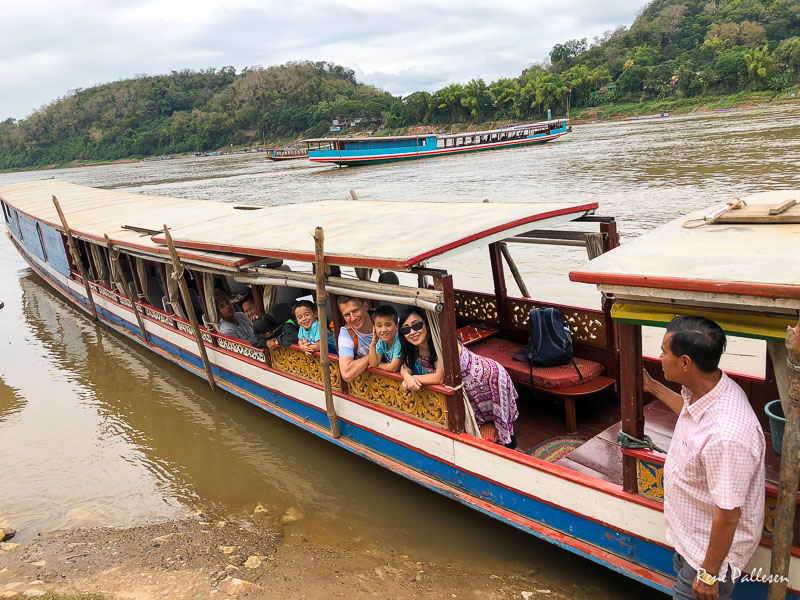


The flow boats are long narrow boats that are ideal for navigating the Mekong River. This part of the river is full of underwater rocks but the boats seem to navigate these treacherous waters with ease.

Having the boat for ourselves gave us more flexibility with regards to how long we wanted to spend at the cane and also meant that we have more room to move around.
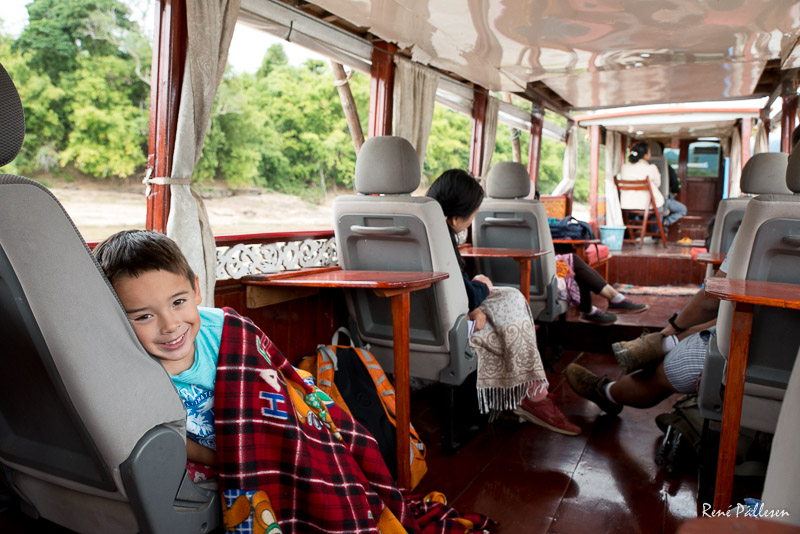


The front of the boar is where the captain sits and steers the boat. After this there is a section for the passengers followed by a small pump toilet and then the living quarters for the captain and his family. Out the back there is a small kitchen for them to do the cooking.

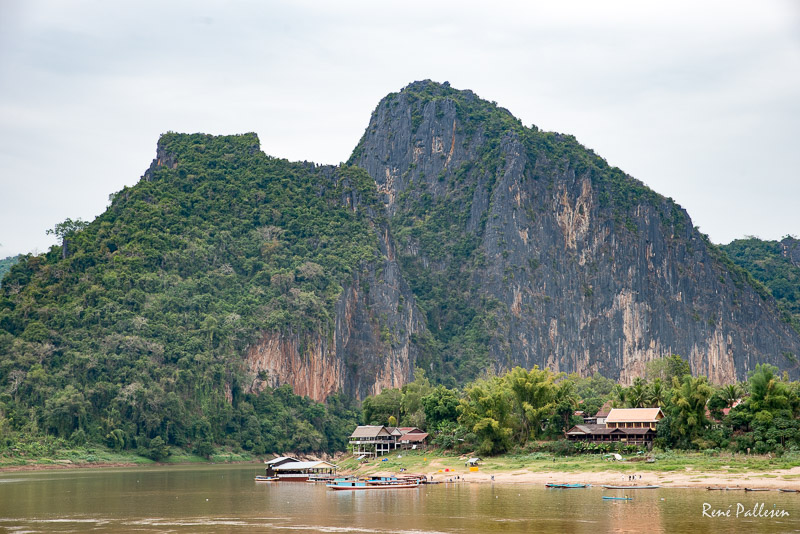
The cave is upstream into an area full of limestone mountains.


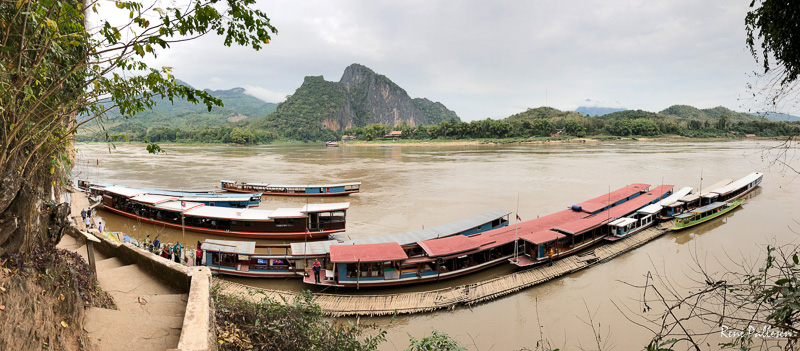
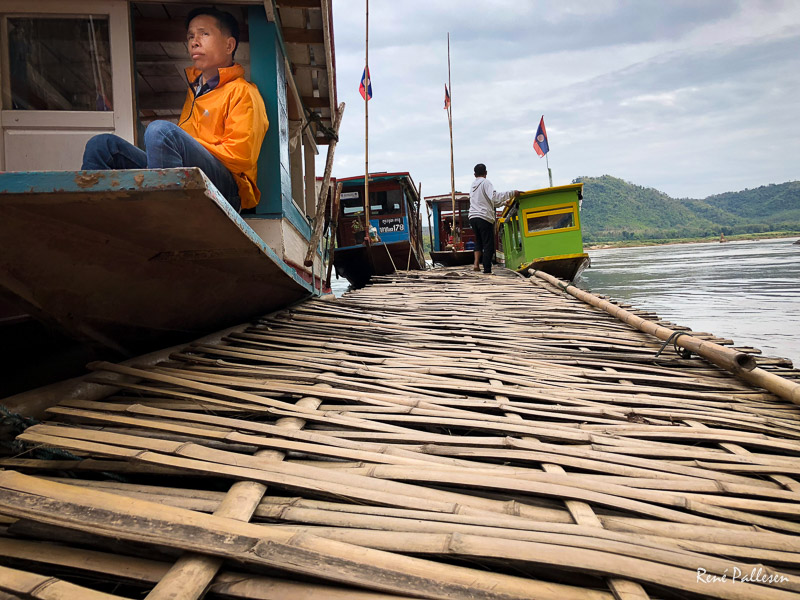
The many boats moor at a long and wobbly floating bamboo bridge that takes you to the cave itself.


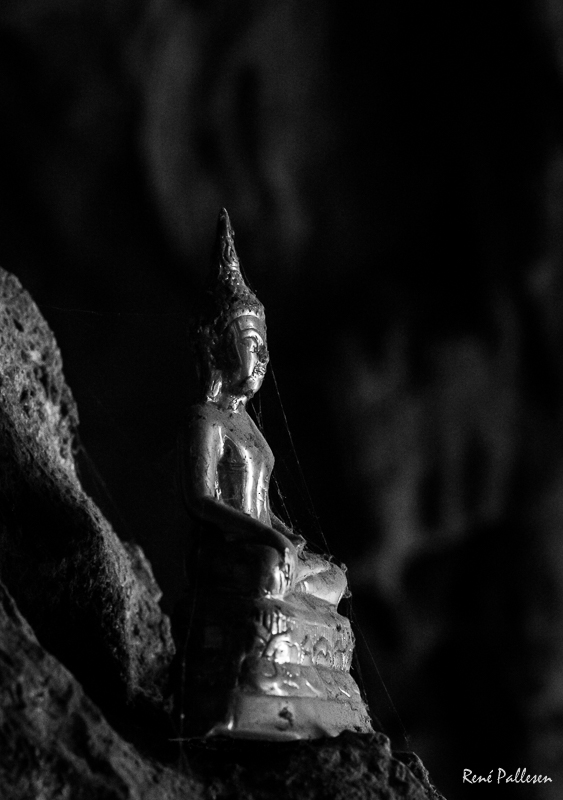
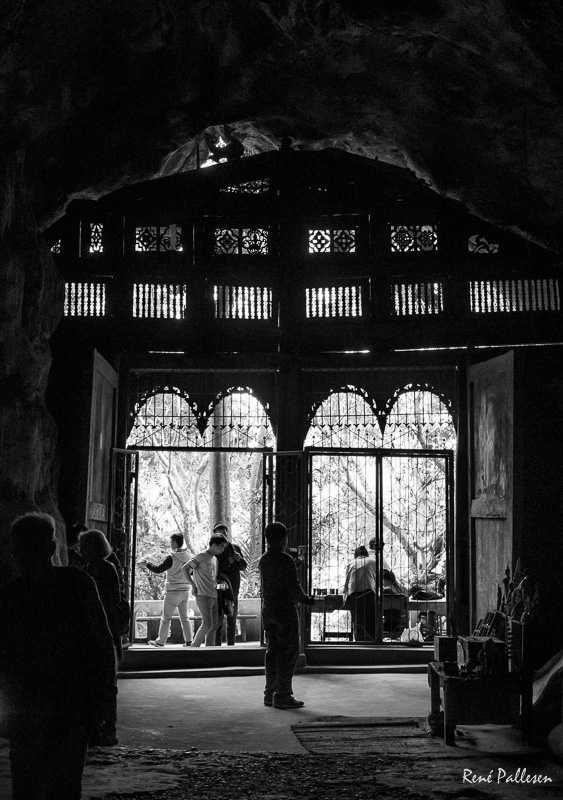
The cave itself is not big but it is full of small Buddhas that have been put there over hundreds of years. You can tell that this used to be an important place of worship.
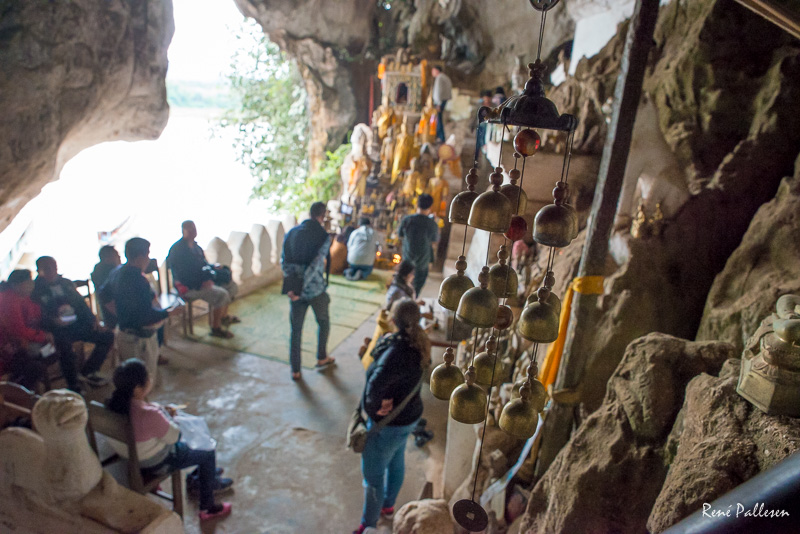


Now however the place is so crowded with tourists (guilty here too) coming in on boats that it is hard to move around. I could not stop myself from taking this photo of Buddha holding up his hands to stop more boats arriving.
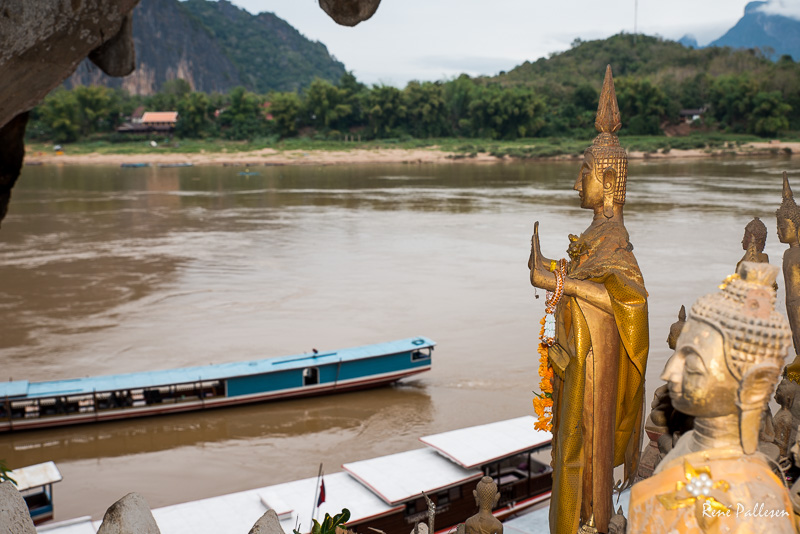


At the top of the hill the hill there is what I think is a more 'pleasant' cave. It is equally interesting and much less crowded because most tourists don's make it up the many steps to the top.
4. February 2018 16:03
by Rene Pallesen
0 Comments

Lao Lau (rice whiskey) - Laos

4. February 2018 16:03 by Rene Pallesen | 0 Comments

The traditional Lao Lau is still being made. Just north of Luang Prabang on the river there is a lit
The traditional Lao Lau is still being made. Just north of Luang Prabang on the river there is a little village on the river called Whiskey village whos main income is from the production of Lao Lau.


When I was there two decades ago this is what the locals were drinking (now they drink beer instead). I still remember the foul taste from the home brew that was distilled in large oil drums after having been fermented in large clay pots. Whenever I see it I always wonder if distilling strong alcohol right next to an open flame is the wisest of ideas!?!?


The process itself hasn't changed, but these days most of the whiskey is sold to tourists and I tastes a lot more pleasant that it did back then.


3. February 2018 15:03
by Rene Pallesen
0 Comments

Food - Laos

3. February 2018 15:03 by Rene Pallesen | 0 Comments

The food in Laos is good. It is traditional cooking mostly still cooked over an open fire.You see th
The food in Laos is good. It is traditional cooking mostly still cooked over an open fire.


You see them start cooking the food well before sunrise in big pots.

The food itself is mostly a fusion of Thai and Vietnamese. It has all the noodle soups from Vietnam, but with the more street food and spice of Thailand. The picture below is a typical noodle soup with a traditional cube of coagulated blood.


We were eating a lot from small street type restaurants following the rule that is had to be popular with the locals. The logic behind this is that the locals would know what is good and would also be choosy regarding the quality of the food, so chances are that it would be fresh and not cause food poisoning (none of us or the kids had any issues on the trip).


There are some dubious food there, such as some of the meat BBQ where they sometimes have the meet cooked earlier on the side of the BBQ and then just re-heat it when you order it.


Also be careful with some of the food stalls where the food may have been sitting there for most of the day and often from the day before.


From a 'snack' perspective there are some personal favourites that I absolutely love such as the BBQ fried squid - the packet stuff is just not the same.


Also the Bamboo and coconut fried rice is delicious - they sell them at bus and train stations and especially the purple rice one is yummi!


The freshly made puffed breads over an open fire - they will use two rakes to flip them until they are done.

2. February 2018 00:02
by Rene Pallesen
0 Comments

Temples - Laos

2. February 2018 00:02 by Rene Pallesen | 0 Comments

The temples in Luang Prabang are some of the most beautiful anywhere. Yes, Thailand has some amazing
The temples in Luang Prabang are some of the most beautiful anywhere. Yes, Thailand has some amazing temples, but these are different. They are smaller, and more intricately decorated.


1. February 2018 23:02
by Rene Pallesen
0 Comments

Luang Prabang - Laos

1. February 2018 23:02 by Rene Pallesen | 0 Comments

Luang Prabang is without a doubt the cultural highlight of Laos. The old part of the city is beautif
Luang Prabang is without a doubt the cultural highlight of Laos. The old part of the city is beautiful and there are good reasons why is has been heritage protected.

I believe it has the most beautiful temples of South East Asia - they are not the largest or even the oldest, but the amount of details that has been put into them is absolutely stunning.
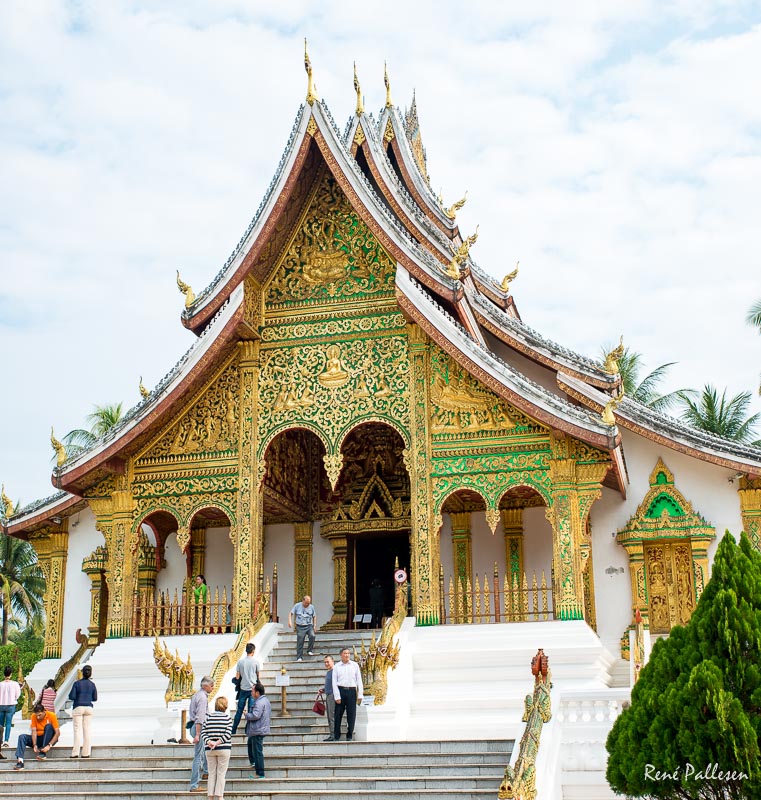


In addition to this there are a lot of other very interesting things to see in and do in the city, which I will cover in later posts.

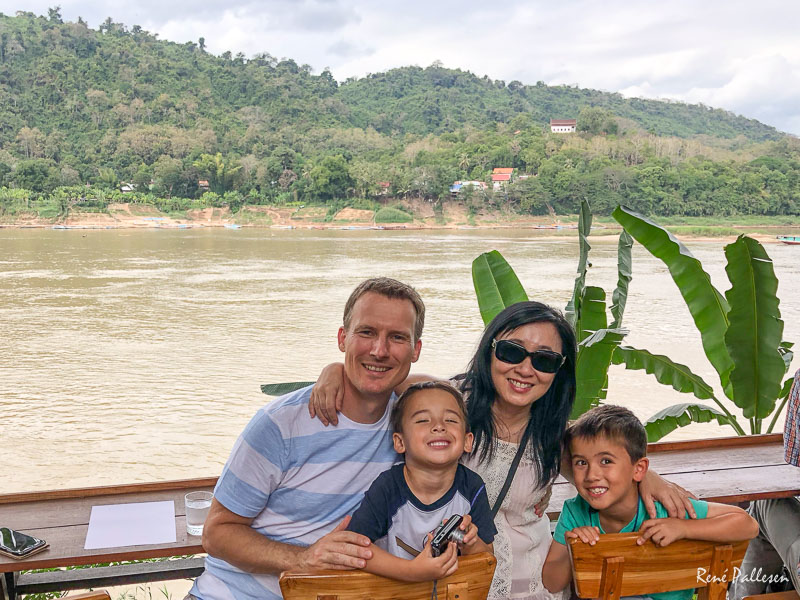
The city itself is situated between two rivers where one of them is the Mekong which is still fairly busy with slow boats and ferries (The chinese are building a large bridge across the river north of the city)
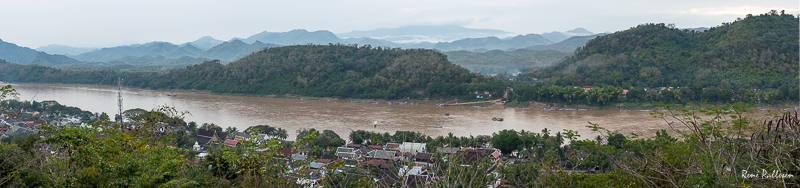


The section between the two rivers form the city itself which consist of four parallel streets each about a kilometer long.
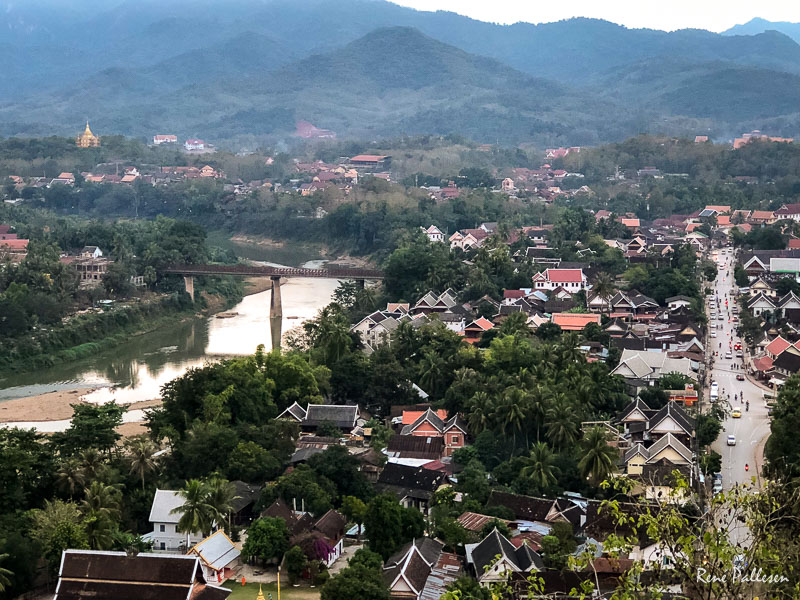


Everything within the city itself can be covered on foot and in the evening the main streets are blocked for card and reserved for pedestrians.

The place is dominated by a big hill with a small temple and stuba on top. It is very popular with tourists to climb the hill around sunset. And there is a great view of the mountains from the top.
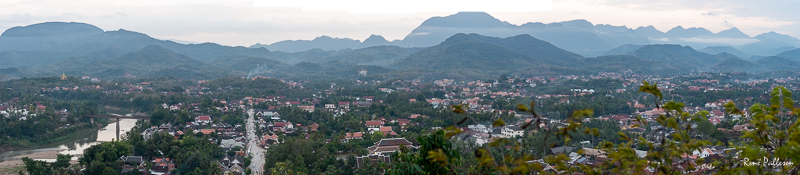
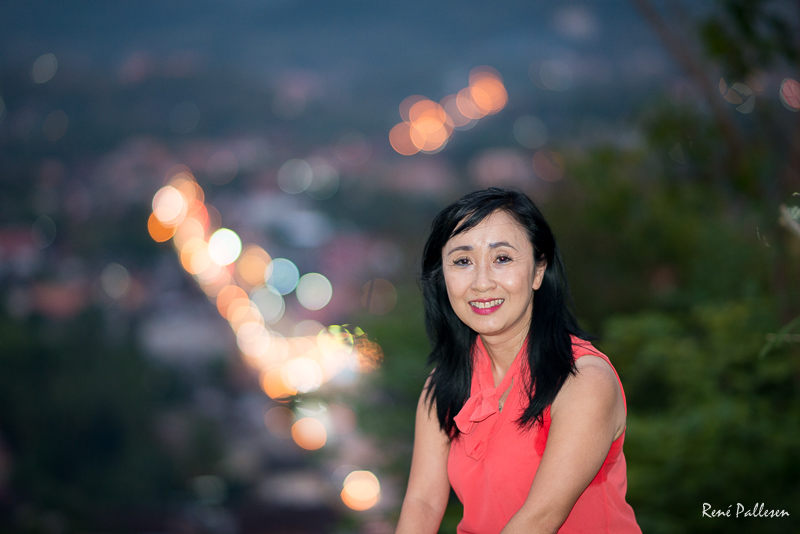
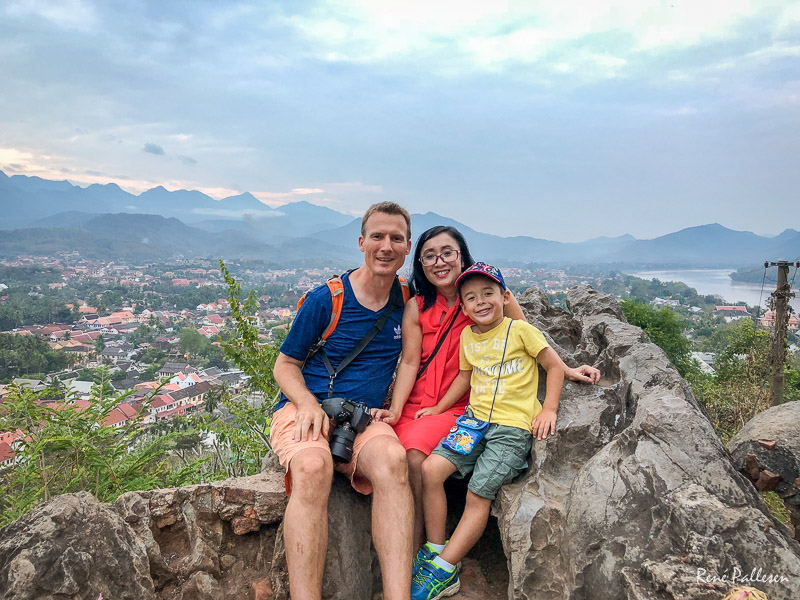


There are some things that have changed in the city since I was there the last time. The most noticeable is the amount of tourists and fine hotels - and here it is really the more wealthy middle aged Europeans you see. The main street of the old city is full of modern western European influenced restaurants, souvenir and antique stores.
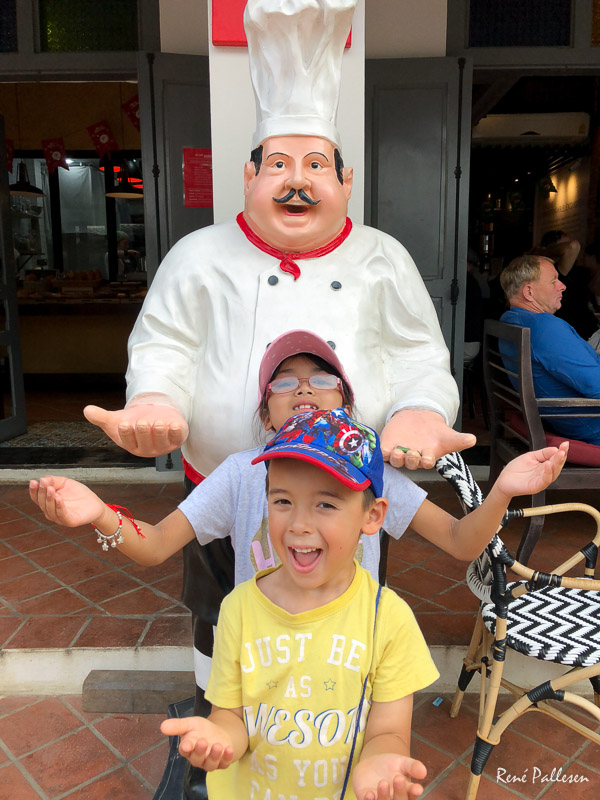


Fortunately you don't have to travel further that to the parallel streets to fine more low key Laos places to eat.

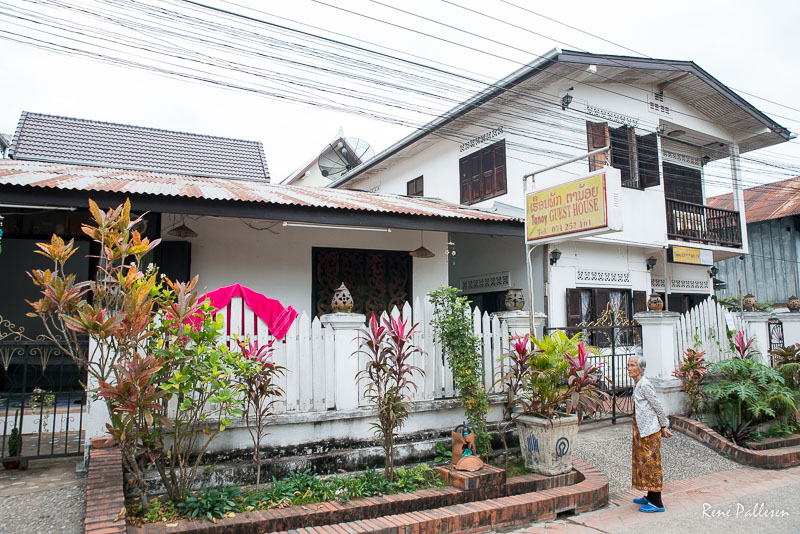
Also, last time I visited, I stayed in a small guest house near the city centre called Tanoy Guest House. When I stayed here I became good friends with the family and the place was named after the oldest daughter who's name was Tanoy.

The place is still there and apart from a larger fence it looks pretty much unchanged.

29. January 2018 21:01
by Rene Pallesen
0 Comments

The War - Laos

29. January 2018 21:01 by Rene Pallesen | 0 Comments

The 'secret' war in the 60's and 70's had a major impact on the country. A massive amount of bombs w
The 'secret' war in the 60's and 70's had a major impact on the country. A massive amount of bombs were dropped by mostly the Americans in mostly the Northern and Eastern part of the country. This was partly an internal civil war but also to stop the North Vietnamese using the country as a supply route.

To get an insight into this was I can highly recommend the books by Christoper Robbins called 'The Ravens' and 'Air America'.

The impact today is that un-exploded ordnance (mines, cluster bombs etc.) is covering large parts of the country and that every year lots of people including children gets injured or killed.

It is also very noticable, especially in the Hmong villages that there is no presence of old men. This is because most of these were killed either during the war where especially they took heavy casualties despite the American support or through 'education' camps after the war.

Last time I went to Laos I went to Plains of Jars which was one of the most heavily bombed areas and the debris was everywhere. We weren't going there on this trip, but to give the family and friends an insight into the history and the dangers to present people we visited the COPE organisation in Vientiane.

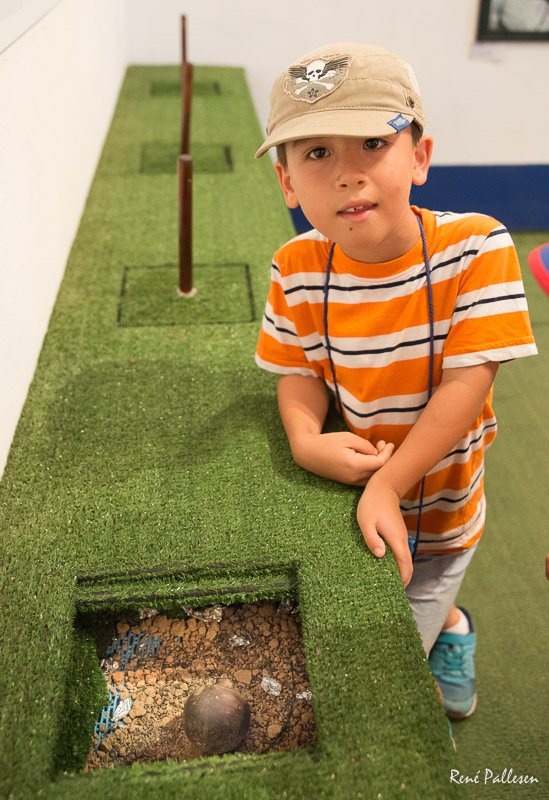
Here is Aiden in front of an unexploded (disarmed) clusterbomb. Looks just like a ball and tempting for kids to play with.


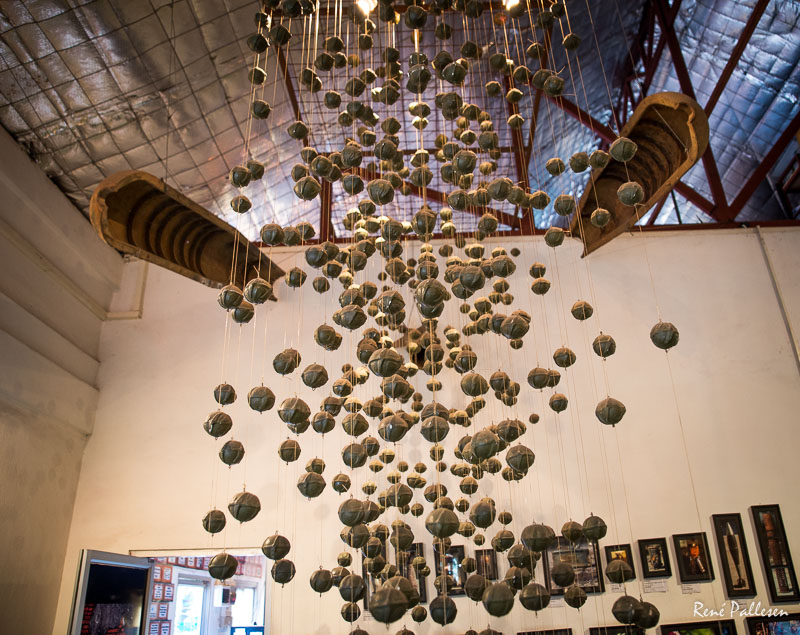
These were dropped from canisters on aircraft with several hundred in each load. It is estimated that 1/3 of these didn't explode on impact.


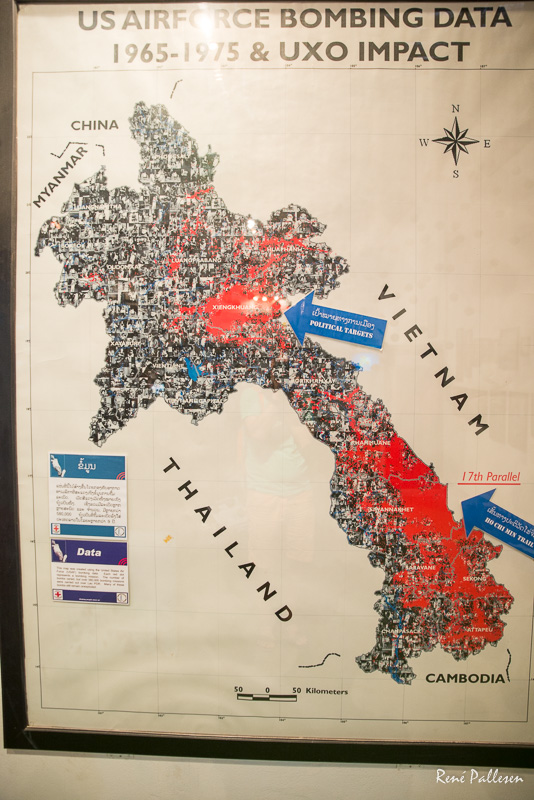
This map shows the areas most effected.


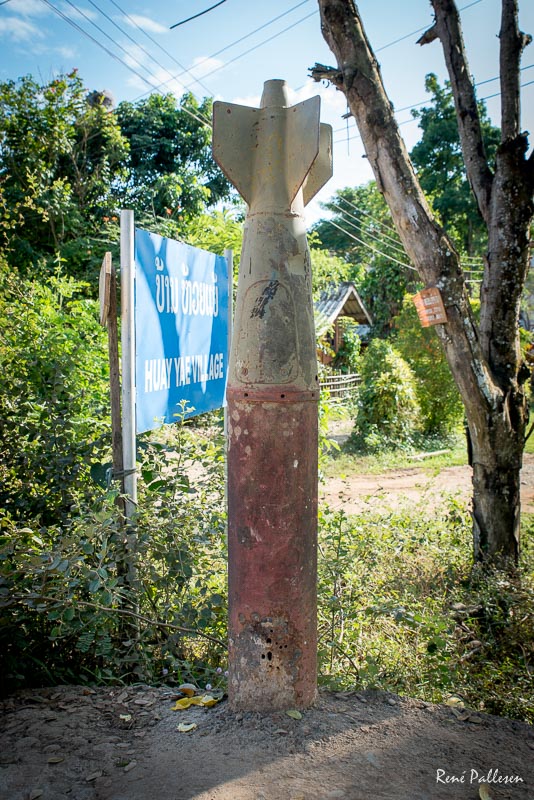
If you look for the bombs they you see them everywhere - mostly disarmed and used as fence posts.


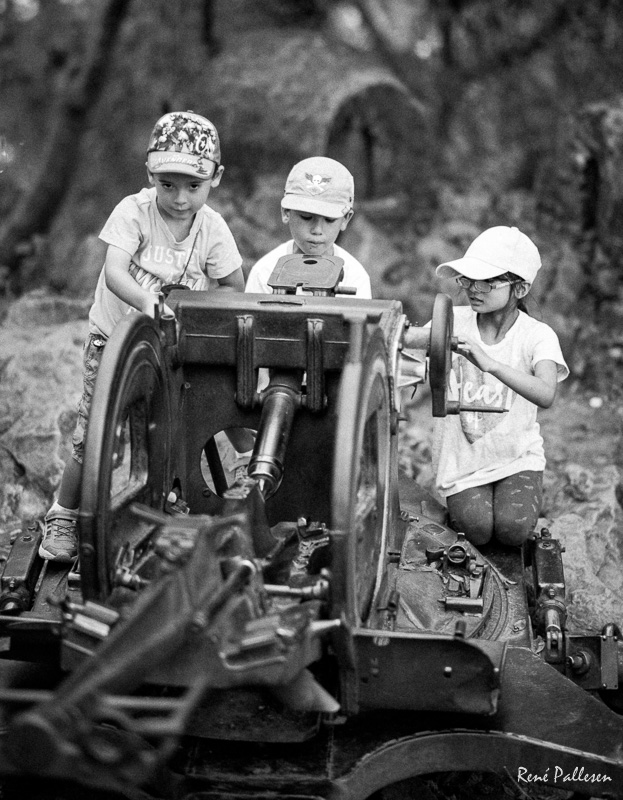
There is also remains of anti aircraft guns such as this one in Luang Prabang. The barrel had been removed but everything else still worked on it and they could turn it by rotating the handles, much to the amusement of the kids. During the war kids only a little older than our kids would have been fighting at the front lines.
16. January 2018 21:03
by Rene Pallesen
0 Comments

People - Laos

16. January 2018 21:03 by Rene Pallesen | 0 Comments

One thing that I love taking photos of on my travels are People.A lot of the photos of the people of
One thing that I love taking photos of on my travels are People.
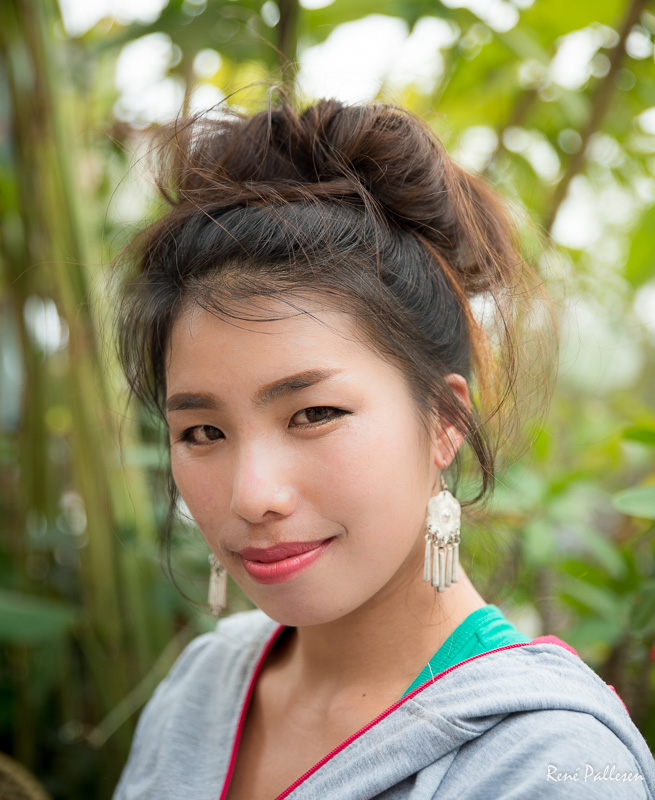


A lot of the photos of the people of my travels are in the other posts, but here is a selection that didn't really fit into the other stories.

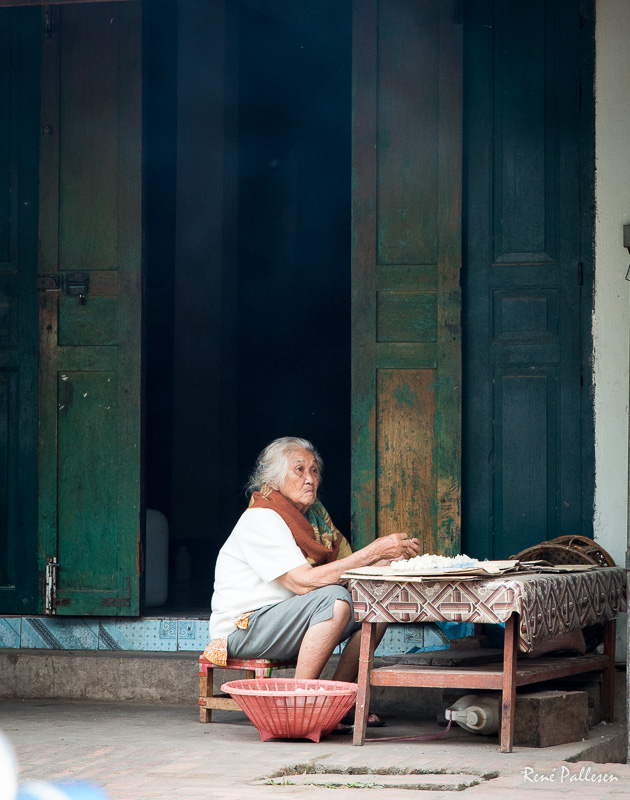
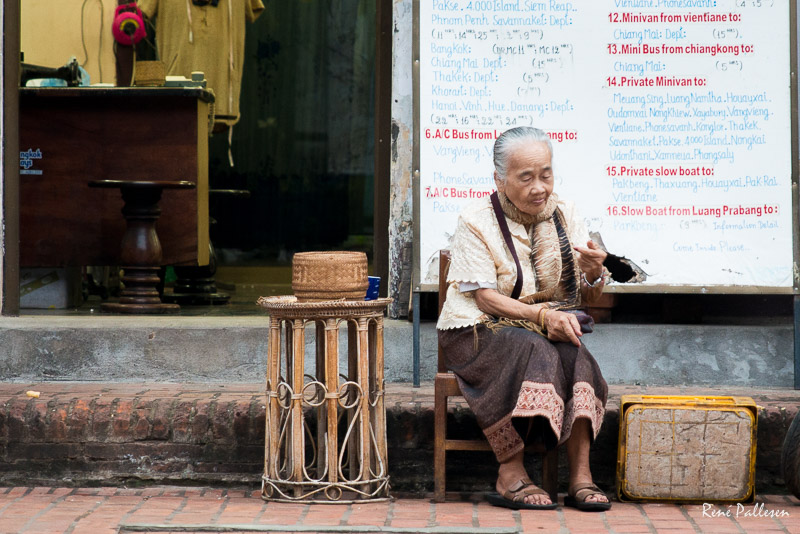
This is an old woman sitting doing preparing food or doing her handicraft outside her house while observing the street life.


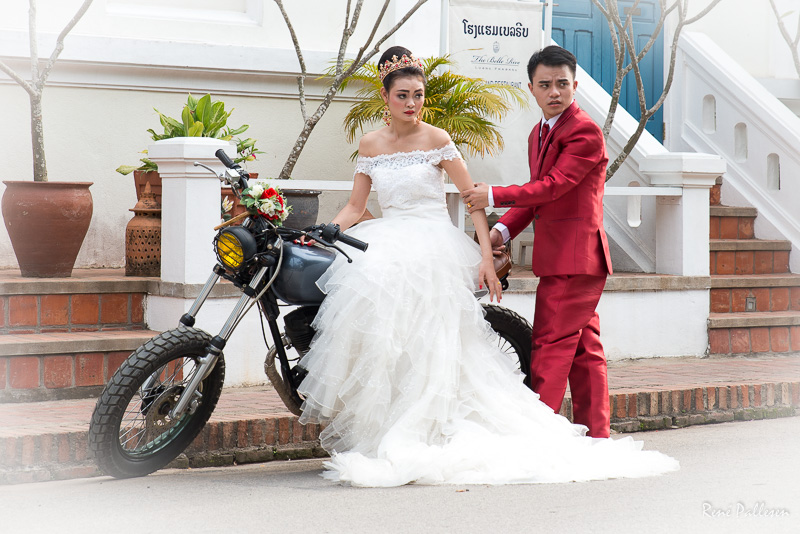
Someone was shooting a wedding, I used the opportunity to snap a photo of my own.


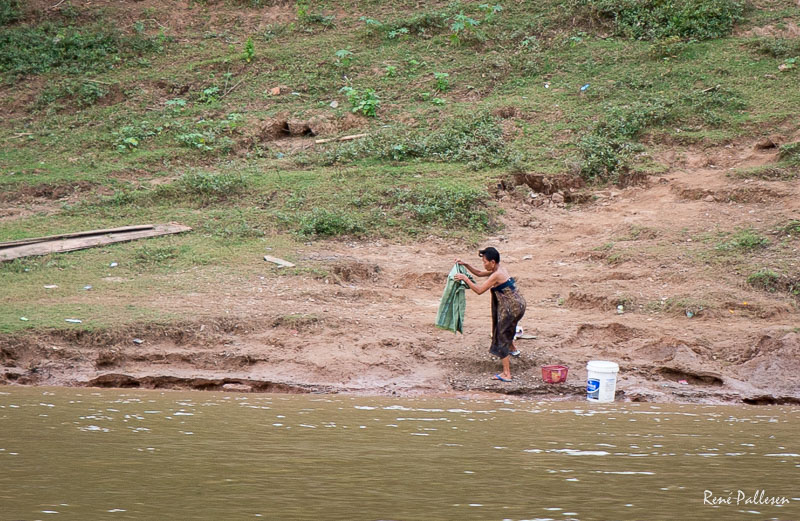
A woman bathing in the Mekong


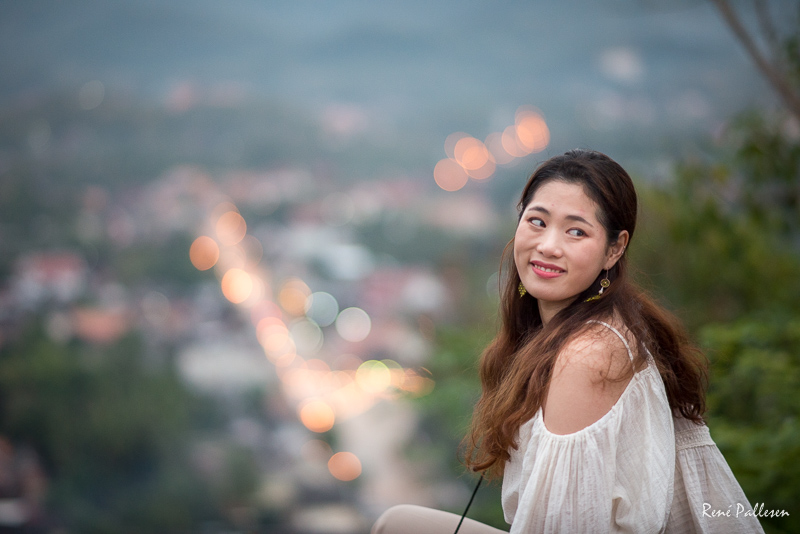
A girl posing for her boyfriend on top of the hill at Luang Prabang


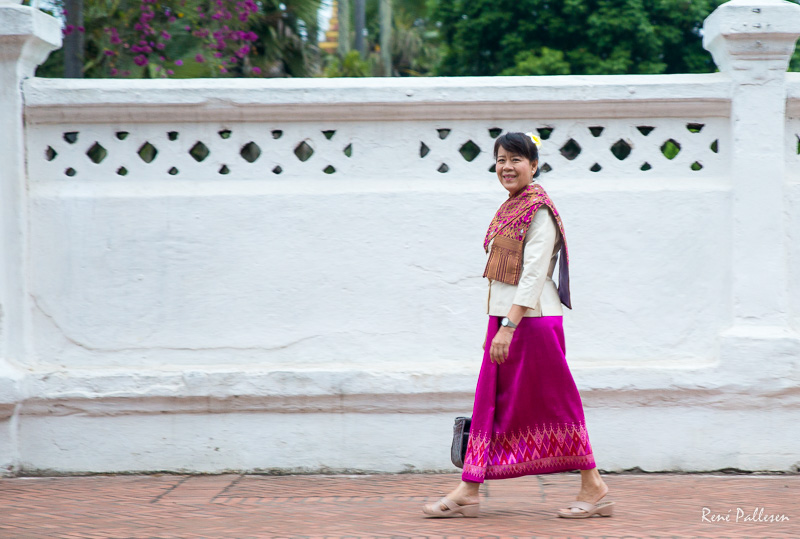
A woman walking down the street


Another woman doing handicraft outside her shop
12. January 2018 00:02
by Rene Pallesen
0 Comments

Fishing - Laos

12. January 2018 00:02 by Rene Pallesen | 0 Comments

The fishing along the rivers in Laos are still very traditional.It is the circular throw out nets, f
The fishing along the rivers in Laos are still very traditional.

It is the circular throw out nets, fish traps and people foraging along the river banks to collect river seaweed and snails for eating.


In most places they still use dugout canoes for the fishing.


In the various town you see people sitting repairing their fishing nets.


Kim told us that when she was a little girl she used to help the family repair the fishing nets, but that she's forgotten how to do it.


One of the delicacies in Loang Prabang is the local riverweed. We saw multiple people collecting it and also sitting cleaning it.


11. January 2018 19:01
by Rene Pallesen
0 Comments

Vang Vieng - Kids highlights

11. January 2018 19:01 by Rene Pallesen | 0 Comments

Some of the other highlights for the kids in Vang Vieng was the gym at our hotel. The local guys use
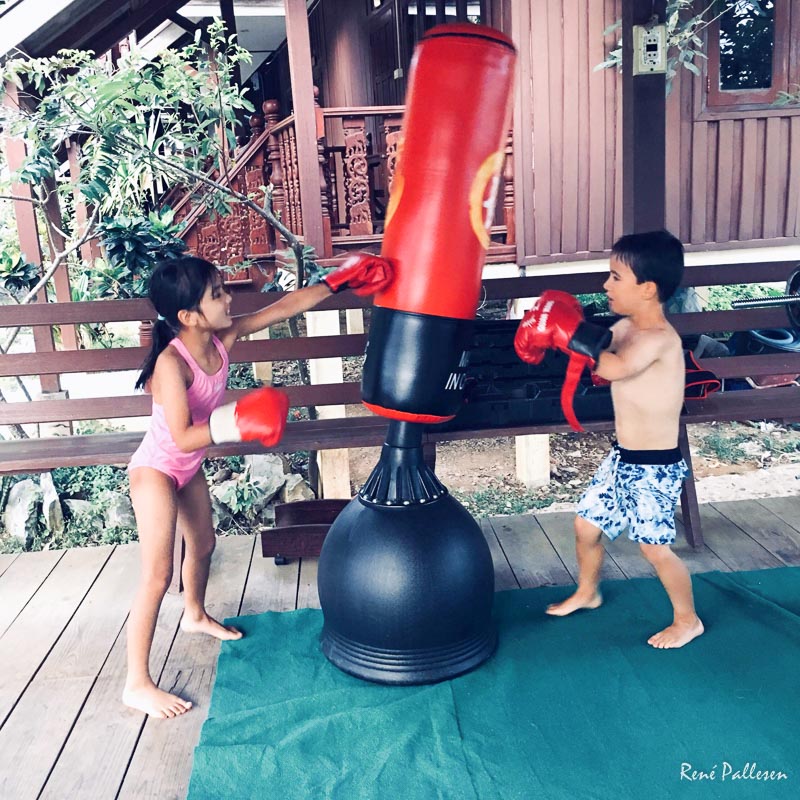
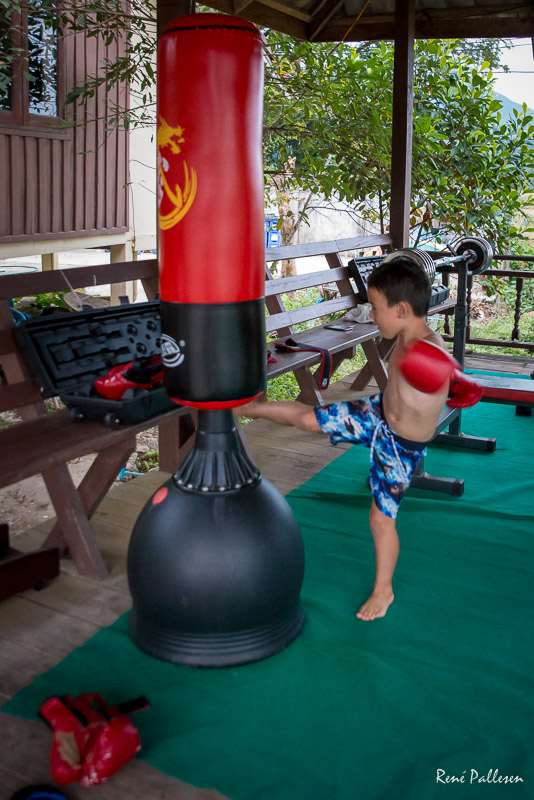
Some of the other highlights for the kids in Vang Vieng was the gym at our hotel. The local guys used it to train for kick boxing and the kids felt inspired.


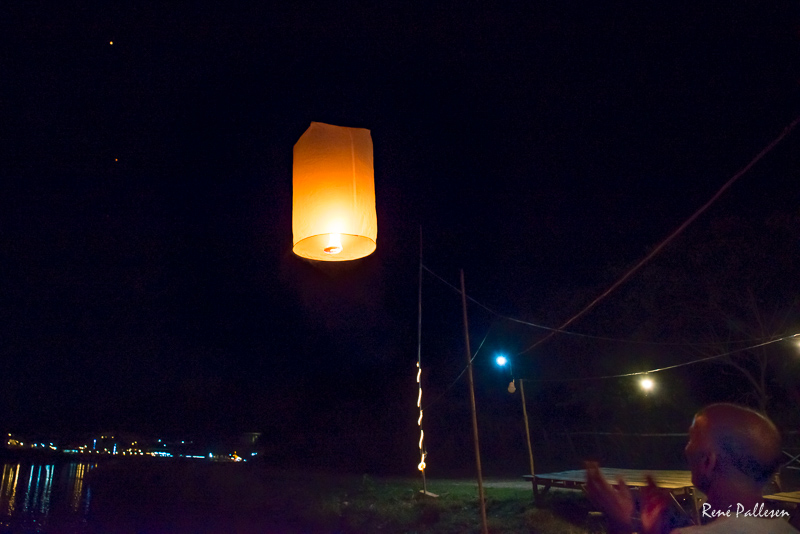
Also, one evening we spotted someone launching wishing lanterns. We asked where they came from and through a lot of pointing we found a local shop keeper selling them.

We bought one and launched it an the kids loved the experience.


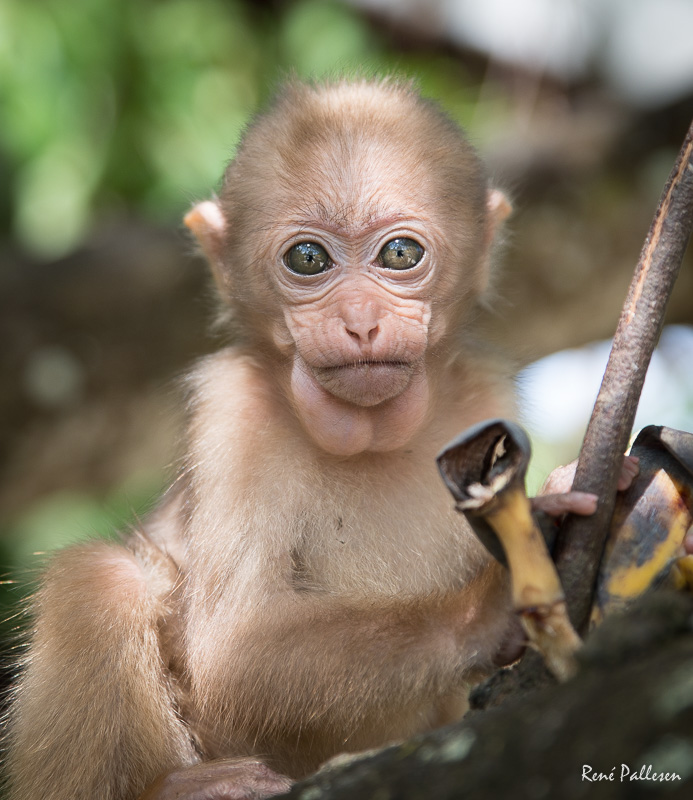
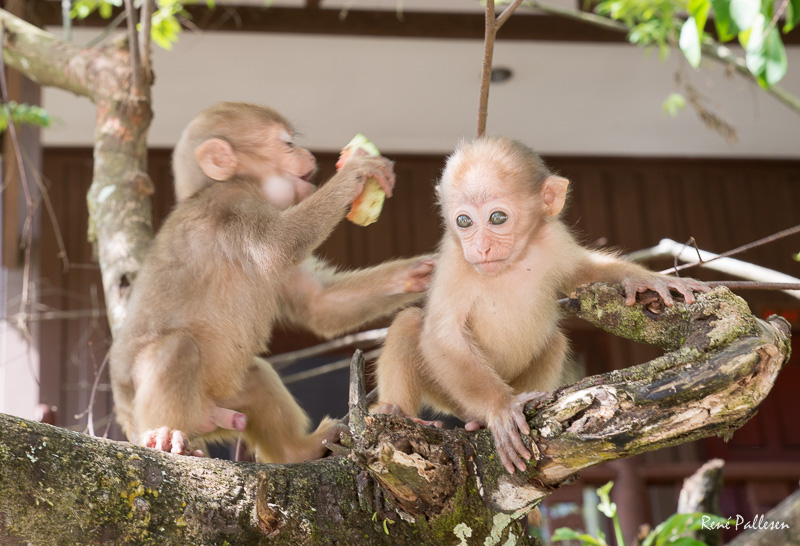
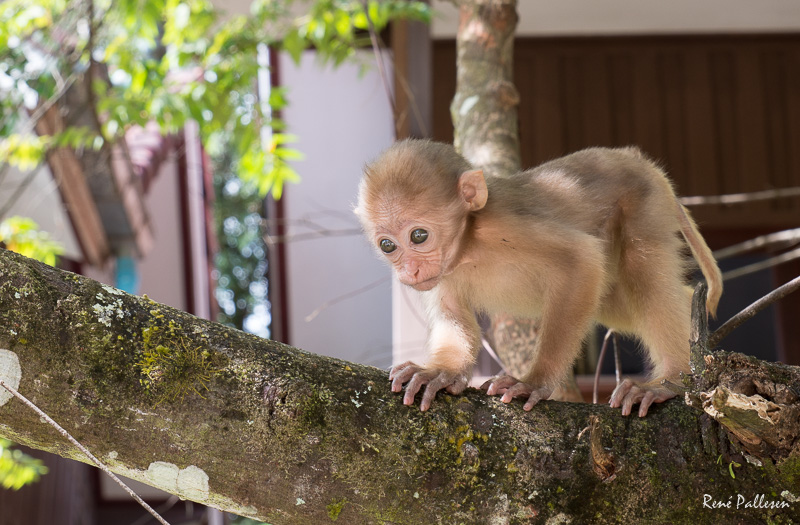
Also, one of the trees at the hotel had two little monkeys staying there most of the day. The kids loved standing there shouting profanities at them.


Perfect Moments Photography | A Rene Pallesen Journal

Home

9. August 2011 04:56
by Rene Pallesen
0 Comments

Rostock and Warnemunde

9. August 2011 04:56 by Rene Pallesen | 0 Comments

rostock and warnemunde


On one of the other days we did a trip to Germany to a town called Rostock (former East Germany). This is a two hour ferry ride from where my dad lives.

Click here for more photos

Rostock is one of the old Hansestads and the inner city has a lot of old houses and beautiful water fountains.

Click here for more photos

Click here for more photos

Click here for more photos


Click here for more photos

It started raining so we decided to drive up to one of the other coastal towns called Warnemunde. This is a little very charming place with old houses, fishing boats and along the coast there are very nice groovy cafes.

Click here for more photos

Click here for more photos


Click here for more photos

In the later afternoon we took the ferry back to Denmark. Aff the Danish coastline they have constructed a massive windmill park with hundreds of windmills generating Electricity.

Click here for more photos

8. August 2011 04:38
by Rene Pallesen
0 Comments

Hans Christian Andersens House

8. August 2011 04:38 by Rene Pallesen | 0 Comments

hans christian andersens house


We went to HC Andersens house in Odense in Denmark. This is the house that he was living in and behind the house they have now build a museum and a park with a castle theatre for the kids.

We started out in the park as there was a play about to start in the theatre.

Click here for more photos

The play was a 15 minute recap of all the most famous stories and it was very well done and very funny (especially the Emperors new Clothing).

Click here for more photos

Both Aiden and Bedstefar really enjoyed the play together.

Click here for more photos

Click here for more photos

Afterwards we went to see the actual house HC andersen was living in.

Click here for more photos

HC Andersen is one of Kims favourite writers.


And we also visited the museum.

Click here for more photos

Click here for more photos

7. August 2011 07:40
by Rene Pallesen
0 Comments

Egeskov Castle

7. August 2011 07:40 by Rene Pallesen | 0 Comments

egeskov castle


After visiting HC Andersens house we went to Egeskov Castle.

This is a castle that has now been converted into a museum and the surrounding area has been converted into very nice gardens, playgrounds, ponds etc.

Click here for more photos

Click here for more photos

The museum hosts old armory, paintings and the owners dad used to go big game hunting in Africa and a lot of the trophies are on display.

Click here for more photos

Click here for more photos


Click here for more photos

Inside the castle they have one of the most amazing doll houses. It is very detailed and some of the pieces have been donated by the royal families of europe.

Click here for more photos

Click here for more photos

In one of the adjacent building have now have a museum for old cars and motorcycles.

Click here for more photos

Click here for more photos

This was one of Kims favourites.

Click here for more photos

They also had a museum for old fire engines.

Click here for more photos

Click here for more photos

While I was busy with the fire engines my Dad and Kim did the tree-top walk nearby.

Click here for more photos

After this we took the ferry back home to complete the tour. By the end of the day we had driven across 9 different islands (Falster -> Masnedø -> Sjælland -> Sprogø -> Fyn -> Tåsinge -> Siø -> Langeland -> Lolland). A long day but well worth it.

7. August 2011 06:07
by Rene Pallesen
0 Comments

Meeting the relatives

7. August 2011 06:07 by Rene Pallesen | 0 Comments

meeting the relatives


This week we travelled to Denmark to meet the relatives. We flew straight from Sydney to Copenhagen with short stopovers in Singapore and London. Aiden behaved like a little angel pretty much all the way although he was pretty tired on the last stretch from London.

The purpose of our trip was initially to introduce Aiden to both his Grandmother and Granddad (Bedstefar), but since my mum passed away last month he could only meet my dad.

Click here for more photos

It took a couple of days for both granddad (Bedstefar) and Aiden to get used to each other, but now they really enjoy each others company and have fun playing with eachother (although it will take some time before we get him to babysit as he refuses to change nappies).

Click here for more photos


We also went to the cemetry to visit my mum who passed away recently and my brother. It is a pity my Mum didn't get to meet Aiden, but at least he has now been to the cemetry.

Click here for more photos

We also went to visit my grand parents (Aidens great grandparents) as well as my great grand parents and great great grandparents (5 generations in one place).

Click here for more photos

Click here for more photos


One afternoon we went to my Aunties house to visit.

Click here for more photos

On a couple of evenings we had an outdoor BBQ. My dad was looking after the meat and we were looking after the side dishes and deserts. On the first evening my dad managed to burn the chicken a faid bit.

Click here for more photos

One afternoon we all went to the local zoo (It must have been 30 years since I last went there).

Click here for more photos

Click here for more photos


Click here for more photos

We tried the swings there, but Aiden wasn't happy with them (Maybe when he is older).

Click here for more photos

In the evenings we went down memory lane where my dad pulled out old 16mm film from when I was a toddler.

Click here for more photos

Click here for more photos

We were in Denmark a week and a half and it was really nice to see Aiden and my Dad getting along. I am hoping that my dad will come to Sydney in the near future and spend more time with Aiden...it will be good for him to know Bedstefar as he is growing up.


10. July 2011 10:30
by Rene Pallesen
0 Comments

Jerusalem Bay 2011

10. July 2011 10:30 by Rene Pallesen | 0 Comments

jerusalem bay 2011


Today was a beautiful winters day...cool, windy and blue skies and we decided to use this beautiful Sunday to go on a bushwalk with Aiden (his first real bushwalk).

The walk we decided to do was one up at Cowan from the station down to Jerusalem Bay (5km return). I carried Aiden all the way in a small sling/backpac we have for him.

Click here for more photos

He is still not used to the sling and keeps leaning back...but hopefully we can get him a bit more used to it before our holiday to Croatia.

The walk follows a creek with a small stream running through it. Eventually it reaches the bay which is a picturesque little place.

Click here for more photos

It was a great trip and it was great to get out and get some exercise.

Click here for more photos

Afterwards we had lunch at Berowra at a place I had been to before. Unfortunately it had changed owners and didn't have the same quality to it any longer.

4. July 2011 12:18
by Rene Pallesen
0 Comments

Getting Aiden used to the Sand

4. July 2011 12:18 by Rene Pallesen | 0 Comments

getting aiden used to the sand


We had a beautiful winter day yesterday and we decided to head down to the beach to get Aiden used to the feel of sand.


He took it a lot better than expected and although wasn't playing with the sand at least he tolerated his feet and hands touching it.


He was also quite content sucking his fingers being full of sand.

4. July 2011 11:49
by Rene Pallesen
0 Comments

Kims Birthday

4. July 2011 11:49 by Rene Pallesen | 0 Comments

kims birthday


This week it was Kims Birthday (one of the big ones with a zero in it). In the morning she was surprised with a big bunch of flowers delivered and she thought they were from me...she was very surprised when she discovered they were from my dad.


...and I got an earful because she thought that I hadn't gotten her any...well I did and they were delivered by the end of the afternoon and they were different from the ones I ordered (they just delivered a palin bunch of roses which was very dissappointing but the florist gave me a refund when I complained about it).


In the evening we had Kims dad baby sitting while we went to Sepia for the degustation menu.


The food was really yummi and time just flew away.


On the Sunday we celebrated with the family on a japanese restaurant followed by cake and birthday song.


Happy Birthday Kim!!


21. June 2011 09:10
by Rene Pallesen
0 Comments

Mum passed away

21. June 2011 09:10 by Rene Pallesen | 0 Comments

mum passed away


Week before last my mum passed away.

She had her birthday on the Saturday where we called her and sang har Happy Birthday. The next day I received an email from my auntie saying that my mum had another stroke on the day after her birthday and that she probably wouldn't make it through the night.

Obviously a bit of a shock and after calling the hospital they confirmed that she was in a coma and that it wasn't looking good. The stroke was on the opposite side of where she previously had a stroke so even if she woke up she would probably be totally paralysed.

Later that day I managed to get hold of my aunt and spoke to her to try and decide whether I should jump on a plane immediately or wherhet I should wait and see. I decided that because she was asleep there wouldn't be much value in me going there since it could be a long wait. My mums health has been pretty bad for a while so every time I've spoken to her I've know that it could be the last time. The one regret I have is that I only spoke to her briefly on her Birthday because we were going out for dinner.

On the 8th I reveived a call from my Aunt in the middle of the night saying that my mum had quietly slept in and that I better make my way to Denmark because there was a lot of decisions that had to be made.

The last photo of my Mum

When I arrived to Denmark my Dad hadn't arrived yet and his neighbour was out so I was unable to get into his apartment. I decided to go for a walk down to the hospital where my mum was and I was sitting outside for a while. Every time I saw someone in a window I was hoping that I would catch a glimse of my mum.

Next day my dad had arrived and we had a very busy day organising the funeral with the funeral company and starting to clear out her apartment. I had to make a decision as to what I wanted to keep and what should be disposed of. Over the next couple of days I managed to pack two boxes of stuff to keep and the rest was thrown out (apart from one box of porcelain painted by my grandma which I gave to my auntie). It was belongings that represented my Mums entire life and I had to make decisions as what to keep. In the end I only kept a few things that I would like to remember her by where the photos were an important part. I also kept a few of my grandmothers things that she had.

My mum had kept a lot of my things which I had to throw out as well. There were a number of really old bottles of wine from before I moved to Australia where the only one that was perfectly drinkable was a 1987 bottle (The rest had turned to vinegar). My dad and I shared this bottle over an outside BBQ one evening.


It is really sad to see how my Mums last few years has split up the family as well as old friends...when she had her first stroke years ago she was very much let down by both family members and friends that she thought she could depend on. A couple of these turned up to the funeral service...I am sure my mum would rather have had them not being there.


On the thursday we had my mums funeral at the church next to where she was born and I found it really hard to say my last goodbuy to her. It is one thing knowing she has passed away, but it really sunk in when she was right there in her coffin.


It was difficult for me to take these photos, but I needed something to remember the funeral by.


After the funeral we had lunch at Marielyst. It was good to catch up with some of my family members especially my mums sisters and my cousins and I am grateful for all the flowers that were sent.


In the middle of the lunch my dads sister came and threw a spanner in the wheels. She has days before promised that she would take care of the legal side and in the middle of the lunch she declared that she didn't want to do it afterall. I find her timing absolutely appaling and dissapointing. She could have let me know of that decisions earlier...instead I had to rush around and organise a lawyer in the afternoon where I thoughs I could finally site back and reflect on the loss of my mum and pack my things to finally go home next morning.

Anyway it got all sorted and next day I returned back to Australia.

I am really sorry that my mum never got to meet Aiden and I am sorry that Aiden never got to meet his grandmother. She passed away day after Aidens 1yo birthday and we were planning togo to Denmark next month to finally introduce them to eachother.


I hope that if there is something after that she has finally found some peace and that she is with my brother and that both of them are young, happy and healthy. The years since my brother passed away were really tough on my mum...she has had a tough autumn and her wish was always to be buried next to him in Vaeggerloese.

We will all miss her very much...


7. June 2011 03:32
by Rene Pallesen
0 Comments

Aiden 1 year old

7. June 2011 03:32 by Rene Pallesen | 0 Comments

aiden 1 year old


Today it was Aidens 1st Birthday and we celebrated it quietly with a birthday song and a little cupcake with a candle in it.


He is now a lot more curious about his environment and crawls around the livingroom investigating every corner. He is still commando crawling, but when he is determined to get to something then he is pretty quick.


We also measured him up against a wall and he is now 74cm tall and weighs just over 10kg. He is starting to become a real handful. He is used to me taking him with me in the shower and really doesn't like being bathed in a bathtub any more and it now takes the two of us to dress him (one of us to hold him while the other person dresses him). He is getting so strong that it is hard to one person to hold him is he starts wiggling like a worm.

On Sunday is his big birthday party and I really hope that I will be able to be there and celebrate it with him. Aiden's Grandmother (my Mum) had another stroke on Sunday (the day after her 69th Birthday) and things don't look very good at the moment and I may suddenly have to rush back to Denmark. I really hope she will hold out as I don't want to miss my little boys first Birthday party.

I am really sad that my Mum and Aiden hasn't had a chance to meet. We are supposed to go back there in August to visit her...but now we will have to re-evaluate our plans.
Perfect Moments Photography | A Rene Pallesen Journal

Home

13. July 2008 09:51
by Rene Pallesen
0 Comments

Climbing Mt Ku-Ring Gai

13. July 2008 09:51 by Rene Pallesen | 0 Comments

climbing mt ku ring gai


A new climbing area in Sydney suddenly popped up on our radar. A new area up in the Mt Ku-Ring Gai national park near Berowra. And and May went there while I was in Hunter Valley and they said it was really hard to get to.


I wanted to experience it myself and convinced Andy that we should go there again. Yes, it is a long walk in (40 minutes) and yes it is hard to find the way but it helped that he'd been there before and it also helps that the track has seen a bit of traffic and marked with cairns.

The first few climbs the rock was a bit cold so the fingers went a bit numb which adds 2-4 grades to a climb. Later when the rock heated up a bit it was really good climbing. The area is new so rock still breaks here and there so it is important to be careful and safe but it is not as bad as Otherland and Stables where the rock crumbles.

During one of the last few climbs we heard some noises in the bushes but couldn't see what it was. Once we finished the climb Andy had a closer look and spotted an Echidna (A large porcupine). I grabbed my camera and went over there and it turned out that there was three Echidnas there trying to hide under a branch.


There are some other cliffs in the area that are being developed so I am sure that we will be spending a fair amount of time there in the future.


13. July 2008 09:40
by Rene Pallesen
0 Comments

Kims Birthday & Hunter Valley

13. July 2008 09:40 by Rene Pallesen | 0 Comments

kims birthday hunter valley


Late June is Kims birthday. We went out for her birthday with a lot of her friends to a restaurant called the Mantra. It was a fun evening with entertainment in the restaurant in the form of belly dancing. Kim also had a go at the sword dance. I thought the belly dancer was pretty good, but Kim having done belly dancing herself said that she'd seen better.

Click here to see more photos

My present to Kim was a trip to the Hunter Valley. I had hired a nice romantic place up there with a Spa, served breakfast on the balcony with a view from the mountains of the whole Hunter Valley. My aim for the weekend was to really spoil her and she loved it. Saturday morning we met up with a couple of Kims friends Linda & Warren do go through the wine districts. As usual we found some really nice surprises and also got confirmed that some of our choices in wine from earlier trips are excellent choices (I can recommend the Silvereye from Misteltoe and the Shiraz from Petersons).

Click here for more photos

In the evening I took Kim to this really nice restaurant called Mojo's. It is not cheap ($60 for two courses) but the scallops Kim had for entrees were without a doubt the best I've ever had before. They were fresh and just marinated and cooked slightly and still raw inside and really tasty. I had Quail for my entree and for the mains I had a beef ribeye fillet and Kim had the Lamb chops. After two courses we were absolutely stuffed. I saw some of the food other people were eating and it all looked very delicious. After dinner we went back for a nice warm spa bath as it was freezing outside all weekend.

Click here to see more photos from hunter valley

Sunday morning we went to another couple of Vineyards and then drove back to Sydney...a very relaxing and enjoyable weekend.

10. July 2008 05:26
by Rene Pallesen
0 Comments

New Job

10. July 2008 05:26 by Rene Pallesen | 0 Comments

new job


After 4 years I decided it was time to change to a new job in a different company. There was several reasons why it was time for a change and it was hard to let go as I have loved working with the company and there are a lot of aspects of the job that I will really miss.

The new job I have accepted is with a large consulting firm here in Sydney. They are about 800 people in the branch itself and they are part of one of the large telecommunications and mobile phone networks here in Australia and Asia which has got tens of thousands of employees. So hopefully in the long term some better career opportunities as well as more money in the short term.


I have now been in the job for about three weeks and is still trying to decide whether I like it or not there. I am more used to a consultative selling process where you talk to clients and really try and understand their business and then become their trusted advisor in making decisions and guiding them how to improve their business.

I was expecting this new consulting company to follow similar approaches as this in my opinion is the best way to secure business. It seems however that this company is following a more opportunistic approach where they respond to tenders and requests from customers. This means that it is in a very competitive area where other business also are responding to the same type of requests from the same customer. It also means that a large part of my function so has has been in preparation for customer demonstrations and writing proposals. I would rather engage with the clients more and understand their business before we jump to demos and proposals.

Another thing is that there was no induction process a such. They have an overwhelming amount of processes in place and there is no one who can really explain what applied and when it applies.


Anyway so far I am not very impressed...but it is really still too early days to tell.

7. May 2008 04:28
by Rene Pallesen
0 Comments

Engaged - Getting Married

7. May 2008 04:28 by Rene Pallesen | 0 Comments

engagement


As you can read further down this blog I popped the big question to Kim when we were in Rio de Janeiro at the end of our holiday. Luckily she said yes because otherwise it would have been a couple of really miserable last couple of days there.

Click here to see more photos

It took us almost a week to find the right moment to break the news to Kims family but as soon as we opened our mouthes and said "We've got some news for..." everyone shouted "YOU ARE GETTING MARRIED!!!". Yeah well, they must have seen it coming miles away. Even my friends Andy, Glen and Luke weren't surprised. Anyway, everyone is very happy (including me) and we are really looking forward to us moving into our own place together.

Click here for more photos


So now the wedding planning has started. We have set a date (16th November this year) and we have booked the reception venue. Everything else is still up in the air but at least I've got less things to stress about than Kim who is running around looking for dresses thinking up colour schemes, table decorations etc. We still have to find a nice venue for the ceremony itself...there are plenty of really nice places in Sydney to have it but the problem is that we also have to take wind and rain into account and most public places such as parks and beaches you have to book and pay for in advance.
It should be a nice wedding although we want to keep the major expenses down as we need the money to buy something to live in.

According to Vietnamese traditions there is given money in red envelopes instead of wedding presents (so do not start looking for presents) so hopefully this will eventually cover some of the cost.

Click here to see more photos

All my friends and family in Denmark is invited to the wedding (This is your official invitation). If you happen to be in Sydney on this day then let me know well in advance.

I am hoping that my Mum and Dad will make it to the wedding. Otherwise it looks like it may be a wedding without any of my family there which would be a major disappointment :-(

Click here for more Photos

Anyway, it looks like 2008 is turning out to be the year of change. Kim has got a new job, we are getting married and we are looking to buy a place to live in. We have 4 big changes that we want to make this year...3 more changes to go and only 7 months to make them in.

Click here to see more photos

Some of Kims friends are starting a Photography business so they agreed to take some engagement photos of us in Centennial Park one morning and then based on that we could decide whether we want to use them for all or some of the wedding photos.

The photos you see here were taken by them and I have provided a link to their websites below where you can see more photos:

Sonova Photography
Sonova Flikr Photo Album Engagement Photos

My slide show

6. May 2008 01:34
by Rene Pallesen
0 Comments

The Stables - Nothing to do with horses

6. May 2008 01:34 by Rene Pallesen | 0 Comments

the stables nothing to do with horses


This Sunday Andy, May and myself went climbing at the Stables up near Pennant Hills in Sydney. The area is close to another nice little area called Otherland, but the stables requires a fair bit a bush bashing to get to.

The climbs are of a higher grade (18-25) but are mostly well bolted, but because of the pretty shitty rock a lot of holds have come of and sometimes this affects the grading of the climb.

May is new to lead climbing but the area had got a really easy grade 14 so we decided that she should have the honour or leading the first climb of the day...she was pretty nervous and back clipped a few draws but otherwise didn't do anything too disastrous.


On the 2rd climb of the day I lead this grade 19 (I think it is 16 or 17) and I did pretty well until I got to the last anchor right at the top. There wasn't a lot of hand holds and I grabbed a small ledge with a rock lip on in. While I was getting my feet into position and getting my balance right to be able to clip the anchor I felt the handhold crumble between my fingers. Everything started happening in slow motion..."oh shit, the hold is breaking away, I'm loosing balance, I'm falling how long am I going to fall". After falling about 5 metres Andy caught me on the belay (Andy, you're my hero) and I was ok...nice to see that the theory also works in practice.
Andy lost a bit of skin on his finger and ankles but was otherwise ok. After resting a few minutes I went back up and completed the climb and Andy and May wisely decided to top rope the climb.

Afterwards we did another couple of really nice climbs all in the grade 19 range and I led all of them and Andy and May top roped.

There is not that many climbs in the area. There are two more climbs that I would go back there for but otherwise I think we've had enough of the Stables...the rock is too crumbly which makes the climbing less enjoyable as you think more about what might break off next instead of focusing on the climb itself.

2. April 2008 02:38
by Rene Pallesen
0 Comments

Barrenjoey - Another couple of ticks

2. April 2008 02:38 by Rene Pallesen | 0 Comments

barrenjoey another couple of ticks


Sunday I went to Barrenjoey climbing with Andy and May. It was one of those rare days where the temperature was perfect and where we had most of the area to ourselves.

Although the climbing is fairly easy at Barrenjoey I enjoy going back here time after time as it is located within the national park at one of the most beautiful spots in Sydney.


I led most of the climbs on the day (trying to veen myself of TR) and Andy and May was happy following. The most memorable is a climb called Mescalito (19) with some interesting section as well as Enterprise (18) which is very enjoyable.


There is generally a lot of ticks (small insects that suck your blood) there and today was no different. I got 4 tick bites.


Also took a couple of videos:

Video of Andy climbing Enterprise
Video of May climbing Enterprise

23. March 2008 12:06
by Rene Pallesen
0 Comments

South America Summary

23. March 2008 12:06 by Rene Pallesen | 0 Comments

south america summary


We are now back in Sydney and I thought I'd write a summary of the various places and experiences.

It has been a big rollercoaster ride through South America...the differences between the countries are huge. During the last six weeks I have taken off in aircrafts 20 times:

Sydney to Los Angeles, Los Angeles to Mexico City, Mexico City to Los Angeles, Los Angeles to Sydney, Sydney to Auckland, Auchland to Santiago, Santiago to Buenos Aires, Buenos Aires to Santiago, Santiago to Lima, Lima to Cusco, Sucre to La Paz, La Paz to Iguazu, Iguazu to Santiago, Santiago to Sao Paulo, Sao Paulo to Rio, Rio to Sau Paulo, Rio to Sao Paulo, Sao Paulo to Santiago, Santiago to Auckland, Auckland to Sydney.

In other words...I have an enormous carbon footprint this year which cannot be apologised enough for.

The people in South America were extremely friendly and helpful (Except the girl at the hostel in Potosi). Most people didn't speak anything other than Spanish...but Spanish is almost my second language now (I know at least 70 words)

Argentina was an interesting place. I loved the culture and the dancing. The food was bland with too much meat and Buenos Aires itself didn't have much else to offer and was a bit run down.

Chile is amazing. It is really organised in Santiago and you could be in Northern Europe in terms of cleanliness. They have a really effective public transport system which is a magnitude better than sydneys (close to being as good as Tokyo). People are very friendly...but unfortynately this is also the only location in all of south america where they managed to scam Chris and I on the price of a taxi fare as we didn't know the local exchange rate...in the rest of South America they did try, but generally we paid same price as the locals (and a few times less). Again I can understand why my cousin chose to live in Santiago rather than somewhere else...it is by far the safest and most developed city in this part of the world. The food here is amazing, and you can get everything...this is the only place in South america that we saw a Thai restaurant.


Macchu Picchu in Peru is incredible...it is a fantastic ride into the site and the area around Cusco has got a lot of potential.


Bolivia is a country with so much potential and with people with so little ability and knowledge to tap into it. People in the North are fantastic, but the further south you get the less culture. It has been a privilege to go there and I think they will get there one day.


Brasil...Beautiful by day and dangerous by night. It was fantastic to go here and I'd like to one day come back to Brasil to see other parts of the country. The economy has really taken off here...but in the process left a lot of people behind and that can be seen by all the crime and social problems.


I have now set foot in 52 countries on 6 continents. As I have travelled I've noticed that the world is becoming a smaller place where no major differences in culture and language.


Countries I've set my foot in

in 10-20 years from now everyone will wear the same clothes, listens to the same music and eat the same food (Pizza). The fun and the purpose of travelling will disappear. I can see from the new generation of travelers that they are more interested in thrill seeking and dead buildings rather than people, cultures and observing and learning from differences. Pity as there is so much to learn and it will build appreciation of how lucky we are to have what we have.

Where to next? I don't know...there is one continent down south that I still haven't been to and former Russian republics have got potential....otherwise closer areas like Tonga, Fiji, Indonesia etc.

22. March 2008 06:08
by Rene Pallesen
0 Comments

Rio De Janeiro - Brasil

22. March 2008 06:08 by Rene Pallesen | 0 Comments

rio de janeiro brasil


We are now in Brasil after an overnight stopover in Santiago (The flights here in South America are fairly irregular so it can be difficult to get connecting flights without having stopovers).

We hadn't booked a place to stay but at the airport the tourist information suggested renting an apartment at Ipanema. When we got there it turned out to be really basic, fairly prices and probably a friend of the guy at the tourist information. Instead we went to Copacabana beach to one of the other options we had which also was very basic and a bit far from the beach...but at least non commiting for more than one night. Later in the evening we walked around and eventually found a hotel close to the beach and cheap. It also had big mirrors on the wall and in the ceiling over the bed...and Kim and I was wondering if it was one of those hotels that could be hired by the hour.
It did however turn out to be really nice apart from one evening when some of the other guests tried to get into our room because they got the number on the door wrong.

The day after we went to Ipanema beach to go for a walk. It is very beautiful in Rio and especially this beach is really cool.

Click here for more photos

After lunch we took the local bus to the Sugarloaf mountain. Traffic is really bad in Rio and Taxis are outrageously expensive and just as slow as the busses so it took us about two hours to get there. It turned out to be perfect. We ended up taking the lift of there just before sunset and had a fantastic view from the top.

Click here for more photos

Click here for more photos

Click here for more photos


Click here for more photos

In the evening we had a fantastic meal called a Ridozio (or something like that). It was a 15 course meal (A lot more than we could eat) and only cost around 10 australian.

Next day we decided to go to see the Jesus statue first thing in the morning. Again we took the local bus there to save some money (Rio is really expensive). We then took the train up to the Statue which has got a fantastic view of Rio and all the beaches.

Click here for more photos Click here to see more photos

Click here for more photos

On this trip with Kim I had planning to ask her if she'd marry me. I had three possibly locations in mind..29th Feb in Santiago, Machu Picchu or at the statue in Rio. Kim was very happy when I popped the question and showed her the ring I'd gotten for her (but more about that later), so we are officially no longer boyfriend and girlfriend.

Click here for more photos

Click here for more photos


In the evening we went to a restaurant called Porcao Rios which had been recommended to be by our partner in Mexico to celebrate and later we had a drink down at the beach.

Click here for more photos

We didn't get back to the hotel until very late and I promised that I would never again walk back to the hotel that late at night. There were people from the slums everywhere and I didn't feel safe walking back...so next time we definitely take a taxi. In the daytime you see quite a few police cars and police officers around...but at night they are very hard to spot. It is almost like the movie 'I am Legend'...you are safe during the day, but as soon as night falls and most people have gone off the streets then the kids from the slums rule the city. It is truly a dangerous place at night...not that we were carrying any valuable on us whatsoever except for whatever cash we needed on the night, but the question is....would these kids believe that that was all we were carrying?
All houses an properties in the more wealthy areas are all surrounded by big fences and cages to keep the kids out...but really...not a very comforting way to live if you cant leave your house.

Another thing I noticed is that there also still is a class difference between the white/light and the black. The blacks have all the lowest paid jobs and the ones requiring manual labour. It is also the black people you see living on the street and going through the garbage every night (and there are a lot of these). So even through slavery was abolished several hundred years ago doesn't mean that everyone is equal.

In the morning I had caught some sort of a stomach bug...probably from the one drink I had at the beach and was feeling really weak so we spend the day doing a bit of shopping locally and then went to Ipanema.

Click here for more photos

Click here to see more photos

In the evening I started to feel really weak and felt like vomiting so dinner consisted of some light vegetables followed by coca cola (The ultimate remedy for any stomach problems).


Last day we slept in (ignored the hotel checkout time) and packed out stuff. I still felt a bit weak but otherwise ok (My bug lasted for two days after which I felt really weak but a dose of Imodium eventually took care of it).

Next back to Santiago overnight and then back to Sydney

Click here to see more photos from Brasil

14. March 2008 10:23
by Rene Pallesen
0 Comments

Sucre - Bolivia

14. March 2008 10:23 by Rene Pallesen | 0 Comments

sucre bolivia


Wow, wow, wow...Sucre is everything that La Paz isn´t...it is fantastic.

Click here to see more photos

We took the bus from Potosi yesterday afternoon and drive through a fantastic landscape of deep canyons and high mountains and through passes of 4800 meters altitude. As soon as we arrived into Sucre we fell in love with it. Right from the start at the bus terminal they had fixed prices on taxis. We drove into town with an old gentleman that had a 1970´s Datsun.
He held the door for us at the hoteland made sure we had accomodation.

Oh..yeah...did I mention accomodation. Kim had booked the Hotel Real Audencia the night before and received confiemation. When we got to the Hotel they didn´t have our booking but fortunately the hotel is empty (I think we are the only ones here). They told us that it was $60 per night...Kim said that the booking we had was $45 and they agreed to this price. It later turned out that she by mistake had booked the Real Audencia in Quito Equador 2000km from here...LOL.
Anyway the hotel is fantastic and Kim loves the luxery...not even Hilton compares and it is 1/20th of the price of a similar hotel.

Click here for more photos

Click here for more photos

We then went to this French restaurant La Taverne...fantastic. I spoiled Kim with a 5 star meal that we would have a hard time finding in sydney...price for the two of us...less than $10.

Sucre is a nice and quiet city...it is beautiful with all the old colonial white washed buildings and it is clean and not polluted. There are far less beggers and street kids and far less social problems. Everything is getting very well maintained and it is a really romantic place to walk around at night through the plazas...with people everywhere at night.

Click here for more photos

We were initially planning to go back to Santiago one day early...but because this is such a nice place we stay here another night and then spend as little time as possible in La Paz. We also treat ourselves to a flight to La Paz which takes 45 minutes rather than a terrible 14 hour bus ride.

Sucre is at 2800 meters altitude but probably 20 degrees warmer than Potosi (4000-4500 meters). It is so nice being able to walk around in a T-Shirt during the day and just a thin Alpaca (I´ve bought two for less than $15 each)jumper during the night.

We went out to the dinosaur park. In some limestone they have found some 5000 tracks from more than 400 different species of dinosaurs. The park has only been open for less than two years and will be a major attraction once they get the place conserved and once the word spreads.

Click here for more photos

We also had lunch at this fantasic Cafe Mirador overlooking the whole city...very nice.

Next day we hired a guide to take us through one of the local Inca trails as well as to a small village called Potola. It was raining so in the beginning it was pretty cold and miserable but eventually it stopped and we had a really nice day on the Inka trail (by the way there are thousands of Inka Trails around the Andes...most of them still in use by the locals as the main mode of transport still is on foot).

Click here for more photos

Potola is a small village west of Sucre. It is supposed to have a lot of local still dressed in their local costumes and lost of local handicraft...but really is has none of that. There was far more dressed in local costumes in Copacabana.

Click here for more photos

As such for Bolivia it has got a huge potential for developing tourism...but the people there don't understand how to do it.

Tomorrow...onto Santiago and then continue to Rio De Janeiro

Click here to see more photos from Bolivia

12. March 2008 11:54
by Rene Pallesen
0 Comments

Potosi, The Mines - Bolivia

12. March 2008 11:54 by Rene Pallesen | 0 Comments

potosi the mines bolivia


Today was a really positive day compared to yesterday after I'd written my last post. We found an excellent restaurant (much better than most restaurants in Sydney) called El Meson...and the food was cheap as. For around USD 13 we got a three course dinner that was absolutely fantastic including drinks. It was so good that we decided to go back there tonight.

This morning we had to move hotel. We did try to extend one night at Hotel Eldorado...but everything in this town is fully booked. Late last night we had managed to put through a couple of bookings at other places, but the only one that came through was a local hostel...so this morning we moved there. It is a nice enough place...but the personnel is totally disinterested in providing a service (and no smiling please)...there is no heat in the room so it could be a cold night...but everything else is ok once you chase them for towels, blankets etc.
The told us that we couldn't have the room until 11.30am...so in the mean time we decided to go to the mint museum.

The Mint museum was really good. They had a lot of interesting items there and they provided an english speaking guide for free to explain how the silver was mined in Potosi, the historical significance as well as went through the whole process of producing silver coins which were produced in the same building (All the original equipment is still there). They also have a fantastic art collection there.
We joined the guided tour a bit late, but the guide was kind enough to repeat the first part of the collection so that we didn't miss out.

The highlight for Kim was when I made her a copper coin using an original minting stamp using a large hammer...she got to keep the coin as a souvernir.

After a lunch at La Plata (With the thickest hit chocolate we've ever seen...the spoon could stand upright) we went down to join a tour of the mines in Potosi. It turned out that Kim and I were the only ones on the tour and the guide spoke perfect English.

First we were fitted with overalls and helmets and afterwards the tour went to the miners market. I bought a stick of dynamite for around 5 Bolivianos (75 cents) and our guide gave Kim a fright when he threw the stick at her.

Click here for more photos Click here for more photos

Click here for more photos


After this we went to the processing plant where they do the first extraction of the metals from the rock. We saw how they crush the rock into a fine powder and then using various chemicals extract the metals from the rock as well as using gravity. All the chemicals and side products are then flushed into the Rio Negra where it then is washed into Paraguay and Argentina. Both BHP and Rio Tinto buy minerals from here processed in this way (It it great to see my shares at work). There are 42 such processing plans here in Potosi...because everything is working as coorporatives there is no investing in processing plants and machinery and the various plants refuse to work together although this would benefit everyone...but more about that later.

Click here for more photos

Afterwards we drove up to the mine itself. We expected to be visiting a part of the mine that was no longer being used but this is not the case...the mine was fully functioning so once in a while we had to run for our lives to a location where the tunnel was wide enough for us to jump to the side when one of the small trains came zooming past.

Click here for more photos

As we went further and further into the tunnels the gasses became thicker and thicker. I have never seen so many visible minerals in one location before...you could actually see the zinc, lead, copper, iron and bronce in the walls all over the place. The yellow sulphur was sitting in 2cm thick layers on the wall (but they don't mine this) and there was Albestos hanging in long threads off the ceiling all over the place and the air was think of asbestos dust.

Click here for more photos Click here for more photos


We were covering our mouthes with bandannas but running through the tunnels, the cramped places, the dust and the gasses in the air made it really hard to breathe through the bandanna (Remember that this is all happening at 4500 meters altitude where there is only 25% of the oxygen as at sea level...so there is not much air in the first place!). The miners themselves were chewing coca leaves to tolerate the gasses.


Click here for more photos Click here for more photos


Normally I would be fine, but at one point I thought I'd die and decided to not use the bandanna (I'd rather die young than die instantly)...and at this point we were still only on the first level (3 additional levels and appx 80 meters below us).

Click here for more photos


We got to a 20 meter almost vertical tunnel and halfway down we took a break where we got the chance to ask a lot of questions about the mine. We also asked if the gasses became worse than here and the reply was yes. We were also told that the tunnels were very similar so Kim and I decided that we'd had enough and would like to breathe clean air...also because the mines are still working and a lot of the supporting structures are from the colonial spanish times 350 years ago the mines are really dangerous places.

Click here for more photos

On the way out we say how the used an old electric motor to pull up the rocks from 80 meters below to our level and then dump it onto the trains. They actually have a champer above the level and then use a big hole in the floor to fill the trains...unsuspecting I walked across the pile 2 minutes prior to them opening up the while whereafter a 1 meter whole appeared in the floor.

Click here for more photos

The whole mountain has got more than 700 mines most existing several hundred years where more than 400 of them are in use today. There is no backfilling taking place and there are no geologists or engineers working on stabilising the mines so the whole place is like a swiss cheese that can collapse any time.

Each individual mine is working as a small collective of maybe 50 miners. There is no coordination between the different mines and most regard eachother as enemies. Because of this they still use old inefficient and very dangerous mining methods and equipment. If they instead coordinated their efforts they would be able to mine the whole mountain in a very modern way which would benefit the whole town and actually earn the individual miners 50-100 more money than they do today. The same goes for the processing plants as they currently don't extract the minerals efficiently and have too high production costs. They haven't even bothered exploring the area for other mining sites, but instead mine the same mountain they have done for several hundred years.

The average age in the mine is 25 years old. The youngest is 10 years old and the estimated lifespan is about 10 years before dying from lung cancer from inhaling gasses and asbestos. The miners are chewing coca leaves and their eyes are blood red. On the weekend they drink 96% pure alcohol (50 cents a bottle).

Click here for more photos

For both Kim and I it was real eye openers...we now love our 9-5 jobs. I think everyone should at least once in their life try and enter such a mine...but for me...never again.

Was it a positive experience? Yes absolutely...I have always wanted to see these mines with my own eyes how dangerous they are. Are they dangerous...yes undescribable...I cannot describe with words what a horrible feeling it was just being on the first level of these mines. I have been in other mines and enjoyed it immensely...but this was truly scary and awful. It took several hours before I could breathe normally again from inhaling all the dust and sulpher gasses.


One more night in Potosi and then we continue to Sucre. Click here to see more photos from Bolivia
Perfect Moments Photography | A Rene Pallesen Journal

Home

13. September 2014 17:09
by Rene Pallesen
0 Comments

Open Studio Day - Taylia Lopez

13. September 2014 17:09 by Rene Pallesen | 0 Comments

Model: Taylia Jordan HMUA: Donna Kalasho Lighting and Sets: Studio 1A Sydney Photo: Rene PallesenHar
Model: Taylia Jordan
HMUA: Donna Kalasho
Lighting and Sets: Studio 1A Sydney
Photo: Rene Pallesen


Hard to believe that this is the same girl/model who during the last shoot was in this extravagant hair and makeup. I almost didn't recognise her.

13. September 2014 14:09
by Rene Pallesen
0 Comments

Open day photo shoot - Michaela

13. September 2014 14:09 by Rene Pallesen | 0 Comments

First of many from the photoshoot I did two weeks ago. Model: Michaela Baranov HMUA: Roxanne Cahill
First of many from the photoshoot I did two weeks ago.

Model: Michaela Baranov
HMUA: Roxanne Cahill
Lighting and Sets: Studio 1A Sydney
Photo: Rene Pallesen


21. July 2014 14:07
by Rene Pallesen
0 Comments

Golf after 5 years

21. July 2014 14:07 by Rene Pallesen | 0 Comments

Kim and I found a couple of hours to play 9 holes of golf on a short (mostly) par 3 course.It was ni
Kim and I found a couple of hours to play 9 holes of golf on a short (mostly) par 3 course after not playing for 5 years.

It was nice getting out again after that long time even though it was very windy and freezing.

20. July 2014 14:07
by Rene Pallesen
0 Comments

Cabramatta

20. July 2014 14:07 by Rene Pallesen | 0 Comments

Last weekend we went to Cabramatta to have my car services and also make a bit of a day trip out of
Last weekend we went to Cabramatta to have my car services and also make a bit of a day trip out of it.

Kim had a haircut while the boys has ice cream.


She also went past the show shop where they sell boots in her size.


Aiden got a new Lightning Mcqueen pyjamas that he was very excited about.


Lots of street food about to make you hungry.


So Lunch we had...


All very tiring.


19. July 2014 14:07
by Rene Pallesen
0 Comments

Aiden recovering

19. July 2014 14:07 by Rene Pallesen | 0 Comments

One of the last days when the kids were still a bit sick we though we'd get them out of the house an
One of the last days when the kids were still a bit sick we though we'd get them out of the house and go to Darling Harbour.

Aiden wanted to go on the tea-cups even though he was still suffering a bit.


18. July 2014 13:07
by Rene Pallesen
0 Comments

Hospital again

18. July 2014 13:07 by Rene Pallesen | 0 Comments

A few weeks ago I was in Melbourne for work.On the way back Kim called and said that Aiden had a rea
A few weeks ago I was in Melbourne for work.

On the way back Kim called and said that Aiden had a really high fever (41+ degrees) and that she was going to get him to the hospital because she was afraid that he'd collapse like he did last time.

I jumped on an earlier flight and went straight to the hospital and spent the night with him. He was really miserable and it took 5 days (fortunately not in the hospital) before we got the fever under control.


After that Lucas got sick and then Kim as well....what a week!!

17. July 2014 13:07
by Rene Pallesen
0 Comments

Various play photos

17. July 2014 13:07 by Rene Pallesen | 0 Comments

Here is some photos that I have taken from various places including work.They don't really belong an
Here is some photos that I have taken from various places including work.

They don't really belong anywhere but it is a pity to not share them.

One day walking from the train station I walked past this pair of sandals under a tree. I don't know the story behind them or the reason why one was taped up.

Did the owner climb the tree and then vanish? Did he (I assume it was a male) walk away bare feet? Where did he come from (Bata is a big brand in Africa and India)?


This next one was taken on the train. I was bored and notices this girl with a small swallow tattoo.


One day I was at Warriewood for a work meeting a dropped past Narrabeen beach (where I used to live). It was a beautiful day to have a play with the panorama function on the iphone.


Here is another panorama. This time from Town hall in Sydney.

We had our annual conference there and couldn't resist getting some photos of the beautiful architecture with my phone.


A couple of weeks ago I went to Melbourne for work. On the way we flew over the Snowy Mountains and I could see the snow there.


Here is another one from work that I took ages ago. When we all moved to the Campus from the city we were invited to hand our own avatar on this wall (mine is hanging somewhere in the top left hand corner).


Here is a photo from the campus itself. It is a cool place to work. Just a pity it is so far from the city.


16. July 2014 13:07
by Rene Pallesen
0 Comments

Aiden Painting

16. July 2014 13:07 by Rene Pallesen | 0 Comments

It is not often that I see Aiden engaged in painting at daycare (he used to be reluctant to get dirt
It is not often that I see Aiden engaged in painting at daycare (he used to be reluctant to get dirty, but now he loves it).

Here he is working on one of his masterpieces.


16. July 2014 13:07
by Rene Pallesen
0 Comments

Lucas Reading

16. July 2014 13:07 by Rene Pallesen | 0 Comments

Lucas loves reading books...he can sit and look at books for hours if he is allowed.One day at dayca
Lucas loves reading books...he can sit and look at books for hours if he is allowed.

One day at daycare all the other kids were playing loudly in another room and I found him in a separate room sitting quietly sitting in a small cardboard box reading by himself.

16. July 2014 13:07
by Rene Pallesen
0 Comments

Anything Thomas

16. July 2014 13:07 by Rene Pallesen | 0 Comments

The kids are really excited whenever they get something with Thomas (the tank engine) on it.Latest i
The kids are really excited whenever they get something with Thomas (the tank engine) on it.

Latest is Aiden's new Bath rope. He was so excited that he asked me to take a photo.


Perfect Moments Photography | A Rene Pallesen Journal

Home

14. November 1999 11:10
by Rene Pallesen
0 Comments

Donkey Day Out . . .

14. November 1999 11:10 by Rene Pallesen | 0 Comments

donkey day out
Grandparents on donkeys


Whilst we were in Morocco, our whole family went riding on donkeys.

That included my grandparents! They needed a bit of support to keep their balance, but otherwise they were doing all right.

You can see my grandmother, my brother Claus and my mother in succession behind by grandfather.

My father on a donkey!


Here is my father! Do you not think that he looks so much like his brother in one of the photos on the 80th birthday page?


Claus on a donkey!


Here is my brother on the donkey. It is quite amazing how much these small animals can carry.


Mum on a donkey!


My mum on her donkey. Not quite as elegant (maybe relaxing a bit would have helped) as the rest of the family, but at least she didn’t fall off!


This is one of the few pictures I have of her where she is not smoking! (oh, and the other one at my grandmother's 80th, of course! It was a very nice picture of her smiling!

Me on my donkey!

Finally, someone got a photo of me on my donkey!

14. November 1999 10:59
by Rene Pallesen
0 Comments

Morocco ( 1999 ) . . .

14. November 1999 10:59 by Rene Pallesen | 0 Comments

morocco 1999


Our main reason for the trip to Morocco, was to come together as a family and attend my grandmother's 80th birthday. We also managed to explore Morocco, and even had a fun day riding donkeys - yes, the whole family - my grandparents, parents and brother!

We met different people and there were some really beautiful women in this country. There were some interesting buildings and we even found some strange goats!

The Women of Morocco . . .


One beautiful girlAnother beautiful girl

Girl being offered


People in the city tend to be more extremist/fundamentalist when it comes to religion, then those who come from the country areas.

One reason could be that the people living in the cities are mainly Arabic, and those living in the countryside are Berbers.

Berber women are less dressed up than in the cities.

Some of them are extremely beautiful.

Also, I noticed that those in the city tend to be more self-conscious of photos being taken than those in the country.People are naturally a bit shy, but by showing friendliness, it a makes it a lot easier to take good photos.

Hmmm... Do you know that I was actually offered to buy this girl on the right for two camels? I do not know why they wanted to get rid of her. Maybe she was making too much trouble in the village?

Anyway…I refused the offer.

Henna hands


The girls decorate themselves with what is called henna. It is a dye that stains there hands for a long time. They paint different patterns onto their hands and it actually looks very pretty. Much nicer than tattoos - which are permanent!


Return to Top


Goats . . .

A goat in a treeA goat in a tree (black & white)More goats in a tree!

We came across a couple of trees full of goats. They were climbing around the tree to reach all the green leaves. Our first though was that someone put them there, but they were too much out of reach for that idea.

14. November 1999 10:34
by Rene Pallesen
0 Comments

My Grandmother's Birthday ( Morrocco 1999 )

14. November 1999 10:34 by Rene Pallesen | 0 Comments

my grandmother s birthday morrocco 1999


Mon Grandmere

My whole family was in Morocco to celebrate my grandmother's 80th birthday.

This is my grandmother. Even as an 80-year-old woman, I find her pretty cool (you should see some of the pictures I’ve got of her with dark Blues Brothers sunglasses).

(No need to say that the flags are Danish.)

It was a family reunion. We do not all live in the same place, but all of us make this journey as it is one of the few times that we all get together. Unfortunately, there were a few of us who could not make it.

It was important for me to be there it was hard to tell whether the whole family will ever come together again as a large group, as my grandparents are no longer living there.


My brother


My brother, Claus!

Another person I find pretty cool is my brother.

He has not been well in the last few years, but I love him anyway
( Definitely can't do without my big brother )
My


Mum's pretty cool too! She will probably hate me for putting this photo on my homepage. But it is a really nice photo of Mum with a big smile.

She hates the idea of me climbing mountains, but at the same time she bought me a climbing helmet as a Christmas present. She thought it will keep me safer when I am so far off the ground.

Thanks Mum for supporting me.

I also find my dad pretty cool. He’s a bit of a nerd just like me which means that we probably understand each other better than anyone else in the family.

My Dad's brother & his wife


This is my dads brother and his wife. The resemblance is unequalled. My dad and his brother looks very much like each other. They have the same bad habits (just like my grandfather) and both their wives are smoking like chimneys.
Me stuffing myself!


Finally, a picture of me...

I do belong to the family even though most of them have probably forgotten about it by now!

I am sitting outside one of the food places on the local market. We each got a serve of excellent calamari, shrimp and fish. I think this was the best meal I had while I was in Morocco.

Most tourists would avoid a place like this just because of the hygiene, but I have never had diarrhoea because I had been eating local food.

Perhaps all this travelling I do has made me immune to germs and bugs! Or maybe I just pick good food!


Do you want to see my family on a Donkey Day out?
Click Here!


Created: Jan 2000 Last Updated: 16 Sept 2001

15. March 1999 11:00
by Rene Pallesen
0 Comments

Laos

15. March 1999 11:00 by Rene Pallesen | 0 Comments

laos 1999


Laos is not a place one can forget.

One day I would like to go back there again in my travels.

It is a beautiful place with friendly people who welcomed me with open hearts.

It is also a place of sorrow because of war and loss.
Yet the people try to go on with their lives despite the war.
They live in hope and their beliefs keep them going.

There are tribes there who seem unaffected by western influence and change and keep to their tradition after all this time.

I met many children there, some happy, some sad.

I also spent time with a special family and also managed to enjoy the local food.


War . . .


Various types of bombsMore bombs

All the eastern parts of Laos was heavily bombed during the Vietnam War. More bombs were dropped in this area than the number of bombs dropped during the entire Second World War (approximately 10,000 bombs for every citizen of Laos). Laos has the sad reputation of being the most heavily bombed country in the world ...

Ever.

The Ho Chi Min trail went through Laos, and the Americans tried to destroy it with every means. They tried everything from carpet bombing, dropping cases of Budweiser Beer (hoping that the Vietnamese soldiers would get drunk) to dropping washing detergent during the wet season (hoping the trail would get slippery). It is estimated that the Americans only succeeded in stopping 10 percent of the traffic on the trail.


In Vietnam, the Americans were not allowed to bomb within 500 meters from temples and hospitals. Their rules of engagement furthermore said that they were not allowed to return to their home base with a bomb load. The result was that they flew across the border to Laos and dropped all their bombs there. In Laos, there were no rules of engagement. They could bomb whereever they wanted to bomb.

Cluster bombs


This also means that there is quite a large amount of UXO (Unexploded ordnance) in the country. Land mines and unexploded cluster bombs (shown on left) are some of the biggest problems.

In Laos, there are still approximately 4 accidents per day resulting from UXO.

Bombs outside a house


Sad as this may seem, people have been pretty creative about using some of the leftover bombs. In this case they have used a couple of 2000-pound bombs as decoration outside the house.
Bombs everywhere


No matter where you go you are reminded of the war.

In all the local villages there are unexploded bombs and shells from the cluster bombs.

Bombs used as scrap metal


A lot of the remains from the war are sold as scrap metal. In this pile there are shells from cluster bombs, wheels from tanks etc. >>>


Bridge made from bombs


<<< Shells from the cluster bombs have been used to make this bridge.


Fences made from bombs


Here as fence posts outside a house. >>>

School with bombs


Outside a school, the schoolyard was surrounded by the shells from the American cluster bombs.


Grandfather  his orphan granddaughterSorrow . . .


This girl's parents were both killed by Hmong guerillas in 1997.

There are still areas where there are lots of problems with guerilla warfare. This is especially the case on Route 7, along the eastern border towards Vietnam and in the western part of Laos west of Vientiane, in the area between the Mekong River and Thailand.

The government is trying to control these problems, but it is difficult with such wast areas of jungle.

Unfortunately such incidents have affected a lot of people. This girl is not the only person in Laos who has lost her family.

Remember that the area has virtually been a permanent warzone since the Vietnam war, until the mid 90’s.

The person behind the girl is her grandfather.
He is now looking after her to make sure that she gets an education

He is after all, her only family left.


Beautiful SunsetHope . . .


Looking at this beautiful photo, it seems really serene and calm.

You couldn't really tell that things are pretty bad in some parts of the country.

The northern part of Laos is especially poor. The mountainous terrain limits what can be grown. Outdated farming methods using “slash-and-burn” of whole mountainsides are not very appropriate for feeding a growing population. A lot of the western countries are represented in Laos with health care workers. What Laos really needs at the moment is help using more environmentally-friendly farming methods, which at the same time improve the growing of crops. The slash-and-burn method basically means they burn a whole mountainside to grow rice. There is nothing left to hold back the nutrients in the soil, and fertiliser is not added. After a few years there are no more nutrients on this mountainside and they move on to the next mountainside. They need to learn how to grow crops in terraces and add fertiliser from their animals to the soil.


Vinchu - a Red Cross worker

One of the problems with growing rice is that the men are unempleyed most of the year while they are waiting for the rice to grow.

Vinchu is working for the Swiss Red Cross. She intends to buy a piece of land in the 32-kilometre village of Muang Xai, and convert it into a fish farm. This would keep some of the men occupied for most of the year. The profit from the fish farm could be used to take care of the village’s basic needs such as education of the children and buying medicine.

Vinchu is one of the few catholics in the country. She is fluent in English and has had a primary healthcare education. This has enabled her to get a job for one of the foreign representatives in the country, which means she is getting a salary that is considerably higher than what her peers get. Also she gets paid in US dollars instead of kip, the local currency.

On average, the government employed in Laos receives 100.000 kip a month (approx US$30). This is not enough to survive on, so most people have either two jobs or let the wife work as well. Lots of people have small vegetable gardens. This allows them to grow a few things to sell at the markets.


Dragon Boat Race


The employees from the hospital in Muang Xai have not received any money from the government for more than 6 months. The government declared that they should participate in the annual dragon boat race.

Vinchu paid for transportation of the employees to the local river, and other expenses, from her own paycheque.

Most of the people in the boat are doctors and people from the hospital.


Me in a sailing raft


Vinchu and I in a sailing raft!


Great Stupa at Vientiene
Religion . . .


Buddhism is a big part of Laos.

The holiest place in Laos is the stupa in Vientiane. There are practically no temples in the eastern part of Laos due to heavy bombardment during the Vietnam War. The only great temples around is the one in Vientiane and Luang Prabang.


Monk at Great Stupa


The Buddhists in Laos are a bit less extremist than in Thailand. People do not have small alters in their homes, and it is not compulsory for the males to become monks.

In Laos, becoming a monk is voluntary. It is mainly people from the poorer parts of the country that become monks, because it is a good and cheap way to get an education. Some of them are studying English and are therefore very eager to practice their English on the tourists.

Monk calling for prayer


When they call the monks in for prayer, they either beat a big drum or the use a wooden ram to chime the bell.


Tribes . . .

3 Hmong girls in traditional garb

There are three main tribes in Laos. One of these tribes is called Lao Tsung (or HMong).

They live mainly in the northern part of the country.

Old Hmong WomanMe wearing a Hmong hatOld Hmong Woman 2

The women still wear traditional clothing. I am wearing a traditional Hmong hat.

A Hmong Woman and I

The Hmong have a dialect that is different from the other tribes. They keep to themselves and are very isolated from the rest of the society.

Hmong Village

The difference between the Hmong village and the other villages is that the Hmong build their houses on the ground instead of on stilts.

An Opium PortraitMan smoking opium

The Hmong is responsible for most of the opium growing and trading in Laos. The government is trying to stop this trade, but it is difficult as the Hmong live in areas that are not easily accessible.

The Hmong are also responsible for most of the problems in the area around Route 7.


The Children of Laos . . .

The kids in Laos are wonderful. There are always kids around you no matter where you go and they are always very joyful and curious to find out who you are.

Kids playing by a riverKids playing by a river

You see a lot more kids playing with each other in Laos than in the western world. I guess it also somehow encourages them to grow up being socially responsible. This could be the simple reason why people are so friendly and welcoming in this country.

Lots of people say that it is because of the religion but I believe that it is something more fundamental than that. People in the western world have just forgotten how to be responsible towards each other. Why? Maybe they do not spend enough time in one another's company.

Kid playing snakeKid playing snake

In Vang Vieng, I saw a kid playing around with a snake. It did not seem to bother him or his parents that it might be poisonous.
I don't know if the pad on his chin was caused by the snake. I doubt it though since he had been very sick.

He was pretty proud of his snake.
I am not sure what kind of snake it was. I did see a few other snakes around, especially at the temples.

Girl carrying child


It tends to be the elder children’s task to look after their younger brothers and sisters while the parents are busy. The system seems to work fairly well since the whole group of children play together, no matter what their age group. It is therefore not such a big burden as some might think.

The photo was taken approx 40 kilometres north of Muang Xai (where Vinchu was).

Beautiful flower girls


This photo on the right is one of my favourites.

It was taken in the northern part of Laos, at the 32-kilometer village outside Muang Xai.

The girls were collecting flowers outside one of the local schools.

Beautiful flower girls


The younger kids tend to be afraid of Europeans. Most of them have never seen a white face before.

This little fellow here was a bit worried about my presence...

Girl eating chewing gum


This is the girl’s first piece of chewing gum... Pretty interesting to watch! *smile*


In the cities kids love to have their picture taken.

3 kids


Tanoy's mother and friend


The Tanoy Family . . .

I stayed a few days with a family running the Tanoy Guest house.

The eldest daughter of the place was called Tanoy.

The girl on the left of this photo is one of Tanoy’s friends from school.
The woman on the right is Tanoy's mum. Tanoy’s mum is 40 years old and has had 6 kids. She does not look that old and still looks absolutely stunning.


Below are a series of shots of Tanoy herself.

I guess she will one day take over the guest house.


Tanoy herselfTanoyTanoy on scooter

Whilst I was staying at the Tanoy Guest House, I saw the preparations for the annual Water Festival.

Every year when the monsoon ends and Water Festival coincides with the full moon, The festival included Dragon Boat racing.

Tanoy's mother making lanterns for the Water FestivalMonks making lanterns for the Water Festival

Everyone was taking part by making lanterns for this festival, including the monks!

All the monks were making lanterns to decorate the temples.

Man drinking already!Party starts!Girl on my shoulders

The festival lasts for three days.

During the festival, they celebrate with all their friends and families. They also drink a lot of “Lao Lao” (or Laos Whisky), which is a kind of rice wine.

Everyone walks down to the river during the day to watch the boat races.

Later in the evening, everyone parties some more and drinks more beer. It does not matter that it is pouring down. The whole village is at the party and everyone is happy.

Drinks galore!The kids are also having a good time!

On the night of the festival, people light candles. They also float the candles in the rivers. House lit with candlesMan lighting candles

Unfortunately it was raining a lot that night, so people had difficulties keeping the candles lit.

Outside the Tanoy House

At the end of the day, I managed to get a photo of me sitting outside the Tanoy Guest House!


Food . . .

Young woman cookingPig being weighedWater buffalo

The food is excellent in Laos.
It takes some time to get used to eating noodle soup for breakfast, but once you get used to it, it is excellent.

There are pigs and turkeys all over the place. Above is a pig being weighed.

An essential part of farming is the water buffalo - it is important for pulling the heavy plough and there feet are designed to walk in water-logged gxround.

Old woman carrying heavy basketsGirl throwing rice

All ingredients used are very fresh. People are walking around selling vegetables on the streets.

It is hard work getting the rice ready for eating. First the rice is to be pounded to break the husks. Then thrown up in the air to remove the husks from the rice itself.


Created: Jan 2000 Last Updated: 16 Sept 2001

15. March 1999 10:32
by Rene Pallesen
0 Comments

Thailand

15. March 1999 10:32 by Rene Pallesen | 0 Comments

thailand
Statue at Grand Palace
Thailand ( 1999 ) . . .

On my way back from Laos, I stayed in Bangkok for a few days, visiting a friend whom I have known for a long time.

On the right, I am standing in front of a huge statue at the Grand Palace in Bangkok. There are many statues like this, very ornate and detailed. They are brightly coloured and some of them can look scary! As you can see in the background, the architecture and design of the roof is also very detailed and many of these were built a very long time ago by very gifted artists.

Nui


Here is Nui on the left.

She was the girlfriend of one of my friends at University in Denmark. She used to be a lecturer at the University of Bangkok and specialised in software design.

I stayed at her family's house for a few days in the outskirts of Bangkok. It was very nice to get away from all the pollution, noise and chaos of inner city.

You will now be happy to know that Nui has finally married Søren after all these years!

Me on a canal cruise


I am on a canal cruise!

Much of the water near the cities are very polluted, but it is very interesting to see the floating markets in Bangkok - yes, you will see people selling vegetables and meat from little boats...


Created: Jan 2000 Last Updated: 16 Sept 2001

15. March 1999 10:31
by Rene Pallesen
0 Comments

Working in Australia . . .

15. March 1999 10:31 by Rene Pallesen | 0 Comments

work


Dilbert

I can apply a lot of Dilbert's Principles to my work, that is why I always go to the Dilbert website to see what else Dilbert has come up with. More importantly, I thought Dilbert an accurate description of what I do, hence the first think you see on this page is... Dilbert!

The group I worked with at Cochlear

I had the privilege of working as a contractor in the world's leading company in bionic implants, Cochlear. I worked there for 1½ years as the head designer/developer of the software programming the bionic implants. I worked with some of the best developers, and had a lot of fun whilst I was at it.

On the Bridge ClimbOn the Bridge Climb

I had the chance to go on the Harbour Bridge climb, organised by the company. It is quite an expensive trip up over thte top of the bridge and normally would not pay to do it, but had the opportunity to do this with my colleagues. It is very windy up there and the view spectacular. There is quite a lot of people on the bridge climb - average about 10-15 per group, with about 3-5 groups on the bridge at a time. The whole walk from the bottom, to the top and back the other side takes about 2 hours. Many tourists take the opportunity to try out the climb, and I am told that the trip at sunset is spectacular.

Staff at PMP

I took this trip on a Douglas DC-3 (from the 1930-40's) with PMP Software. PMP Software was the company I worked for during the years I was waiting to get my permanent residency in Australia. I had the chance to see this state from an aerial view. There were quite a few Danes working for PMP, and at present, Kenneth is also working for them.


15. June 1998 10:33
by Rene Pallesen
0 Comments

Perfect Moments Photography | A Rene Pallesen Journal

Home

21. August 2011 02:09
by Rene Pallesen
0 Comments

Driving to Bled via Karlovac - Slovenia

21. August 2011 02:09 by Rene Pallesen | 0 Comments

driving to bled via karlovac slovenia


Driving to Slovenia we again chose to take the scenic route rather than take the highway to Zagreb and then to Slovenia from there. Instead we took the scenic road to Karlovac and then straight north across the border from there.

The was a very small road through a hilly landscape consisting mostly of farms and forests. A great and very enjoyable drive.

When we arrived to Karlovac I noticed a field just outside the city limits where they had deposited a lot of military hardware such as tanks, planes and artilery.

We decided to stop and have a look and it was almost like a museum, but there didn't seem to be anyone taking and entrance fee. There were also a number of bombed out buildings surrounding the field.

Karlovac was badly damaged during the war. Especially the southern part where this field was was totally destroyed. It was pretty much on the frontline between the croats and the serbs. The United nations tried to keep the parties apart, but the croats detroyed the UN observation posts.


Click here for more photos

The serbs responded with a heavy bombardment of Karlovac firing 5-6,000 grenades into the city every day (that is a lot) as well as by firing missiles into Zagreb.

One of the things on display was one very much shot up and crashed Mig 21...I would assume from the Yugoslav/Serbian Army based on the markings.


Click here for more photos

The Croatian markings were different on the other Mig21 on display.

Click here for more photos

Besides from this there were a lot of other hardware such as tanks and artilery as well as one russian missile launcher. I am pretty sure the first tank is an M84 and I think the other ones are Russian T55's.


Click here for more photos

Click here for more photos

Click here for more photos

Click here for more photos

Click here for more photos

Click here for more photos

Click here for more photos


Click here for more photos

It was obvious that most of the equipment here had been used in action and some of the equipment was improvised and was also badly shot up such as this armoured personel car.

Click here for more photos

Afterwards we drove through the city itself and it was obvious that the scars of the war on the buildings were very visible just like in Mostar.

Ironically the main industry in Kardovac today is Arms production and they are a major producer and exporter of handguns.

Driving north from Karlovac we entered a mountain range leading us across the border. On the top we found the Slovenian border and crossed it easily.

It was now lunch time and coming down on the other side we started looking for a place to have eat. We found a restaurant at the foorhills and decided to order todays special having no idea what the price was. We decided to skip the initial soup that was part of the menu and went straight to some very solid mains. The waiter then brought us deserts as well. In total the bill came to 18 Euros including drinks...Kim called this the greatest bargain on our trip.

Not far from there we again joined up with the highway that would take us to Bled. After a while we came to the check for Road Tolls. Not knowing how it worked and not sure which lane I was supposed to be in I had to just go through the gates without paying. After another 30 kilometers we encountered we came to another toll gate and this time I decided to go through the truck/bus lane as it seemed like this one had a cashier. I asked him how the system worked and he said that I had to purchase a weekly pass (so we did). I also asked him what would happen if I didn't have a pass and he told me that I would get a 300 Euro fine...Oouch!!! But he also said that the controls were manual controls, so unless I was stopped I would be ok.....Whewww!!!

The rest of the drive to Bled was a breeze from there on. During our whole trip we used my GPS navigator extensively. Although it wasn't totally accurate all the time for these countries it would still get us most of the way and the driving would definitely have been a lot less enjoyable if we had to use a map all the time.

20. August 2011 07:32
by Rene Pallesen
0 Comments

Plitvice Lakes - Croatia

20. August 2011 07:32 by Rene Pallesen | 0 Comments

plitvice lakes croatia


We had heard a lot about Plitvice Lakes before we arrived to Croatia. One of the travel shows went as far as saying 'You haven't been to Croatia is you haven't been to Plitvice'. It is also one of the first natural sites that was listed as a UNESCO World Heritage site.

Click here to see more photos

Some of the photos/footage we had seen from there was stunning.


Click here for more photos

Click here for more photos

When we arrived to the villa we were staying in the girl who checked us it provided us with a map of the national park and said that we should go there in the afternoon and get the big waterfalls out of the way. I asked her about Aiden and how easy it would be with his pram. She said that there were some steps, that once you were down at the lakes then it was mainly flat. She also said that on the second day we should do the other waterfalls. This route was longer but flat most of the way.

Click here to see more photos

We arrived to the park and sorted out the park entrace fee and figured out how the parking worked. The decent down to the lakes was a long ramp...easy with the pram.
Once we arrived to the bottom this turned into a wooden walkway. The planks used hadn't been levelled but were just raw pieces of timber and it was very difficult and very bumpy for Aiden in the pram. The narrow walkway (without railing) was full of busloads of japanese tourists whick made it even harder to get through it. We were so busy strugling with getting through the crowds that it was very hard to enjoy and take in the scenery. The walkway was constructed only a few metres from some of the smaller but more scenic waterfalls and with all the people even without the pram it would have been not so as enjoyable as it could have been.

Fortunately the walkway was fairly short and once we hit gravel walkways the going became a lot easier. By this time the busloads had also turned back the same way they came so less crowds. At the end of the circuit we came to this little picturesque lake that had these small tour boats running on it to transport people from one side of the lakes to the other.

Click here to see more photos

We took the boat across to the other side and found the dreaded 200 steps (I think Kim counted 211) from the lake shore back up to the busstop for the bus that would take us back to the carpark. At this point stairs were easy as long as there were no wooden logs or crowds.

Dinner tasted extra good this evening...a massive trout.

Next morning we went back to the park and started on the second circut that had been suggested to us. Again we encountered the wooden log walkways and this time they just kept going. we saw other people with prams who were also struggling. I did have a carrying harness with me, but it was fairly hot and Aiden doesn't like sitting in it for very long so I only carried him in it for short periods of time.

Click here for more photos

The walks themselves were not that crowded, but every time there was a waterfall it was really crowded and hard to get an unobstructed view.

Click here for more photos

Click here for more photos


The walk itself was really nice and the water in the lakes has this amazing turquiose blue colour from the limestone deposits in the water.

And the water is so clear that you can see all the fish swimming around.

Click here for more photos

Click here for more photos


Click here for more photos

It is these deposits that form the lakes and the waterfalls.

Click here for more photos


The track ended up at the same lake as the day before so we had to take the tourboat across. One of the families with a pram tried to jump the queue by carrying their pram down the hill and he dropped their baby out of the pram...what a chaos, but fortunately the baby was ok.

Click here for more photos

In the afternoon when we returned to the villa we put Aiden to bed and rushed back down to the park to re-do part of the walk from the day before. It was later in the afternoon so it wasn't as crowded and we found it a lot more pleasurable.

Kim kept asking about a partucular viewpoint of the waterfalls. We were unable to find this viewpoint, but there was a particular track that was closed for maintenance and I am sure that the viewpoint is from this track.

Click here for more photos

Anyway...in terms of expectations we found that Plitvice under delivered. we found that Krka National Park was amazing, less crowded (or a least more of a local Croatian crowd) and more pram friendly.


19. August 2011 07:31
by Rene Pallesen
0 Comments

Drive to Plitvice Lakes - Croatia

19. August 2011 07:31 by Rene Pallesen | 0 Comments

drive to plitvice lakes croatia


Driving to the Lakes we decided to take the old road rather than the highway.This road crosses the mountain range and then catches up with one of the larger roads further inland. We were told that after the highway was built there was less traffic on this road, but when we got onto it, it was completely empty of any traffic whatso ever.

The drive across the range was very different. It was very scenic and the road was in great condition. The landscape was very rocky and very dry, almost dessert like with low scrubs and there were many old farms and houses that had been left probably because life was too hard up here. I would have thought it would be the typical place to have goats roaming around, but we didn't see a single goat up on the high plateau. The farms looked like they were several hundred years old. It was the typical farms you see in these areas where the farmers every year pick up the stones they see in their fields and put them to the side to eventually form a type of fence line/walls around the field. Some of these walls were several metres high for even very small fields meaning that they were very old and that it would have taken a lot of really backbreaking work to be able to grow anything up here.

After about seventy kilometres we were across the plateau and one of the first larger town we arrived to was Knin. We decided to stop here to pick up a few supplies and site down and have some lunch. Not far from the supermarket was the trainstation and here was the very nice old steam locomotive. It was built in Budapest (possibly in 1955) and was now just sitting there rusting.

Click here for more photos

Click here for more photos


Click here for more photos

Knin was also the only place on our trip where we saw a significant military presence. I later found out that this was one of the Serbian strongholds during the was and they tried to break free of the newly independent croatia in 1991 as the Republic of Serbian Krajina. As it attempted to break off from Croatia in 1991 they ethnically cleansed the area of non-Serbs and set up their own local government. In 1995, the Croatian army retook the region and the majority of the Serb population fled or was displaced. There are today still some tension in the area and there are not a lot of opportunities. It is also close to the border and strategically located so hence the large military presence.

Just outside Knin we passed this weird structure on one of the farms. It was liks a big silo, but with a large chimney on top. Next to it there was a a wooden structure with some hoisting structure in it. I have no idea what this structure was for. It could be some sort of a furnace for melting something, but to be honest I have no idea...I would love to find out what this structure was for?? Today it looks like the building is used to store cow manure. There are some vineyards in the area so this could possible provide a clue. My guess is that it was for burning limestone (plenty of that around) to produce cement or mortar.


Click here for more photos

Click here for more photos

The remainder of the drive was on a much more busy road with large trucks. We managed to get to the lakes early afternoon. Just in time to have a quick visit to the lakes...but more about that in the next post.


18. August 2011 07:02
by Rene Pallesen
0 Comments

Coastal drive to Trogir - Croatia

18. August 2011 07:02 by Rene Pallesen | 0 Comments

coastal drive to trogir croatia


The coastal drive from Dubrovnik back up to Trogir just north of Split is absolutely amazing. It follows the coastline closely all the way and it is both a fun drive and incredibly scenic. I found it better than the Great Ocean Road here in Australia.

One minute the road is really close to the water and you can see all these little bays with crystal clear water and sometimes with small beaches and people swimming. Next minute the road is up high and you get an incredible view of all the high mountains and islands off the coast. The whole route is dotted with small towns and beautiful little churches.

Click here for more photos

The road is really winding and does not have too much traffic on it, so it is a very pleasant and never boring. To complete the drive we also had to cross back into to Bosnia only to cross the border back into Croatia a few kilometers later.


Unfortunately both Kim and Aiden missed out on much of the scenery as they were sleeping most of the way.

Along the way we stopped in Markarska to get a bite to eat. It is an incredible little natural harbour with a steep backdrop to the mountains behind.

Click here to see more photos

Click here to see ore photos

We stopped for the night in a small island town called Trogir. It is a charming little town with narrow passageways and very nice little restaurants. It is very popular with the rich in their 150 foot motor boats.

Click here for more photos

Click here for more photos


Click here for more photos

Kim had found a hotel right in the centre of the old town so we had to park outside the city and then walk in. We were only staying for one night, so it was easy for us to just pack one bag and leave the rest of our things in the boot of the car.

Arriving to the hotel we found that the Aircon and TV wasn't working...we complained to the reception desk and they came to have a look at it. It turned out to have been turned off at the fuse box. We turned on the Aircon and it was quite noisy but at least it was somewhat working.

Kim went to have a shower and suddenly I heard a very loud vacumm cleaner type sound and then Kim started screaming. I went out to the bathroom and there was water and soap everywhere...the walls, the doors (even the outside of the door) and the floor. The Jacuzzi in the bathroom had suddenly automatically turned itself on in the middle of her shower and the off switch wasn't working. The only way we could turn it off was on the fuse box...so now we knew why it was off when we arrived.

This turned out to be probably the worst of the hotels (Hotel Fontana) that we stayed in...it was really unbearable hot in the room, we couldn't open the window because we would be attacked my moscitoes, and if we wanted to turn on the noisy aircondition then the jacuzzi would automatically start every 10 minutes and disrupt our sleep. And the included breakfast was also not worth writing home about.

But besides from that Trogir was very nice. We spent a fair bit of time getting lost in the small alleys. Kim would ask if I had any idea where we were or where we were going...and I'd say "No, we are definitely lost" (Trogir is a very small island so you are never truly lost).

Click here for more photos

Click here for more photos

16. August 2011 09:49
by Rene Pallesen
0 Comments

Dinner in Montenegro

16. August 2011 09:49 by Rene Pallesen | 0 Comments

dinner in montenegro


After the Peljesac Peninsular we thought we'd drive to Montenegro for dinner.

The border to Montenegro is about 30 kilometers from Dubrovnik and Herzeg Novi a coastal town is just on the other side of the border.

Crossing the border we saw a 2 kilometer long queue of cars trying to get back to Croatia. Every car was being stopped and checked for how many cigarettes they were bringing across. We though "Oh My...we have to get back through this is a couple of hours time". Fortunately by the time we returned the queue had cleared and we were processed really fast at the border.

It was a pleasant evening in the city and we had dinner along the seashore. People were really very friendly as well.

Click here for more photos

Click here for more photos

The food was very nice and especially the Tiramisu and chocolate pancakes were indulgent.

Click here for more photos

Click here for more photos


Click here for more photos

It was very hot so we used the opportunity to do some funny photos of Aiden.

Click here for more photos

16. August 2011 05:48
by Rene Pallesen
0 Comments

Peljesac Peninsular

16. August 2011 05:48 by Rene Pallesen | 0 Comments

peljesac peninsular


While in Dubrovnik we went for a drive up along the Peljesac Peninsular.

It has some really nice litte beaches and the town of Ston has the most amazing fortres defence line running across the mountain tops. It is almost like the great wall of China. In total the town has 6km of defensive walls around it.


Click here for more photos

We also came across this beautiful little abandoned church.

Click here for more photos

We spent the afternoon at one of the beaches just dazing in the sun and letting Aiden play in the water.

Click here for more photos

Some of the bay have small picturesque islands and there are lots of oyster and mussel farms that have been in operation since roman times.

Click here for more photos

15. August 2011 03:30
by Rene Pallesen
0 Comments

Dubrovnik - Croatia

15. August 2011 03:30 by Rene Pallesen | 0 Comments

dubrovnik croatia


After Bosnia we headed back to Croatia (and we then quickly had to cross back through Bosnia on the way to get there because of the geography) to Dubrovnik.

Dubrovnik was founded in the 7th Century as a refugee camp after the fall of the roman empire. A Slavic invation forced the romans to seek further south and eventually barricaded themselves on a rocky outcrop at Dubrovnik buy using a natual channel and building big walls as a defence.


Click here for more photos Dubrovnik as such prospered and became a powerful trading port in the adriatic sea. Now it is probably one of the largest tourist attactions on the the eastern side of the adriatic sea.


Click here for more photos

Click here for more photos


Click here for more photos

As usual Kim had done a great job finding accomidation in an apartment only 100 metres from one of the main gates to the city, so it was a easy stroll to the old town.


My first impression of Dubrovnik was something along the lines of 'Holy @#@$@%...there are so many stairs here" (tough job carrying Aiden up and down stairs with a pram).

Click here for more photos

Fortunately we found an easier way that did involve very little more walking, but no carrying...so all a happy family.

Click here for more photos

The main street through the middle of Dubrovnik is very nice and full of nice places to eat and shop. There are a lot of people everywhere and in general everything is really expensive compared to elsewhere is Croatia. Parking for example was equivalent to $48 per day for street parking...and again considering it is a big tourist destination people are not that helpful with advise and guidance.


Click here for more photos

There are also several churces that are very nice. Our favourite one (by far) was the St. Ignatius Church.


Click here for more photos

Click here for more photos


Click here for more photos

Inclucing some museums such as the national archives which used to be the Sponza palace.


Click here for more photos

Click here for more photosThis is the handrailing for the stairs


Click here for more photos

As well as some great little Franciscan and Dominican monesteries. These both had some great little courtyard garden with palm and orange trees.


Click here for more photos

Click here for more photos

Click here for more photos

Click here for more photos


As well as some cool water fountains (Aiden was very happy with these) and really likes a cool splash whenever he could get the chance.


Click here for more photos

In more modern times, Dubrovnik was under heavy shelling by Serbian and Montenegro forces during the Yugoslav war in 1991 although it had absolutely no strategic value whatsoever.

Click here to see a video of the shelling of Dubrovnik

Today It is hard see any scars of this conflict as most of the buildings have been repaired although there are some signs of the shelling.

Click here for more photos

Click here for see more photos

And again I managed to sneak out for a couple of evening photos. Evening shots were really hard to take as they were usually around the time where we either had to have dinner or get Aiden ready for bed.


Click here for more photos

Click here for more photos

Click here for more photos


Click here for more photos

13. August 2011 05:39
by Rene Pallesen
0 Comments

Mostar - Bosnia

13. August 2011 05:39 by Rene Pallesen | 0 Comments

mostar bosnia


After Split we headed across the border into Bosnia to a town called Mostar. Some will remember Mostar from the terrible fighting that took place here during the war in Yugoslavia in 1992 and 1993. The town has this beautiful river running through it with this anciant bridge running across it. During the war this bridge was blown up by the Bosnian Croat forces but has now been re-built thanks to the United Nations and especially Spain. The original bridge was built during the ottoman empire during the 16th Century.

Click here for more photos

Click here for more photos

The Bridge looks even more stunning at night and especially with all the mosques in the surrounding area.

Click here for more photos


Click here for more photos

Click here for more photos


Click here for more photos

Mostar is only a few hours drive from the border up through this beautiful valley. Today a fair number of tourists go to Mostar to see the bridge, but most of them only stay for one night and then move on. We decided to stay for two nights because it was easier with Aiden. Again Kim had done a good job finding accomodation in at Old museum (more like a beautiful old house really)...the was also the only house that was left more or less intact after the war (only a few mortar shells through the top floor).

Click here for more photos

Click here for more photos


Click here for more photos

During the day we spent a few hours on the river going for a swim. The water was quite cool coming from the mountains and there was a lot of current so Kim and Aiden stayed at the edge, but I jumped in a few times and let the current take me a couple of meters before heading back to shore.

Click here for more photos

Click here for more photos

The locals jump off the bridge and into the river...and it is a fairly high jump from the bridge to the water (24 metres apparently). Every year there is a special festival where they do it, but now they mainly do it to entertain the tourists for a bit of money in return.

Click here for more photos

Click here for more photos


Click here for more photos

People were very friendly in Bosnia, of all the places we travelled through we probably found the croats the least approachable and helpful.


During the war the town was surrounded by Bosnian Croat forces and the population consisting mainly of muslims decided to defend themselves. The city was hammered to pieces by Croat artiliry fire and even today it is hard to find a house without scars from bulletholes and grenades.

It is worthwhile to have a look at the following video to see what happened here in 1993: Mostar in 1993


Click here for more photos

Click here for more photos

Mostar is surrounded by steaphills and it would have been almost impossible to find cover from snipers and artiliery from above.


Now almost 20 years later there are still many ruins right in the centre of east Mostar where we were staying and there are lots of house that are full of bulletholes and people are still living in these houses.In the houses that have not been repaired it is almost impossible to find a 30 by 30cm patch that does not have a bullet hole or grenade fragments in it. It would have been a hell on earth living or fighting here during these times.


Click here for more photos

Click here for more photos

Inside the city limites there are three cemeteries and they are all full of victims killed in 1993...all mixed with Muslim, Christian and Orthodox. It is a very sobering experience to see that every grave is marked with the exact same year and that almost every victim was born at about the same time as Kim and myself.

Click here for more photos

Click here for more photos

Today the population seems to be getting along regardless of background and religion.

Click here for more photos

The surrounding hills in the valley driving in from Croatia also have old castles and ruins on them. It is a very scenic drive and highly recommended.


Click here for more photos

We have a very nice time in Bosnia and we can highly recommend that people go there to visit.

Click here for more photos

People should not forget Mostar and especially not forget what happened here in 1992 and 1993.

Click here for more photos


12. August 2011 10:55
by Rene Pallesen
0 Comments

Krka National Park - Croatia

12. August 2011 10:55 by Rene Pallesen | 0 Comments

krka national park croatia


We spent a day driving to a National Park along the Krka river.This park has the most amazing waterfalls and clear blue water to swim in.

Click here for more photos

Click here for more photos

Kim and I both agree that this park is much better and less overcrowded than Plitvice National Park. There are also fewer steps and better tracks whick made it more pram friendly.


Click here for more photos

Click here for more photos

Click here for more photos

The park is full of small waterfalls.


Click here for more photos

Back in time the water from the river was used to drive a watermill, which is still functioning to this day.

Click here for more photos

The lower falls you can swim in. We all went for a swim and the water was beautiful...Aiden didn't want to leave.


Click here for more photos

Click here for more photos


10. August 2011 12:25
by Rene Pallesen
0 Comments

Split - Croatia

10. August 2011 12:25 by Rene Pallesen | 0 Comments

split croatia


After Denmark we went to Croatia. Our first stop was Split arriving late at night into Split Airport, picking up the rental car and baby seat and then navigating our way to the apartment we had rented for a few days.

The apartment was very nice (Kim is good at finding accomodation) and they had provided a baby cot for Aiden to sleep in (all the places we stayed provided a cot for us), next to the best beach in town and it was about a kilometers walk from the central part of the city.

Click here for more photos

Split is famous because of the Diocletians Palace, which is an enormous and fairly well preserved palace in the middle of the city. The Palace was built for the retirement of the Roman emperor Diocletian at around 300AD. There are still a lot of well preserved buildings and cellars within the palace walls, but there is also a lot of more 'modern' houses, shops, restaurants etc.

Click here for more photos

Click here for more photos

Click here for more photos


Click here for more photos

Walking around and getting lost in the small alleys was really pleasant.


Just outside the Gold gate there is an enormous status, and it is said that if you touch the toe of the statue then it brings you luck and guarantees your return to Split (We did drive past Split a week later....maybe that counts).

Click here for more photos

Click here for more photos


Click here for more photos

In the evenings it was pleasant walking along the shore and take in the views of the city.

Click here for more photos

Click here for more photos

Click here for more photos

And all the locals were out stretching their legs too...

Click here for more photos

And we really enjoyed the fresh seafood.

Click here for more photos

Click here for more photos

Aiden loved the food and the decor of some of the restaurants.

Click here for more photos
Perfect Moments Photography | A Rene Pallesen Journal

Home

14. November 2004 11:06
by Rene Pallesen
0 Comments

Pyramid of Cheops

14. November 2004 11:06 by Rene Pallesen | 0 Comments

pyramid of cheops


The largest pyramids were built by Khafre (Cheops) and his son Kefren (Chephren).
Khafre's pyramid stood 147 metres tall. Each side was 230 metres (with only 0.2% margin error - can you believe that?)


René's mum stands at the foot of Kefren's pyramid.
It is almost a one-kilometre walk around the whole pyramid.


It is taller than Kefren's pyramid but does not look so as it sits on lower ground.
It is estimated that something like 2.3 million blocks were used to build the pyramid.
Right: There once lay a solar-boat. Khafre's mummy was placed into this boat as the ancient Egyptians believed the pharaoh sailed to the after-life.
The boat is now housed in a building next to the pyramid.


Created: Dec 2004Last Updated: 24-Jan-2005

14. November 2004 11:05
by Rene Pallesen
0 Comments

Cairo's Hotel Pyramisa Coffee-shop

14. November 2004 11:05 by Rene Pallesen | 0 Comments

cairo s hotel pyramisa coffee shop


Whilst we were waiting to check-in, the family decided to get something to eat as we had not eaten anything since breakfast on the plane.


Created: Dec 2004Last Updated: 24-Jan-2005

14. November 2004 11:04
by Rene Pallesen
0 Comments

Bedstemor's 85 års fødselsdag ( 13 - 20 Nov 2004 )b

14. November 2004 11:04 by Rene Pallesen | 0 Comments

bedstemor s 85 rs f dselsdag 13 20 nov 2004 b
Bedstemor's 85 års fødselsdag ( 13 - 20 Nov 2004 )
Oversættelse Freddy Pallesen © 2004


Det gamle Ægyptens historier og legender har længe markeret sig gennem film som "Kleopatra", "Mumien" og begejstret os kvinder med Omar Sharifs optræden i "Lawrence of Arabia" og "Doctor Zhivago og senere i tegnefilm som "The Prince of Egypt". Der er en vis mystik omkring mellemøsten skildret for os i en meget ung alder, når vi hørte godnathistorier som "Ali Baba og de 40 røvere" eller "Sinbad Søfareren" - de fleste af os har en drøm om at se pyramiderne.

Jeg var meget heldig at få muligheden for 20 år siden sammen med mine forældre at komme til Ægypten, men som 10 årig er der ikke så meget et barn kan huske. Men dette år samles Familien Pallesen igen engang for "Matriarkens" 85 års fødselsdag. Det er tradition for familien at samles og rejse til et eksotisk land - tidligere har det været Tunesien, Marokko, Tyrkiet og Gambia - og nu for Bedstemors ønske om at se Ægyptens pyramider, som hendes mand så for 50 år siden.

Bedstemors tre børn, seks børnebørn (Nikolai kunne ikke komme med), fire oldebørn og respektive ægtefæller, alle tog sammen til det magiske Ægypten. Det er efterår med varme dage og kølige nætter - en kontrast til den kommende vinter i Danmark.


Lørdag 13. November 2004
Afrejse til Ægypten

Vores familie måtte af sted kl. 3.30 for at nå flyet kl. 6.55; 4½ time senere ankom vi til Cairo lufthavn. Jeg har en svag hukommelse om en meget varm lufthavn med komplet kaos, med mennesker, der skubber for at få deres kufferter igennem, råbende gennem en masse larm. Nu fandt vi en næsten ren og ikke tætpakket lufthavn.Vi mødte AP-Travels repræsentant, som tog os til Hotel Pyramissa, hvor vi tilsyneladende blev glemt i Pianobaren, til en af os fik den lyse ide, at bede om vores værelsesnøgler.Pallesen familie venter på værelser

Vores familie deltes om en toværelses suite med et stort fællesrum. Vores første eftermiddag blev brugt til en spadseretur rundt i kvarteret for evt. at finde et sted for familien at spise. Vores hotel lå på den anden side af floden i forhold til centrum, så der var ikke meget at se på sammen med, at mange butikker var lukket p.g.a. Ramadanen, den Islamiske fasteperiode fra daggry til solnedgang. Søndag var sidste dag i Ramadanen, så mange var i gang med at forberede den sidste faste.

Sluttelig spiste familien til aften i hotellets "Orientel" restaurant i Ægyptisk stil. Vi regnede med at få ordentlig Ægyptisk mad, men blev skuffede over at få lunkent mad. Risen var meget tør, lammekødet var meget småt og maden var en blandet fornøjelse. Til vores overraskelse, efter vores kommentarer, fik vi serveret ekstra tallerkner med lokal Ægyptisk frugt så som friske dadler og duava. Til vores morskab smagte alle Ægyptiske vine ens, uanset mærke. Der var masser af Ægyptisk øl og selvfølgelig levede danskerne op til deres drikkeevner og Bedstemor gav maden til alle.


Søndag 14. november 2004

Første nat sov vi ikke så godt - at sove i en fremmed seng kombineret med koranbøn fra en nærliggende moske gav os ikke ligefrem en fredfyldt søvn. Imidlertid var vi alle tidlig oppe for at mødes i Bedstemors værelse for at overraske hende med danske fødselsdagssange til flimmer med danske flag og små gaver. Denne familie overrasker fødselaren og alle synger unisont denne meget søde fødselsdagssang.

Citadellet Muhammad Ali Moskeen

Udsigten fra CitadelletVores første besøg gjaldt Citadellet. Det er byens fort og husede engang den kongelige familie og skønt det meste af komplekset er åben for besøgende, besidder militæret stadig en del, som er lukket område. Det tager en halv dag at komme gennem hele Citadellet, hvilket vi ikke havde mulighed for. I stedet tilbragte vi vores tid i Muhammed Ali moskeen.

<== Der er en fantastisk panorama over byen fra den Vestlige terrasse - fantastisk at Cairo ikke et bygget af ens mudderfarvede stenbygninger. Det mest bemærkelsesværdige ved Cairo er imidlertid mangelen på farver og farverne stemmer overens med ørkenens farver.

Mohammed Ali MosqueVores guide Adam/Mohammed gav os en ringe indsigt i funktionen eller historien af Citadellet, og i stedet pladserede gruppen i hjørnet i hjørnet af Muhammed Ali moskeen som en gruppe skolebørn, og gav en lektion om Islamisk lov og sædvane.

Da René vovede sig til at spørge om mere om Citadellet, blev han skældt ud for at afbryde og fik besked på at lytte. Vi fik aldrig muligheden for at finde 7-tallet Napoleons tropper hade malet over port for at undgå de uvante arabiske navne, eller det halvrunde tårn, da vores guide simpelthen ikke vidste, hvor de var.

Ind i Mohammed Ali Mosque


I den tid havde jeg muligheden for at spadsere lidt for mig selv og gå i moskeens skønne alabaster arkader. Den himmelhvælvede centrale bederum var et glimmer af hundrede af lys, der hang i koncentriske cirkler. På loftet var der arabiske inskriptioner i guld. Kvinder skulle være anstændig klædt og kunne ikke bære ærmeløse trøjer eller korte shorts eller skørter. I et hjørne af rummet lå sarkofaget med Muhhamed Ali - grundlægger af moskeen og Albanisk handelsmand, grundlægger af dynastiet, som herskede til revolutionen i 1952.

Cairo Ægyptisk Museet

Jeg huske turen rundt i dette museum, hvor jeg kiggede ind i smudsige glas montre og stirrede på de rynkede ansigter af nogle engang kendte faroer som Ramses II og undrede mig over, om disse gamle Ægyptere var giganter i deres store kister.
20 år senere var det næsten umuligt at skubbe sig gennem mængderne af turister - kun nyttigt fordi deres guider gav flere informationer end vores. Med kun to timer var det umulig at se hele museet og slet ikke de kongelige mumier.
Museet fejrede sit hundred år med en speciel udstilling omkring TutAnkhAmun - det mest berømte fund. Med rejseguiden i hånden "aaaede" og "åååede" vi over guldskattene fundet i hans grav - en guldtrone med den berømte scene med TutAnkhAmons dronning, der tilbeder ham, kister af ibenholt og elfenben, jagtskjolde beklædt med gepardskin, buer og pile, alabaster krukker med kong Tuts mummificerede organer, guld sarkofager - da Howard Carter havde fundet sådanne skatte for en lille kendt drenge-konge, forestil jer, hvad Ramses II´s grav har indeholdt. Kong Tuts inderste kiste af rent guld og og den berømte maske af guld, som alle gerne vil se, er trykt i mange Ægyptiske billedmaterialer.
Museet er blevet en ny pengemaskine for Ægypterne med yderligere en entre for at se de kongelige mumier. Vi måtte være tilfreds med at se dyremumierne - katte, hunde, fugle, geder, Nile Perch (ja, også fisk!) og mest fantastisk var en 7 meter krokodillemumie.
Udstillingerne var på øverste etage opsat efter emne og på underste etage i kronologisk orden uret rundt fra det Gamle Kongerige, til det midterste og sluttende med de Nye og Sidste Kongedømmer. Der var værelser fyldt med kæmpe sarkofager (kister), som hver ville veje en tons, et værelse fyldt med miniaturer, der viste daglig liv i Ægypten, et værelse fuld af falmede gamle papyrusskrifter og værelser fulde af brokker og stykker fra ruiner, statuer, palads gulve - et sted, man kan tilbringe dage med en ordentlig rejse guide.


Khan Al-Khalili

På gaderne af Ægypts største bazar, Khan Al KhaliliEfter et stop på en Ægyptisk parfumefabrik og en frokostpause, kom vi til Khan Al-Khalili, det ældste basar i Ægypten, som går tilbage til 1300-tallet. Gamle tiders købere besøgte Khanen for at kigge på varerne bragt dertil af handelskaravanerne. Vi finder ikke længere slaver, silke, juveler eller diamanter, men træ guitarer, skønne klude tæpper, klæder, t-shirts, papyrustryk, vandpiber, bunker af tøj, aromaen af krydderier breder sig og boder med stakke af rødt, guld og blå pulver og sække med frø og bønner. Kobbersmede udhamrer fade, terriner, kaffekander og enorme halvmåneformede toppe til minareter. Det er et ritual i basarer at tinge om priserne, lokale såvel som gæster - almindeligvis til en tiendedel af den budte pris - har du betalt en tredjedel, har du betalt for meget. Vi havde kun en time til vores rådighed, men mange af boderne var lukkede for siesta og for ramadanen. Ulla og jeg pegede på nogle sække af mangefarvede krydderier. Han ville have 50£ (50 kr.), men efter jeg sagde "da ketir awi" (det koster for meget) og gik, fulgte sælgeren efter os en kilometer mens han reducerede prisen fra 40£ til 30£, 25£, 20£, og efter vi i spøg råbte 10£, tilbød han 15£, 10£ og endelig 5£ før han opgav os. Efter megen tingen lykkedes det os få to udsmykkede parfumeglas flasker for 20£ (20 kr.).


Bedstemor's fødselsdagfest

Bedstemors festIrene og Ole havde sørget for et privat værelse til Bedstemors fødselsdagsfest. Et enkelt langt bord i et værelse i Ægyptisk stil. Sølv fade i to rækker midt på bordet med ild under holdt maden varm.

Vi fik kommen-panneret stegt fisk, kyllinge filleter på Ægyptisk stil, kanel-krydret ravioli, ris, kartoffelmos og steg i pebbersauce, "sang" og brød med Ægyptisk vin og øl til Bedstemor.

Mens børnene legede i et hjørne, var der meget snak bordet rundt, og aftenen sluttede med chokolade og frugt kage pyntet med "Happy Pirthday" (det er ikke en fejl) og vi morede os over os over overfloden af Ægyptiske kager - bagværk, semulje tærte, rosenvands krydrede tærter og tærter, der smagte af flydende honning… Ulla ville gerne have resten af desserten med sig (undtagen den rosenvands krydrede - det var morsomt at se hendes udtryk - rosenvand dufter næsten som parfume). Tjenerne var hele tiden meget opmærksomme, passerede hver andet minut for at opvarte os.

Det bedste var, at Bedstemor blev som to årig, da hun skulle puste lysene på kagerne ud. Som danskerne ville sige, "det var meget hyggeligt!"


Mandag 15. november 2004 (start 7:30)

Fra de grå bygninger og gader I Cairo kørte vi 24 km mod sydøst til Saqqara, skiftende fra ensartet brun til frodige grøne marker med grøntsager og hundrede af dadelpalmer. Det var som en oase, hvor et fint slør gav en uvirkelig følelse af de frodige områder i det gamle Ægypten. Kvinder i hellange sorte "abeeyas" fordelt i markerne, den gamle mand, der vandrede omkring - en stor kontrast til mylderet i Cairos centrum.

Saqqara's Trin Pyramide

Grundlagt som et nekropolis (begravelses by) for det gamle Kongedømme og et af de rigeste arkæologiske områder i Ægypten.

Trin pyramiden er mindre end halv så høj, som den største pyramide ved Giza, men dette monument var en forløber for de glatte pyramider. Tidligere var gravene bygget af soltørrede muddersten, rektangulære byggesten, der dækkede gravstedet. Men arkitekten Imhotep havde Zosers trinpyramide i Sakkaraden lyse ide at bygge med sten og bygge den trinagtige struktur fen gange ovenpå hinanden, og skabte den første pyramide.

Vi kom ind gennem den store sydlige gård - på størelse med en fodboldbane - gennem en koridor af 40 søjler inspireret af bundter af bundne rør. Mens Adam holdt endnu en af sine taler, blev jeg antastet af en klæde og turbanklædt Ægypter, som førte mig op til toppen, hvor jeg fik et godt skud af de fantastiske søjlers top, før jeg blev skældt ud af Adam og tigget for "baksheesh". Jeg var taknemmelig for at blive reddet fra Ægypteren, som ikke ville lade mig gå uden baksheesh, af et par Italienere. Da jeg kom ud fra koridoren blev jeg imidlertid blændet af det hvide sand og den enorme pyramide alene omgivet af sten fra andre ruiner og en meget mindre trekantet høj af sten i baggrunden. Selv om morgenen var køkig, så varmede solen os, mens vi vandrede nord omkring pyramiden.


Memphis

Ramses II ligger på Memphis' lille museetEngang hovedstaden i det gamle Ægypten, uudgravet på grund af landsbyen, bygget over den gamle by, og det hævede grundvandsspejl på grund at Asuan-dæmningen. Der er en lille park med nogle få fund, brokker og stykker, men den mest spændende ting at se er en kolos af Ramses II, der ligger på ryggen og mangler den nederste del af benene. Kolossen ville have været 5 etager høj, hvis den havde været hel. Midt i parken ligger den største alabaststatue, der er fundet - en sphinx på 80 tons - tænk hvilke skatte, der kunne have været fundet, hvis Memphis kunne udgraves, især da denne gamle by lå på halvvejen mellem Øvre og Nedre Ægypten.


Vores sidste stop før frokost var ved en papyrus butik - endnu et sted med kommission til Adam. Bedstemor købte en papyrus med det Ægyptiske alfabet i heroglypher. Nogle af papyrusbillederne kostede 3500£ (3500 kr). Til frokost fik vi et udmærket Ægyptisk måltid ude midt i ingenting. Vi fik glimrende mezza (ægyptiske tapas) af baba ghanoush (ristet aubergine dip), tzatziki (agurke dip), hummus (kikærte dip), fuul (bønner) serveret med friskbagte pitabrød, varme vinblade ruller, lamme kofta og ny grillet kylling med timian. Det var et måltid for konger og det bedste Ægyptiske måltid, vi fik på hele turen.


Pyramider af Giza

De store fantastiske pyramider i Giza. Her ses vi den største pyramid - Cheops/Khufus pyramidFra luften ligger ørkenen og pyramiderne lige op til byen, 16 km fra Cairo.

Jeg husker svagt at blive puklet op ad en overraskende varm skakt, oplyst af en enkelt lyspære, og komme ind i et meget køligt, mørk rum, hvor der stod en enkel stensarkofag; rummet var tomt, men med tilfældige firkantede huller i væggen til mad til livet hinsides.

Jeg var inde i Dronningerummet i den største pyramide og nu 20 år senere kan kun de første 300 gæster daglig komme ind i disse pyramider - for en anseelig entre.


René står næste pyramiden
Den største af de tre, Kheops pyramide, er 146 meter høj, 920 meter i omkreds og består af 2,3 millioner stenblokke! Hver blok var mindst en meter høj, så man kan forestille sig hvor massive disse pyramider var.


Den anden største pyramid - Chephrens pyramid


Den næststørste Khefrens (Kheops søn) pyramide har stadig noget af de glatte skinnende kalkstens dækning, som engang dækkede alle pyramiderne.==>

Den massive solbåd, som engang bragte faraos krop fra Memphis til Giza og de tre mindre Dronninge pyramider står ved foden af den massive Kheops pyramide. Vi havde ikke mulighed for at komme ind i gravkammeret denne gang, men jeg føler mig privilegeret over at jeg var derinde, og stadig har nogle minder fra begivenheden.


Sphinxen

SfinxenPyramiderne rejser sig i baggrunden, mens den sider stille på det varme sand under den bagende sol i 4000 år. Napoleons tropper brugte den som målskive, så næsen og faraos skæg er for længst faldet af og findes i British museum. Grækerne kaldte den "Sphinx", som var basseret på en mærkelig skikkelse med hovedet af et menneske og kroppen af en løve, som ville stoppe enhver rejsende langs vejen med en gåde - hvis gåden ikke blev gættet, blev man måltid for Sphinxen. Trængslen af skarerne omringede Sphinxen og vi kunne kun bevæge os i gåsegang. Gennem tiden ser det ud til, at turisterne må se Sphinxen på længere og længere afstand. For 50 år siden kunne Bedstefar røre ved Sphinxen og også klatre op på toppen af pyramiden; for 20 år siden var Sphinxen hegnet inde med et lille trådhegn, men jeg kunne stå tæt ved den; nu ligger den i et stort hul, hvor besøgende kun kan se den tæt på gennem zoomen på deres kameraer. 4 tusind år senere bjergtager den stadig os alle.


Tirsdag 16. november 2004 (start 2:30)

Ja, du læste rigtig - vi ventede alle I receptionen kl. 2.30. I aftes diskede Bedstemors børnebørn op med Spansk-Ægyptisk-Italiensk middag til hele familien. Dette fulgtes op af en Familien i en larm fra tamboriner, obo og trommer, der spillede til forlovelsesfest for et Ægyptisk par I receptionen.

Denne morgen fløj vi til Asuan for at gå ombord til et Nilkryds på 4 dage op til Luxor. Da vi ankom, tog vi på en "felucca" (nilbåd) tur på Nilen med en fantastisk panorama til "Tomb of Nobles" (de overordnedes grave). Da vi kom tilbage fik vi vores værelser på en fire etages krydstogt skib, der havde motionsrum, svømmebassin og soldæk øverst oppe. Selv fra vores værelser i bunden, havde vi en fantastisk udsigt til de små moskelignende bygninger på toppen af de store sandbjerge med små huler.

Om aftenen havde vi mulighed for at besøge byens lille souq (locale bazaar), hvor de solgte t-shirts, papyrusbilleder, dynger af safran og tørret vellugtende lotusblomster, brun, rød, gul og indigo bjerge af duftende krydderier - alt noget som nogle af os tingede om - det dyreste køb var 25£ for papyrus billede og billigst 15£ for en broderet t-shirt med hieroglyffer. Sidst brugte vi 5£ til en hestevogn tilbage til skibet.

Den anden papyrus har jeg købt fra bazaren


Onsdag 17. november 2004 (start 7:30)

Det ser ud til, at nogle I familien har pådraget sig en maveonde. Vi andre undgik uvasket frugt, frisk salat, rå grøntsager og drinks med vand fra vandhane. Dette forhindrede os imidlertid ikke i at tage på sightseing.

Den ufærdige Obelisk

Hvis denne obelisk var blevet færdig, ville det have været den højeste og tungeste nogensinde fremstillet på 142 meter. Den ligger i et granitstenbrud, færdighugget på tre sider, men opgivet da en revne viste sig i stenen. Det er næsten umulig at forestille sig, hvordan de gamle ægyptere kunne flytte selv en enkelt sten fra dette stenbrud, da dette sted er ganske mange mile fra alle monumenterne, som er færdigfremstillet. Uheldigt for Ægypten er de fleste obelisker blevet spredt til andre lande - til Italien, England, Frankrig og selv Argentina - af fremmede arkæologer gennem de sidste århundreder. Mange af os havde ikke tid til at se hele obelisken før Adam ringede med sin klokke, som han medbragte (for at genere os, tror jeg).

Den ufuldendte ObeliskDe meste familier kom ikke så langt til her


Den Høje Dæmning

I århundreder har Nilen styret Ægypternes liv - hvad enten der var oversvømmelse eller for lidt vand, var det skæbnesvangert for folket, hvis liv afhang af denne store vandkilde. Da Asuandæmningen blev bygget mistede nogle af landsbyerne i det sydlige deres vandforsyninger.

For 30 år siden blev den nye Høje Dæmning bygget, hvilket resulterede i den menneskeskabte Nasser sø mod syd. ==>

Det betød, at mange mennesker måtte flyttes, da landsbyerne og bopladserne blev oversvømmet, ligesom også nogle af de gamle Ægyptiske monumenter som Philae templet.


Aswan dæmningPå sit højeste er den Høje Dæmning 111 m, 3,8 km lang og 980 m bred ved foden.

Der er blevet brugt tre gange så mange sten, som der var i Kheops pyramiden til bygningen af dæmningen.

Da dæmningen er militært område, må man ikke bruge videokamera - hvis der blev rettet et angreb på dæmningen kunne meget af Ægypten blive oversvømmet, hvilket ville være en katastrofe for landet.


Efter kun 10 minutter "ringede" Adam os tilbage til bussen igen.


Philae templet

Vi sejler til Philae templetEfter den første Asuan dæmning blev bygget, var Philae templet oversvømmet 6 måneder om året, og turisterne måtte se templet gennem Philae søens mudrede vand. Da den Høje Dæmning blev bygget, truede det med at oversvømme templet for evigt. Templet blev da flyttet sten for sten til en ø med et lignende landskab. Philae er speciel i, at den kun kan nås med båd og at solnedgangen giver et spektakulært bagtæppe. Templet, som er bygget til Isis (gudinden for kvinder, sexualitet og renhed), var en af de sidste hedenske udsteder og på grund af Isis popularitet, blev det også brugt af de tidlige Kristne. Templets vægge og mange af søjlerne var fra top til fod fyldt med hieroglyffer og billeder af Isis - mange af billedernes ansigter var ødelagt af de tidlige Kristne, som anså de gamle Ægyptiske guder for hedenske. Jeg havde en fantastisk eftermiddag med at vandre ind og ud af gennem alle krogene og sprækkerne - besøge Fødselshuset, Nilometeret, Faraos sengested og meget mere og til stor morskab for familien, var jeg den sidste til at møde op.


Kom Ombo templet i aftenKom Ombo

Skibet sejlede fra Asuan kl. 15.45 efter en eftermiddag tilbragt med solbadning og øldrikning (typisk dansk med solbadning og øl). Vi sejlede 48 km. nord for Asuan til Kom Ombo - den gamle by med tilbedelsen af krokodilleguden Sobek. Den gamle by er for længst forsvunden og krokodillernes eksistens på de nærliggende sandbanker er blevet jagtet til udryddelse.

I solnedgangen besøgte vi Kom Ombo templet, opført til både krokodilleguden Sobek og Horus, den falkehovede himmelgud og Isis søn. Selvom vi ikke havde tiden til at fordybe os i 2 crocodil mumie på Kom Ombo templedette tempen, var det både imponerende og sælsomt med store projektører, der belyste templet. Der var en brønd med vand og en afsats halvvejs nede, hvor krokodiller gennem en gang blev lokket ind fra Nilen med menneskekød, og den største krokodille blev fanget og mumificeret som et offer til Sobek. Ved kapellet for Hathor (Horus hustru) var der en Amerikaner, der udbrød "Gud, jeg troede jeg skulle se krokodillestatuer!" - latter - Kapellet indeholdt to krokodillemumier fundet i templet.

Vi returnerede til et lille cocktail party før middagen, givet af skibet for at introducere de ansvarlige for personalet og for at gøre vores tur behagelig.


Tirsdag 18. november 2004 (start 7.00)

Gennem natten sejlede vi fra Kom Ombo til Edfu, et lille regionalt center for sukkerrørshandlen, besøgte Horus templet og sejlede videre til broen over Nilen og slusesystemet ved Esna.

Horus templet

Den smukke Horus temple i EdfuDette er det mest komplette tempel i Ægypten, et Græsk-Romansk tempel, helt bygget efter gamle Ægyptiske arkitektoniske principper. Vi besøger Edfu for at se, hvordan alle andre templer kunne have set ud i deres originale form. Vi var benovet over indgangspartiet med pylonernes massive mure med tydelige spejlvendte relieffer af Horus og af Farao, der holder sine fjender i håret for at henrette disse. Templet er bygget af Kleopatras far omkring 50 år før Kristus. Omkring pladsen foran dette velbevarede tempel, kan vi se huse bygget af muddersten (mudder fra Nilen blandet med strå og soltørrede) på toppen af bakkerne omkring templet. Templet var tidligere begravet helt op til taget med en landsby opført ovenpå. Mange af templets relieffer viser den voldsomme kamp mellem Horus og hans bror Seth.Vi gik ned i et lille Nilometer - en mørk, snæver tunnel, der stank af urin, som engang blev brugt til at måle Nilens vandstand. Igen var jeg den sidste (kun et par minutter for sent) til store klapsalver fra alle (og et stikkende blik fra Adam).


Fra vort skib på NilenTilbage på skibet til afgang kl. 9.00, hvor vi afsejler mod Esna, 48 km syd for Luxor. Mens familien trængte sig sammen på soldækket, sad jeg i solen på skibets fordæk i fred og ro. Det var rigtig skønt at sidde på et skib - ikke for lille eller for stor - og skue det skiftende sceneri på begge bredder, store palmelunde og frodige grønne marker passerede forbi, et rygende flimmer, skibet, der bevæger sig med fredfyldte 16 km/t og passerer utrolige bjerge af sand og sten. Ole gør mig selskab for en snak - han og Irene flytter til Grønland på tirsdag. Senere på formiddagen sluttede jeg mig til René og Ulla ved poolen, der sludrede om Bedstefar og familie sammenligningerne, mens de betragtede Vinnies børn og Sebastian plaske rundt i pølen, og Lonnie, Sarah og Berit afklædt til et minimum for at få lidt farve.


En ægyptisk mand ryger vand pibeVi ankom til Esna og brugte et par timer til at strække benene efter en formiddag at have dovnet omkring pølen. Jeg kløede efter at spadsere i Esna, væk fra turister og se, hvordan de lokale boede. René og jeg gik efter de stille gader og undgik de travle gader omkring souqen. Vi blev fulgt af en flok børn i lange grå eller hvide klæder, der førte og irriterede os. De fleste af de snævre gader var ubelagte, nogle var mudrede og lugtede af gødning. Magre, skelletagtige æsler stod forspændt arbejdsvogne, mange sky piger vinkede fra deres mørke døråbninger eller fra 1.sals vinduer, mens små drenge kom ud for at sige hello og kredse omkring os. De fleste huse var simple af lermursten og med små tilskoddede vinduer for at holde varmen ude.Nogle havde fantastiske udskårne trædøre, efterladenskaber fra kolonitiden. Tilfældige blikke ind gennem døråbningerne afslørede tomme mudderklinede rum, da de fleste mennesker boede på første sal. Ind imellem råbte René "imshee!" (forsvind), når børnene blev for støjende og nærgående, trak os i armene og smed småsten efter os. Da jeg snublede over en pibende sort og hvid sygelig hvalp svøbt i brun papir, som var sparket til side - rakte jeg næsten ud efter den, hvis ikke René havde stoppet mig. Det var klogt endog ikke at komme i kontakt med børnene, som var støvede og klædt i de lange Ægyptiske dragter. Det var en befrielse, da de til sidst forlod os, selv om vi vidste de gemte sig i smøgene og iagttog os skride gennem gaderne. Der var guldsmedier glimrende af smykke ringe, øreringe og halskæder; skræddere, der stadig syede i hånden sidende på trappetrinene til deres butikker; kaffehuse fyldt kun med mænd, der røg på deres vandpiber - deres øjne fulgte os ned ad gaden. Vi havde siddet forskellige steder så lang tid, at det var godt at komme væk.

Gennem slusen

Vi sejlede kl. 15.00 og samledes med andre skibe som vores ved en bro lige nord for Esna. Hver fjerde time åbner broen i en time for skibene og bilerne kunne i stedet tage en lille færge over Nilen. Til aften har skibet dækket op til en speciel Ægyptisk "Orientalsk" middag, hvor gæsterne kunne klæde sig i ægyptiske dragter. Det var et festmåltid med fladbrød, baba ghanoush, varme fyldte zucchini og peberfrugt, varme pølseruller, kikærter, linser, fisk, traditionel ret af okra (ligner grøn chili, men er ikke stærk), pyntet og risfyldt hel lam med foliedækket hoved med små magre oberginer som ører sat op på et sølvfad. Som afslutning på det hele var der et bord med ægyptiske desserter - semulje tærte, mandel-mælk agar (gelé) og små tærter med honningsmag. Mellem 22 0g 23 samledes vi alle for at se slusningen.

Ved slusning føres skibet fra et niveau til et andet niveau, som regel ved en dæmning. To krydstogtskibe sejlede ind i slusen, hvorefter portene lukkedes efter os. Vandet ledtes ud af slusen og skibene blev sænket næsten 10 meter ned, hvorefter portene foran skibene åbnedes, og vi sejlede videre. Slusningen tog ca. en time, selv om ventetiden varede nogle timer for at komme til. Det var værd at se, selv om vi skulle starte tidlig næste morgen. Det mest fantastiske var at se den ekspertise skibet førtes gennem den snævre sluse med næsten ingen plads til begge sider.


Fredag 19 November 2004 (start 7.00)

Gennem natten sejlede vi fra Esna til Luxor, vores sidste havn, hvortil vi kom ca. kl. 2. Vi blev effektivt vækket og kunne høre telefonvækningen omkring på de værelser, som skulle ud på en tidlig tur. Vi havde en lang dag for os, hvor vi skulle besøge fire steder.

Kongernes dal

Bygmestrene af de store pyramider opdagede, at skjulte indgange og falske skakter ikke beskyttede deres døde faraoer eller rigdommene, der var med i gravene, for gravrøvere, så fra det 18. dynasti startede de gamle ægyptere med at grave i undergrunden. Rullende bakker og dale af sand, grus og solid sandsten - det er forbavsende at tænke sig, at de gamle Ægyptere var i stand til at begrave over 300 faraoer hvoraf kun 62 er fundet (den sidste var TutAnkhAmun).


Kongernes Dal

Bjerget, under hvilket mange af gravene er fundet, har en pyramidelignende fason.


Ramses V/VI grave


Vores billetter gav os ret til kun at besøge tre grave og kun en håndfuld var åbne på dagen med lange køer ved alle.

Vi besøgte gravene for Ramsesene III, IX og V/VI - alle relative små grave, nogle delvis udgravede, andre meget skadede af fugtighed fra de mange turister og fra svedige fingre.


Det smukke loft af Ramses V/VI graveDer var en mængde af hieroglyffer og billeder af faroerne, hvordan de behandlede deres undersåtter, selv lofterne var smukt udsmykket med blå himmel, tusinder af stjerner og himmel gudindens hoved. Ramses III´s grav var som en billedbog over "Bedre Huse og Haver" med billeder af hundrede af krukker, møbler og madkunst. I Ramses V/VI's grav var der en kæmpe revnet Faraoformet sarkofag uhyggelig illumineret med sølvagtig lys - Ramses VI delte usædvanligt graven med sin forgænger og broder. Det er rugtig forbavsende, at sådanne billeder har overlevet tusinder af år, gemt bort i mørke tørre grave, som hurtig nedbrydes, efter at de er blevet udgravet.


Memnon kolosserne

Colossi af MemnonLige efter Kongernes Dal stoppede vi for at se Memnon kolosserne - to 18 meter høje figurer af Amenhotep III, som stod foran hvad men mener var Ægyptens største tempel, endnu større end det eksisterende Karnak tempel. Hver af statuerne er hugget ud af en hel sten, engang berømte for klokkelignende toner, der opstod fra statuerne ved solopgang. Grækerne troede disse lyde blev lavet af den udødelige Memnon, der hilste på sin moder. Efter at en Romersk hersker foretog restaurationer på kolosserne i 170 efter kristus, forsvandt lydene.

Til vores morskab gjorde Adam endnu et "kommisions stop" ved en alabaster butik. Han kunne ikke forstå, hvorfor vi brød ud i latter. I stedet for at boycotte turen, skyndte vi os alle ind for at få en kop gratis myntete (som ikke havde noget med myntete at gøre). René førte an i et race med Sebastian og Vinnies drenge med det glatte alabastergulv som glidebane. I den anden ende blev Ulla præsenteret for en lille 10000£ alabaster flodhest, som hun i sjov sagde ja til, hvorefter butiksassistenten gik for at sætte den til side.


Hatshepsut templet

Dronning Hatshepsuts terrassetempelI nærheden af Kongernes Dal ligger dette tempel for den eneste kvindelige Farao, der har regeret Ægypten. På grund af et forkvaklet arbejde af et rent Ægyptisk arkæologisk hold, blev templets ruiner genrejst til at indeholde et busdepot, resulterende i at meget af de originale kunstværker blev overmalet eller ødelagt. Efterfølgeren til Hatshepsuts bror/mand var stedsønnen Tuthmose III, som måtte vente 20 år på sin trone, hvorfor Hatshepsut ikke blev balsameret, da hun døde, og hendes tempel blev ødelagt som straf. Templet stod på stedet for et Koptisk kloster og fantastiske sandstensklipper. Der er måske ikke meget af templet at se, men synet tæt på, fra stor afstand og endog fra himlen gør absolut turen værd.

Så fik vi frokost og et lille hvil. Jeg blev overrasket over, at et humoristisk medlem af rengøringspersonalet havde sat håndklæder, tæppe og pude op i min seng, så det lignede en mand og hans slange. Jeg troede René havde lavet grin med mig, til jeg fandt ud af, at noget lignende var lavet i andre familiemedlemmers værelser!


134 kæmpe-søjler af Karnak temple - verdens største tempelkompleksKarnak Luxor templer

Karnak var kendt som "Ipet-Isyt" - det mest perfekte af stederne.

Meget af det ligger I ruiner, men er muligvis det største tempelkompleks bygget nogensinde og skabt over 1500 år af efterfølgende generationer af Faraoer.

Det var boplads for Faroer, stedet for gudedyrkelse, rigt skattekammer og administrationscenter med tusinder ansat.

Karnak er berømt for dets gigantiske søjler - 134 på 15 meters højde, 12 i midten på 21 meter. Der skal seks voksne til at favne omkring en søjle.

Engang stod der statuer af Faraoer mellem søjlerne og hele stemningen ville have været skræmmende, som at passere gennem en hal af kæmpe guder.


Underskrift af Ramses II


<== Ramses II var ansvarlig for meget af restaureringen af templet, og hans signatur er hugget dybt ind i flere områder, så ingen anden Farao kunne tage æren.


Den højste obelisk i Ægypt - Hatshepsuts Oberlisk i Karnak tempel


Forbi de kæmpe søjler stod den højeste eksisterende obelisk I Ægypten, næsten 30 meter høj. Selvom den er lavet af et stykke granit, ser Hatsheosuts obelisk ud, som om den er lavet af to forskellige sten, da den nederste del i mange år var dækket til af Tuthmosis III i hans vrede over stedmoderens tilranelse af tronen. Der var engang 17 obeliske, men disse er nu spredt over hele verden.

Jo længere vi kommer ind i tempelområdet, jo ældre er templet og ligger i ruiner, så da vi når den anden ende, ligger alt i ruiner.


Smukke vægge i Karnak tempel

Det mest skønne syn for mig I templet var billedet af dronningen, der omfavner sin Farao.

Det blev betragtet som tabu at vise billeder med en sådan affekt, så billedet var i mange år dækket af en guldplade.


Tæt ved den hellige sø - et bassin beregnet til præsternes renselse - stor en kæmpe skarabel. Adam fortalte, at vi skulle gå syv gange rundt om den, mod uret, og vi ville få vort ønske opfyldt. Det ville have været ret komisk at se en stor skare af folk vandre omkring skarabellen.

Efter 1½ time måtte vi videre… til endnu en kommisionsbutik - en bomuldsbutik med t-shirts med fabrikstryk, der kostede fem så meget, som jeg havde købt broderede t-shirts for.


Luxor tempel


Til sidst på vores tur: Luxor templet==>

Der var en avenue af Sphinxer, som engang forbandt Karnak templet med Luxor templet med 2½ km.

Engang i Faraoernes tid lå Luxor templet i hjertet af den gamle hovedstad Thebes og var velbevaret fordi den engang var begravet under landsbyen Luxor og endog i det 13. årh. havde en moske opført indenfor dens mure - hvilket indbyggerne kræver bevaret under restaureringen af templet.

Templet synes ikke oversvømmet med turister og i det forsvindende lys fra solnedgangen lægger templet et spøgelsesagtigt men flot skygge over byen.


En Efter turen tog resten af familien på hestevognstur tilbage til skibet, mens vores lille familie besluttede at gå gennem byen - en kort tur langs Nilen. Som i Esra var vi interesserede i at gå gennem gaderne, tage video og fotos og se, hvordan folk levede - gamle mænd ryger vandpibe, skrædere syer dragter, en mand vasker kopper i en kaffeshop, en åben slagter med kroppe hængende ved fortovet, små børn hviner for at blive fotograferet, kvinder klædt fra top til tå i sort, børn glad vinkende fra alle hjørner - disse mennesker smilede mere og syntes venligere - og ingen spurgte efter bakshees (drikkepenge), og en skarp kontrast til Esna. Vi stoppede for at få en sodavand på tagterrassen af en hotel og betragtede endnu en fantastisk solnedgang over Luxor.


En kobbersmedEn tømmer
En ægyptisk kvinde bærer noget på hendes hovedEn skrædderEn sky dreng
En mand laver maden ægyptisk caféAnden mand ryger vand
Venter på gadenAnden ægyptiske café / restaurant

en Sko magerTømmerEn slagter


en Hvivlende danserEfter vores sidste middag blev vi underholdt af en ung kedelig mavedanserinde og, hvad jeg har ventet på at se, en "Hvirvlende Dervish" - en fremvisning af Sufi dans.

Sufism, en halv-mystisk gren af Islam, med en uortodoks vej til bøn, det vil sige at danse og opnå en trancelignende forening med Gud.

Tilskyndet af takten fra trommer, strenge og fløjter, spinner danseren rundt i et slør of flerfarvet skørt - rød, gul og blå - indtil han lignede en snurretop.


Photo Courtesy of Tour Egypt Photos


Lørdag 20 November 2004 (start 4:45)

De fleste af familien nød krydstogtet og stederne de så. De var ikke særlig glade ved planlægningen af turen med latterlige tidlige morgenstarter, nogle dage sammenpressede og andre med næsten intet. Men mest af alt var mange af familien utilfredse med Adam - vi klagede på vore spørgeskemaer og Ulla gav AB-Travel repræsentanten en opsang om, hvor ubehagelig Adam havde været, hvor intetsigende hans høj-accenterede sprog havde været, han kørte på nogle af os, stirrede på børnene for at sludre bag i bussen, han undgik spørgsmål og skældte på alle, der afbrød ham med et spørgsmål. Værst var alle de unødvendige "kommissions baserede" stop, som tog tid fra vores seværdigheds besøg. Han var en typisk Ægypter, som kunne have gjort vores tur meget mere lykkelig.

Fra en tidelig flyvetur til Cairo, en galehus med vores bagage, en tretimers ventetid I en kaffeshop på et hotel tæt ved, til en 4½ timers flyvetur tilbage til København, var klokken 17, da vi fik vores bagage og tog en sidste afsked med alle medlemmer af familien. På trods af en start kl. 4.45 tog det os en hel dag at komme hjem.

Der er en vis portion tristhed at det måske er sidste gang familien er samlet, da Bedstemor jo bliver ældre. René har været med på måske ti samlinger, planlagt af Bedstemors børn, men betalt af Bedsteforældrene - som en arv til familien. Jeg har været heldig og privilegeret at blive inviteret med på en af disse familiesamlinger - fire generationer i alt. Det gav mig lov til at besøge en anden eksotisk del af verden og at lære at kende denne meget specielle Matriark.

BEDSTEMOR på Karnak tempel

§ Fin §


Tilbage til indholdsfortegnelse

Estimated loading time for current page: 4min 30s (based on 56K modem)

Fotografier Oversættelse ©Copyright Freddy Pallesen 2000 ~ 2005
Design dagbog ©Copyright 2001 ~ 2005
Created: 13Dec 2004Sidst update: 13-Dec-2004

14. November 2004 11:03
by Rene Pallesen
0 Comments

Egypt - Pallesen Family Holiday 2004

14. November 2004 11:03 by Rene Pallesen | 0 Comments

egypt pallesen family holiday 2004
Egypt - Pallesen Family Holiday 2004

~ Travel Journal ~

Read about our journey with links to an amazing photo gallery


~ Photo Gallery ~

What We are All in Egypt for

The Sphinx
~ Half Man Half Lion
~
Saqqara's Step Pyramid
Valley of the Kings
Pyramids of Giza
Kheop's Pyramid
~ the Largest Pyramid ~
Khefren's Pyramid
Aswan Dam
Memphis
~ Capital of Ancient Egypt ~
The Unfinished Obelisk


Temples

Karnak
~ 120-metre Columns ~

Hatshepsut in a Cliff
Horus
~ Greek "Egyptian" Temple ~
Philae - the Island Temple
Kom Ombo
Crocodile Mummies
Luxor


The People Way of Life

Streets of Luxor
Khan Al-Khalili
~ an Egyptian Bazaar ~
Horses


The Pallesen Family

Bedstemor's Fest
Egyptian "Italian" Dinner
Coffee-shop

On the Roof-top

In Cairo


The Nile

On the Boat
Felucca on the Nile
Tomb of Nobles


Egyptian Sunset


Things to Buy

Papyrus
Perfumery
Alabaster


Other Places We Saw


The Citadel in Cairo

Lunch on the Nile


Created: 8 Jan 2005Last Updated: 24-Jan-2005

14. November 2004 11:02
by Rene Pallesen
0 Comments

Bedstemor's 85th Birthday ( 13 - 20 Nov 2004 )

14. November 2004 11:02 by Rene Pallesen | 0 Comments

bedstemor s 85th birthday 13 20 nov 2004
Bedstemor's 85th Birthday ( 13 - 20 Nov 2004 )


Ancient Egyptian stories and legends have long made their mark through movies such as "Cleopatra", "The Mummy" and wowed us women with Omar Sharif's performance in "Lawrence of Arabia" and "Doctor Zhivago" and more recently in cartoons such as "The Prince of Egypt". There is a certain mystic about middle east portrayed to us from a very young age when we hear bedtime tales like "Ali Baba the 40 Thieves" or "Sinbad the Sailor" - most of us have a dream of seeing the pyramids.

I was very lucky to have the opportunity 20 years ago to come to Egypt with my parents and at 10 years old, there's only so much a child can remember. But this year, the Pallesen Family once again get together for the Matriach's 85th birthday. It is tradition for the family to come together and travel to an exotic country - in the past Tunisia, Morocco, Gambia and for Grandmother's last wish, to see the pyramids of Egypt, that her husband saw 45 years earlier.

The Matriach's three children, six grandchildren (Nikolai could not make it), four greatgrandchildren and respective spouses all came together for a week in magical Egypt. It is autumn with warm days and cool nights - a contrast to the approaching winter in Denmark.


Saturday 13 November 2004
Departure for Egypt

Our family had to leave Falster at 2:30am to catch a 6:30 flight, 4½hr later we arrived at Cairo Airport. I have dim memories of a very warm airport in complete chaos, with people pushing to get their luggage through, shouting over a mad din. Instead we found a rather clean and uncrowded airport. We were met by the AB Travel Agency representative, taken to a Hotel Pyramisa, left in a closed piano barPallesen familie venter på værelser and promptly forgotten until one of us had the bright idea to ask for our keys.

Our family shared a two-bedroom hotel room with a large living area. Our first afternoon was spent walking around the streets of Cairo trying to find a place for the family to have dinner. Our hotel was located across the river from downtown Cairo, so there was not a lot to see, combined with the fact that many shops were closed during the day over Ramadan, the Islamic period of fasting from dawn to dusk. Sunday heralded the last day of Ramadan, so many were preparing for the final feast.

In the end, the whole family had dinner in the hotel's "Oriental" restaurant of Egyptian style. We figured we would get some decent Egyptian food but were disappointed to find most of our food luke-warm. The rice was very dry, little meat on the lamb and rather bland food. To our surprise, after our comment about this, we were presented with a complimentary platter of fruits native to Egypt such as fresh dates and guava. To our amusement, no matter what kind of Egyptian wine we ordered, they all tasted the same. There was plenty of Egyptian beer and of course the danes lived up to their drinking prowess and Bedstemor ("grandmother") treated us all dinner.


Sunday 14. november 2004

On the first night we didn't sleep very well - sleeping in a different bed combined with quranic prayers coming from a nearby mosque didn't exactly leave us with a peaceful sleep. However we were all up early to get together in Bedstemor's room for a "surprise" get-together - to sing the danish birthday song amongst a flutter of red white flags, and present her with a small gift. This family "surprises" the birthdayee and all sing in unison this rather cute birthday song.

The Citadel Muhammad Ali Mosque

Udsigten fra CitadelletOur first destination was the Citadel. It is the city's fortress that once housed the royal family and although most of the complex is open to visitors, the military still have a foothold and some areas are out of bounds. It takes a half day to explore all areas of the Citadel but we didn't have the opportunity to do so, and instead spent most of our time in the Muhammad Ali Mosque.

<== There is a magnificent view of the city from the Western Terraces - magnificent had most of Cairo not been filled with the same shade of mud-bricked buildings. What was most notable about Cairo was its lack of colour or rather its ability to blend into the desert.

Mohammed Ali MosqueOur guide Adam/Mohammed provided little insight to the function or history of the Citadel, and instead sat the group in one corner of the Muhammad Ali Mosque like a bunch of school children, and gave a lecture on Islamic laws and behaviour.

When René ventured to ask more about the Citadel, he was scolded for interrupting and told to listen. We never got the opportunity to find the number 7 Napoleon's troops had painted above one doorway to avoid using the unfamiliar Arabic names or the twin half-round towers because our guide simply didn't know where they were.

Ind i Mohammed Ali Mosque


During this time, I had the opportunity to wander off and walk the beautiful alabaster-lined arcades of the mosque. the soaring central prayer hall was a glimmer of hundreds of lights hanging in concentric circles. Arabic inscriptions in gold were painted on the ceiling. Women had to be suitably attired and could not wear sleeveless tops or short skirts or shorts. In one corner lay the sarcophagus of Muhammad Ali - the builder of the mosque and an albanian mercenary who was the founder of the dynasty that ruled till the revolution in 1952.

Cairo Egyptian Museum

I have memories of wandering around this museum, peering into smudged glass cases, staring into the shrivelled faces of some once well-known pharaoh like Ramses II and wondering if the ancient Egyptians were giants in their large coffins.
20 years later, it was almost impossible to push through the crowds of tourists - only useful because their guides provided more information than ours. With only two hours, there was no way that we could view the whole museum or see the royal mummies.
The museum was celebrating its centenary and there was a special exhibition dedicated to TutAnkhAmun - the most famous archaeological find. With travel guide in hand, we oohed and ahhed over the gold treasures found in his tomb - a gold throne featuring the famous scene of TutAnkhAmun's queen anointing him, chests made out of ebony ivory, cheetah-skinned hunting shields, bows, arrows, alabaster canopic jars holding King Tut's mummified organs, gold sarcophagus - if Howard Carter had found such treasures for a little known boy-king, imagine what the tomb of a pharaoh like Ramses II would have been like? King Tut's inner coffin of solid gold and the famous mask of gold that everyone wants to see and is portrayed in many egyptian images.
The museum has become another money-making expedition for the Egyptians with an exhorbitant price to view the royal mummies. We had to content ourselves with the animal mummies - cats, dogs, birds, goats, Nile perch (yes, fish as well!) and most amazing was a 7-metre crocodile mummy.
The exhibitions were arranged by themes on the upper floor and chronological on the lower floor, going clockwise from the Old Kingdom, to the Middle and finally to the New and later kingdoms. There were rooms full of giant sarcophagi that would've weighed a tonne each, a room full of miniatures showing the egyptians' daily lives, a room full of ancient papyrus long faded and rooms full of bits and pieces from ruins, statues, palace floors - a place where one needs a days to spend with a decent travel guide.


Khan Al-Khalili

På gaderne af Ægypts største bazar, Khan Al KhaliliAfter a stop at an egyptian perfumery and some lunch, we headed to Khan Al-Khalili - the oldest bazaar in Egypt that has lasted since the 1300s. Ancient buyers visited the khan for goods brought in on merchant caravans. No longer do we find slaves, silk, jewels or diamonds, but wooden guitars, brightly patched pouffe covers, clothes, t-shirts, crappy papyrus paintings, bongs/water pipes, bright bolts of cloth, the aroma of spices is very much present and stalls are heaped with bright red, gold and blue powders and sacks of seeds pods. Coppersmiths hammer out platters, tureens, coffeepots and enormous crescent-shaped tops for minarets. It is a ritual of the bazaar to expect to bargain - locals or foreign visitors - usually a 10th of the offer price - if you have paid a third, you have paid too much. We had only an hour to spare but many of the shops were closed for a siesta after lunch. Ulla I pointed to bags of multicoloured spices. He wanted £50 (AUD$10, 50DK.Kr) and after I said "da ketir awi" (it costs too much) and walked away, the shopkeeper doggedly followed us for a kilometre reducing the price from £40 to £30, £25, £20 and after we shouted £10 in jest, he offered £15, £10 and finally £5 before finally giving up on us. After much haggling, we managed to bargain for two ornate glass perfume bottles for £20 (AUD$2.50; 20DK.Kr)


Bedstemor's Birthday Feast

Bedstemors festIrene Ole had organised a private room for Bedstemor's birthday party. A single long table in a room of egyptian style. Small silver pots lined in two rows in the middle of the table kept the food warm.

We feasted on cumin-flavoured fried fish, chicken fillets egyptian-style, cinammon-flavoured ravioli, rice, mashed potatoes and beef steaks in pepper sauce, sang and toasted with bottles of egyptian wine and beer to Bedstemor.

Whilst the children played in one corner, there was much chatter througout the table and the evening finished off with chocolate and fruit cakes topped with "Happy Pirthday" (note, it's not an error) and we laughed in amusement in a plethora of egyptian sweets - baklawa, semolina tarts, rose-water flavoured tarts, and tarts that tasted like liquid honey... Ulla almost wanted to take the rest of the desserts with her (except for the rose-water flavoured ones - it was funny to watch her expression - rosewater almost smells like cosmetics). The waiters were extremely attentive, coming by every two minutes to serve us.

Best of all, Bedstemor turned 2 years old, as she blew out each candle on the cakes. As the danes would say, "det var meget hyggeligt!" (it was cozy)


Monday 15. november 2004 (7:30am start)

From the brown buildings and streets of Cairo, we travelled 24km southeast of the city to Saqqara, changing from a uniform brown to lush green fields of large cabbages and hundreds of date palms. It was like an oasis, a gentle mist gave a surreal sense of the fertile plains of ancient Egypt. Women in full-length black abeeyas squatted in the fields, the odd man walking around - such a contrast to the intense crowds of central Cairo.

Saqqara's Step Pyramid

Founded as a necropolis (burial city) for the Old Kingdom and is one of the richest archaeological sites in Egypt.

The Step Pyramid is less that ½ the height of the largest pyramids at Giza, but this monument served as a predecessor of the smooth pyramids. Previously tombs were made of mud brick, rectangular slablike structure covering a burial pit. But the architect Imhotep had the bright idea to construct in stone and Zosers trinpyramide i Sakkarabuild the slablike structure 5 times one on top of the other, creating the first pyramid.

We entered through the Great South Court - the size of a soccer field, down a corridor of 40 pillars inspired by bundles of tied reeds. Whilst Adam was making another one of his speeches, I was tempted by a turbaned egyptian in a dress who took me to the top where I managed to get one shot of the magnificent pillars up top, before being scolded by Adam and being asked for baksheesh (tip). I was gratefully rescued by a couple of Italians when the egyptian would not let me go without a baksheesh. However, once I surfaced from the building, I was blinded by white sands and the immense pyramid sitting solitary amongst a few ruined stones, with a much smaller triangular heap of stones in the background. Although the morning had been cool, the sun soon warmed us up as we wandered round to the north.


Memphis

Ramses II ligger på Memphis' lille museetOnce the capital of ancient Egypt, it remains unexcavated due to villages built on top of it and a high water table as a result of the Aswan Dam. There is a small garden with small finds - bits and pieces but the most exciting thing to see is a colossus of Ramses II lying on his back as the lower legs are missing. The colossus would've been 5 stories high had it been standing. Nearby lies the largest alabaster statue ever found - 80 tons of sphinx - imagine what treasures that could've been found if Memphis could've been excavated, especially as this ancient city lay halfway between Upper and Lower Egypt.


Our final stop before lunch was a papyrus museum - another place of commission for Adam. Bedstemor purchased a papyrus of egyptian alphabets. Some of the paintings cost a massive £3,500 (AUD$900, 3,500DK.Kr). For lunch, we had a splendid egyptian meal in the middle of nowhere that served excellent mezza (egyptian tapas) of baba ghanoush (roasted eggplant dip), tzatziki (cucumber dip), hummus (chickpea dip), fuul (beans) served with freshly made pita bread, warm vine-leaf rolls, lamb kofta and freshly roasted chicken in thyme. It was feast fit for a king and the most egyptian meal we had on the whole trip.


De store fantastiske pyramider i Giza. Her ses vi den største pyramid - Cheops/Khufus pyramidPyramids of Giza

From air the desert pyramids were right on the edge of the city, 16km from Cairo.

I remember vaguely, as a child, hunched over, walking up a surprisingly warm shaft lit by a single light bulbs and emerging into a very chilly dark room that held a single stone sarcophagus, the room empty except for occasional square holes in the wall where food was left for the afterlife.

I had entered the Queen's chamber in the largest pyramid and 20 years later, only the first 300 can enter these pyramids - for an exhorbitant fee.


René står næste pyramiden
The largest of the three, Cheops' pyramid was the largest, standing at 146metres at one point, took 920 metres to walk around it and contained 2.3 million blocks! Each block was at least one metre high, so you can imagine how massive these pyramids were.


Den anden største pyramid - Chephrens pyramid


The 2nd largest, Khefren's (Cheop's son) pyramid still had some of the smooth shiny limestone casing that once used to cover all these pyramids.==>

The massive solar boat that once carried the pharaoh's body from Memphis to Giza and the three smaller Queens' pyramids stood at one corner of the massive Cheop pyramid. We didn't have the opportunity this time to enter the tombs, but I feel priveleged that I did and that I still have some memories of the event.


The Sphinx

SfinxenThe pyramids loomed in the background as it sat silently on the hot sand under the glaring sunlight for 4,000 years. Napoleon's troops once used it for target practice, so its nose and pharaohs beard and long fallen off and lies in a British museum. The Greeks called it "the Sphinx" as it was based on a mystical creature with the head of a man and body of a lion, which would stop any traveller along the way with a riddle - if the riddle wasn't answered, it became the sphinx's dinner. Throngs of crowds surrounded the sphinx and we could only enter in single file. Over time, it seemed that tourists could view it from further and further away. 45 years ago, Bedstefar's (grandfather) could touch the Sphinx and even climb to the top of the pyramid; 20 years ago, it was simply surrounded by a small wire fence but I could stand close up to it; now it lay in a very large pit where visitors could only view it up close if they zoomed in on their cameras. 4 millenia later, it still manages to awe all of us.


Tuesday 16. november 2004 (2:30am start)

Yes, you did read that right - we were all waiting in the lobby at 2:30AM. Last night, Bedstemor's grandchildren treated the family to a Spanish-Egyptian Italian dinner, which was followed by a Familien i en cacophany of tambourines, oboes and drums played for an Egyptian engagement couple in the lobby.

This morning we were flying to Aswan, to board a 3-day cruise up the Nile, sailing up to Luxor. When we arrived, we were taken for a short felucca ride along the Nile with a fantastic view of the Tomb of Nobles. When we returned we were given our rooms onboard a four-storey cruise ship that had an indoor games room, a pool and sundeck at the top. Even from our rooms right at the bottom, we had a magnificent view of a small white mosque-like structure on top of huge sandy mountains dotted with small caves.

In the evening we had the opportunity to visit a small souq (local bazaar) selling t-shirts, papyrus paintings, mounds of saffron and dry scented lotus flowers, brown, red, yellow indigo mounds of fragrant spices - all of which some of us bargained for - the most expensive £25 papyrus painting (AUD$5, 25DK.Kr) to cheapest £15 embroidered t-shirts with hieroglyphics (AUD$3, 15DK.Kr). To top the evening off, we took a £5 horse carriage ride back to the ship.

Den anden papyrus har jeg købt fra bazaren


Wednesday 17. november 2004 (7:30am start)

It seemed some of the family had succumbed to a tummy bug. The rest of us steered clear of unwashed fruit, fresh salads, raw vegetables and drinks made with local water. However, this didn't stop us from going out to see a few sights.

The Unfinished Obelisk


Had this obelisk been completed, it would've been the largest and heaviest ever made standing at 142 metres. It sat in a granite quarry, perfectly complete on three sides but abandoned when a flaw was found in the stone. It is almost impossible to imagine how the ancient egyptians could've moved even a single rock made from this quarry as it stood a great many miles from any of the monuments ever made. Unfortunately for Egypt, most of its obelisks have been spirited to other countries - to Italy, Britain, France and even Argentina by foreign archaeologists in the last centuries. Most of us didn't have the chance to view the complete obelisk before Adam rang a bell that he carried (to annoy us I suppose)

Den ufuldendte ObeliskDe meste familier kom ikke så langt til her


High Dam

For centuries the Nile controlled the Egyptians' lives - either flooding or insufficient water levels were disastrous for the people who relied on this huge water source for their livelihood. When the Aswan Dam was built, some of the villages in the south lost their water supply.

30 years ago, a new High Dam was built which resulted in the man-made Lake Nasser to the south being created ==>

This meant many people had to be moved as villages were buried, as well as some of the ancient egyptian monuments such as the Temple of Philae.


Aswan dæmningAt its highest point, the High Dam stands at 111m high, 3.8km long and 980m wide at the base.

Three times the number of stones used for Cheops' Pyramid was used.

Videoing isn't allowed as it is a high-security military area - should there be an attack on this Dam, then much of Egypt would be submerged under water and would be a disaster for the country.


Given only 10min, Adam "rang" us back to the bus.


Temple of Philae

Vi sejler til Philae templetAfter Aswan Dam, the Temple of Philae was submerged for six months a year and tourists had to view it through the murky waters of Lake Philae. When the High Dam was built, it threatened to submerge the Temple permanently, so was moved stone by stone to a new island similarly landscaped. Philae is special in that it's only accessible by boat and the sunset forms a spectactular backdrop. A temple dedicated to Isis (goddess of women, sex purity), it was one of the last outposes for paganism and due to the popularity of Isis, was also used by the early Christians. The Temple walls and many pillars were filled from top to bottom with hieroglyphs and images of Isis - many defaced by the early Christians who considered ancient Egypt's gods to be "pagan". I had a fantastic afternoon walking in and out of all the nook and crannies - visiting the Birth House, Nilometer, the "Pharaoh's Bedstead" and much to the amusement of the family, I was the last to emerge.


Kom Ombo templet i aftenKom Ombo

The ship set sail from Aswan at 3:45pm after an afternoon spent sunbaking and drinking beer (typically danish to make the most of sunshine and beer). We were sailing 48km north of Aswan to Kom Ombo - the site of an ancient city devoted to the worship of a crocodile god, Sobek. The ancient city is long gone and crocodiles existing on nearby sandbanks have been hunted to extinction.

At sunset, we visited the Temple of Kom Ombo, dedicated to both Sobek the Crocodile god and Horus, the falcon-headed sky god Isis' son. Although we didn't have the opportunity to explore this 2 crocodil mumie på Kom Ombo templetemple, it was both spectacular and eerie at sunset, with large light illuminating it. There existed a pit filled with water, with a platform halfway down, where crocodiles were lured in from the Nile with human flesh, and the largest crocodile was caught and mummified as a tribute to Sobek. At the Chapel of Hathor (Horus' wife), an American shouted "Geez, I thought I was supposed to see crocodile statues!" *laugh* It contained two of the mummified crocodiles found at the Temple.

We returned to a small cocktail party before dinner, provided by the ship to introduce all the staff responsible for making our trip enjoyable.


Thursday 18. november 2004 (7am start)

We sailed overnight past Kom Ombo to Edfu, a small regional center for the sugarcane trade, visited the Temple of Horus and sailed on to the Lock-crossing at Esna.

Temple of Horus

Den smukke Horus temple i EdfuThis is the most complete of its kind, a Greco-Roman temple that conforms exactly to ancient egyptian principles of architecture ie visit Edfu to see what almost every other temple in Egypt would've looked like in its original form. We were awed by the massive walls of the pylons at the entrance, distince reliefs showing mirror images of Horus and the pharaoh grasping the hair of his enemies. It was built by Cleopatra's father around 50yr BC. Standing in the forecourt of this well-preserved temple we can see mud-brick houses lined up at the top of the compound walls because this temple was once buried right up to the ceiling with a village built on top of it. Many of the temple relifes capture the cataclysmic battle of Horus with his brother Seth. We entered a small Nilometer - a dark, dank tunnel that smelled of pee and was once used to measure the level of the Nile. Again I was the last to emerge (a couple of minutes late only) to the loud applause of everyone (and a huge glare from Adam).


Fra vort skib på NilenReturning to the ship in time for the 9am sail, we set off for Esna, 48km south of Luxor. Whilst the family tanned on the sundeck, I sat in the sun at the front of the boat, enjoying sense of peace and tranquility. It was truly beautiful to sit on a boat not too big or small, to watch the changing scenery on both sides, passed fields of giant palms and lush green fields, a smoking metal, the ship moving at a leisurely 16km/hr and passing some incredibe mountains of sand and cliffs. Ole joined me for a chat - he Irene are moving to Greenland on Tuesday. Later in the morning, I joined René and Ulla by the pool, gossiping about Bedstefar and family resemblances, watching Vinnie's kids and Sebastian splash about the pool, Lonnie, Sarah Birit stripped down to the minimum to get a bit of colour.


En ægyptisk mand ryger vand pibeWe reached Esna and used the few hours to get off the ship and stretch our legs after a morning of lazing around the pool. I was itching to walk around Esna, away from tourists and see how the locals lived. René and I headed for the quieter streets avoiding the busy streets around a souq. We were followed by a few children clad in long grey or white robes, who guided and annoyed us. Most of the narrow streets were unpaved, some very muddy and smelling of manure. Skinny, skeletal donkeys balanced again flat wagons, many shy girls waving from the darkness of their doorways or 2nd-level windows, whilst little boys came out to say hello and mill around us. Most houses were simple of mud bricks, with tiny wooden shuttered windows to keep the intense summer heat out. Some had extremely ornate wooden doors, reminiscent of colonial days. Occasional peek in doorways revealed empty mud-lined rooms as most people lived in the upper floors. Eventually René shouted imshee! (go away) as the kids got noisier, more aggressive, pulling on our arms and throwing pebbles at us. When I stumbled over a whimpering black and white disease-ridden puppy in brown paper, it was kicked aside - making me almost reach out for it if René hadn't stopped me.it was wise not to even make contact witht the children, who were dust-covered and clad in the long egyptian grey robes. It was such a relief when they finally left us even though we knew they were hiding in in alleyways watching us wind through the streets. There were goldsmiths glittering with ornate rings, earrings and necklaces; tailors still sewing by hand on the steps of their shop; coffee houses filled with solitary men smoking their water-pipes - their eyes following us down the street. We had spent so much time just sitting around that it was good to get away.

Crossing of the Lock

We set sail at 3pm and many ships like ours got together near two bridges just north of Esna. For one hour of the day, a bridge opened up for the ships and cars were ferried across the Nile instead. In the meanwhile, the ship had organised a special Egyptian "Oriental" dinner where guests could dress up in egyptian attire. It was a traditional egyptian feast of flat bread, baba ghanoush, warm stuffed zucchini and capsicum, warm cabbage rolls, chickpeas, lentils, fish, and traditional dish of okra, and a dressed up rice-stuffed whole lamb with a foil-covered head, small skinny eggplants for ears sitting upright on a silver platter. To finish it off was a plethora of egyptian dessert - semolina tarts, almond-milk agar (jelly) and the tartlets that tasted of liquid honey. Between 10-11pm we all gathered together for the lock-crossing.
Canal lock-crossing involves ships moving from a one water-level to another, usually where a dam is involved. Two cruise ships moved into a channel that is closed off and the water in the channel gradually reduced - in our case approx 10 metres. Once we reached the new water-level on the other side of the lock, the door in front of the ship opened and we sailed out. The lock-crossing took approx one hour, although all the waiting took a few hours. It was well-worth staying up even though we had an early start the next day. What was most amazing was the way the ship travelled with such expertise through such a narrow channel with barely enough space on each side.


Friday 19 November 2004 (7am start)

Overnight we had sailed from Esna to Luxor arriving at approx 2am - the last port for us. We were awoken by efficient wake-up calls and we could hear phones ringing in all the rooms going on early tours. We had a long day ahead, cramming four different sights.

Valley of the Kings

Builders of the great pyramids realised that hidden entrances and false shafts were not going to protect their dead pharaohs or the riches buried with them from tomb-robbers, so from the 18th dynasty, the ancient egyptians started digging underground. Rolling hills and valleys of sand, rubble and solid limestone - it is amazing to think that the ancient egyptians managed to bury something like possibly over 300 pharaohs of which only 62 have been found (last was TutAnkhAmun).


Kongernes Dal

The mountain under which many of the tombs were found has a pyramid-shaped peak.


Ramses V/VI grave


Our tickets allowed us to visit three tombs only and only a handful were opened on the day with long queues at each.

We visited the tombs of Ramseses III, IX and V/VI - all of them relatively small tombs, some partly excavated, others quite madly damaged by humidity from all the tourists and from oily fingers.


Det smukke loft af Ramses V/VI graveThere was a variety of hieroglyphs and images, of the pharaohs, how they treated their subjects, even the ceilings were beautifully adorned with dark blue skies, thousands of stars and the sky goddess Nut, stretched above. Tomb of Ramses III was like a picture book of "Better Homes Gardens" with images of hundreds of pots, furniture and food preparation. In the tomb of Ramses V/VI was a large shattered giant pharaoh-shaped sarcophagus eerily illuminated by silver light - Ramses VI unusually sharing a tomb with his predecessor brother. It is truly amazing that such images have lasted thousands of years, hidden away in dark low-humidity tombs that are quickly disintegrating since they have been excavated.


Colossi of Memnon

Colossi af MemnonJust past the Valley of the Kings, we stopped to view the Colossi of Memnon - twin 18-metre figures of Amenhotep III that once stood in front of what was believed to be Egypt's greatest temples, even larger than the existing Temple of Karnak. Each carved from single pieces of stone, once famous for bell-like tone emitted each sunrise. The Greeks believed these sounds were made by the immortal Memnon greeting his mother. After an Roman emperor made restorations in 170AD, the sounds ceased.

To our amusement, Adam made another one of his commission-based stops at an alabaster factory. He couldn't understand why we broke into laughter. Instead of boycotting the trip, we all went rushing in for free cups of coffee. René led a race with Sebastian and Vinnie's boys sliding across the smooth alabaster marble floor. At the other end was Ulla being approached with a small £10,000 alabaster hippo, to which she jokingly said yes and the shop-assistant went away to put it aside.


Temple of Hatshepsut

Dronning Hatshepsuts terrassetempelLying next to the Valley of the Kings is this temple of the only female pharaoh who ever ruled in Egypt. Due to a botched job by an Egyptian-Polish archaeological team, the ruined temple was recreated to resemble a bus depot, with much of the original artwork covered over or destroyed. The sucessor to Hatshepsut's brother/husband was stepson Tuthmose III who had to wait 20 year to get his throne, hence when she died, she was not mummified and her temple destroyed as punishment. The temple was at the site of a Coptic monastery and fantastic limestone cliffs. There may not be much of the temple to look at but the view, from up close, far away or even from the sky is definitely worth the trip.

Then we had lunch and a brief rest. I was surprised to find that a humorous member of housekeeping had set up towels, blanket lettuce leaves to resember a man and his snake. I thought René had played a joke on me until I found out something similar other family members' rooms!


134 kæmpe-søjler af Karnak temple - verdens største tempelkompleksTemples of Karnak Luxor

Karnak was known as "Ipet-Isut" - The Most Perfect of Places.

Much of it is in ruins but is possibly the largest temple complex ever built anywhere and created over 1,500 years by successive generations of pharaohs.

It was the residence of pharaohs, place of worship, wealthy treasury, centre of administration and employed thousands.

Karnak is most famous for its giant columns - 134, each 15m high, centre 12 columns were 21 metres tall. It takes six adults to stretch their arms out around a column's girth.

Between the columns there once stood statues of pharaohs and the whole effect would've been intimidating, as though passing through a hall of giant gods.


Underskrift af Ramses II


<== Ramses II was responsible for a lot of the restoration of the temple and his signature is etched deeply in certain area so no other pharaoh could take credit.


Den højste obelisk i Ægypt - Hatshepsuts Oberlisk i Karnak tempel


Past the giant columns stood the tallest obelisk existing in Egypt at almost 30m high. Although made out of one piece of granite, the Obelisk of Hatshepsut looks like it's made of two different stones as the lower half was covered up for many years by Tuthmosis III in his resentment towards his stepmother's usurpment of the throne. There once existed 17 obelisks but these now lie in various parts of the world.

The further we walked into the temple, the older the temple and the more ruined it became so when we reached the other side, it was a mass of ruins.


Smukke vægge i Karnak tempel

The most beautiful aspect of the temple to me were the images of a queen embracing her pharaoh.

It was considered taboo for such displays of close affection that for many years it was covered up with a gold plate.


Near the Sacred Lake - a body of water used for priests' ablutions - stood a giant scarab beetle. Adam told us to walk around it seven time and our wishes would be granted. It would've been very comical to see a large group of people all walking around this large beetle.

After 1½hr, it was time to move on... to another commission-based stop - a cotton t-shirt shop with template-printed t-shirts costing five times more than what I bought them for.


Luxor tempel


Finally our last tour - the Temple of Luxor==>

There was once an Avenue of Sphinxes that joined the Temple of Karnak to the Temple of Luxor for 2.5km.

In pharaonic times, Luxor Temple sat at the heart of the ancient capital of Thebes and was well-preserved because it was once buried under the village of Luxor and even had a 13th-century mosque built amongst its walls - which the villagers demanded it remain during excavations of the site.

It is a temple that doesn't seem to be flooded with tourists and at the diminishing lights of sunset, the temple casts an eerie but beautiful shadow through the city.


En After the tour, the rest of the family returned to the ship whilst our little family decided to walk through the city - a short walk along the Nile. Like the walk around Esna, we were interested in walking through the streets, taking photos and seeing how people lived - old men smoking bongs, tailors mending clothes, a man cleaning cups in small coffeeshop, an open butcher with carcasses hanging by the roadside, little kids all vying for a shot on a photo, women clad from head to toe in black, children happily waving from all corners - these people were smiled more and seemed friendlier - and none asking for baksheesh (tip), and a sharp contrast to the streets of Esna. We stopped for a drink on the rooftop of a hotel and watched another fantastic sunset over Luxor.


En kobbersmedEn tømmer
En ægyptisk kvinde bærer noget på hendes hovedEn skrædderEn sky dreng
En mand laver maden ægyptisk caféAnden mand ryger vand
Venter på gadenAnden ægyptiske café / restaurant

en Sko magerTømmerEn slagter


en Hvivlende danserAfter our last dinner, we were entertained by a young boring bellydancer and what I've been waiting to see... a Whirling Dervish - a display of Sufi dancing.

Sufism a semi-mystical branch of Islam with an unorthodox approach to prayer ie dancing to attain a trancelike union with God.

Urged on by the pulse of drums, strings and pipes, the dancer spun in a blur of multicoloured skirts - reds, yellows blue until he looked like a spinning top.


Photo Courtesy of Tour Egypt Photos


Saturday 20 November 2004 (4:45am start)

Most of the family enjoyed the cruise and the sights they saw. They were not very happy with the organisation of the tour, with ridiculous early-morning starts, packed days on some and almost nothing on others. Most of all, many of the family were unhappy with Adam - we vented on our questionnaires and Ulla gave the AB Travel Agent representative an earful, about how rude Adam had been, how unintelligible his heavily-accented danish had been, he picked on some of us, glared at the children for chattering at the back of the bus, he avoided questions and scolded anyone who interrupted him with a question. Worst of all were all these unneccesary "commission-based" trips that cut into our sightseeing time. He was the typical Egyptian that could've made our trip much more enjoyable.

From an early flight to Cairo, a mad-scramble for our baggage, a three-hour wait in the coffeeshop of a nearby hotel to a 4½hr flight back to København, it was 5pm by the time we all retrieved our luggage and bade our final farewells to each member of the family. Despite a 4:45am start, it took us a whole day to return home.

There is a certain amount of sadness that it may be last time the family is united as Bedstemor is getting on in her years. René has been on approx ten reunions, organised by Bedstemor's children but paid for the grandparents - as a legacy to the family. I have been lucky and privileged to be invited to one of these family gatherings - four generations in all. It allowed me to visit another exotic part of the world and to get to know this very special Matriach.

BEDSTEMOR på Karnak tempel

§ The End §


Created: 8 Dec 2004Last Updated: 16-Jan-2005

14. November 2004 11:02
by Rene Pallesen
0 Comments

Bedstemor's 85 års fødselsdag ( 13 - 20 Nov 2004 )

14. November 2004 11:02 by Rene Pallesen | 0 Comments

bedstemor s 85 rs f dselsdag 13 20 nov 2004
Bedstemor's 85 års fødselsdag ( 13 - 20 Nov 2004 )
Oversættelse Freddy Pallesen © 2004


Det gamle Ægyptens historier og legender har længe markeret sig gennem film som "Kleopatra", "Mumien" og begejstret os kvinder med Omar Sharifs optræden i "Lawrence of Arabia" og "Doctor Zhivago og senere i tegnefilm som "The Prince of Egypt". Der er en vis mystik omkring mellemøsten skildret for os i en meget ung alder, når vi hørte godnathistorier som "Ali Baba og de 40 røvere" eller "Sinbad Søfareren" - de fleste af os har en drøm om at se pyramiderne.

Jeg var meget heldig at få muligheden for 20 år siden sammen med mine forældre at komme til Ægypten, men som 10 årig er der ikke så meget et barn kan huske. Men dette år samles Familien Pallesen igen engang for "Matriarkens" 85 års fødselsdag. Det er tradition for familien at samles og rejse til et eksotisk land - tidligere har det været Tunesien, Marokko, Tyrkiet og Gambia - og nu for Bedstemors ønske om at se Ægyptens pyramider, som hendes mand så for 50 år siden.

Bedstemors tre børn, seks børnebørn (Nikolai kunne ikke komme med), fire oldebørn og respektive ægtefæller, alle tog sammen til det magiske Ægypten. Det er efterår med varme dage og kølige nætter - en kontrast til den kommende vinter i Danmark.


Lørdag 13. November 2004
Afrejse til Ægypten

Vores familie måtte af sted kl. 3.30 for at nå flyet kl. 6.55; 4½ time senere ankom vi til Cairo lufthavn. Jeg har en svag hukommelse om en meget varm lufthavn med komplet kaos, med mennesker, der skubber for at få deres kufferter igennem, råbende gennem en masse larm. Nu fandt vi en næsten ren og ikke tætpakket lufthavn.Vi mødte AP-Travels repræsentant, som tog os til Hotel Pyramissa, hvor vi tilsyneladende blev glemt i Pianobaren, til en af os fik den lyse ide, at bede om vores værelsesnøgler.Pallesen familie venter på værelser

Vores familie deltes om en toværelses suite med et stort fællesrum. Vores første eftermiddag blev brugt til en spadseretur rundt i kvarteret for evt. at finde et sted for familien at spise. Vores hotel lå på den anden side af floden i forhold til centrum, så der var ikke meget at se på sammen med, at mange butikker var lukket p.g.a. Ramadanen, den Islamiske fasteperiode fra daggry til solnedgang. Søndag var sidste dag i Ramadanen, så mange var i gang med at forberede den sidste faste.

Sluttelig spiste familien til aften i hotellets "Orientel" restaurant i Ægyptisk stil. Vi regnede med at få ordentlig Ægyptisk mad, men blev skuffede over at få lunkent mad. Risen var meget tør, lammekødet var meget småt og maden var en blandet fornøjelse. Til vores overraskelse, efter vores kommentarer, fik vi serveret ekstra tallerkner med lokal Ægyptisk frugt så som friske dadler og duava. Til vores morskab smagte alle Ægyptiske vine ens, uanset mærke. Der var masser af Ægyptisk øl og selvfølgelig levede danskerne op til deres drikkeevner og Bedstemor gav maden til alle.


Søndag 14. november 2004

Første nat sov vi ikke så godt - at sove i en fremmed seng kombineret med koranbøn fra en nærliggende moske gav os ikke ligefrem en fredfyldt søvn. Imidlertid var vi alle tidlig oppe for at mødes i Bedstemors værelse for at overraske hende med danske fødselsdagssange til flimmer med danske flag og små gaver. Denne familie overrasker fødselaren og alle synger unisont denne meget søde fødselsdagssang.

Citadellet Muhammad Ali Moskeen

Udsigten fra CitadelletVores første besøg gjaldt Citadellet. Det er byens fort og husede engang den kongelige familie og skønt det meste af komplekset er åben for besøgende, besidder militæret stadig en del, som er lukket område. Det tager en halv dag at komme gennem hele Citadellet, hvilket vi ikke havde mulighed for. I stedet tilbragte vi vores tid i Muhammed Ali moskeen.

<== Der er en fantastisk panorama over byen fra den Vestlige terrasse - fantastisk at Cairo ikke et bygget af ens mudderfarvede stenbygninger. Det mest bemærkelsesværdige ved Cairo er imidlertid mangelen på farver og farverne stemmer overens med ørkenens farver.

Mohammed Ali MosqueVores guide Adam/Mohammed gav os en ringe indsigt i funktionen eller historien af Citadellet, og i stedet pladserede gruppen i hjørnet i hjørnet af Muhammed Ali moskeen som en gruppe skolebørn, og gav en lektion om Islamisk lov og sædvane.

Da René vovede sig til at spørge om mere om Citadellet, blev han skældt ud for at afbryde og fik besked på at lytte. Vi fik aldrig muligheden for at finde 7-tallet Napoleons tropper hade malet over port for at undgå de uvante arabiske navne, eller det halvrunde tårn, da vores guide simpelthen ikke vidste, hvor de var.

Ind i Mohammed Ali Mosque


I den tid havde jeg muligheden for at spadsere lidt for mig selv og gå i moskeens skønne alabaster arkader. Den himmelhvælvede centrale bederum var et glimmer af hundrede af lys, der hang i koncentriske cirkler. På loftet var der arabiske inskriptioner i guld. Kvinder skulle være anstændig klædt og kunne ikke bære ærmeløse trøjer eller korte shorts eller skørter. I et hjørne af rummet lå sarkofaget med Muhhamed Ali - grundlægger af moskeen og Albanisk handelsmand, grundlægger af dynastiet, som herskede til revolutionen i 1952.

Cairo Ægyptisk Museet

Jeg huske turen rundt i dette museum, hvor jeg kiggede ind i smudsige glas montre og stirrede på de rynkede ansigter af nogle engang kendte faroer som Ramses II og undrede mig over, om disse gamle Ægyptere var giganter i deres store kister.
20 år senere var det næsten umuligt at skubbe sig gennem mængderne af turister - kun nyttigt fordi deres guider gav flere informationer end vores. Med kun to timer var det umulig at se hele museet og slet ikke de kongelige mumier.
Museet fejrede sit hundred år med en speciel udstilling omkring TutAnkhAmun - det mest berømte fund. Med rejseguiden i hånden "aaaede" og "åååede" vi over guldskattene fundet i hans grav - en guldtrone med den berømte scene med TutAnkhAmons dronning, der tilbeder ham, kister af ibenholt og elfenben, jagtskjolde beklædt med gepardskin, buer og pile, alabaster krukker med kong Tuts mummificerede organer, guld sarkofager - da Howard Carter havde fundet sådanne skatte for en lille kendt drenge-konge, forestil jer, hvad Ramses II´s grav har indeholdt. Kong Tuts inderste kiste af rent guld og og den berømte maske af guld, som alle gerne vil se, er trykt i mange Ægyptiske billedmaterialer.
Museet er blevet en ny pengemaskine for Ægypterne med yderligere en entre for at se de kongelige mumier. Vi måtte være tilfreds med at se dyremumierne - katte, hunde, fugle, geder, Nile Perch (ja, også fisk!) og mest fantastisk var en 7 meter krokodillemumie.
Udstillingerne var på øverste etage opsat efter emne og på underste etage i kronologisk orden uret rundt fra det Gamle Kongerige, til det midterste og sluttende med de Nye og Sidste Kongedømmer. Der var værelser fyldt med kæmpe sarkofager (kister), som hver ville veje en tons, et værelse fyldt med miniaturer, der viste daglig liv i Ægypten, et værelse fuld af falmede gamle papyrusskrifter og værelser fulde af brokker og stykker fra ruiner, statuer, palads gulve - et sted, man kan tilbringe dage med en ordentlig rejse guide.


Khan Al-Khalili

På gaderne af Ægypts største bazar, Khan Al KhaliliEfter et stop på en Ægyptisk parfumefabrik og en frokostpause, kom vi til Khan Al-Khalili, det ældste basar i Ægypten, som går tilbage til 1300-tallet. Gamle tiders købere besøgte Khanen for at kigge på varerne bragt dertil af handelskaravanerne. Vi finder ikke længere slaver, silke, juveler eller diamanter, men træ guitarer, skønne klude tæpper, klæder, t-shirts, papyrustryk, vandpiber, bunker af tøj, aromaen af krydderier breder sig og boder med stakke af rødt, guld og blå pulver og sække med frø og bønner. Kobbersmede udhamrer fade, terriner, kaffekander og enorme halvmåneformede toppe til minareter. Det er et ritual i basarer at tinge om priserne, lokale såvel som gæster - almindeligvis til en tiendedel af den budte pris - har du betalt en tredjedel, har du betalt for meget. Vi havde kun en time til vores rådighed, men mange af boderne var lukkede for siesta og for ramadanen. Ulla og jeg pegede på nogle sække af mangefarvede krydderier. Han ville have 50£ (50 kr.), men efter jeg sagde "da ketir awi" (det koster for meget) og gik, fulgte sælgeren efter os en kilometer mens han reducerede prisen fra 40£ til 30£, 25£, 20£, og efter vi i spøg råbte 10£, tilbød han 15£, 10£ og endelig 5£ før han opgav os. Efter megen tingen lykkedes det os få to udsmykkede parfumeglas flasker for 20£ (20 kr.).


Bedstemor's fødselsdagfest

Bedstemors festIrene og Ole havde sørget for et privat værelse til Bedstemors fødselsdagsfest. Et enkelt langt bord i et værelse i Ægyptisk stil. Sølv fade i to rækker midt på bordet med ild under holdt maden varm.

Vi fik kommen-panneret stegt fisk, kyllinge filleter på Ægyptisk stil, kanel-krydret ravioli, ris, kartoffelmos og steg i pebbersauce, "sang" og brød med Ægyptisk vin og øl til Bedstemor.

Mens børnene legede i et hjørne, var der meget snak bordet rundt, og aftenen sluttede med chokolade og frugt kage pyntet med "Happy Pirthday" (det er ikke en fejl) og vi morede os over os over overfloden af Ægyptiske kager - bagværk, semulje tærte, rosenvands krydrede tærter og tærter, der smagte af flydende honning… Ulla ville gerne have resten af desserten med sig (undtagen den rosenvands krydrede - det var morsomt at se hendes udtryk - rosenvand dufter næsten som parfume). Tjenerne var hele tiden meget opmærksomme, passerede hver andet minut for at opvarte os.

Det bedste var, at Bedstemor blev som to årig, da hun skulle puste lysene på kagerne ud. Som danskerne ville sige, "det var meget hyggeligt!"


Mandag 15. november 2004 (start 7:30)

Fra de grå bygninger og gader I Cairo kørte vi 24 km mod sydøst til Saqqara, skiftende fra ensartet brun til frodige grøne marker med grøntsager og hundrede af dadelpalmer. Det var som en oase, hvor et fint slør gav en uvirkelig følelse af de frodige områder i det gamle Ægypten. Kvinder i hellange sorte "abeeyas" fordelt i markerne, den gamle mand, der vandrede omkring - en stor kontrast til mylderet i Cairos centrum.

Saqqara's Trin Pyramide

Grundlagt som et nekropolis (begravelses by) for det gamle Kongedømme og et af de rigeste arkæologiske områder i Ægypten.

Trin pyramiden er mindre end halv så høj, som den største pyramide ved Giza, men dette monument var en forløber for de glatte pyramider. Tidligere var gravene bygget af soltørrede muddersten, rektangulære byggesten, der dækkede gravstedet. Men arkitekten Imhotep havde Zosers trinpyramide i Sakkaraden lyse ide at bygge med sten og bygge den trinagtige struktur fen gange ovenpå hinanden, og skabte den første pyramide.

Vi kom ind gennem den store sydlige gård - på størelse med en fodboldbane - gennem en koridor af 40 søjler inspireret af bundter af bundne rør. Mens Adam holdt endnu en af sine taler, blev jeg antastet af en klæde og turbanklædt Ægypter, som førte mig op til toppen, hvor jeg fik et godt skud af de fantastiske søjlers top, før jeg blev skældt ud af Adam og tigget for "baksheesh". Jeg var taknemmelig for at blive reddet fra Ægypteren, som ikke ville lade mig gå uden baksheesh, af et par Italienere. Da jeg kom ud fra koridoren blev jeg imidlertid blændet af det hvide sand og den enorme pyramide alene omgivet af sten fra andre ruiner og en meget mindre trekantet høj af sten i baggrunden. Selv om morgenen var køkig, så varmede solen os, mens vi vandrede nord omkring pyramiden.


Memphis

Ramses II ligger på Memphis' lille museetEngang hovedstaden i det gamle Ægypten, uudgravet på grund af landsbyen, bygget over den gamle by, og det hævede grundvandsspejl på grund at Asuan-dæmningen. Der er en lille park med nogle få fund, brokker og stykker, men den mest spændende ting at se er en kolos af Ramses II, der ligger på ryggen og mangler den nederste del af benene. Kolossen ville have været 5 etager høj, hvis den havde været hel. Midt i parken ligger den største alabaststatue, der er fundet - en sphinx på 80 tons - tænk hvilke skatte, der kunne have været fundet, hvis Memphis kunne udgraves, især da denne gamle by lå på halvvejen mellem Øvre og Nedre Ægypten.


Vores sidste stop før frokost var ved en papyrus butik - endnu et sted med kommission til Adam. Bedstemor købte en papyrus med det Ægyptiske alfabet i heroglypher. Nogle af papyrusbillederne kostede 3500£ (3500 kr). Til frokost fik vi et udmærket Ægyptisk måltid ude midt i ingenting. Vi fik glimrende mezza (ægyptiske tapas) af baba ghanoush (ristet aubergine dip), tzatziki (agurke dip), hummus (kikærte dip), fuul (bønner) serveret med friskbagte pitabrød, varme vinblade ruller, lamme kofta og ny grillet kylling med timian. Det var et måltid for konger og det bedste Ægyptiske måltid, vi fik på hele turen.


Pyramider af Giza

De store fantastiske pyramider i Giza. Her ses vi den største pyramid - Cheops/Khufus pyramidFra luften ligger ørkenen og pyramiderne lige op til byen, 16 km fra Cairo.

Jeg husker svagt at blive puklet op ad en overraskende varm skakt, oplyst af en enkelt lyspære, og komme ind i et meget køligt, mørk rum, hvor der stod en enkel stensarkofag; rummet var tomt, men med tilfældige firkantede huller i væggen til mad til livet hinsides.

Jeg var inde i Dronningerummet i den største pyramide og nu 20 år senere kan kun de første 300 gæster daglig komme ind i disse pyramider - for en anseelig entre.


René står næste pyramiden
Den største af de tre, Kheops pyramide, er 146 meter høj, 920 meter i omkreds og består af 2,3 millioner stenblokke! Hver blok var mindst en meter høj, så man kan forestille sig hvor massive disse pyramider var.


Den anden største pyramid - Chephrens pyramid


Den næststørste Khefrens (Kheops søn) pyramide har stadig noget af de glatte skinnende kalkstens dækning, som engang dækkede alle pyramiderne.==>

Den massive solbåd, som engang bragte faraos krop fra Memphis til Giza og de tre mindre Dronninge pyramider står ved foden af den massive Kheops pyramide. Vi havde ikke mulighed for at komme ind i gravkammeret denne gang, men jeg føler mig privilegeret over at jeg var derinde, og stadig har nogle minder fra begivenheden.


Sphinxen

SfinxenPyramiderne rejser sig i baggrunden, mens den sider stille på det varme sand under den bagende sol i 4000 år. Napoleons tropper brugte den som målskive, så næsen og faraos skæg er for længst faldet af og findes i British museum. Grækerne kaldte den "Sphinx", som var basseret på en mærkelig skikkelse med hovedet af et menneske og kroppen af en løve, som ville stoppe enhver rejsende langs vejen med en gåde - hvis gåden ikke blev gættet, blev man måltid for Sphinxen. Trængslen af skarerne omringede Sphinxen og vi kunne kun bevæge os i gåsegang. Gennem tiden ser det ud til, at turisterne må se Sphinxen på længere og længere afstand. For 50 år siden kunne Bedstefar røre ved Sphinxen og også klatre op på toppen af pyramiden; for 20 år siden var Sphinxen hegnet inde med et lille trådhegn, men jeg kunne stå tæt ved den; nu ligger den i et stort hul, hvor besøgende kun kan se den tæt på gennem zoomen på deres kameraer. 4 tusind år senere bjergtager den stadig os alle.


Tirsdag 16. november 2004 (start 2:30)

Ja, du læste rigtig - vi ventede alle I receptionen kl. 2.30. I aftes diskede Bedstemors børnebørn op med Spansk-Ægyptisk-Italiensk middag til hele familien. Dette fulgtes op af en Familien i en larm fra tamboriner, obo og trommer, der spillede til forlovelsesfest for et Ægyptisk par I receptionen.

Denne morgen fløj vi til Asuan for at gå ombord til et Nilkryds på 4 dage op til Luxor. Da vi ankom, tog vi på en "felucca" (nilbåd) tur på Nilen med en fantastisk panorama til "Tomb of Nobles" (de overordnedes grave). Da vi kom tilbage fik vi vores værelser på en fire etages krydstogt skib, der havde motionsrum, svømmebassin og soldæk øverst oppe. Selv fra vores værelser i bunden, havde vi en fantastisk udsigt til de små moskelignende bygninger på toppen af de store sandbjerge med små huler.

Om aftenen havde vi mulighed for at besøge byens lille souq (locale bazaar), hvor de solgte t-shirts, papyrusbilleder, dynger af safran og tørret vellugtende lotusblomster, brun, rød, gul og indigo bjerge af duftende krydderier - alt noget som nogle af os tingede om - det dyreste køb var 25£ for papyrus billede og billigst 15£ for en broderet t-shirt med hieroglyffer. Sidst brugte vi 5£ til en hestevogn tilbage til skibet.

Den anden papyrus har jeg købt fra bazaren


Onsdag 17. november 2004 (start 7:30)

Det ser ud til, at nogle I familien har pådraget sig en maveonde. Vi andre undgik uvasket frugt, frisk salat, rå grøntsager og drinks med vand fra vandhane. Dette forhindrede os imidlertid ikke i at tage på sightseing.

Den ufærdige Obelisk

Hvis denne obelisk var blevet færdig, ville det have været den højeste og tungeste nogensinde fremstillet på 142 meter. Den ligger i et granitstenbrud, færdighugget på tre sider, men opgivet da en revne viste sig i stenen. Det er næsten umulig at forestille sig, hvordan de gamle ægyptere kunne flytte selv en enkelt sten fra dette stenbrud, da dette sted er ganske mange mile fra alle monumenterne, som er færdigfremstillet. Uheldigt for Ægypten er de fleste obelisker blevet spredt til andre lande - til Italien, England, Frankrig og selv Argentina - af fremmede arkæologer gennem de sidste århundreder. Mange af os havde ikke tid til at se hele obelisken før Adam ringede med sin klokke, som han medbragte (for at genere os, tror jeg).

Den ufuldendte ObeliskDe meste familier kom ikke så langt til her


Den Høje Dæmning

I århundreder har Nilen styret Ægypternes liv - hvad enten der var oversvømmelse eller for lidt vand, var det skæbnesvangert for folket, hvis liv afhang af denne store vandkilde. Da Asuandæmningen blev bygget mistede nogle af landsbyerne i det sydlige deres vandforsyninger.

For 30 år siden blev den nye Høje Dæmning bygget, hvilket resulterede i den menneskeskabte Nasser sø mod syd. ==>

Det betød, at mange mennesker måtte flyttes, da landsbyerne og bopladserne blev oversvømmet, ligesom også nogle af de gamle Ægyptiske monumenter som Philae templet.


Aswan dæmningPå sit højeste er den Høje Dæmning 111 m, 3,8 km lang og 980 m bred ved foden.

Der er blevet brugt tre gange så mange sten, som der var i Kheops pyramiden til bygningen af dæmningen.

Da dæmningen er militært område, må man ikke bruge videokamera - hvis der blev rettet et angreb på dæmningen kunne meget af Ægypten blive oversvømmet, hvilket ville være en katastrofe for landet.


Efter kun 10 minutter "ringede" Adam os tilbage til bussen igen.


Philae templet

Vi sejler til Philae templetEfter den første Asuan dæmning blev bygget, var Philae templet oversvømmet 6 måneder om året, og turisterne måtte se templet gennem Philae søens mudrede vand. Da den Høje Dæmning blev bygget, truede det med at oversvømme templet for evigt. Templet blev da flyttet sten for sten til en ø med et lignende landskab. Philae er speciel i, at den kun kan nås med båd og at solnedgangen giver et spektakulært bagtæppe. Templet, som er bygget til Isis (gudinden for kvinder, sexualitet og renhed), var en af de sidste hedenske udsteder og på grund af Isis popularitet, blev det også brugt af de tidlige Kristne. Templets vægge og mange af søjlerne var fra top til fod fyldt med hieroglyffer og billeder af Isis - mange af billedernes ansigter var ødelagt af de tidlige Kristne, som anså de gamle Ægyptiske guder for hedenske. Jeg havde en fantastisk eftermiddag med at vandre ind og ud af gennem alle krogene og sprækkerne - besøge Fødselshuset, Nilometeret, Faraos sengested og meget mere og til stor morskab for familien, var jeg den sidste til at møde op.


Kom Ombo templet i aftenKom Ombo

Skibet sejlede fra Asuan kl. 15.45 efter en eftermiddag tilbragt med solbadning og øldrikning (typisk dansk med solbadning og øl). Vi sejlede 48 km. nord for Asuan til Kom Ombo - den gamle by med tilbedelsen af krokodilleguden Sobek. Den gamle by er for længst forsvunden og krokodillernes eksistens på de nærliggende sandbanker er blevet jagtet til udryddelse.

I solnedgangen besøgte vi Kom Ombo templet, opført til både krokodilleguden Sobek og Horus, den falkehovede himmelgud og Isis søn. Selvom vi ikke havde tiden til at fordybe os i 2 crocodil mumie på Kom Ombo templedette tempen, var det både imponerende og sælsomt med store projektører, der belyste templet. Der var en brønd med vand og en afsats halvvejs nede, hvor krokodiller gennem en gang blev lokket ind fra Nilen med menneskekød, og den største krokodille blev fanget og mumificeret som et offer til Sobek. Ved kapellet for Hathor (Horus hustru) var der en Amerikaner, der udbrød "Gud, jeg troede jeg skulle se krokodillestatuer!" - latter - Kapellet indeholdt to krokodillemumier fundet i templet.

Vi returnerede til et lille cocktail party før middagen, givet af skibet for at introducere de ansvarlige for personalet og for at gøre vores tur behagelig.


Tirsdag 18. november 2004 (start 7.00)

Gennem natten sejlede vi fra Kom Ombo til Edfu, et lille regionalt center for sukkerrørshandlen, besøgte Horus templet og sejlede videre til broen over Nilen og slusesystemet ved Esna.

Horus templet

Den smukke Horus temple i EdfuDette er det mest komplette tempel i Ægypten, et Græsk-Romansk tempel, helt bygget efter gamle Ægyptiske arkitektoniske principper. Vi besøger Edfu for at se, hvordan alle andre templer kunne have set ud i deres originale form. Vi var benovet over indgangspartiet med pylonernes massive mure med tydelige spejlvendte relieffer af Horus og af Farao, der holder sine fjender i håret for at henrette disse. Templet er bygget af Kleopatras far omkring 50 år før Kristus. Omkring pladsen foran dette velbevarede tempel, kan vi se huse bygget af muddersten (mudder fra Nilen blandet med strå og soltørrede) på toppen af bakkerne omkring templet. Templet var tidligere begravet helt op til taget med en landsby opført ovenpå. Mange af templets relieffer viser den voldsomme kamp mellem Horus og hans bror Seth.Vi gik ned i et lille Nilometer - en mørk, snæver tunnel, der stank af urin, som engang blev brugt til at måle Nilens vandstand. Igen var jeg den sidste (kun et par minutter for sent) til store klapsalver fra alle (og et stikkende blik fra Adam).


Fra vort skib på NilenTilbage på skibet til afgang kl. 9.00, hvor vi afsejler mod Esna, 48 km syd for Luxor. Mens familien trængte sig sammen på soldækket, sad jeg i solen på skibets fordæk i fred og ro. Det var rigtig skønt at sidde på et skib - ikke for lille eller for stor - og skue det skiftende sceneri på begge bredder, store palmelunde og frodige grønne marker passerede forbi, et rygende flimmer, skibet, der bevæger sig med fredfyldte 16 km/t og passerer utrolige bjerge af sand og sten. Ole gør mig selskab for en snak - han og Irene flytter til Grønland på tirsdag. Senere på formiddagen sluttede jeg mig til René og Ulla ved poolen, der sludrede om Bedstefar og familie sammenligningerne, mens de betragtede Vinnies børn og Sebastian plaske rundt i pølen, og Lonnie, Sarah og Berit afklædt til et minimum for at få lidt farve.


En ægyptisk mand ryger vand pibeVi ankom til Esna og brugte et par timer til at strække benene efter en formiddag at have dovnet omkring pølen. Jeg kløede efter at spadsere i Esna, væk fra turister og se, hvordan de lokale boede. René og jeg gik efter de stille gader og undgik de travle gader omkring souqen. Vi blev fulgt af en flok børn i lange grå eller hvide klæder, der førte og irriterede os. De fleste af de snævre gader var ubelagte, nogle var mudrede og lugtede af gødning. Magre, skelletagtige æsler stod forspændt arbejdsvogne, mange sky piger vinkede fra deres mørke døråbninger eller fra 1.sals vinduer, mens små drenge kom ud for at sige hello og kredse omkring os. De fleste huse var simple af lermursten og med små tilskoddede vinduer for at holde varmen ude.Nogle havde fantastiske udskårne trædøre, efterladenskaber fra kolonitiden. Tilfældige blikke ind gennem døråbningerne afslørede tomme mudderklinede rum, da de fleste mennesker boede på første sal. Ind imellem råbte René "imshee!" (forsvind), når børnene blev for støjende og nærgående, trak os i armene og smed småsten efter os. Da jeg snublede over en pibende sort og hvid sygelig hvalp svøbt i brun papir, som var sparket til side - rakte jeg næsten ud efter den, hvis ikke René havde stoppet mig. Det var klogt endog ikke at komme i kontakt med børnene, som var støvede og klædt i de lange Ægyptiske dragter. Det var en befrielse, da de til sidst forlod os, selv om vi vidste de gemte sig i smøgene og iagttog os skride gennem gaderne. Der var guldsmedier glimrende af smykke ringe, øreringe og halskæder; skræddere, der stadig syede i hånden sidende på trappetrinene til deres butikker; kaffehuse fyldt kun med mænd, der røg på deres vandpiber - deres øjne fulgte os ned ad gaden. Vi havde siddet forskellige steder så lang tid, at det var godt at komme væk.

Gennem slusen

Vi sejlede kl. 15.00 og samledes med andre skibe som vores ved en bro lige nord for Esna. Hver fjerde time åbner broen i en time for skibene og bilerne kunne i stedet tage en lille færge over Nilen. Til aften har skibet dækket op til en speciel Ægyptisk "Orientalsk" middag, hvor gæsterne kunne klæde sig i ægyptiske dragter. Det var et festmåltid med fladbrød, baba ghanoush, varme fyldte zucchini og peberfrugt, varme pølseruller, kikærter, linser, fisk, traditionel ret af okra (ligner grøn chili, men er ikke stærk), pyntet og risfyldt hel lam med foliedækket hoved med små magre oberginer som ører sat op på et sølvfad. Som afslutning på det hele var der et bord med ægyptiske desserter - semulje tærte, mandel-mælk agar (gelé) og små tærter med honningsmag. Mellem 22 0g 23 samledes vi alle for at se slusningen.

Ved slusning føres skibet fra et niveau til et andet niveau, som regel ved en dæmning. To krydstogtskibe sejlede ind i slusen, hvorefter portene lukkedes efter os. Vandet ledtes ud af slusen og skibene blev sænket næsten 10 meter ned, hvorefter portene foran skibene åbnedes, og vi sejlede videre. Slusningen tog ca. en time, selv om ventetiden varede nogle timer for at komme til. Det var værd at se, selv om vi skulle starte tidlig næste morgen. Det mest fantastiske var at se den ekspertise skibet førtes gennem den snævre sluse med næsten ingen plads til begge sider.


Fredag 19 November 2004 (start 7.00)

Gennem natten sejlede vi fra Esna til Luxor, vores sidste havn, hvortil vi kom ca. kl. 2. Vi blev effektivt vækket og kunne høre telefonvækningen omkring på de værelser, som skulle ud på en tidlig tur. Vi havde en lang dag for os, hvor vi skulle besøge fire steder.

Kongernes dal

Bygmestrene af de store pyramider opdagede, at skjulte indgange og falske skakter ikke beskyttede deres døde faraoer eller rigdommene, der var med i gravene, for gravrøvere, så fra det 18. dynasti startede de gamle ægyptere med at grave i undergrunden. Rullende bakker og dale af sand, grus og solid sandsten - det er forbavsende at tænke sig, at de gamle Ægyptere var i stand til at begrave over 300 faraoer hvoraf kun 62 er fundet (den sidste var TutAnkhAmun).


Kongernes Dal

Bjerget, under hvilket mange af gravene er fundet, har en pyramidelignende fason.


Ramses V/VI grave


Vores billetter gav os ret til kun at besøge tre grave og kun en håndfuld var åbne på dagen med lange køer ved alle.

Vi besøgte gravene for Ramsesene III, IX og V/VI - alle relative små grave, nogle delvis udgravede, andre meget skadede af fugtighed fra de mange turister og fra svedige fingre.


Det smukke loft af Ramses V/VI graveDer var en mængde af hieroglyffer og billeder af faroerne, hvordan de behandlede deres undersåtter, selv lofterne var smukt udsmykket med blå himmel, tusinder af stjerner og himmel gudindens hoved. Ramses III´s grav var som en billedbog over "Bedre Huse og Haver" med billeder af hundrede af krukker, møbler og madkunst. I Ramses V/VI's grav var der en kæmpe revnet Faraoformet sarkofag uhyggelig illumineret med sølvagtig lys - Ramses VI delte usædvanligt graven med sin forgænger og broder. Det er rugtig forbavsende, at sådanne billeder har overlevet tusinder af år, gemt bort i mørke tørre grave, som hurtig nedbrydes, efter at de er blevet udgravet.


Memnon kolosserne

Colossi af MemnonLige efter Kongernes Dal stoppede vi for at se Memnon kolosserne - to 18 meter høje figurer af Amenhotep III, som stod foran hvad men mener var Ægyptens største tempel, endnu større end det eksisterende Karnak tempel. Hver af statuerne er hugget ud af en hel sten, engang berømte for klokkelignende toner, der opstod fra statuerne ved solopgang. Grækerne troede disse lyde blev lavet af den udødelige Memnon, der hilste på sin moder. Efter at en Romersk hersker foretog restaurationer på kolosserne i 170 efter kristus, forsvandt lydene.

Til vores morskab gjorde Adam endnu et "kommisions stop" ved en alabaster butik. Han kunne ikke forstå, hvorfor vi brød ud i latter. I stedet for at boycotte turen, skyndte vi os alle ind for at få en kop gratis myntete (som ikke havde noget med myntete at gøre). René førte an i et race med Sebastian og Vinnies drenge med det glatte alabastergulv som glidebane. I den anden ende blev Ulla præsenteret for en lille 10000£ alabaster flodhest, som hun i sjov sagde ja til, hvorefter butiksassistenten gik for at sætte den til side.


Hatshepsut templet

Dronning Hatshepsuts terrassetempelI nærheden af Kongernes Dal ligger dette tempel for den eneste kvindelige Farao, der har regeret Ægypten. På grund af et forkvaklet arbejde af et rent Ægyptisk arkæologisk hold, blev templets ruiner genrejst til at indeholde et busdepot, resulterende i at meget af de originale kunstværker blev overmalet eller ødelagt. Efterfølgeren til Hatshepsuts bror/mand var stedsønnen Tuthmose III, som måtte vente 20 år på sin trone, hvorfor Hatshepsut ikke blev balsameret, da hun døde, og hendes tempel blev ødelagt som straf. Templet stod på stedet for et Koptisk kloster og fantastiske sandstensklipper. Der er måske ikke meget af templet at se, men synet tæt på, fra stor afstand og endog fra himlen gør absolut turen værd.

Så fik vi frokost og et lille hvil. Jeg blev overrasket over, at et humoristisk medlem af rengøringspersonalet havde sat håndklæder, tæppe og pude op i min seng, så det lignede en mand og hans slange. Jeg troede René havde lavet grin med mig, til jeg fandt ud af, at noget lignende var lavet i andre familiemedlemmers værelser!


134 kæmpe-søjler af Karnak temple - verdens største tempelkompleksKarnak Luxor templer

Karnak var kendt som "Ipet-Isyt" - det mest perfekte af stederne.

Meget af det ligger I ruiner, men er muligvis det største tempelkompleks bygget nogensinde og skabt over 1500 år af efterfølgende generationer af Faraoer.

Det var boplads for Faroer, stedet for gudedyrkelse, rigt skattekammer og administrationscenter med tusinder ansat.

Karnak er berømt for dets gigantiske søjler - 134 på 15 meters højde, 12 i midten på 21 meter. Der skal seks voksne til at favne omkring en søjle.

Engang stod der statuer af Faraoer mellem søjlerne og hele stemningen ville have været skræmmende, som at passere gennem en hal af kæmpe guder.


Underskrift af Ramses II


<== Ramses II var ansvarlig for meget af restaureringen af templet, og hans signatur er hugget dybt ind i flere områder, så ingen anden Farao kunne tage æren.


Den højste obelisk i Ægypt - Hatshepsuts Oberlisk i Karnak tempel


Forbi de kæmpe søjler stod den højeste eksisterende obelisk I Ægypten, næsten 30 meter høj. Selvom den er lavet af et stykke granit, ser Hatsheosuts obelisk ud, som om den er lavet af to forskellige sten, da den nederste del i mange år var dækket til af Tuthmosis III i hans vrede over stedmoderens tilranelse af tronen. Der var engang 17 obeliske, men disse er nu spredt over hele verden.

Jo længere vi kommer ind i tempelområdet, jo ældre er templet og ligger i ruiner, så da vi når den anden ende, ligger alt i ruiner.


Smukke vægge i Karnak tempel

Det mest skønne syn for mig I templet var billedet af dronningen, der omfavner sin Farao.

Det blev betragtet som tabu at vise billeder med en sådan affekt, så billedet var i mange år dækket af en guldplade.


Tæt ved den hellige sø - et bassin beregnet til præsternes renselse - stor en kæmpe skarabel. Adam fortalte, at vi skulle gå syv gange rundt om den, mod uret, og vi ville få vort ønske opfyldt. Det ville have været ret komisk at se en stor skare af folk vandre omkring skarabellen.

Efter 1½ time måtte vi videre… til endnu en kommisionsbutik - en bomuldsbutik med t-shirts med fabrikstryk, der kostede fem så meget, som jeg havde købt broderede t-shirts for.


Luxor tempel


Til sidst på vores tur: Luxor templet==>

Der var en avenue af Sphinxer, som engang forbandt Karnak templet med Luxor templet med 2½ km.

Engang i Faraoernes tid lå Luxor templet i hjertet af den gamle hovedstad Thebes og var velbevaret fordi den engang var begravet under landsbyen Luxor og endog i det 13. årh. havde en moske opført indenfor dens mure - hvilket indbyggerne kræver bevaret under restaureringen af templet.

Templet synes ikke oversvømmet med turister og i det forsvindende lys fra solnedgangen lægger templet et spøgelsesagtigt men flot skygge over byen.


En Efter turen tog resten af familien på hestevognstur tilbage til skibet, mens vores lille familie besluttede at gå gennem byen - en kort tur langs Nilen. Som i Esra var vi interesserede i at gå gennem gaderne, tage video og fotos og se, hvordan folk levede - gamle mænd ryger vandpibe, skrædere syer dragter, en mand vasker kopper i en kaffeshop, en åben slagter med kroppe hængende ved fortovet, små børn hviner for at blive fotograferet, kvinder klædt fra top til tå i sort, børn glad vinkende fra alle hjørner - disse mennesker smilede mere og syntes venligere - og ingen spurgte efter bakshees (drikkepenge), og en skarp kontrast til Esna. Vi stoppede for at få en sodavand på tagterrassen af en hotel og betragtede endnu en fantastisk solnedgang over Luxor.


En kobbersmedEn tømmer
En ægyptisk kvinde bærer noget på hendes hovedEn skrædderEn sky dreng
En mand laver maden ægyptisk caféAnden mand ryger vand
Venter på gadenAnden ægyptiske café / restaurant

en Sko magerTømmerEn slagter


en Hvivlende danserEfter vores sidste middag blev vi underholdt af en ung kedelig mavedanserinde og, hvad jeg har ventet på at se, en "Hvirvlende Dervish" - en fremvisning af Sufi dans.

Sufism, en halv-mystisk gren af Islam, med en uortodoks vej til bøn, det vil sige at danse og opnå en trancelignende forening med Gud.

Tilskyndet af takten fra trommer, strenge og fløjter, spinner danseren rundt i et slør of flerfarvet skørt - rød, gul og blå - indtil han lignede en snurretop.


Photo Courtesy of Tour Egypt Photos


Lørdag 20 November 2004 (start 4:45)

De fleste af familien nød krydstogtet og stederne de så. De var ikke særlig glade ved planlægningen af turen med latterlige tidlige morgenstarter, nogle dage sammenpressede og andre med næsten intet. Men mest af alt var mange af familien utilfredse med Adam - vi klagede på vore spørgeskemaer og Ulla gav AB-Travel repræsentanten en opsang om, hvor ubehagelig Adam havde været, hvor intetsigende hans høj-accenterede sprog havde været, han kørte på nogle af os, stirrede på børnene for at sludre bag i bussen, han undgik spørgsmål og skældte på alle, der afbrød ham med et spørgsmål. Værst var alle de unødvendige "kommissions baserede" stop, som tog tid fra vores seværdigheds besøg. Han var en typisk Ægypter, som kunne have gjort vores tur meget mere lykkelig.

Fra en tidelig flyvetur til Cairo, en galehus med vores bagage, en tretimers ventetid I en kaffeshop på et hotel tæt ved, til en 4½ timers flyvetur tilbage til København, var klokken 17, da vi fik vores bagage og tog en sidste afsked med alle medlemmer af familien. På trods af en start kl. 4.45 tog det os en hel dag at komme hjem.

Der er en vis portion tristhed at det måske er sidste gang familien er samlet, da Bedstemor jo bliver ældre. René har været med på måske ti samlinger, planlagt af Bedstemors børn, men betalt af Bedsteforældrene - som en arv til familien. Jeg har været heldig og privilegeret at blive inviteret med på en af disse familiesamlinger - fire generationer i alt. Det gav mig lov til at besøge en anden eksotisk del af verden og at lære at kende denne meget specielle Matriark.

BEDSTEMOR på Karnak tempel

§ Slut §


Tilbage til Ægypter indholdsfortegnelse

Tilbage til indholdsfortegnelse

Estimated loading time for current page: 4min 30s (based on 56K modem)

Fotografier Oversættelse ©Copyright Freddy Pallesen 2000 ~ 2005
Design dagbog ©Copyright 2001 ~ 2005
Created: 13Dec 2004Sidst update: 21-Jan-2005

14. November 2004 10:57
by Rene Pallesen
0 Comments

Papyrus Paintings We Bought

14. November 2004 10:57 by Rene Pallesen | 0 Comments

papyrus paintings we bought


Created: Dec 2004Last Updated: 21-Jan-2005

14. November 2004 10:53
by Rene Pallesen
0 Comments

Saqqara's Step Pyramid & Great South Court

14. November 2004 10:53 by Rene Pallesen | 0 Comments

saqqara s step pyramid great south court


Created: Dec 2004Last Updated: 21-Jan-2005

14. November 2004 10:52
by Rene Pallesen
0 Comments

The Sphinx at Giza

14. November 2004 10:52 by Rene Pallesen | 0 Comments

the sphinx at giza


Created: Dec 2004Last Updated: 21-Jan-2005

14. November 2004 10:38
by Rene Pallesen
0 Comments

Khan Al-Khalili - Egypt's Oldest Bazaar

14. November 2004 10:38 by Rene Pallesen | 0 Comments

khan al khalili


Al-Khalili's Bazaar / Markets, is the oldest market in Egypt, established some time in the 12th century. The surviving towers of the original markets go back to the 1500s and miles of shops adorn the streets.
I was looking forward to purchasing some papyrus paintings and some t-shirts, but it was rather quiet with half the shops closed.
However, we did see plenty selling wooden guitars, brightly tattered pouffe covers, egyptian clothes, spices, t-shirts, crappy papyrus paintings, plenty of bong-like pipes.


Wherever we went, we would see a couple of individuals smoking "water-pipes" (or what I would've called "bongs"). These bongs were brightly coloured, some intricately ornate and were inexpensive - AUD$40 for the ignorant tourist, less than AUD$10 for the savvy bargain-hunter.


Afterward only an hour, we all met up at a typical Egyptian coffee-house. We met up here because it seems, Adam wanted to smoke his water-pipe...


Created: Dec 2004Last Updated: 24-Jan-2005